
Rentals
One-Way Motorbike Rental in Vietnam: The Ultimate Guide to Riding North to South
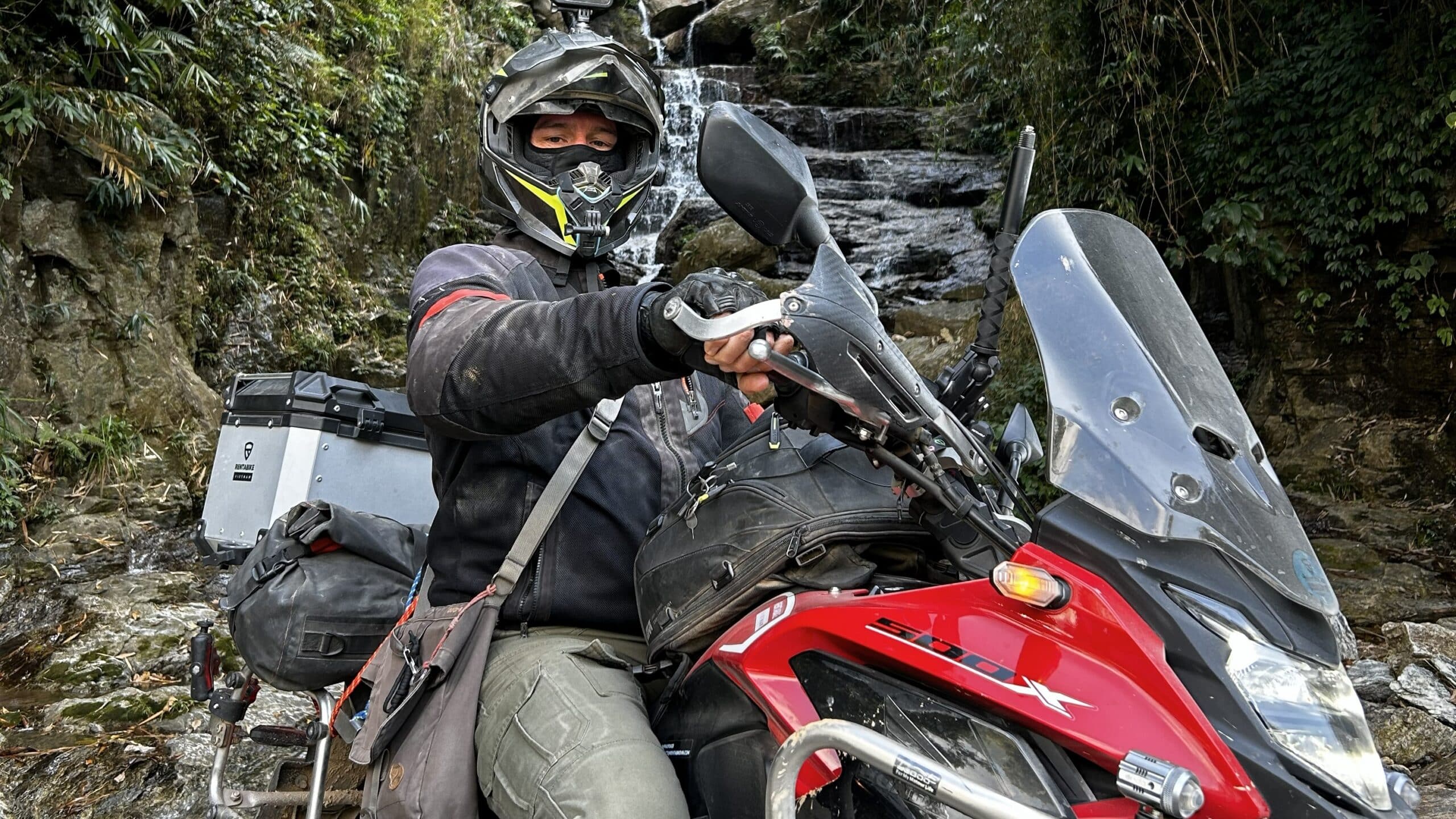
A one-way motorbike rental lets you collect a motorcycle in one city and return it in another, so you can ride through Vietnam without having to retrace your route. It works especially well for longer journeys between Hanoi, Danang and Ho Chi Minh City.
For many travellers, this is simpler than buying a cheap motorcycle, dealing with repairs and then trying to sell it before flying home. You rent a serviced bike, choose your route and return it at the agreed destination.
The important question is not just whether one-way rental is possible, but whether it suits your trip. Your route, number of days, riding experience, luggage and bike choice all make a difference.
If you are still deciding which roads to use, our Vietnam motorcycle route maps can help you compare routes before you commit to the journey.
This guide explains how one-way rental works, which motorcycles suit different journeys, what to expect with deposits and luggage, and how to plan the route before you book.
Renting One-Way or Buying a Motorbike?
For years, many travellers in Vietnam bought a cheap motorcycle, rode it across the country and then tried to sell it at the other end. It can still work, but it is not automatically cheaper or easier than renting.
The real question is how much time and uncertainty you are willing to accept. Buying means taking responsibility for the condition of the bike, repairs during the trip and selling it again before you leave Vietnam.
A one-way rental removes most of that uncertainty. You start with a serviced motorcycle, ride your planned route and return it at the agreed destination without having to find a buyer at the end.
If you are still deciding between the two options, our renting vs buying a motorbike in Vietnam guide goes into the differences in more detail.
The Real Cost of Buying
The purchase price is only part of the cost of owning a motorcycle for a trip. Tyres, chains, brakes, wheel bearings, suspension and electrical problems can all become your responsibility once you leave the seller.
A cheap motorcycle can still be perfectly usable, but it is difficult to know its history. A mechanical problem several hundred kilometres into the journey can cost both money and valuable travel time.
You also need to consider what the motorcycle will be worth at the end. If you are short of time, you may have to accept a much lower price just to sell it before your flight.
| Feature | Buying a Cheap Used Bike | Renting a Serviced Honda |
|---|---|---|
| Bike Condition | Can vary greatly depending on age and previous maintenance | Checked and serviced before and after every rental |
| Reliability | Unknown until you have ridden it for some time | More predictable if properly maintained |
| Maintenance Cost | You pay for repairs and replacement parts | Normal maintenance is generally handled by the rental company |
| Ride Quality | Depends heavily on the individual bike | You can choose a model suited to your route |
| Breakdowns | You arrange repairs yourself | Support is available if something goes wrong |
| Local Support | You deal with accidents, thefts, damage yourself | A good rental company can help with emergencies, route advice and practical trip planning |
| End of trip | You need to find a buyer | Return the bike at the rental shop |
| Cost | Purchase price + repairs – resale value | Rental rate + any one-way transport fee |
What a Good Rental Company Should Provide
A good motorcycle rental company should offer more than just the bike. If you have an accident, breakdown or other emergency, having someone local who understands the roads, repair options and local procedures can make a difficult situation much easier to manage.
They should also be able to help with practical trip planning. That can include route advice, realistic daily distances, road conditions, suitable overnight stops and hotel suggestions based on the route you are actually riding.
This local knowledge is particularly useful in Vietnam, where the fastest road is not always the best motorcycle road and where weather, roadworks or seasonal conditions can change a journey quickly.
For many riders, this support is one of the biggest advantages of renting rather than buying a motorcycle independently.
The Problem at the End of the Trip
Buying can still make sense if you are staying in Vietnam for a long time, are comfortable dealing with maintenance and have enough time to sell the motorcycle afterwards.
It may also appeal to riders who enjoy working on their own bike and do not mind taking on the risk of mechanical problems. For a shorter holiday, however, the extra time and uncertainty often outweigh the potential saving.
If you are still comparing the two options, our renting vs buying a motorbike in Vietnam guide looks at the trade-offs in more detail.
When Buying Might Still Make Sense
Buying can still make sense if you are staying in Vietnam for a long time, are comfortable dealing with mechanical problems and have enough time to sell the motorcycle afterwards.
For a shorter holiday, especially a point-to-point trip between Hanoi, Danang and Ho Chi Minh City, renting is usually the simpler option because the start and finish are already organised.
If you already know you want to rent rather than buy, you can check our one-way rental options and see which bikes are suitable for your route.
How One-Way Motorbike Rental Works
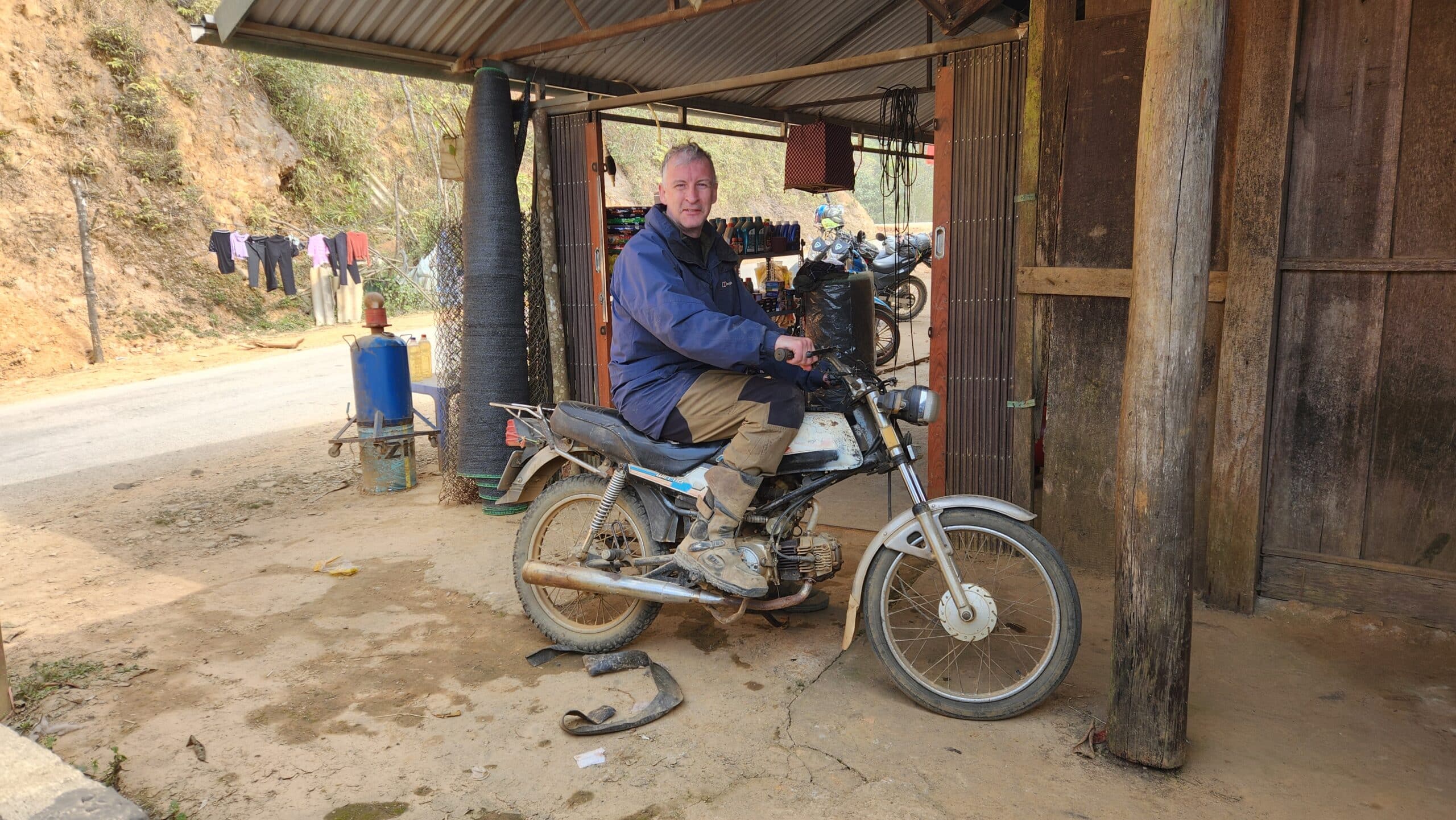
One-way rental is straightforward. You collect the motorcycle from one agreed AZ Motorbikes location, ride your planned route and return it at another.
The main advantage is that your route does not have to loop back to where you started. If your trip naturally ends in Danang or Ho Chi Minh City, you can finish there instead of spending several extra days retracing the same roads.
The exact motorcycles available for one-way rental can vary by location and date, so it is worth checking availability before you build the whole trip around one particular bike.
Where Can You Start and Finish?
The main one-way rental points are Hanoi, Danang and Ho Chi Minh City. This gives you several useful combinations, including Hanoi to Danang, Hanoi to Ho Chi Minh City and Danang to Ho Chi Minh City, as well as the same journeys in reverse.
Which direction is better depends on the season, your flights and the route you want to ride. There is no automatic advantage to riding north to south rather than south to north.
If you are still deciding where your trip should start and finish, our Vietnam motorcycle route maps can help you look at the journey in stages rather than thinking of the whole country as one long ride.
The One-Way Relocation Fee
A one-way rental normally has an additional relocation charge because the motorcycle eventually needs to be returned to its original location. The exact amount depends on the bike and the cities involved.
This fee should be clear before you confirm the rental. When comparing prices, look at the total cost rather than only the daily rental rate.
It is also worth comparing the relocation fee with the alternative: extra rental days, fuel, accommodation and riding time if you had to return the motorcycle yourself.
Deposits
A deposit is normally required for the motorcycle. The amount depends on the bike and the rental arrangements for your trip.
Cash is often the simplest option because it allows you to keep your passport with you for hotels, flights and normal travel. Before leaving, make sure you understand how and where the deposit will be returned at the end of the one-way journey.
If you are using a particular currency for the deposit, confirm the return arrangements in advance so there is no confusion when you hand the bike back.
Should You Leave Your Passport?
Some travellers ask whether they can leave a passport instead of a cash deposit. Where this is possible, think carefully before choosing that option because your passport is one of the most important documents you carry.
You may need it for hotels, flights, border crossings or other travel arrangements. For most riders, keeping the passport with them and arranging a separate deposit is more convenient.
If you are unsure what deposit arrangement applies to your bike, ask before booking rather than waiting until collection day.
Returning the Motorcycle
At the end of the trip, return the motorcycle to our shop. The bike will normally be checked, the return completed and the deposit dealt with according to the arrangement made at the start.
This is where the one-way system becomes especially convenient. Once the bike is handed back, your motorcycle trip is finished and you are free to continue your journey without arranging transport for the bike or finding someone to buy it.
Before setting off, make sure you know the exact return location, opening times and what time you need to arrive if you have an onward flight, train or bus.
What Happens If Something Goes Wrong?
This is another area where a good rental company should add value. If you have a breakdown, accident or other problem, you should be able to contact someone who can help you work out what to do next.
Depending on the situation, that might mean helping you find a mechanic, explaining where to take the bike, advising on the next town or helping you reorganise the route. Local knowledge can be particularly useful when you are somewhere unfamiliar and do not know which repair shops or roads are sensible.
For more detailed preparation, our motorbike accident guide for Vietnam explains what to do if you are involved in a crash.
Choosing the Right Motorcycle for a One-Way Trip
The best motorcycle is not simply the biggest or most expensive one. It depends on your route, how much luggage you are carrying, whether you are riding solo or two-up, and how comfortable you are with the bike’s weight.
For a mostly paved journey, a smaller bike can be easier and more economical. If your trip includes rough mountain roads, broken surfaces or long days in the North, a dual-sport may be the better choice. Larger adventure bikes offer more comfort and power, but they also need more experience.
Before choosing the bike, it is worth deciding what kind of roads you actually want to ride. That usually makes the right motorcycle much easier to identify.
If you are still comparing bikes, our motorcycle rental fleet shows the main options available.
Honda Future and Smaller Bikes
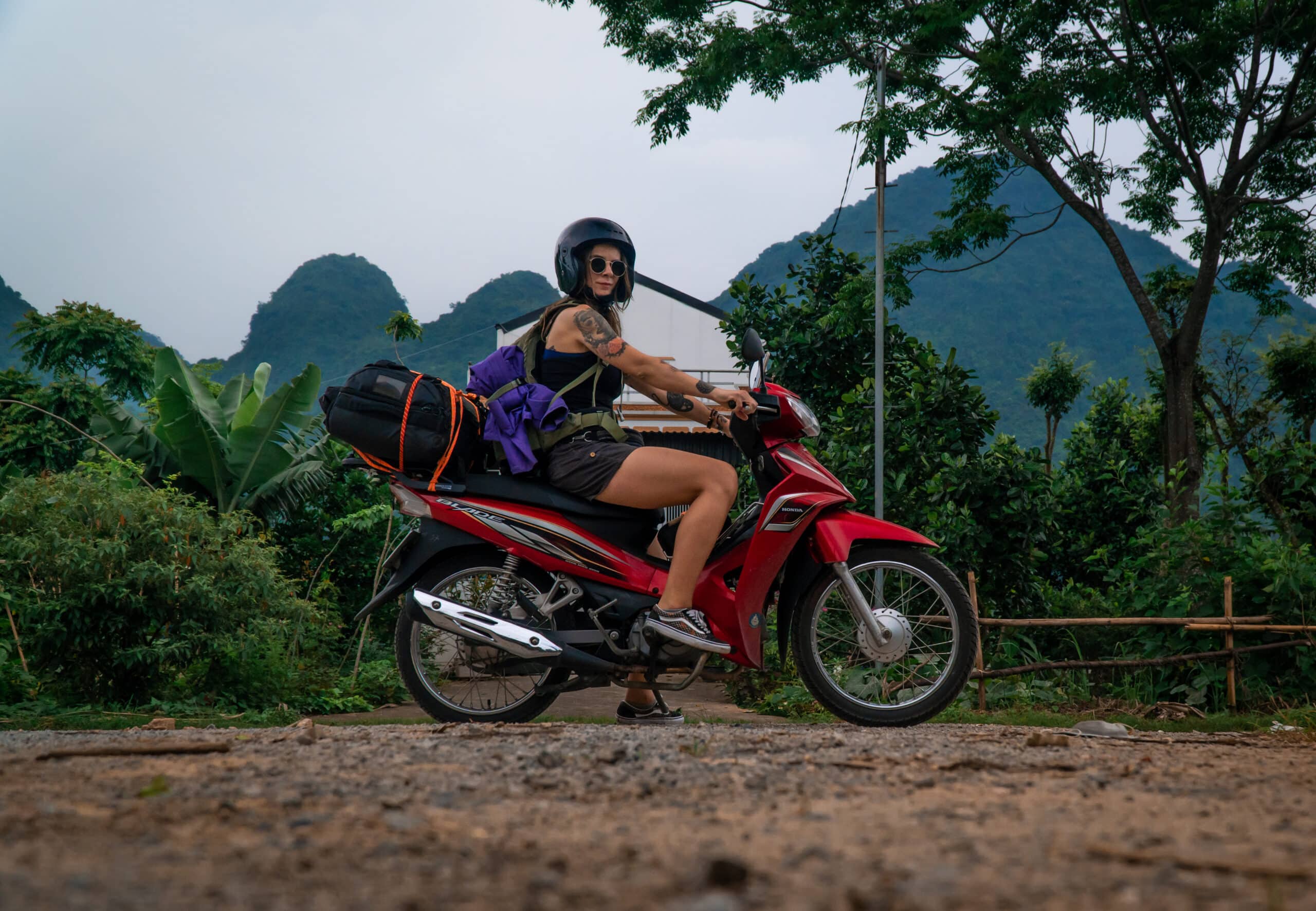
A Honda Future is a practical choice for riders who want something light, simple and economical. It works well for paved roads, slower-paced touring and riders who are more comfortable on a smaller motorcycle.
Its main advantage is ease of use. It is light in traffic, easy to park and cheap to run, but it is less suitable for rougher roads, heavy luggage or more demanding mountain routes.
If your trip is mainly between larger towns on good roads, a smaller bike may be all you need.
Honda XR150L and XR190L
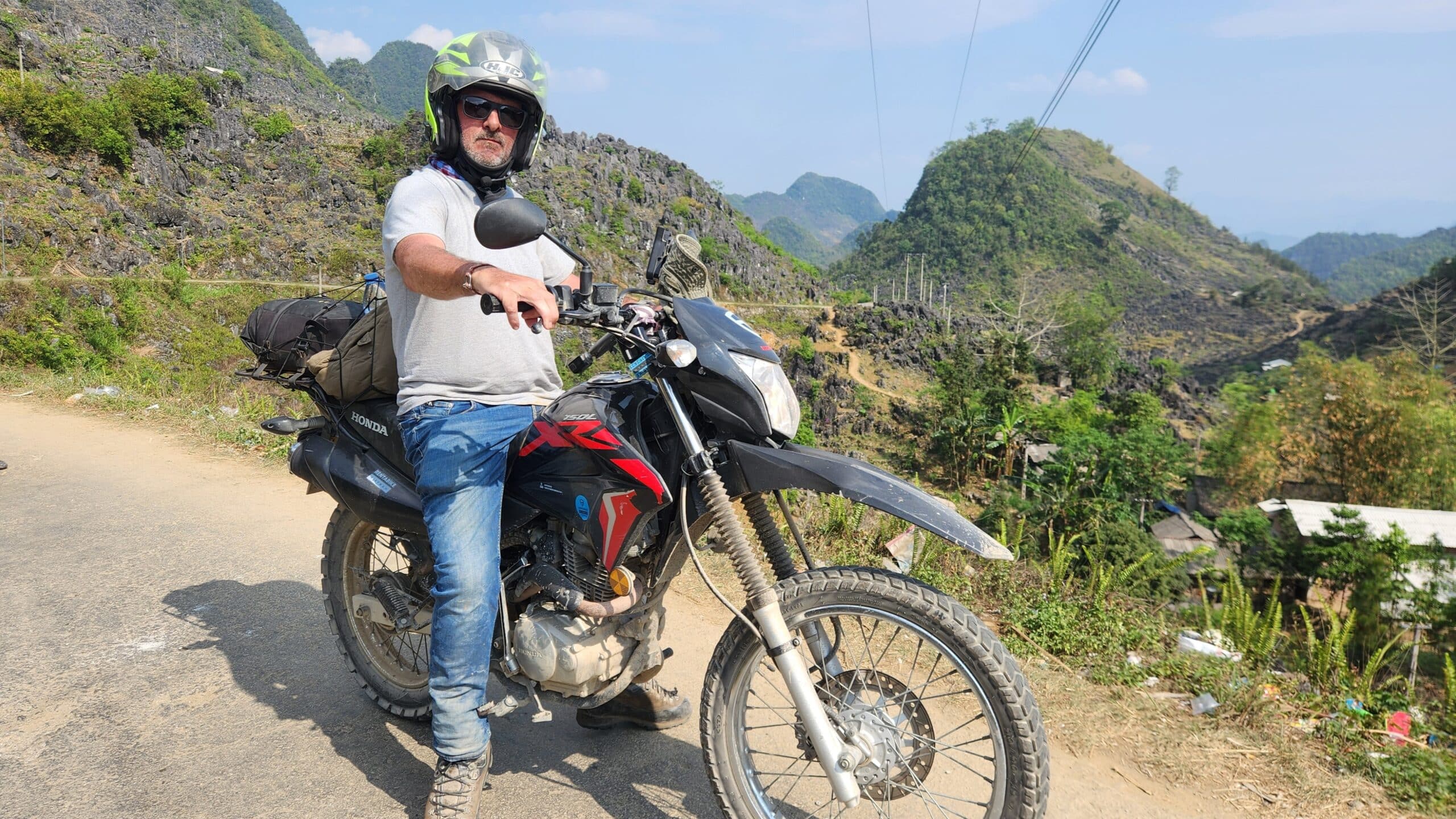
The XR150L and XR190L are good choices for mixed-road trips because they are still manageable in towns but have more suspension travel, ground clearance and larger wheels than a small road bike.
They suit riders heading into places such as Ha Giang, Cao Bang, the Northwest or the Ho Chi Minh Road, where the surface can change quickly. They are also easier to manage than a larger adventure bike if the road becomes narrow, broken or muddy.
If you are deciding between the two, our Honda XR150L vs XR190L comparison explains the differences in more detail.
Honda CB500X
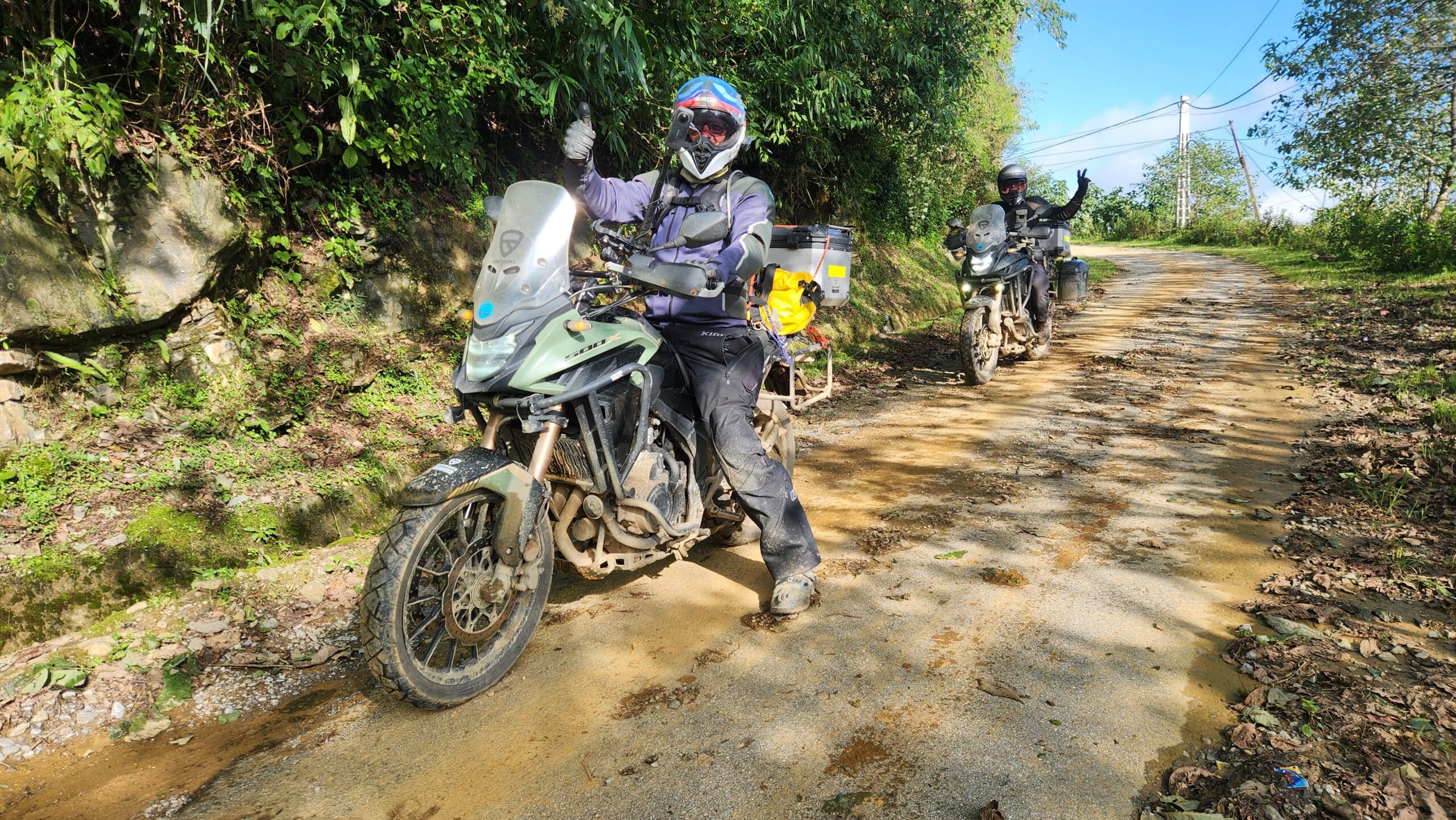
The Honda CB500X suits experienced riders who want more comfort and power for longer paved journeys. It is particularly useful if you expect to cover bigger daily distances, ride two-up or spend more time on good main roads.
The extra weight is the trade-off. On tight mountain roads, rough surfaces or in heavy city traffic, a smaller bike can be easier and less tiring.
If you are considering the CB500X for a long trip, our Honda CB500X rental page gives you the bike details and current rental information.
Which Bike Is Best for Two-Up Riding?
If you are travelling with a passenger, comfort and luggage capacity become more important. A small bike can carry two people, but once you add bags and long riding days, it may start to feel cramped or underpowered.
For two-up touring, a larger motorcycle such as the CB500X will usually be more comfortable on good roads. The trade-off is that the bike is heavier to manage at low speed and on rougher sections.
The right choice therefore depends on the balance between passenger comfort and the kind of roads you want to ride.
Choose the Route Before the Bike
One of the easiest mistakes is choosing the motorcycle first and then trying to make the route fit the bike. It is usually better to do the opposite.
Decide whether your trip is mainly mountain roads, open highways, coastal riding, rough back roads or a mixture of everything. Then choose the motorcycle that fits that journey.
Our Vietnam motorcycle route maps can help you compare roads before you decide which bike makes the most sense.
Not Sure Which Bike to Choose?
If you are unsure, tell us your start city, finish city, number of days, riding experience, whether you are travelling solo or two-up, and the kind of roads you want to ride.
That is usually enough information for us to narrow the choice down quickly and avoid putting you on a motorcycle that does not suit the trip.
You can view our one-way rental options here.
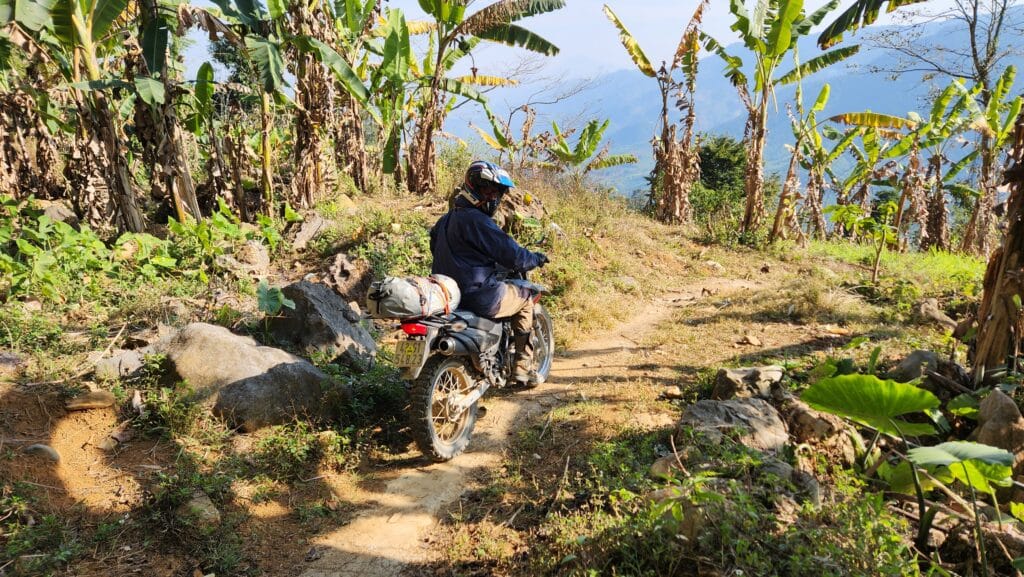
One-Way Rentals
Ready for ultimate freedom? Our one-way rentals let you blaze your own trail across Vietnam — no need to loop back!
✅ Pick up/drop off in Hanoi, Danang, or Ho Chi Minh City
✅ Explore Vietnam at your pace
✅ No backtracking—just pure, open-road freedom
Planning Your One-Way Route
A one-way rental gives you freedom, but the route still needs some planning. Vietnam is long, and the fastest road between two cities is often not the most interesting motorcycle road.
Start by deciding how many days you have, what kind of riding you enjoy and which places matter most. Then build the route around those priorities rather than trying to cover as much distance as possible.
This is where our Vietnam motorcycle route maps are useful. They let you compare different roads, distances and route options before you commit to the journey.
Hanoi to Danang
Hanoi to Danang is a good choice if you want a substantial one-way motorcycle trip without riding the full length of Vietnam. Depending on your time, you can include places such as Ninh Binh, Phong Nha, the former DMZ, Hue and the Hai Van Pass.
The journey can be made more direct or more scenic. If you enjoy quieter roads and more varied riding, inland sections are often more interesting than staying on the main coastal highway all the way south.
If you are considering this trip, our Hanoi to Danang 6 Day route gives you a useful starting point for planning the journey.
Hanoi to Ho Chi Minh City
Hanoi to Ho Chi Minh City is the classic full-length one-way journey. The biggest decision is whether to follow the coast, ride inland on parts of the Ho Chi Minh Road, or combine both.
A mixed route usually gives a better motorcycle trip because you can avoid spending too much time on Highway 1. Places such as Phong Nha, Khe Sanh, the Central Highlands and Dalat can all be worked into a longer itinerary.
Before setting your schedule, think carefully about how much time you actually want to spend riding each day. Our how far can you ride in one day in Vietnam guide can help you plan realistic distances.
Danang to Ho Chi Minh City
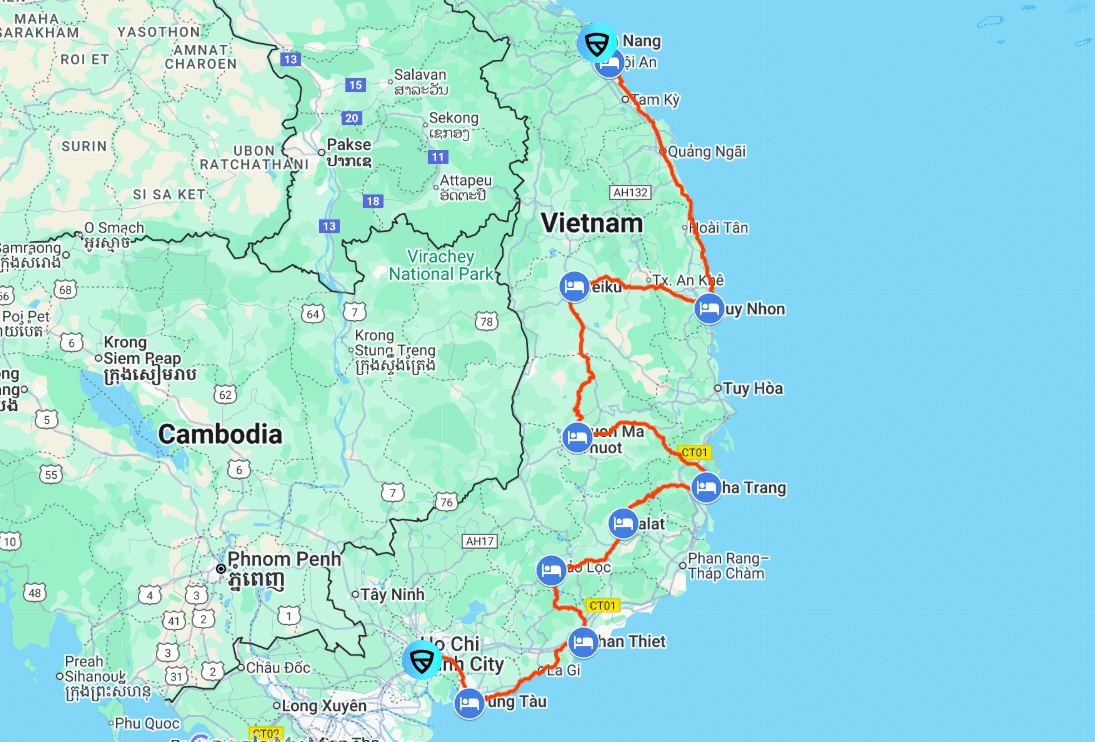
Danang to Ho Chi Minh City gives you several very different choices. You can follow the coast, head inland through the Central Highlands, or combine mountain and coastal roads depending on the season.
The inland route is often more interesting for riders who prefer quieter roads and varied scenery, while the coastal route can work well if beaches and easier navigation are more important.
Dalat is a useful inland stop, but the exact route should depend on your time, weather and riding experience.
North to South or South to North?
There is no single best direction. Flights, weather and the route you want to ride are usually more important than whether you travel north or south.
Some riders prefer finishing in Ho Chi Minh City because it gives them an easy onward flight or a natural end to the trip. Others prefer finishing in Hanoi so they can spend more time in the northern mountains before returning the bike.
If your dates are fixed, it often makes more sense to choose the direction that suits the season rather than following the traditional north-to-south route automatically.
How Many Days Do You Need?
Do not plan a motorcycle journey in Vietnam by dividing the distance by the speed you normally ride at home. Towns, traffic, mountain roads, weather, roadworks and sightseeing all reduce your average speed.
A shorter day with time for lunch, coffee, viewpoints, markets and unexpected stops is usually more enjoyable than racing to reach the next hotel before dark.
If you want to understand this in more detail, our how far can you really ride in one day in Vietnam guide explains why distance alone can be misleading.
Plan the Route in Stages
A long one-way trip becomes easier to plan when you break it into separate stages. Instead of asking “How do I ride from Hanoi to Ho Chi Minh City?”, ask “What is the best route from Hanoi to the next overnight stop?” and continue from there.
This also makes it easier to change the plan if the weather turns bad, a road is closed or you simply decide you want to stay somewhere longer.
Our motorcycle route maps are designed to help with exactly this kind of planning.
Not Sure Which Route Fits Your Time?
If you tell us your start city, finish city, number of days and the kind of riding you enjoy, we can usually suggest a sensible direction and realistic daily stages.
That can save you from choosing a route that looks simple on Google Maps but turns into a series of long, tiring riding days.
Once you know the route, you can check the motorcycles available for one-way rental and choose a bike that suits it.
Before You Leave: Legal, Insurance and Packing
Once the route and motorcycle are sorted, the next step is making sure you are legally prepared and practically ready to travel. This is the part many riders leave until the last minute, but it is much easier to deal with before collection day.
You should understand which licence and International Driving Permit are valid for the motorcycle you intend to ride, what documents come with the bike and what your travel insurance actually covers. It is also worth thinking carefully about luggage, because carrying too much can make a long trip much less comfortable.
Our how to drive legally in Vietnam guide explains the licence and document side in more detail.
Licence and International Driving Permit
Do not assume that every International Driving Permit or document sold online is recognised in Vietnam. Your licence, IDP and motorcycle entitlement need to match the motorcycle you plan to ride.
This matters not only for police checks but also for insurance. A travel insurer may refuse a claim if you were not legally entitled to ride the motorcycle involved.
If you want to check the details before booking, our Vietnam motorbike licence guide for foreigners goes deeper into the current requirements.
Motorcycle Documents and Insurance
The motorcycle should have the appropriate registration and compulsory insurance documents, and you should know what paperwork you are expected to carry while riding.
It is also important to separate the motorcycle’s compulsory insurance from your own travel insurance. They are not the same thing, and the cover available in an accident can be very different.
Our Vietnam motorbike insurance guide explains the main types of cover and what riders should check before travelling.
What Should You Pack?
Most riders bring too much. On a long one-way trip, a smaller amount of soft luggage is easier to secure, easier to remove at hotels and less likely to affect the handling of the motorcycle.
A few lightweight layers, proper rain protection, basic toiletries and the essentials are normally enough. Keeping the load compact becomes even more important if you are riding two-up.
If you want to go deeper into luggage choice and packing, our motorcycle luggage guide covers the main options.
What About a Large Suitcase?
A large hard-shell suitcase is not a good fit for most motorcycles. It adds weight, creates a wide load and can make the bike awkward to handle, especially in traffic or on rough roads.
If you arrive in Vietnam with a suitcase, it is usually better to leave it behind or arrange for it to be transported separately to your final destination. That lets you travel with only the luggage you actually need on the motorcycle.
Ask us about luggage options when you book a one-way rental so we can help you work out the most practical arrangement for your route.
Prepare for Problems Before They Happen
Most trips go smoothly, but it is still worth knowing what to do if something goes wrong. Save the rental company’s contact details, keep copies of your important documents and know how to describe your location.
If you have an accident or breakdown, the first job is to make the situation safe and then contact the rental company for advice. A good operator should be able to help you find a mechanic, understand what to do with the bike and decide whether the route needs to change.
Our motorbike accident guide for Vietnam gives you a practical checklist for what to do after a crash.
Final Check Before You Set Off
Before leaving, make sure you understand the return location, deposit arrangement, documents, emergency contact, luggage setup and any restrictions attached to the rental.
You should also know roughly where you are staying on the first night and have a realistic route for the first day. Once you are on the road, plans can stay flexible, but the start of the trip should be simple.
If you are still deciding between routes, bikes or trip length, use our Vietnam motorcycle route maps to narrow things down before you collect the bike.
FAQ
Can I rent a motorbike in Hanoi and return it in Ho Chi Minh City?
Yes, subject to availability. One-way rentals can be arranged between Hanoi, Danang and Ho Chi Minh City, so you do not need to return the motorcycle to your starting point.
The exact bikes available depend on your dates and route. If you already know where you want to start and finish, check our one-way rental options.
How much extra does one-way rental cost?
Contact AZ Motorbikes to confirm motorcycle availability, pickup and return arrangements, included equipment and support for your intended rental.
Which motorcycle is best for a one-way trip across Vietnam?
That depends on your route. Smaller bikes work well for easier paved journeys, while the XR150L and XR190L are better suited to mixed roads and mountain routes. The CB500X suits experienced riders who want more comfort and power on longer paved sections.
If you are unsure, start with the route and then choose the bike. You can compare our rental motorcycles here.
How many days do I need for Hanoi to Ho Chi Minh City?
There is no single answer because the route matters more than the distance. A direct journey can be completed relatively quickly, but a good motorcycle trip should leave time for smaller roads, rest days, weather and unexpected stops.
Our how far can you really ride in one day in Vietnam guide can help you plan realistic daily distances.
Is one-way rental better than buying a motorbike?
For a shorter holiday, it usually offers much more certainty. You start with a serviced motorcycle, have access to support during the trip and know exactly where the bike will be returned.
Buying can still make sense for long-term travellers who are comfortable dealing with repairs and have enough time to sell the motorcycle afterwards. Our renting vs buying a motorbike in Vietnam guide goes into this in more detail.
Plan the Route First, Then Choose the Bike
A one-way motorbike rental is useful because it lets the journey finish where the route naturally ends. Instead of returning to your starting city, you can travel between Hanoi, Danang and Ho Chi Minh City and hand the motorcycle back at the agreed destination.
The best way to plan the trip is to decide how much time you have and what kind of roads you want to ride first. From there, you can choose the bike, daily distances and overnight stops that make sense for the journey.
If you want to go deeper, start with our Vietnam motorcycle route maps and compare the roads available between your main stops.
If you are still deciding what kind of trip suits you, compare the motorcycles available for rental and think about whether you want smaller paved-road travel, mixed mountain riding or a larger bike for longer distances.
If you already know your dates, starting city and finishing city, the next step is to check our one-way rental options and contact us with your riding experience and rough route.