Tours
Motorcycle Top Boxes in Vietnam: The Best Luggage Setup for Touring
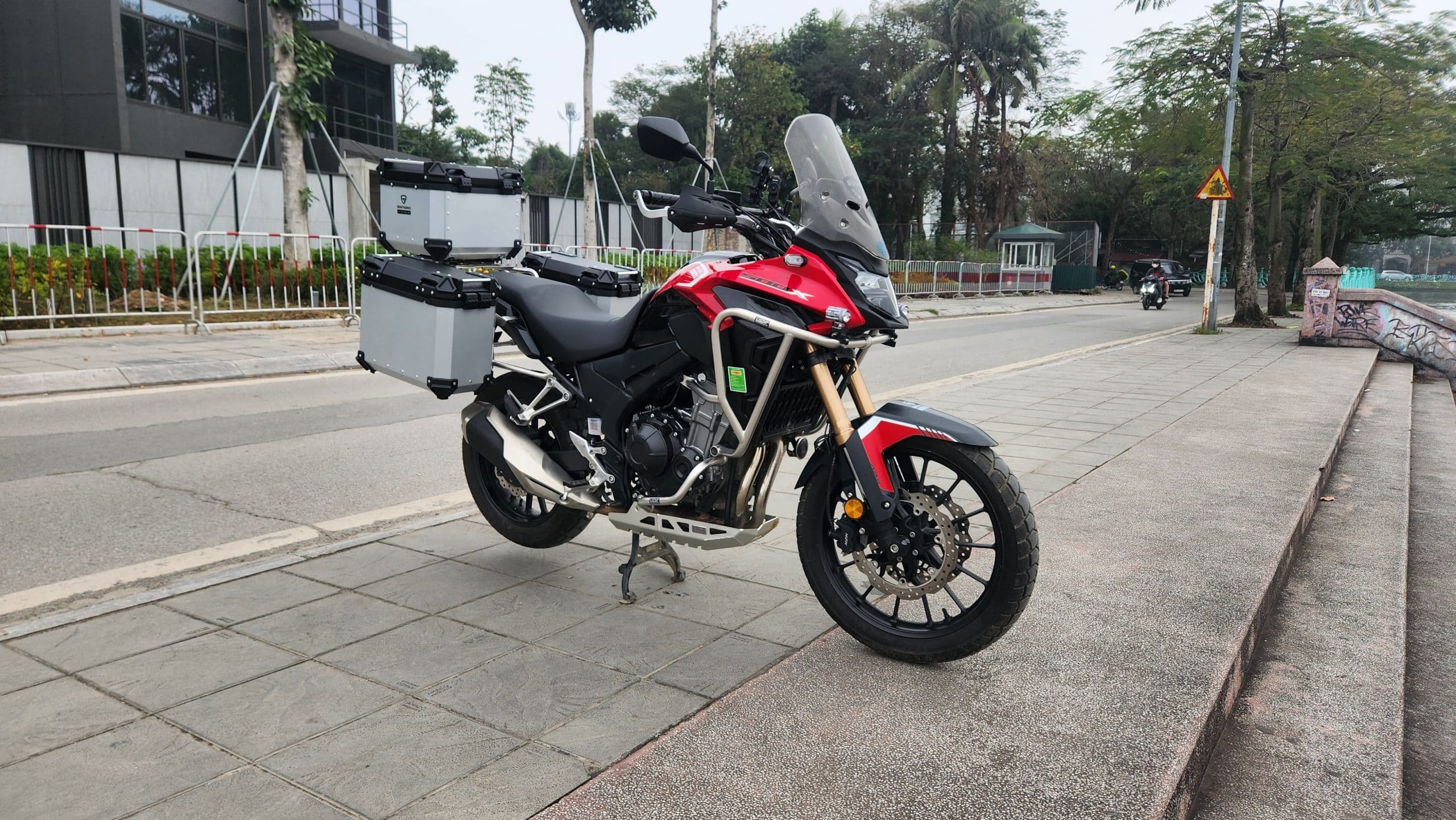
Packing for a motorcycle trip in Vietnam is different from packing for a normal holiday. Everything has to fit on the bike, stay dry, remain secure and, most importantly, not make the motorcycle unpleasant or unsafe to ride.
For most riders, the simplest solution is not a huge luggage system. A well-packed top box, sometimes combined with a waterproof dry bag, is usually enough for a multi-day Vietnam motorcycle tour. The exact setup depends on the bike, whether you are carrying a passenger, and how much you really need to take.
Short answer: For a typical Vietnam motorcycle tour, a top box gives secure, weather-resistant storage without making the bike wider. Add a waterproof dry bag if you need extra capacity, and use panniers mainly when you genuinely need more space.
Why Top Boxes Work So Well in Vietnam
A motorcycle top box is a rigid storage case mounted behind the rider. It is one of the most useful luggage options for Vietnam because it adds practical carrying capacity without increasing the width of the motorcycle.
That matters here. Town traffic can be tight, mountain roads can be narrow, and parking spaces are often compact. Side panniers can work very well, but they make the motorcycle wider and require more awareness when filtering, parking or passing through confined spaces.
A top box is also easy to use. You can open it quickly at a fuel stop, lock valuables inside when you walk away from the bike, and keep rain gear, cameras, chargers or other frequently used items close at hand.
For a rider travelling alone, a medium or large top box can be enough on its own if you pack lightly. If you are carrying more, the easiest next step is usually a waterproof dry bag secured to the rear seat or luggage rack.
Top Box, Dry Bag or Panniers?
There is no single best luggage setup for every Vietnam motorcycle trip. The right choice depends on how long you are travelling, the motorcycle you are using and whether you have a pillion passenger.
Top Box
For most touring riders, the top box is the best starting point. It is secure, simple and keeps the bike relatively narrow.
The main disadvantage is weight placement. A heavy top box puts weight high and behind the rider, which can affect handling if it is overloaded. Keep the top box mainly for lighter items, valuables and things you want securely locked or easy to reach. When riding solo, heavier items can often be better carried in a securely strapped waterproof bag on the passenger seat, close behind the rider, where the load sits lower and farther forward than it would in a top box. Whatever the setup, keep dense items as low and as close to the motorcycle’s centre as practical.
A top box can also work well for a pillion because it gives the passenger something behind them. It should never be treated as a substitute for a proper passenger seat or safe riding position, but many passengers find the extra support reassuring.
Waterproof Dry Bag
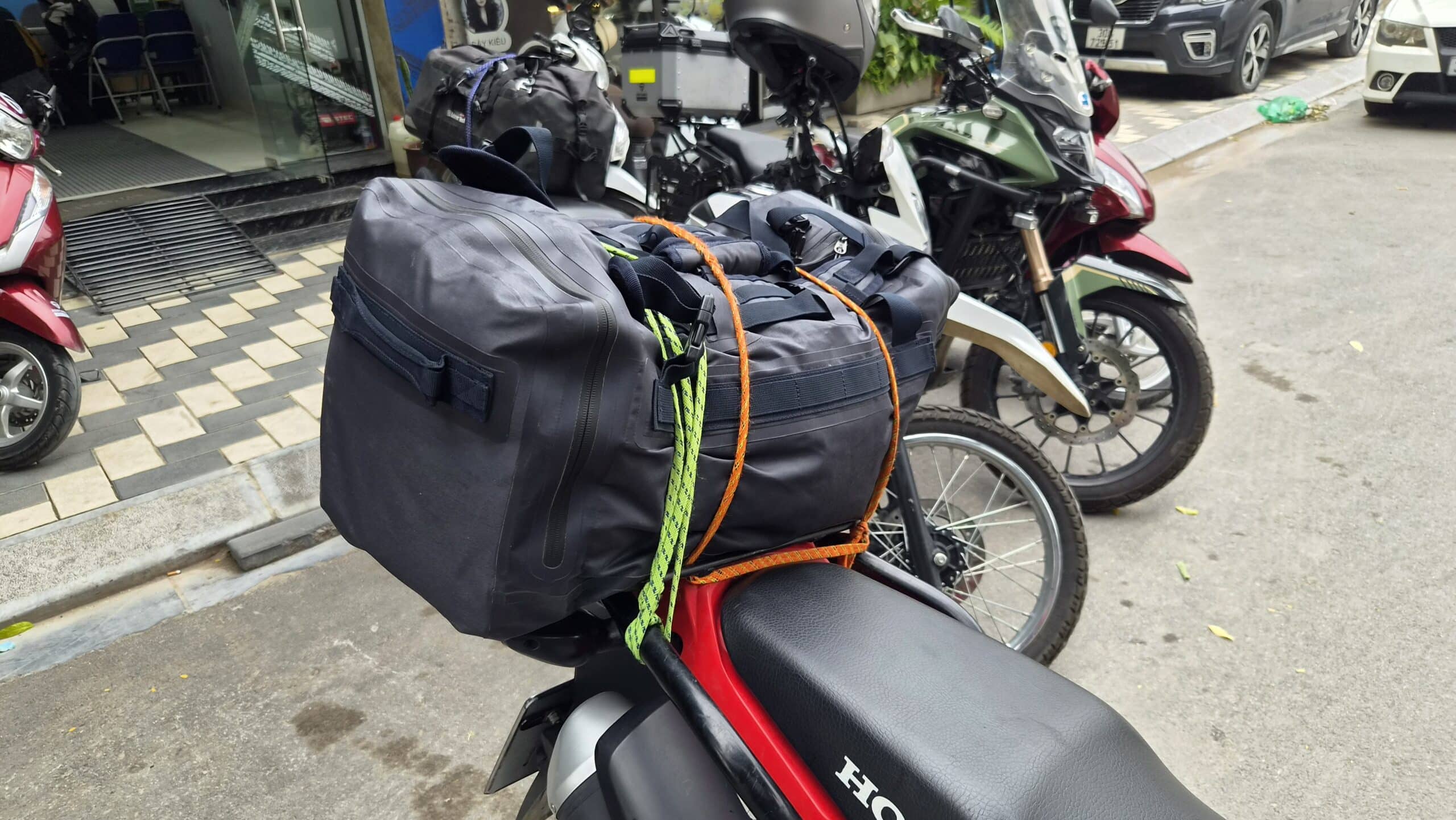
A dry bag is the simplest way to add capacity. It is light, inexpensive and, if properly closed, excellent in heavy rain.
We particularly like dry bags for clothing. Clothes are bulky but relatively light, which makes them ideal for carrying on the rear seat or luggage rack. A dry bag also comes off the motorcycle easily at the end of the day.
The weakness is security. A soft bag is easier to cut or remove than a locked hard case, so valuables should not be left in it when the bike is unattended.
Side Panniers
Panniers make sense when you need considerably more capacity, particularly on a larger touring motorcycle. They also allow you to carry weight lower on the bike, which can be better for balance than putting everything into one large top box.
The trade-off is width. In Vietnam, that matters more than it might on a wide European road. You need to remember the cases are there every time you move through traffic, pull alongside another motorcycle or squeeze into a narrow parking area.
The Best Luggage Combinations
Most riders do not choose just one type of luggage. The useful question is how the pieces work together on the motorcycle.
Top box + waterproof bag — For many solo riders, this is the best all-round setup for a Vietnam tour. Keep lighter valuables and frequently used items in the top box, and strap clothing or denser items securely on the passenger seat so the load sits farther forward and lower.
Panniers + waterproof bag, no top box — This works well if you want more capacity while keeping weight lower on the motorcycle. The dry bag can sit across the rear seat, while the panniers carry heavier items low on either side. You lose the lockable convenience of a top box, but avoid putting extra weight high and far back.
Top box + panniers — This combination becomes much more useful when riding two-up because the passenger occupies the rear seat. It gives plenty of secure storage, but the motorcycle is wider and heavier, so there is even more reason to pack selectively.
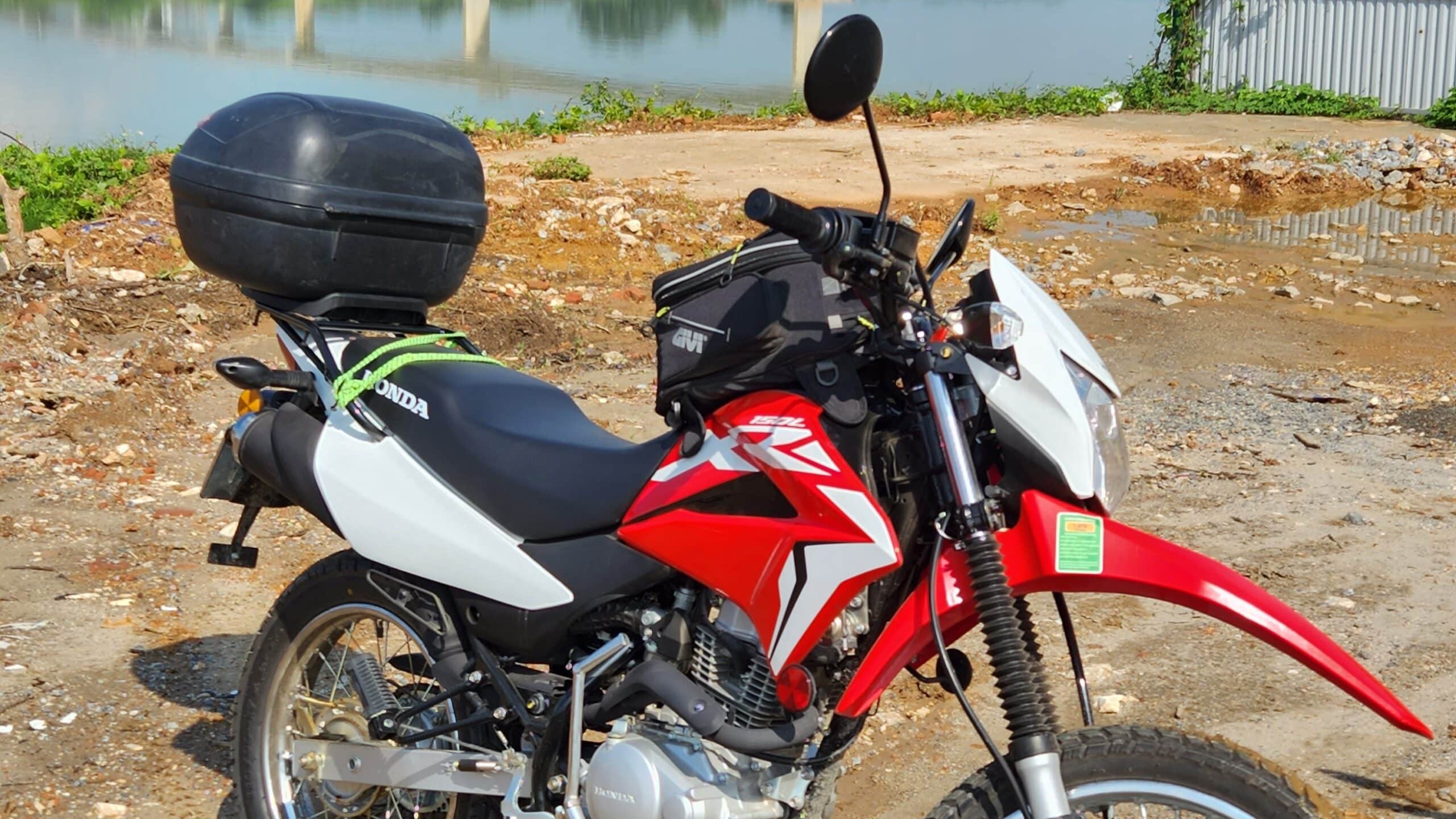
Dry bag only — On a smaller bike such as an XR150, a single waterproof bag can be the simplest and most enjoyable solution. It keeps the bike light, narrow and easy to handle, provided the bag is strapped securely and does not interfere with the exhaust, rear wheel or lights.
Top box + panniers + dry bag — This gives maximum capacity, but most solo riders do not need it. It makes more sense for two-up travel, very long trips or riders carrying specialist equipment. If you find yourself filling all three, it is worth asking whether you are simply taking too much.
How Much Luggage Do You Really Need for a Vietnam Tour?
A common mistake is packing for every possible situation. On a motorcycle trip, less is usually better.
For a 7-10 day tour, you do not need 7-10 days of separate clothing. Many hotels and homestays can arrange washing, and quick-drying clothes make it easy to travel with a small rotation. Three or four tops, a couple of pairs of trousers or shorts, underwear, lightweight evening clothes and riding layers are usually far more practical than a full suitcase.
Keep riding gear separate from normal luggage where possible. Rain gear should be accessible without unpacking the motorcycle. Documents, phone, wallet and passport should stay on your person or in a secure place you can reach quickly.
If you are travelling with expensive cameras, drones or electronics, use the locked top box for them rather than the dry bag. Soft luggage is better used for clothing and items that are less attractive to thieves and less vulnerable to impact.
A sensible aim is to have enough space left that you are not forcing the lid shut every morning. Packing becomes tiring very quickly if every item only fits in one exact position.
The Best Setup for Different Vietnam Motorcycle Trips
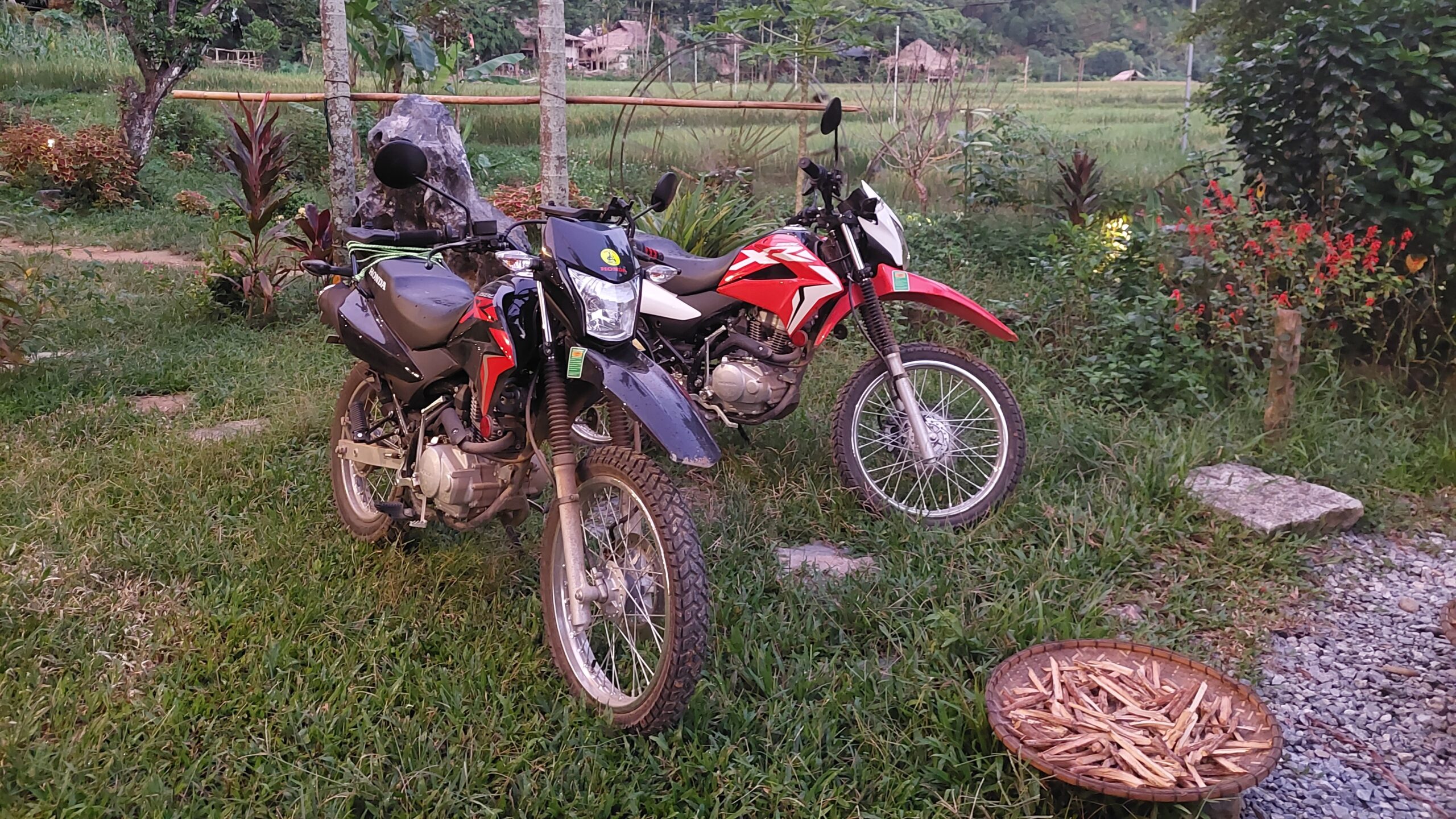
Small Dual-Sport Bike
On bikes such as the Honda XR150, simple is better. A waterproof bag on the extended rear rack is often all you need, particularly for a solo rider travelling through the mountains.
Adding too much hard luggage to a small motorcycle can make it feel heavier and less agile. Pack light and keep the load close to the bike.
If you are choosing a bike for a northern trip, our Honda XR150 motorcycle rental is designed for this kind of practical, lightweight travel.
Larger Touring Bike
On a larger adventure-touring motorcycle, a top box becomes especially useful because the bike has the size and carrying capacity to handle it comfortably.
Our Honda CB500X motorcycle rental includes dry bags and can also be supplied with top and side boxes when requested in advance. For a longer self-guided trip, that gives you the option to use only the storage you actually need rather than carrying empty luggage around Vietnam.
For many riders, a top box plus one waterproof bag is the sweet spot. It gives enough space for a proper touring trip without turning the motorcycle into a moving wardrobe.
Travelling with a Passenger
A pillion changes the calculation. The rear seat is occupied, so you lose the easiest place to strap a large dry bag. At the same time, two people naturally need more luggage space than one, so packing discipline becomes even more important. In practice, that usually means each person carrying less, sharing toiletries and chargers, and avoiding duplicate items wherever possible. Think of it as roughly halving the personal luggage allowance per rider rather than trying to double the amount carried on the bike.
This is when a top box and side panniers become more useful. The top box gives secure storage and leaves the passenger seat clear, while panniers add capacity without piling luggage behind the rider.
Be more disciplined about weight when carrying two people. The motorcycle is already carrying an extra passenger, so unnecessary luggage has a bigger effect on braking, acceleration and handling.
Guided Tour with Support Vehicle
If you are joining one of our guided motorcycle tours and a support vehicle is being used, you may need very little luggage on the motorcycle at all.
Larger bags can travel in the support vehicle while the rider carries only a small waterproof bag with rain gear, water and the items needed during the day. That makes the motorcycle lighter and the riding more enjoyable.
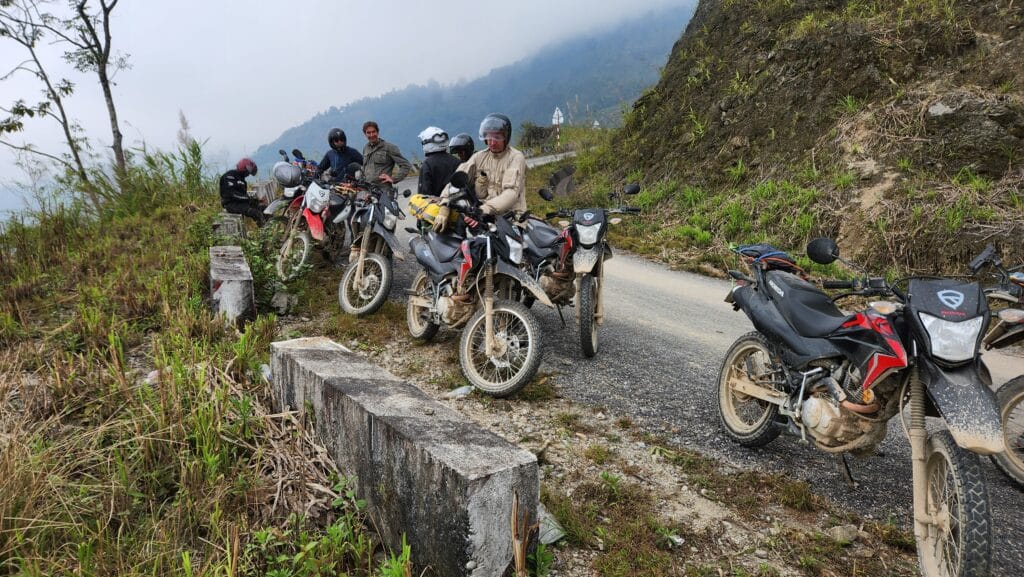
Great Loop | 12-Day Motorcycle Tour
Ready to ride the ultimate northern loop? This 12-day adventure takes you deep into Vietnam’s wildest and most breathtaking landscapes.
✅ Over 1,800 km of tarmac, dirt, and single track
✅ Ride legendary passes, visit remote villages, and cross the Chinese borderlands
✅ Stay with ethnic minority families, experience authentic highland life
Pack the Motorcycle, Not Just the Bag
Good luggage is only useful if it is packed properly.
Keep heavy items as low and as close to the centre of the motorcycle as possible. Avoid loading the top box with everything heavy simply because it locks. A lighter top box and a balanced motorcycle will usually feel much better on twisting roads.
Check every strap before you leave in the morning. Loose webbing or bungee cords can move towards the rear wheel, chain or exhaust and become dangerous. After the first 15-20 minutes of a trip, stop and check the luggage again because loads often settle once the bike starts moving.
Do not block the rear light or indicators with a bag. Make sure the handlebars can move fully from lock to lock and that nothing interferes with the rider’s legs, passenger or suspension.
Finally, leave some spare capacity. You may buy something on the road, need to remove a layer of riding clothing, or want somewhere to put wet rain gear temporarily. A luggage system that is already at 100% capacity before you leave Hanoi is probably too full.
If you are planning a longer self-guided journey, our one-way motorcycle rental service can help you build a route without having to return the motorcycle to your starting city. You can also use our Vietnam motorcycle route maps to plan realistic daily stages before deciding how much gear you actually need.
AZ Motorbikes Solution
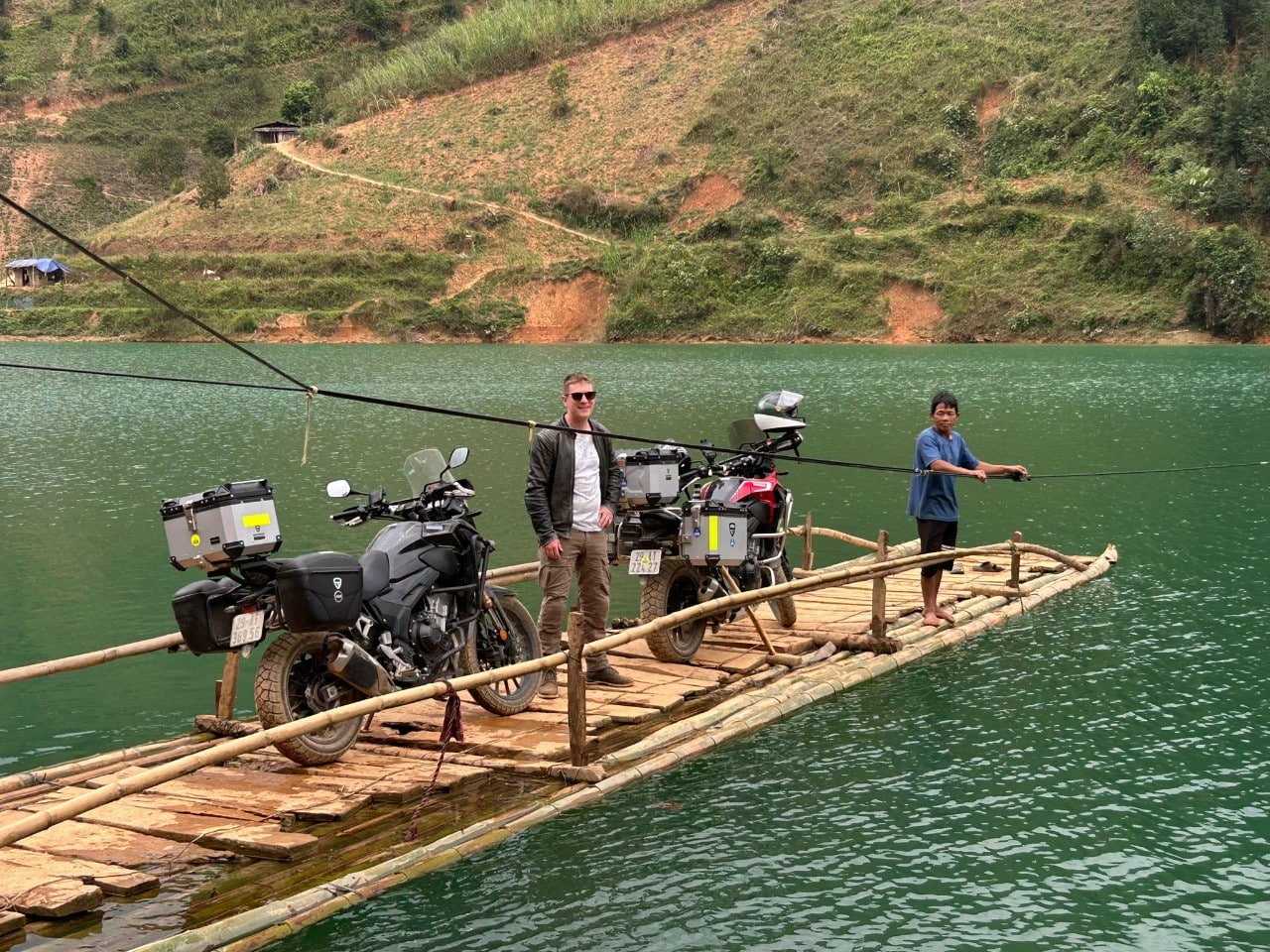
For our larger touring bikes we offer: top boxes, side panniers, waterproof bags and tank bags included in the rental fee, if requested in advance. We find that this covers all rider’s needs and allows them up to a whopping 100L or more in storage space. Even for travelling with a pillion passenger and no support vehicle, this is plenty.
Whilst on tour, we usually have a support vehicle that carries larger luggage items. This means offering just a small waterproof bag is enough for each rider.
For smaller rentals, like the Honda XR150, we are usually asked to provide a small waterproof bag. Our bikes have an extended luggage rack on the rear and bungee straps to secure them onto the bike.
FAQ
What size top box is best for a Vietnam motorcycle tour?
There is no perfect size for every rider, but a medium-to-large box is usually enough for valuables, electronics, rain gear and some clothing. The important point is not maximum capacity; it is keeping the weight sensible and matching the box to the motorcycle.
Is a top box enough for a 10-day motorcycle trip in Vietnam?
It can be if you pack lightly and use laundry along the way. For most riders, a top box plus a waterproof dry bag gives a much more flexible setup without the extra width of panniers.
Are panniers better than a top box?
Not necessarily. Panniers carry weight lower and provide more total space, but they make the motorcycle wider. A top box is simpler in Vietnamese traffic and is often enough for a solo rider, especially if there is a support vehicle.
Should I bring my own motorcycle luggage to Vietnam?
Usually not. If you are renting from us, tell us what trip you are planning and how much luggage you expect to carry. We can advise what is available for the motorcycle you choose, including dry bags and hard luggage on suitable bikes.
What should never go in a motorcycle top box?
Avoid putting all of your heaviest items in it. Tools, large bottles and dense equipment are better carried lower where possible. Also avoid leaving passports, cash or expensive electronics in an unattended motorcycle overnight, even if the box locks.
Pack Smart, Ride Safe, Enjoy Freedom
The best motorcycle luggage setup in Vietnam is normally the simplest one that carries what you genuinely need. For many riders, that means a top box for secure items and a waterproof dry bag for clothing.
Choose the luggage around the motorcycle and the trip, not around everything you own. A lighter, narrower bike is easier to ride through cities, mountain roads and small towns, and you will appreciate that every day of the journey.
If you are still deciding which motorcycle and luggage combination suits your trip, browse our motorcycle rentals or contact us before booking. Tell us whether you are travelling solo or with a passenger, how long you are riding and where you plan to go, and we can suggest a practical setup.