
Tours
The Best Time for a Northern Vietnam Motorcycle Tour
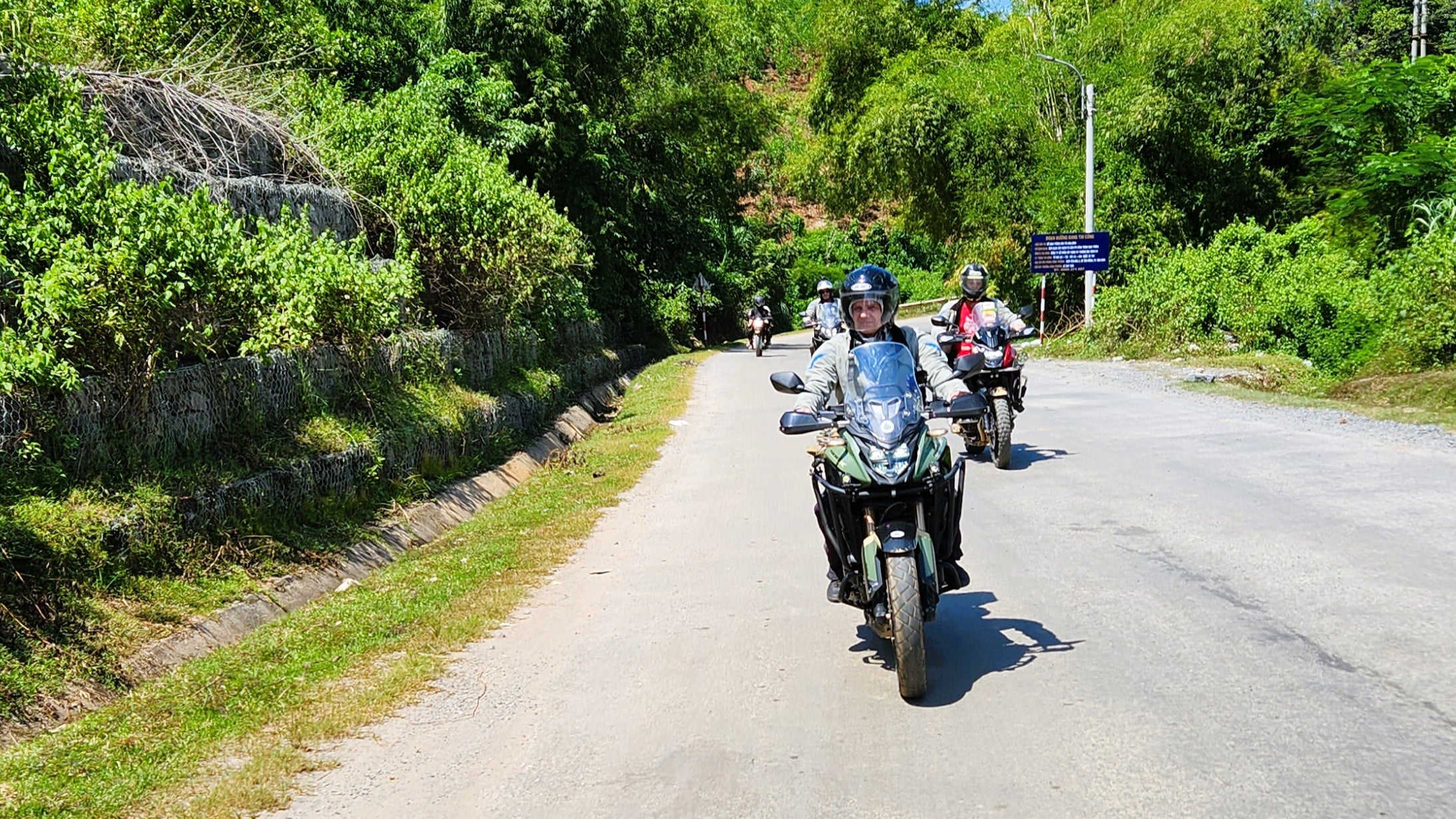
There is no single perfect month for a motorcycle tour in Northern Vietnam. October and November are hard to beat for comfortable temperatures and generally settled riding, while March and April are also excellent. Come at another time, though, and you may get greener mountains, fuller waterfalls, golden rice fields or much quieter roads.
The important thing is to match the season to the kind of trip you want. Conditions in Hà Giang, Cao Bằng and the Northwest can be quite different even in the same month, so I would never choose dates by looking at Hanoi weather alone. If you are travelling beyond the North, our Vietnam Motorcycle Weather Guide compares riding conditions across the whole country.
When Is the Best Time to Ride Northern Vietnam?
For most riders, I would start by looking at March–April or September–November. These periods usually give the best balance of temperature, scenery and manageable road conditions, but they are not the only times worth riding.
We run and ride motorcycle trips throughout the year. The difference is that summer and winter require a little more flexibility with routes, daily distances and equipment.
| Period | Riding Conditions | Best for |
|---|---|---|
| Mar-Apr | Mild, some mist and drizzle | General touring |
| May-Aug | Hotter, greener, wetter | Green scenery, waterfalls |
| Sep-Oct | Cooler, colourful, improving weather | Rice harvest, first-time trips |
| Nov | Cool and generally drier | Comfortable touring |
| Dec-Feb | Cold, quieter, often dry | Experienced riders, fewer tourists |
The Short Answer

If I had to choose one period for a first Northern Vietnam motorcycle tour, I would look first at October–November or March–April.
March and April
March and April are excellent months for a longer trip through Northern Vietnam. Temperatures are generally more comfortable than in the middle of summer, while the worst of the winter cold is beginning to disappear.
You can still get mist, drizzle and damp roads at altitude, but for most riders these are manageable conditions rather than reasons to avoid the mountains. If I were combining Hà Giang, Cao Bằng, Ba Bể and parts of the Northwest, spring would be one of the first periods I would consider.
May to August
By May, the mountains become much greener and the landscape starts to feel more tropical. Rice is being planted in many areas, rivers begin filling and waterfalls become more impressive, but rain also becomes a much bigger part of the trip.
July and August are the months when I would build the most flexibility into an itinerary. Heavy rain can bring mud, gravel, local flooding and landslides, so a road that was perfectly rideable yesterday may need a different plan today. You can still have a very good trip, but this is not the time to insist on a fixed route regardless of conditions.
September to November
September is one of the most visually impressive times to ride Northern Vietnam. Rice begins turning gold in many mountain areas while rivers and waterfalls are still carrying plenty of water after the summer rains, although heavy showers are still possible.
October usually becomes cooler and more settled, and it is one of my favourite months for a first northern motorcycle trip. November can also be excellent, with lower rainfall, comfortable daytime temperatures and generally good conditions for longer days on the bike.
December to February
Winter is quieter, drier in many areas and very different from the wet-season landscape, but it is also easy to underestimate the cold. Hanoi may feel fairly mild while high passes around Đồng Văn, Mèo Vạc, Sa Pa or the far Northwest are genuinely cold early in the morning.
Do not judge your riding gear by the temperature while standing outside a hotel. Several hours of wind chill on a motorcycle is different, especially if there is mist or damp air, so warm gloves, waterproof layers and good wind protection matter.
Where Should You Ride at Different Times of Year?
Once I know when somebody is travelling, the next question is where the conditions and scenery make the most sense. Northern Vietnam is large enough that you can often adapt a trip rather than abandon it simply because one region has poor weather.
Hà Giang and Cao Bằng
Hà Giang can be ridden throughout the year, but spring and autumn are particularly attractive. March and April often bring comfortable temperatures, while September through November can give you green valleys, rice harvests and cooler, clearer riding conditions. If Hà Giang is the main focus, use our Hà Giang motorcycle route maps to move from the seasonal question into the actual roads and daily stages.
Cao Bằng has its own rhythm and is worth planning separately. Summer gives Bản Giốc far more water but also more rain, while September and October often combine good colour, fuller rivers and more comfortable temperatures. For a deeper look at that region, see Best Time to Ride the Cao Bằng Loop.
Sa Pa, Mu Cang Chai and the Northwest
The Northwest depends heavily on what you want to see. Around Sa Pa, Mu Cang Chai, Tú Lệ and Hoàng Su Phì, the agricultural season changes the whole look of the landscape, from planting to bright green terraces and then the golden harvest.
This area also makes more sense as part of a journey than as a simple out-and-back ride. As you build the route, think in terms of connected riding days through places such as Mai Châu, Tà Xùa, Mu Cang Chải, Sa Pa and Bắc Hà rather than trying to draw one giant loop at the beginning.
Ba Bể and the Route Network
Ba Bể is useful because it works both as a destination and as a connection between other northern regions. It fits naturally between Hanoi and Cao Bằng and can also form part of longer routes towards Hà Giang, which gives you more options when weather or road conditions force a change.
That is one reason we have been building the Northern Vietnam motorcycle route maps as individual A-to-B connections. Once you understand several ways to move between the same places, the trip becomes much easier to adapt on the road.
How the Seasons Change the Actual Riding
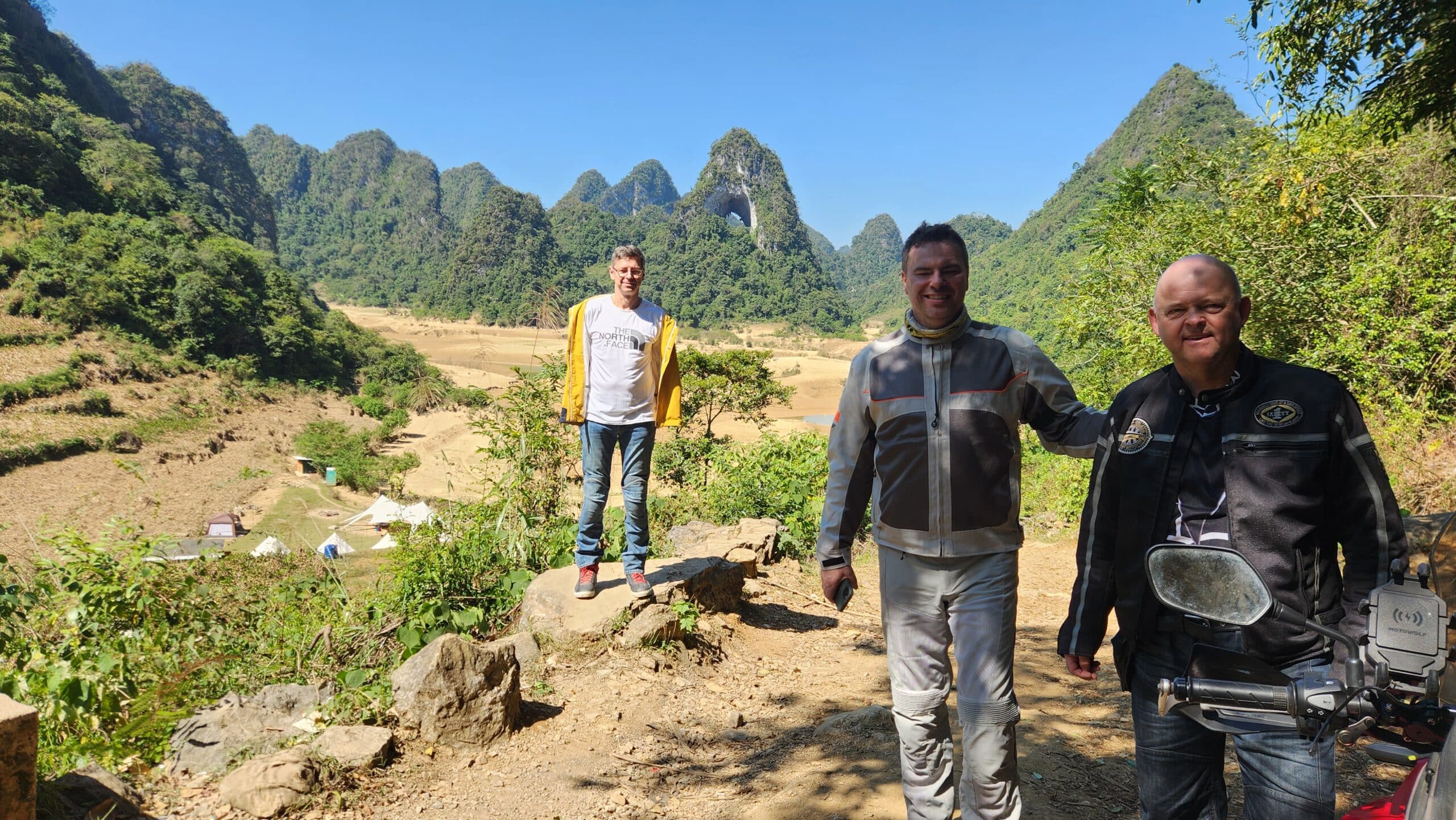
Weather matters more on a motorcycle than it does on a normal sightseeing holiday because you are outside for several hours every day. Rain, visibility and temperature change not only your comfort but also how quickly you can travel and which roads make sense.
Rain and Road Conditions
A wet road is only part of the problem after heavy rain. In the mountains you also need to expect mud, gravel, stones, water running across shaded roads and occasional landslides, sometimes long after the rain itself has stopped.
That does not mean you cannot ride. It means you slow down, read the road properly and remain willing to change the plan. A motorcycle itinerary should give you direction, not force you to complete a particular road regardless of what has happened overnight.
Fog and Visibility
Fog can be extremely localised in Northern Vietnam. A valley may be clear while the pass above it is sitting inside cloud, and visibility can change within a few kilometres.
This is why I prefer realistic daily distances rather than trying to maximise kilometres. A short-looking mountain day can suddenly take much longer, particularly if the road is wet or visibility is poor.
Heat and Cold
Summer heat can be just as tiring as rain. Regular stops, drinking enough water and avoiding an unnecessarily ambitious itinerary matter far more than trying to prove you can ride 300 km in a day.
Winter brings the opposite problem, especially at altitude. Ten or fifteen degrees Celsius may sound mild, but several hours of wind chill can become very uncomfortable. Our guide to How Far Can You REALLY Ride in One Day in Vietnam? explains why distance alone is a poor way to judge a northern riding day.
You Know When You Are Coming – Now Plan the Ride
Once the dates are fixed, weather becomes only one part of the planning. The next questions are how many days you have, how far you can realistically ride, which roads you want to use and which motorcycle makes sense for the trip.
Days, Distance and Leaving Hanoi
Do not look at a map of Northern Vietnam and assume everything is close because the distances seem small. A 150 km mountain day can require more concentration and more time than a much longer day on straightforward roads, so for many northern routes 120–180 km is a useful starting range rather than a target.
You also need to account for the first and last days around Hanoi. Our Getting Out of Hanoi by Motorcycle guide explains why I treat those as part of the itinerary rather than pretending the interesting riding begins the moment you leave the shop.
Build the Trip from A-to-B Stages
I increasingly prefer to build longer itineraries from individual riding days rather than drawing a big circle on Google Maps and assuming it works. Look at each A-to-B connection, check the road, distance, riding time, alternative routes and what there is to see along the way.
That approach is particularly useful in Hà Giang and Cao Bằng, where two roads connecting the same places can produce completely different riding days. The motorcycle route map collection is designed to help you make those choices before you commit to the full loop.
Choose the Motorcycle for the Trip
You do not need a huge adventure bike to travel through Northern Vietnam. A lighter motorcycle is often easier to manage on small roads, broken surfaces, steep parking areas and busy Vietnamese traffic.
For many solo riders the Honda XR150L is enough motorcycle for a long northern trip, while the extra performance of the XR190L becomes more useful with a passenger or heavier luggage. Our Honda XR150L vs XR190L comparison goes into that decision in more detail.
Self-Ride or Let Us Organise the Tour?
Once you know when, where and roughly how long, there are two straightforward ways to do the trip. You can rent a motorcycle and build the route yourself, or you can let us organise the route, accommodation and logistics as a tour.
Self-Ride
If you enjoy planning and want maximum flexibility, self-riding is an excellent way to explore Northern Vietnam. Start with our motorcycle rentals, choose a bike that suits your experience and luggage, and then use the route maps and destination guides to build the trip one day at a time.
The biggest advantage is freedom. You can stay longer somewhere you like, change direction when the weather turns, or take a road that somebody recommends over breakfast without worrying about breaking a fixed schedule.
Guided or Organised Tours
If you would rather spend your time riding than organising hotels, routes and daily logistics, look at our Northern Vietnam motorcycle tours. The longer tours connect several of the regions discussed in this guide rather than concentrating on one destination.
For example, the 10-Day Due North Motorcycle Tour links multiple northern riding areas into one trip. That style of itinerary makes sense if you want variety without spending every evening working out the next day’s route.
How Long Should You Allow?
With three or four days, I would normally concentrate on one region. Seven days gives you much more choice, while ten days or more allows you to combine Hà Giang, Cao Bằng, Ba Bể or parts of the Northwest without turning every day into a transfer.
If you already know your dates, tell us how many riding days you have, your experience level and roughly what you want from the trip. We have spent years renting motorcycles, organising tours and riding these roads ourselves, so we can usually tell you fairly quickly whether a plan makes sense and where I would change it.
7-Day Due North Motorcycle Tour
Ride deep into Vietnam’s northern frontier: mountain passes, hidden valleys, and rich history packed into one unforgettable week Book NowFAQ
What is the best month for a Northern Vietnam motorcycle tour?
If I had to choose one month for a first motorcycle tour in Northern Vietnam, October would be one of my first choices. Temperatures are normally comfortable, the summer rains are easing and the countryside can still have excellent autumn colour. March, April and November are also very good periods.
Is September a good time to ride Northern Vietnam?
Yes. September can be spectacular, particularly if you want to see rice terraces changing from green to gold. It can still rain heavily, however, so keep the route flexible and do not assume that every mountain road will be in perfect condition.
Can you motorcycle around Northern Vietnam during the rainy season?
Yes, but you need to adapt the way you travel. Heavy rain can cause mud, gravel, landslides and local flooding, and conditions can change quickly. Reduce your planned daily distances, check road conditions locally and be prepared to use an alternative route.
Is Northern Vietnam too cold for motorcycle touring in winter?
Not necessarily, but mountain areas can become much colder than many visitors expect. December through February can bring cold mornings, fog and strong wind chill while riding. Good windproof and waterproof clothing makes a major difference.
How many days do I need for a Northern Vietnam motorcycle tour?
Three or four days can work well if you concentrate on one region. Seven days gives you substantially more choice, while ten days or more allows you to connect areas such as Hà Giang, Cao Bằng, Ba Bể and the Northwest without turning every day into a long transfer ride.
Choose the Season, Then Build the Right Trip
There is no single best time for everybody to ride Northern Vietnam. If I wanted the strongest combination of comfortable temperatures and generally good riding conditions, I would look first at March–April or September–November, with October particularly hard to beat.
Once you have chosen your dates, the next step is to choose the region and build the route. Our Hà Giang motorcycle route planner, Cao Bằng seasonal guide and Northern Vietnam motorcycle route maps can help you turn the dates into a practical riding plan.
From there, decide whether you want to organise the trip yourself with one of our motorcycle rentals or let us arrange the route, accommodation and logistics as part of a Northern Vietnam motorcycle tour.