
Routes
How Many Days Do You Need to Get Out of Hanoi by Motorcycle?
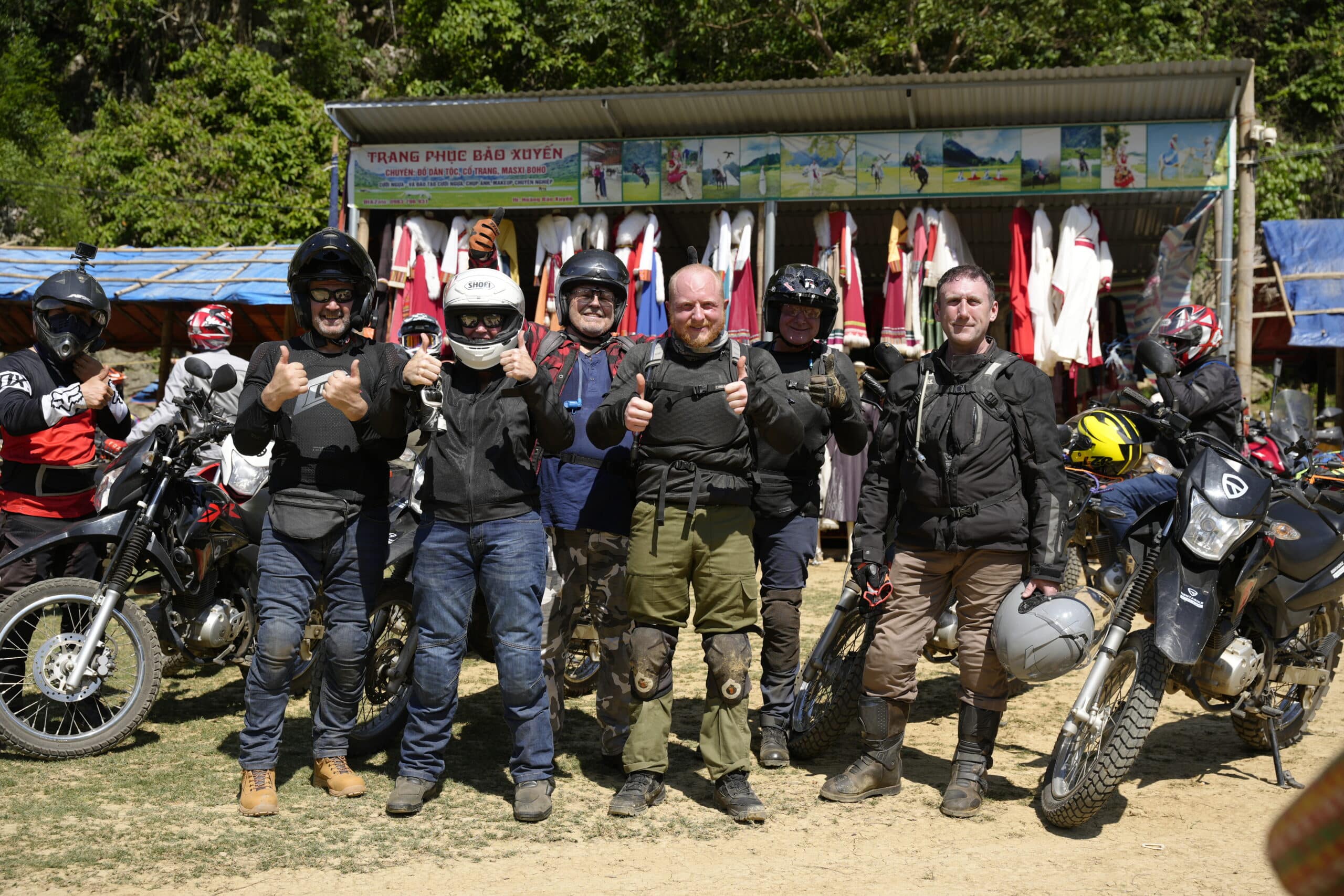
Someone planning a ten-day motorcycle tour in northern Vietnam may assume that all ten days can be spent riding around Ha Giang, Cao Bang, Sa Pa, Mu Cang Chai or Ba Be. In reality, Hanoi still has to be ridden out of and, unless you finish elsewhere, ridden back into.
That normally uses a meaningful part of at least one day at each end of the trip. It does not mean those days are wasted, but they must be designed properly. You can ride a long distance immediately, take two easier days to settle into the motorcycle and the traffic, or use a different plan in each direction.
What Does “Getting Out of Hanoi” Really Mean?
Crossing Hanoi’s administrative boundary is not the same as reaching good touring roads. From a rider’s point of view, you are not really “out” when a sign tells you that you have left the city. You are out when dense development, industrial traffic and repeated junctions begin to give way to smaller roads, open countryside, villages and mountains.
The time needed depends on the direction. A tour heading southwest towards Mai Chau can reach a good first-night destination in roughly 140–150 km. Riders heading northeast can use Bắc Sơn, roughly 150–160 km from Hanoi, as an easier first night before continuing towards Lạng Sơn, Thất Khê, Cao Bằng or Bản Giốc.
Ba Be, to the north and northeast, is around 200–220 km depending on the route and already represents a full day for many riders. Thất Khê is also a more testing first-day destination at roughly 200–220 km, depending on the route, but it positions you well for the eastern side of Cao Bằng. Ha Giang City is around 300 km by the direct route and should be regarded as a serious transit day, especially at the beginning of a trip.
Our How to Get Out of Hanoi by Motorcycle guide explains the actual exit roads in each direction. This article deals with the other half of the problem: how much of your itinerary to allocate to the journey and how hard the first and final days should be.
Why 150 km near Hanoi can feel like a long ride
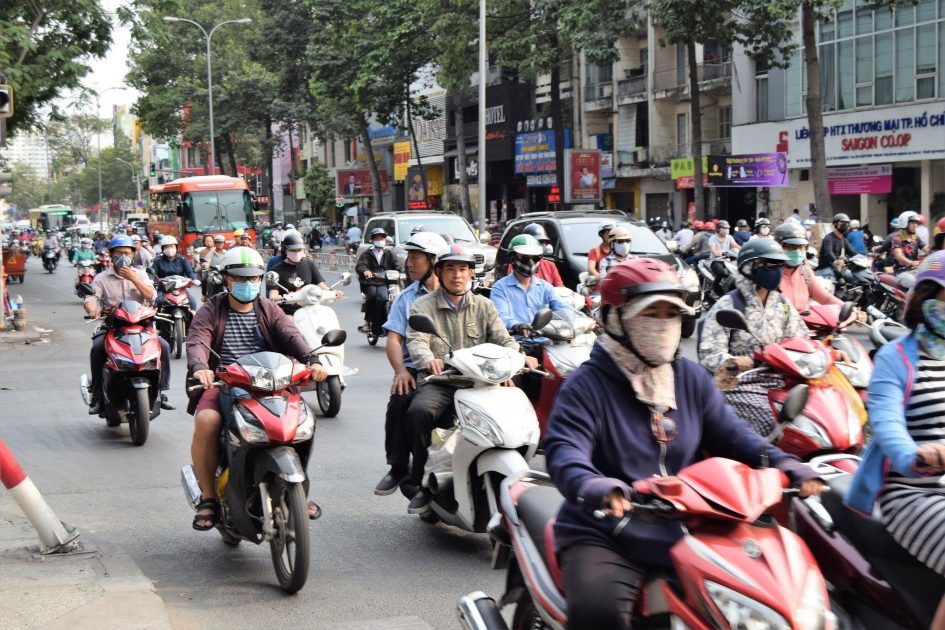
Distance alone is a poor way to judge the first day out of Hanoi. The opening kilometres can include traffic lights, buses, trucks, industrial areas, heat and frequent navigation decisions, so even a flat paved road can demand continuous concentration.
Once you are clear of the city, the riding may become quieter but more technical. That is why the distances in this article are only rough planning guides rather than targets. For the broader question of realistic daily distance in Vietnam, see How Far Can You REALLY Ride in One Day in Vietnam?
| Direction from Hanoi | Example destination | Approximate distance | How to treat it |
|---|---|---|---|
| Southwest | Mai Chau | 140-150km | Sensible first day for many riders |
| Northeast | Bac Son | 150-160km | Easier first day into the northeast |
| North/Northeast | Ba Be Lake | About 200km | Full first day with stops |
| Northeast | That Khe | 200-220km | Longer more testing first day |
| North | Ha Giang City | About 300km | Long, demanding transit day |
Should You Take One Day or Two to Get Out?
There are two valid ways to begin a northern Vietnam motorcycle tour. The right choice depends on experience, arrival time, weather, group size, motorcycle, luggage and the riding planned for the following day.
Option 1: One big day out of Hanoi
A long first day can move you 200–300 km from Hanoi and place you directly in or near the main touring region. It preserves more itinerary days for the mountains and can work well for an experienced rider who knows Vietnam, has collected the motorcycle in advance and can leave early.
The difficulty is that several unfamiliar tasks arrive at once. You may be learning the clutch and brakes of a new motorcycle, securing unfamiliar luggage, navigating Vietnamese junctions and adapting to local overtaking behaviour. You may also be jet-lagged or starting later than planned because the motorcycle briefing, paperwork and packing took longer than expected.
The Hanoi to Ha Giang motorcycle route shows the extreme version of this choice. The direct journey is around 300 km and involves roughly six hours of moving time before normal breaks and delays. Motorcycles cannot use Vietnam’s expressways to turn it into a simple high-speed motorway transfer. It is possible in one day, but possible and sensible are not always the same thing.
Option 2: Use two progressive days
The alternative is to treat Day 1 as a settling-in ride. Cover perhaps 100–160 km, stop when necessary and arrive with enough daylight to check the motorcycle, shower, eat and prepare calmly for the next day. Day 2 can then take you further into the mountains on a longer or more technical route. In the northeast, Hanoi to Bắc Sơn followed by Bắc Sơn to Thất Khê is a good example: two manageable days replace one more testing push, while both days still move the tour towards Cao Bằng and Bản Giốc.
This gives you time to understand the motorcycle, the traffic, local junctions, navigation and your real travelling speed. It also reveals practical details: whether the luggage moves, how often the group stops, how quickly fuel is used and whether the planned daily distances are realistic.
For someone riding in Vietnam for the first time, this is often a better use of a day than attempting an immediate 250–300 km transfer. It does not necessarily make the whole tour feel slower. It can make every day that follows safer, more comfortable and more enjoyable.
A shorter start deserves even stronger consideration if you have just arrived on a long-haul flight, are riding two-up, have bulky luggage, are travelling in a large group, expect wet weather or have a difficult mountain day planned next. The least experienced rider should set the pace for a group, not the most confident one.
Two Days Out and One Day Back: The Asymmetric Plan
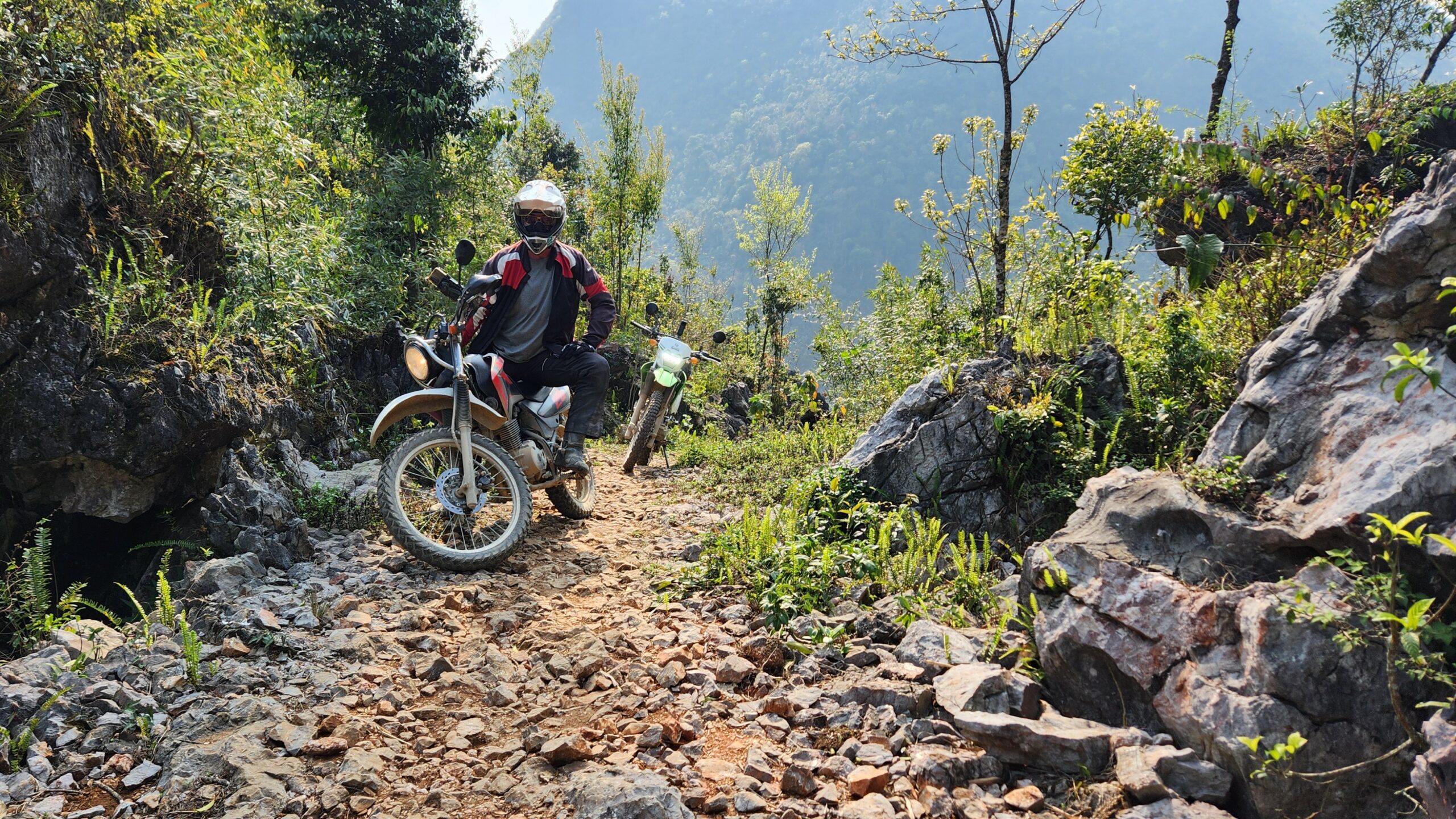
The outward and return journeys do not have to be mirror images. In fact, for many first-time visitors we prefer two progressive days away from Hanoi and one longer day back.
On the first morning, the rider has little familiarity with the motorcycle or Vietnamese traffic. Navigation is unfamiliar, the luggage system is untested and even routine road behaviour requires thought. The mental workload is high before the tour reaches the mountains.
By the final days, that same rider has spent a week or more on the motorcycle. Controls, luggage, fuel stops and navigation have become routine. Vietnamese traffic is more predictable because the rider has learned how vehicles merge, overtake and use the horn. A longer return can therefore be more realistic at the end than the same distance would have been on Day 1.
| Stage of trip | Bike familiarity | Traffic familiarity | Sensible approach |
|---|---|---|---|
| First morning | Low | Low | Shorter acclimatisation ride |
| Day 2 | Improving | Improving | Moderate distance and challenge |
| Middle of tour | High | High | Normal scenic touring days |
| Final days | High | High | Longer transit possible IF needed |
This is not a rule that every rider must follow. It is a useful way of matching distance to developing confidence. If we were planning a ten-day first motorcycle tour in northern Vietnam, we would often rather use two days to get comfortably into the country and make the return longer once the rider is settled.
What a ten-day tour really contains
A ten-day Hanoi-to-Hanoi itinerary is not normally ten unrestricted days in the mountains. It includes the connection between Hanoi and the touring region in both directions. Recognising that at the beginning produces a more honest and comfortable route.
| Day | Fast model | Progressive model |
|---|---|---|
| 1 | Long ride to the main touring area | Easy acclimatisation ride from Hanoi |
| 2 | Main tour begins | Continue into the main touring region |
| 3-8 | Main tour | Main tour |
| 9 | Main tour or position for Hanoi | Main tour or position for Hanoi |
| 10 | Long return to Hanoi | Longer return with an experienced rider |
The progressive model appears to use more time getting out, but Day 1 can still be part of the holiday. A good road, a relaxed lunch and an early arrival in Mai Chau is a better introduction to Vietnam than an exhausted arrival after dark. In the first case, you arrive fresh, eager for more whereas in the second, you arrive drained, dreading the next day. The 10-Day Due North Motorcycle Tour is also a useful example of how Hanoi connections, daily distance and major northern destinations have to work together across a complete itinerary.
Plan the First and Final Days Properly
A sensible distance can still become a bad day if the timing is wrong. “Collect the bike at 08:00” does not mean “leave Hanoi at 08:00.” The briefing, documents, luggage, protective gear, route setup, fuel and last-minute purchases all take time. Count the touring day from the moment the wheels begin moving.
If a long first day depends on leaving Hanoi very early, arrange the motorcycle, luggage and paperwork the previous afternoon where possible. You can then begin with a known route and a full tank instead of losing the coolest and quietest part of the morning. Our guide to riding early or late in Vietnam explains why daylight, heat, traffic and seasonal conditions should influence the decision.
Do not plan the day around the fastest Google Maps estimate. Use the suggested riding time only as the starting point, then add realistic stops and contingency. Weather, roadworks, market traffic, construction and a simple puncture can all change the schedule. If the plan only works when nothing goes wrong, it is not a good motorcycle-tour plan.
The return to Hanoi deserves equal care. The final 30–50 km may involve heavier traffic, wider junctions and more lane changes just when the rider is tired. Arriving back to Hanoi around the evening rush hour can turn the least interesting part of the tour into the most stressful one. Aim to return earlier, or stop for lunch outside the city and choose the entry time deliberately.
Never plan an international flight for a few hours after the expected end of a substantial motorcycle journey. Weather, road conditions or a mechanical problem can delay the final day, and there should be time to return the motorcycle, deal with luggage and recover. A night in Hanoi after the ride is not wasted time; it is a useful contingency.
A longer day can still make sense when the rider is experienced, the weather is suitable, the route is straightforward and the motorcycle is ready the evening before. A shorter plan is wiser when riders are new to Asia, travelling two-up, carrying heavy luggage, riding in poor weather or facing a challenging route the following day. A Honda CB500X on a straightforward highway and an XR150L on small mountain roads also create very different days, so a distance should never be judged without the motorcycle and road type.
Make the Transit Day Part of the Tour
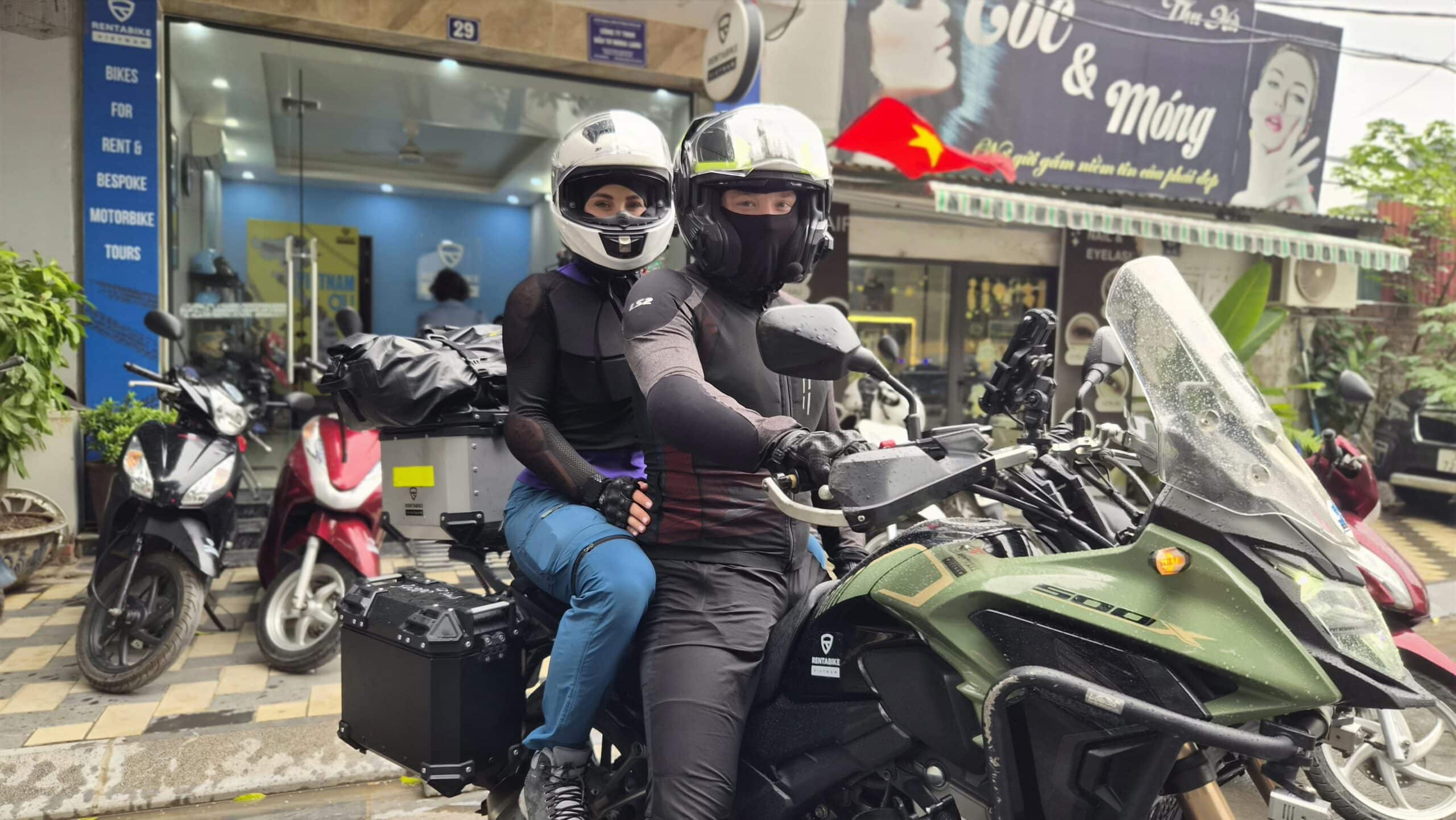
Getting away from Hanoi does not have to mean sacrificing a day to unpleasant roads. The first destination and the route chosen can turn necessary travel into worthwhile touring.
Mai Chau is a good example. The direct journey is manageable for many riders, but quieter roads, Black River sections and local detours can make the ride itself part of the experience. See our Hanoi to Mai Chau motorcycle map when planning a gentler start towards the northwest.
Ba Be is farther and should be treated as a fuller day, but it gives access to the western side of the northeast and creates a natural stepping stone towards Cao Bang. The Hanoi to Ba Be motorcycle route helps you judge the distance and decide whether Ba Be should be your first night or your second.
Bắc Sơn and Thất Khê create a separate route into the eastern northeast. Bắc Sơn is the easier first-night choice: it is far enough to leave Hanoi behind but short enough to allow a new rider to settle in. From there, a second manageable day can reach Thất Khê and position the tour for Cao Bằng or Bản Giốc. The alternative is to ride directly from Hanoi to Thất Khê in one longer, more demanding day, preserving an extra day deeper in the region. From Thất Khê, continue with our Thất Khê to Bản Giốc motorcycle route.
This northeast example shows the two-day principle particularly well. Hanoi to Bắc Sơn and then onward to Thất Khê gives you two easier days with time to enjoy the changing landscape. Hanoi to Thất Khê in one push is the more testing option for a prepared and experienced rider. Both approaches reach the same corridor; the correct one depends on how much pressure you want to place on the first day.
Ha Giang is possible directly, but we would not automatically make it the first destination for every rider. An intermediate night reduces pressure and means you do not begin the Ha Giang section already tired. Where time is limited, the direct route can be used, but it should be chosen deliberately rather than because a map makes 300 km look easy.
The larger principle is simple: do not just ask how quickly you can reach the famous destination. Ask whether an interesting road, sensible first night and progressive increase in difficulty will create a better tour. Our Northern Vietnam Motorcycle Routes hub can help you compare complete regions and itineraries before choosing the direction of travel.
If you are still deciding on the motorcycle, we can help match the bike to the route, luggage, rider experience and daily distances. Browse our motorcycle rentals in Vietnam, or consider a guided motorcycle tour if you would prefer the daily routes, stops and support to be organised for you.
FAQ
How long does it take to get out of Hanoi by motorcycle?
That depends on the direction and on what you mean by “out.” You can cross the city boundary relatively quickly, but reaching quieter and more enjoyable touring roads may take one or several hours. Use the How to Get Out of Hanoi guide to compare the main exit routes.
Is Hanoi to Ha Giang possible in one day?
Yes. The direct route is about 300 km and requires roughly six hours of moving time, before adding food, fuel and rest stops. It is a long first day and is better suited to an experienced, prepared rider with an early start. See the Hanoi to Ha Giang route map before deciding.
Is Hanoi to Mai Chau a good first motorcycle day?
Generally, yes. At around 140–150 km, Mai Chau gives many riders enough time to become comfortable with the bike and traffic without making the first day an endurance test. Route choice, stops, weather and the actual departure time will still affect the day.
Should I spend my final night outside Hanoi?
It can be a good option if the alternative is an exhausting final day or a return during rush hour. A carefully chosen last night can make the remaining distance shorter and more predictable. However, a confident rider may prefer one longer return after becoming familiar with the motorcycle and local traffic.
How many kilometres should I ride per day in northern Vietnam?
There is no single correct number. Around 150 km may be easy on one route and a complete riding day on another. Road surface, traffic, mountain terrain, stops, weather, group size and rider experience are more useful measures than distance by itself.
Build the Tour Around the Rider, Not the Map
There is nothing automatically wrong with riding 250 or 300 km in a day in Vietnam. The more important question is when that day appears in the tour and whether the rider is ready for it.
For many first-time riders, a shorter Day 1, a moderate Day 2 and a longer return after a week of experience is a better design than forcing the hardest transit onto the first morning. It gives you time to understand the motorcycle and the traffic without surrendering the valuable days in the mountains.
Do not waste your best riding days sitting in traffic, but do not ruin the first one by trying too hard to escape it. Choose the right first night, leave enough contingency for the return and make every necessary kilometre part of the journey.