
Routes
5 Best Roads for a Motorbike Tour in Vietnam
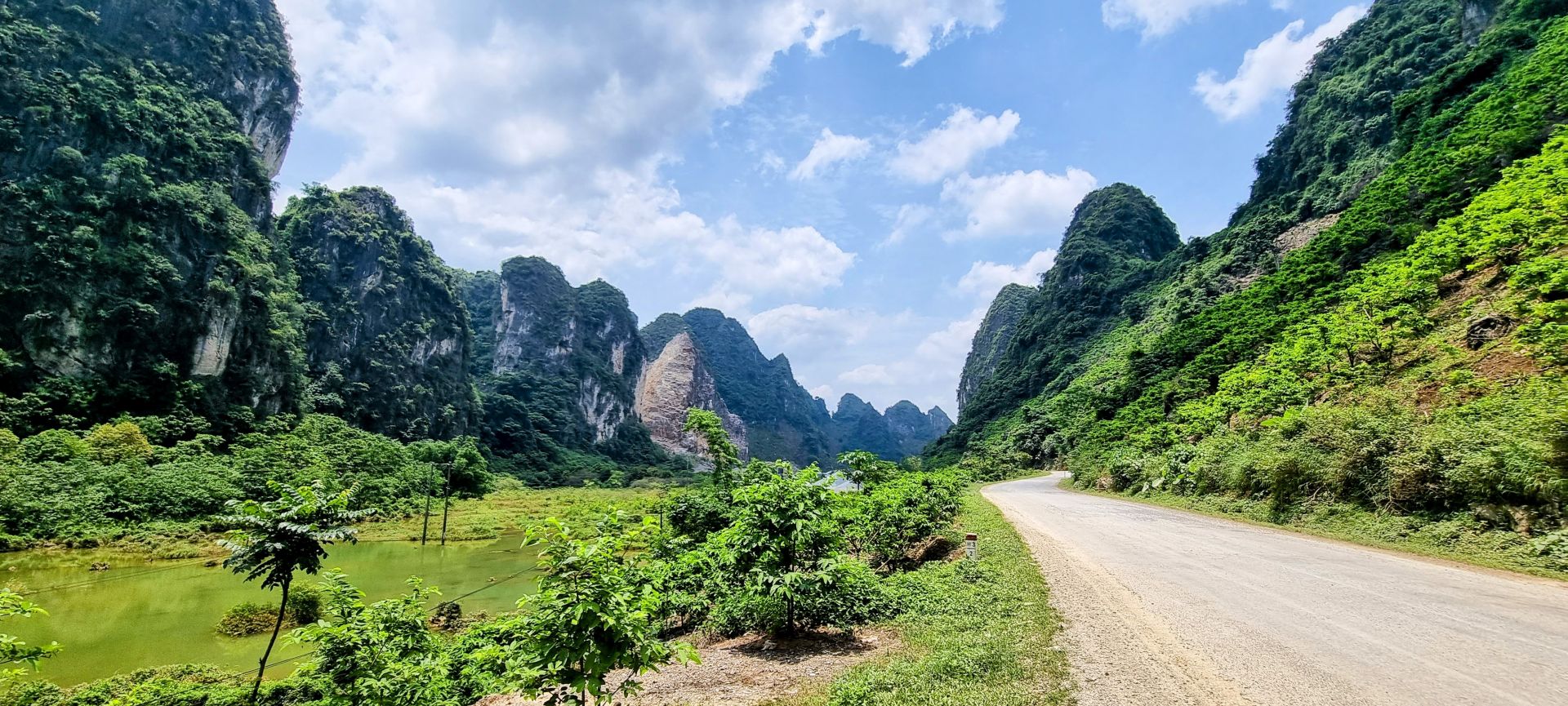
Vietnam has thousands of kilometres of roads worth riding, so choosing only five is inevitably subjective. We have rented motorcycles and run guided tours here for years, and the roads we rate most highly are not always the fastest, highest or most famous. They are the ones that combine enjoyable riding, scenery, interesting places to stop and a reason to keep exploring beyond the obvious tourist route.
This list ranges from a relatively short mountain pass to roads that can form the backbone of a multi-day motorcycle tour. Some work well as part of a single riding day, while others are better treated as one section of a much longer journey through Vietnam.
If you are building your own trip, our Vietnam motorcycle route maps give you individual A-to-B routes, loops and alternatives that can be joined together into a longer itinerary. They are particularly useful once you have chosen the region you want to ride but still need to decide how the individual days should connect.
THE HA GIANG LOOP AND HAPPINESS ROAD
The map above shows where all five roads in this guide sit within Vietnam. Use it as a quick orientation before reading the individual road sections and deciding which areas fit your own trip.
The Ha Giang Loop
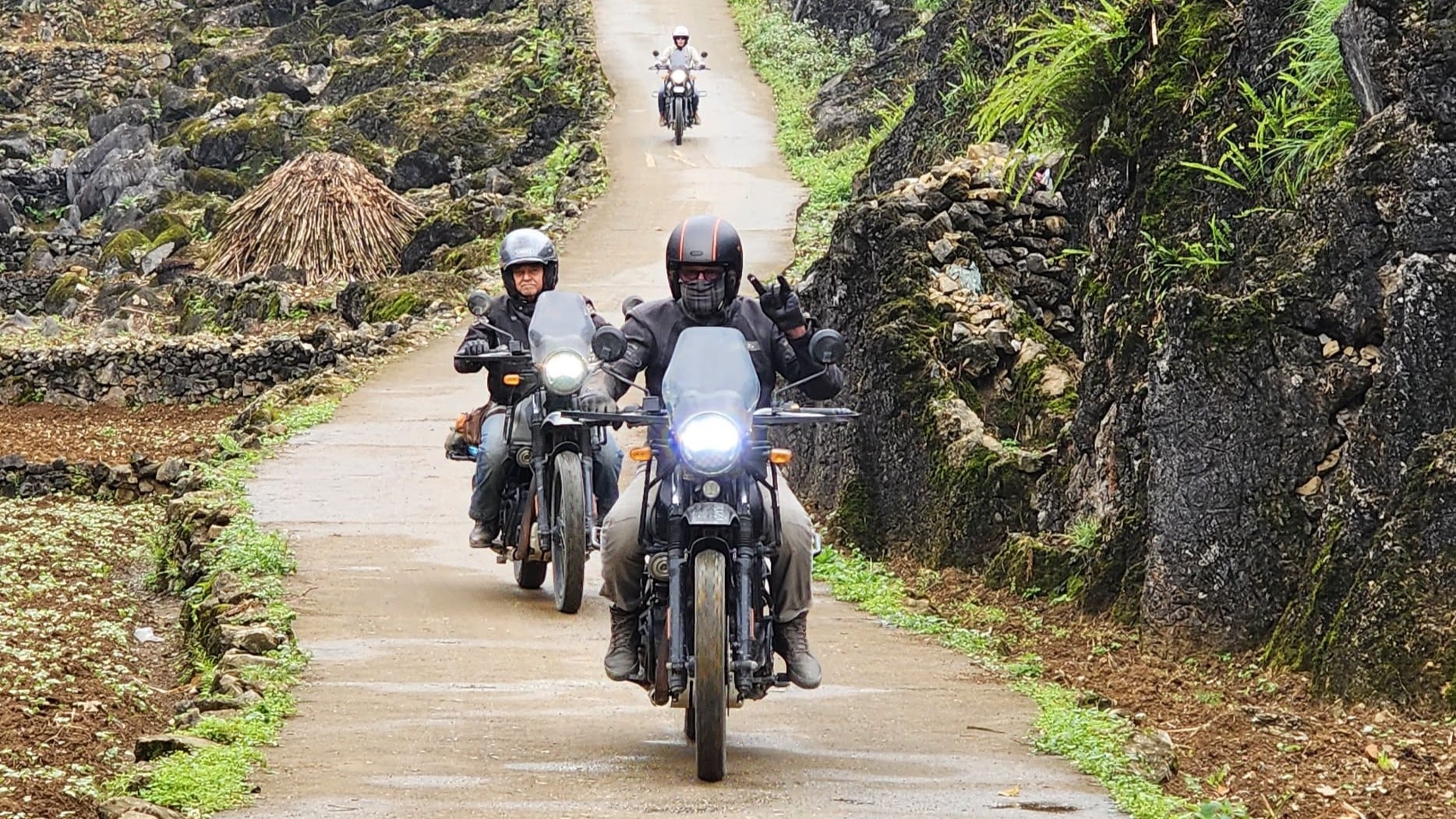
Ha Giang is the obvious place to begin because very few parts of Vietnam put so much mountain riding into such a relatively small area. Roads through Quan Ba to Yen Minh, or Dong Van to Meo Vac combine long climbs, tight bends, mountain villages and the dramatic landscapes that have made the region internationally famous.
What makes Ha Giang good on a motorcycle is not speed. The roads constantly change direction and elevation, and a relatively short distance can involve hairpins, village traffic, roadworks, viewpoints and repeated stops. Riders who plan the day by kilometres alone often underestimate how long it takes to travel through the province.
Happiness Road is the best-known road through the region, running from Ha Giang City to Meo Vac through the highland districts. This is an amazing road to ride and is on our 5-Day Ha Giang Loop route, which offers you the whole Ha Giang experience. Riders with enough time can include Lung Cu, Du Gia, Mau Due and smaller connecting roads, or continue east through Bao Lac towards Cao Bang rather than simply returning to where they started.
We have ridden these roads repeatedly on our own tours, and one of the biggest mistakes we see is trying to compress too much into too few days. Ha Giang becomes much better when you have time to stop for coffee, visit a market, take a smaller road or simply sit at a viewpoint without worrying about reaching the next hotel before dark.
For a deeper look at the region, start with our Ha Giang Loop itinerary and then use the individual route maps to choose the roads between each overnight stop. If you want to understand the road that made the region famous, our Happiness Road guide explains its history, route and riding environment in much more detail.
Riders who would rather explore Northern Vietnam with the route, accommodation and daily logistics already organised can also look at our Great Loop motorcycle tour. It combines Ha Giang with a much wider journey through Northern Vietnam rather than treating the famous loop as an isolated destination.
THE HO CHI MINH ROAD
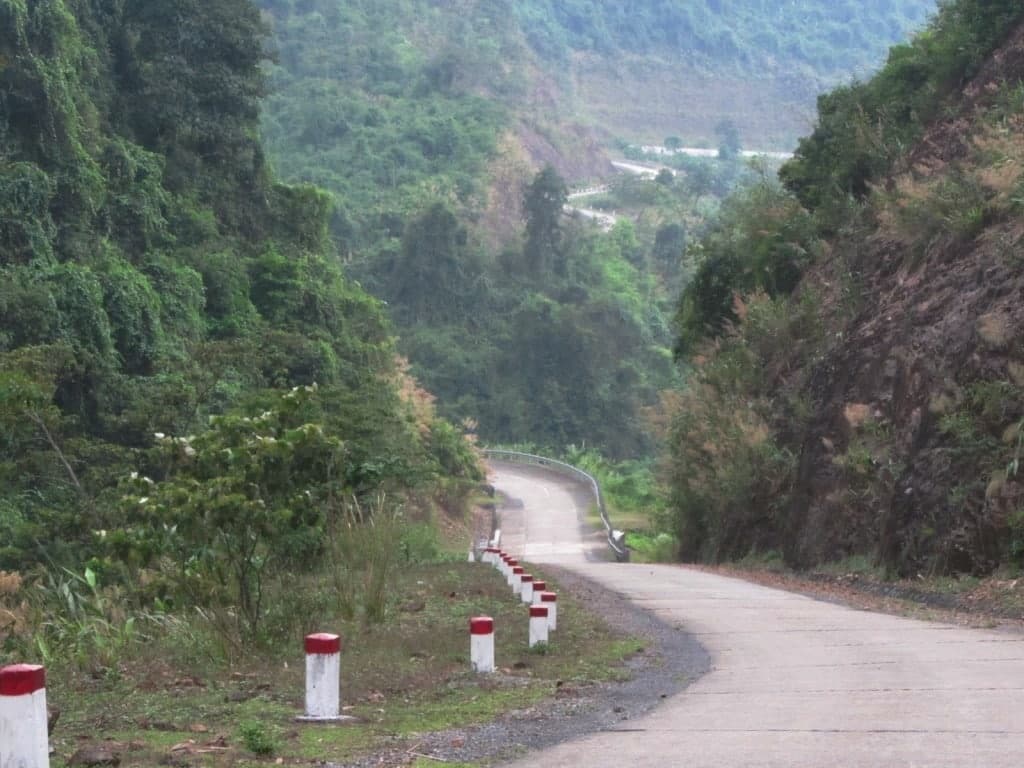
The Ho Chi Minh Road is one of the best roads in Vietnam for riders who actually want to travel through the country rather than complete a short loop. Long sections can be used to connect Northern and Central Vietnam, particularly on journeys between Hanoi, Phong Nha, Khe Sanh, Hue and Danang.
It is worth separating the modern Ho Chi Minh Road from the wartime Ho Chi Minh Trail. The historic trail was a much larger supply network extending beyond Vietnam, while motorcycle travellers today use modern roads inside Vietnam that pass through mountain valleys, forests and rural districts.
We particularly like the Ho Chi Minh Road because it offers an alternative to building a long journey around Highway 1. The riding is generally more interesting, the surroundings are more rural and places such as Phong Nha, Khe Sanh and A Luoi create natural stops along the way.
This is also one of the routes where motorcycle choice starts to matter more. A solo rider travelling relatively light can cover very long distances on an XR150L or XR190L, while a larger touring motorcycle can become attractive if you are carrying a passenger, substantial luggage or expecting several longer paved days. If you are deciding between our two lightweight dual-sport bikes, our Honda XR150L vs XR190L comparison explains where the additional performance of the XR190L actually becomes useful.
The Ho Chi Minh Road also works extremely well for riders who do not want to return to where they started. Our One-Way Motorbike Rental Vietnam Guide explains how a motorcycle can be collected in one AZ Motorbikes location and returned in another, which opens up much more useful route choices for longer journeys.
We also use sections of this road on our Run to the Sun motorcycle tour between Hanoi and Danang. On that trip the Ho Chi Minh Road is not simply a way of getting south; it becomes one of the main reasons to make the journey by motorcycle.
THE HAI VAN PASS
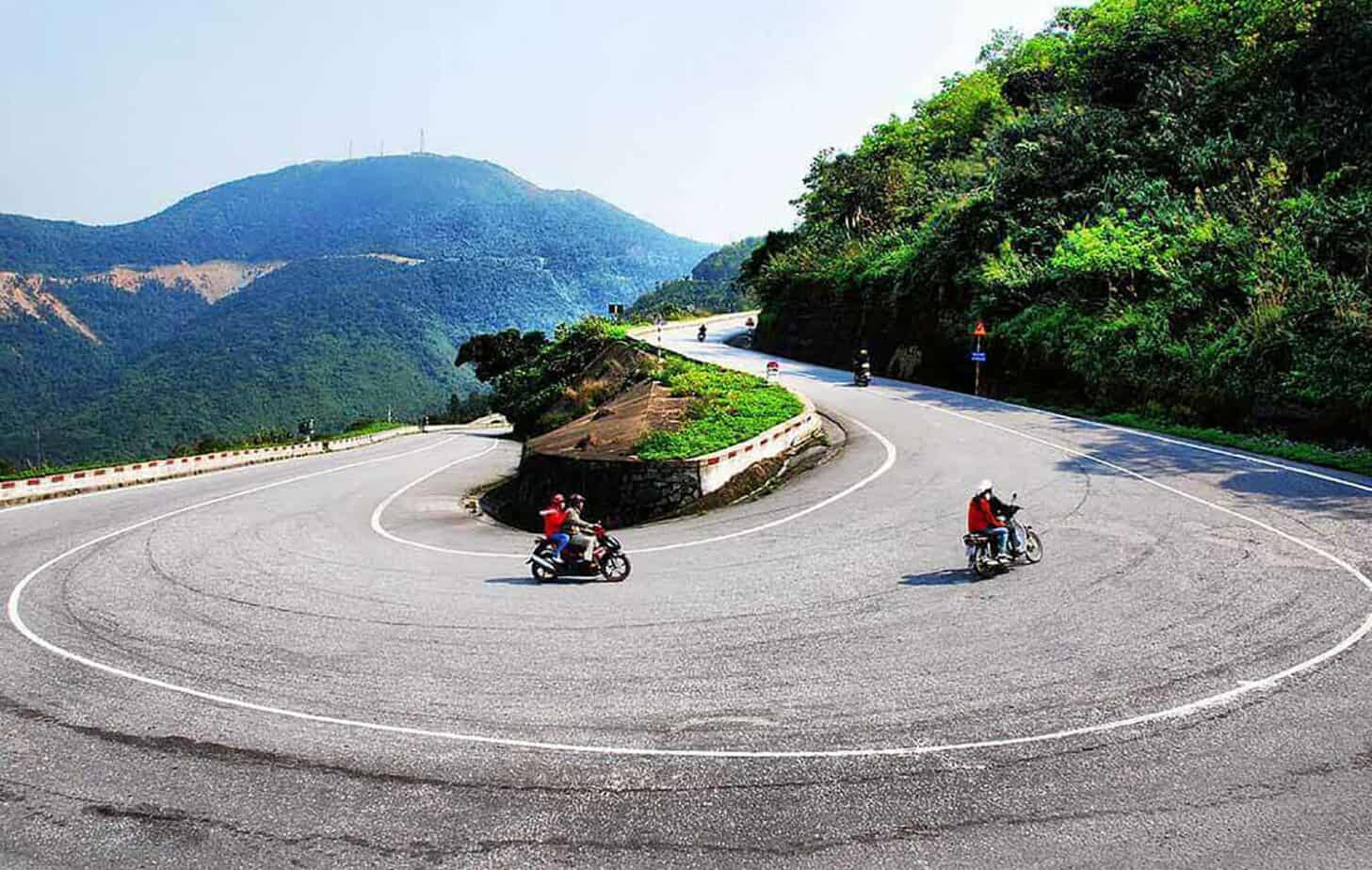
The Hai Van Pass is much shorter than the other roads on this list, but it deserves its place because it packs an excellent section of motorcycle road into a relatively small distance. The pass climbs away from the coast between Hue and Danang, crosses the mountains and gives riders views towards Lang Co, the sea and Central Vietnam.
The riding is quite different from Ha Giang. You are not committing yourself to several days in remote mountains, and an experienced rider can include Hai Van quite easily in a journey between Hue and Danang. That makes it one of the most accessible good motorcycle roads in the country.
Weather has a big influence on the experience. Clear conditions provide the coastal views most people associate with Hai Van, while cloud, fog and heavy rain can dramatically reduce visibility and change the character of the road. Central Vietnam also has a different seasonal pattern from Northern Vietnam, so a nationwide idea of a single Vietnamese dry season is not particularly useful.
If weather is influencing your itinerary, our Vietnam Motorcycle Weather Guide explains how riding conditions change between Northern, Central and Southern Vietnam. Once you have decided Central Vietnam suits your dates, our Hai Van Pass guide is the better place to look at the road itself and what to expect when you ride it.
Hai Van is particularly useful for our customers because it connects naturally with our Danang operation. It can be ridden as part of a local rental, included in a longer Central Vietnam trip or incorporated into a one-way journey travelling down the country.
DA LAT TO NHA TRANG
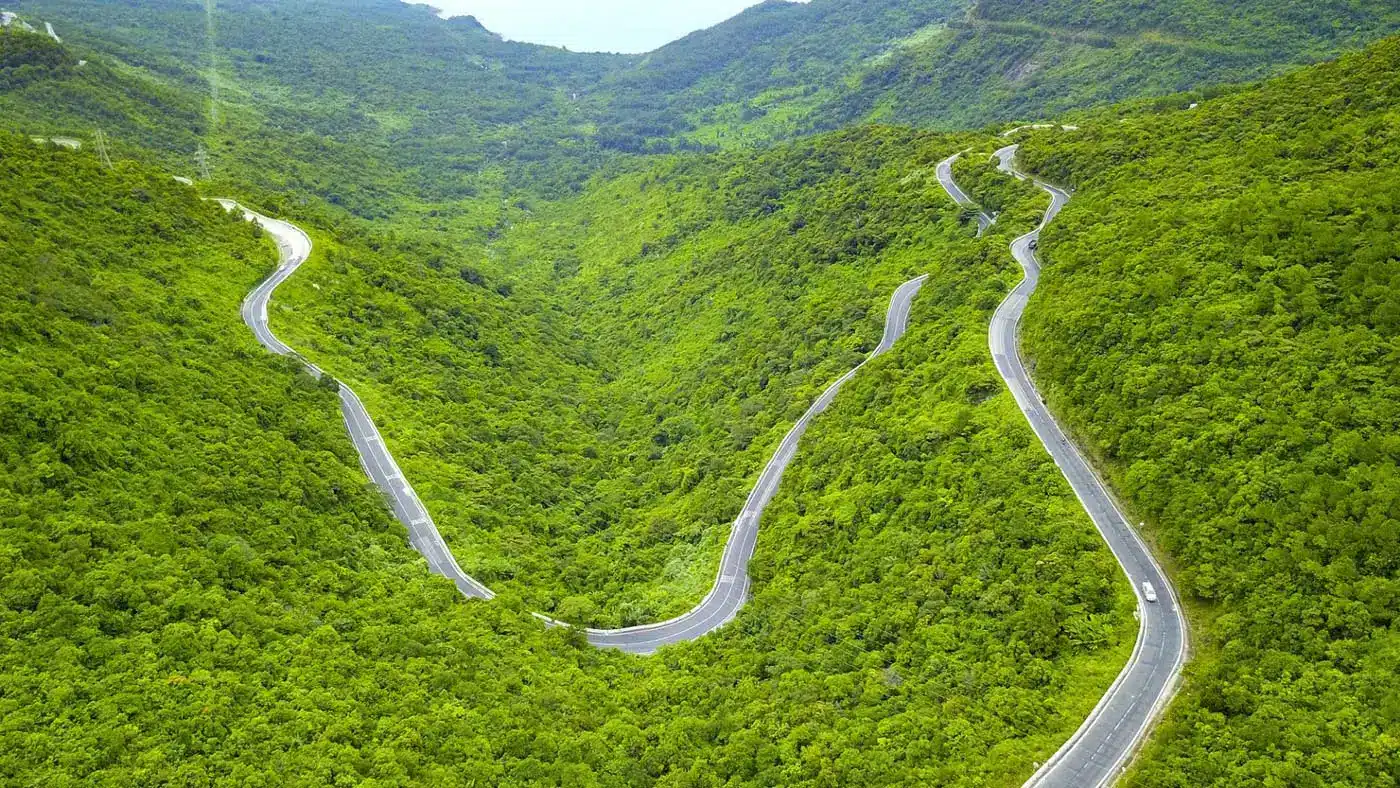
The road between Da Lat and Nha Trang offers a very different kind of motorcycle day from the Northern routes. You begin in the cooler Central Highlands before gradually descending towards the hotter coastal lowlands, with long sections of forest, mountains and bends connecting the two environments.
At roughly 140 kilometres, the distance can make the day look easier on a map than it feels on the motorcycle. The long descent towards the coast means braking, speed management and concentration become important, particularly if the road is wet or you are carrying luggage.
What we like about this road is the feeling of travelling through the country rather than riding purely for a viewpoint. Climate, vegetation and landscape change noticeably during the day, and by the time you reach the coast the environment feels very different from where you started.
You do not need a large adventure motorcycle to enjoy this road. A lightweight dual-sport works perfectly well for a solo rider carrying sensible luggage, while a larger touring motorcycle may be more comfortable if this forms part of a much longer journey.
CAO BANG TO BAN GIOC WATERFALL
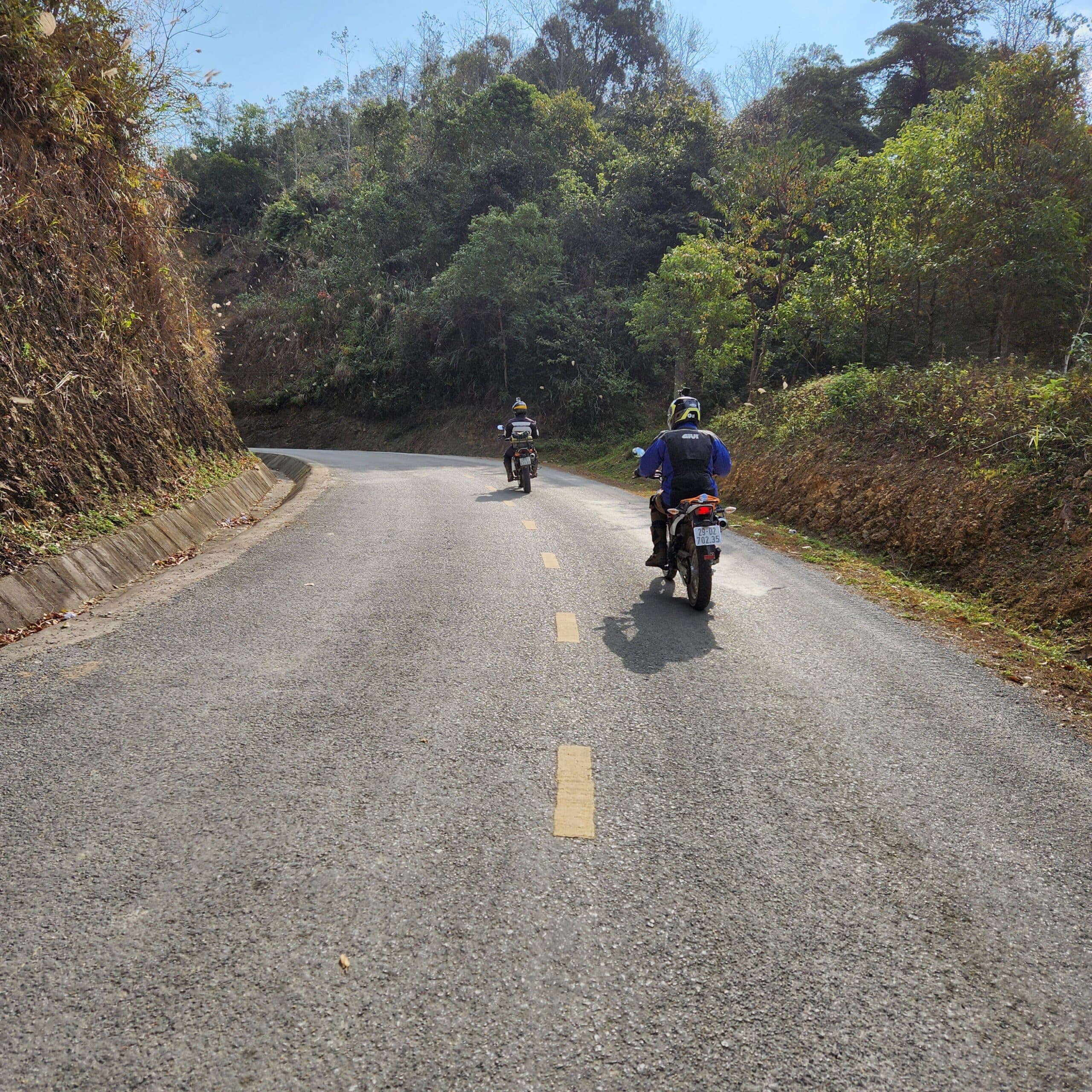
Cao Bang to Ban Gioc is one of the roads we rate more highly now than we did several years ago, largely because the whole Cao Bang region has become one of our favourite areas for motorcycle touring. The province has excellent mountain roads, considerably less tourist traffic than some parts of Ha Giang and enough alternative roads that the journey does not need to be a simple out-and-back.
The direct journey from Cao Bang City to Ban Gioc is around 90 kilometres, but there is much more than one way to ride it. Riders can use the more straightforward DT206 route or explore quieter alternatives through places such as Vinh Quy, Ha Lang, Tra Linh and the border country, turning the journey to the waterfall into a proper riding day.
That is one of the things we particularly like about Cao Bang. Good paved roads can lead into narrow rural roads, limestone valleys and villages within a relatively short distance, while caves, markets, craft villages and the Chinese border give you reasons to stop rather than simply chase a destination.
Ban Gioc may be the headline attraction, but we would not recommend travelling all the way to Cao Bang simply to ride out to the waterfall and return. With more time, the area connects naturally between Pac Bo and Bao Lac, and Bao Lac and Ba Be and can form part of a much larger Northeast Motorcyle Loop.
Our updated How to Get to Ban Gioc Waterfall guide compares the route choices in much greater detail and is the logical next page for anyone planning this ride. If you want to make Ban Gioc one part of a longer journey, our Northeast Vietnam Motorbike Loop shows how Cao Bang, Ban Gioc and Ba Be can be joined into a manageable multi-day route.
FAQ
Which of these roads is best for a first motorcycle trip in Vietnam?
For an experienced motorcyclist who is new to Vietnam, the Hai Van Pass is probably the easiest of these five to add to a normal itinerary because it is relatively short and close to major cities. Ha Giang and Cao Bang require more route planning, while the Ho Chi Minh Road and Da Lat to Nha Trang make more sense as parts of longer journeys.
A rider with very limited motorcycle experience should not choose a road simply because it is popular online. Good bike control and confidence in traffic matter before adding mountain roads, long descents or several full days of riding.
Which is better for riding: Ha Giang or Cao Bang?
Ha Giang gives you some of Vietnam’s most dramatic concentrated mountain scenery, while Cao Bang often has quieter roads and considerably more freedom to build different routes. We like both for different reasons, and neither needs to be treated as the automatic winner.
With enough time, the best option is often not to choose between them at all. Ha Giang and Cao Bang can be connected through Bao Lac and ridden as one much larger Northeast journey.
What motorcycle do I need for these routes?
You do not need a large adventure motorcycle for most of them. Lightweight dual-sport motorcycles such as the Honda XR150L and XR190L are particularly useful on Northern mountain roads, while larger motorcycles become more attractive for heavier luggage, pillion travel and longer paved days.
The condition of the individual motorcycle is at least as important as its engine capacity. Tyres, brakes, chain, suspension and proper preparation matter more than simply choosing the largest motorcycle available.
When is the best time to ride these roads?
There is no single perfect month for all five because weather varies significantly between Northern Vietnam, Central Vietnam and the Central Highlands. Good conditions in Ha Giang do not automatically mean good weather around Hai Van, and the better approach is to match the route to the region and time of year.
Our Vietnam Motorcycle Weather Guide compares the regions in much more detail. Use it before fixing the itinerary rather than choosing the route first and hoping the weather will fit.
Can I combine several of these roads into one motorcycle trip?
Yes, and that is often the best way to use them. Ha Giang and Cao Bang can form part of a long Northeast journey, while the Ho Chi Minh Road and Hai Van Pass fit naturally into a Hanoi to Danang or longer north-to-south trip.
Our Vietnam motorcycle route maps are designed to help with exactly this. Individual A-to-B routes and loops can be connected according to how much time you actually have rather than forcing your journey into one standard itinerary.
FIVE GREAT ROADS, BUT HUNDREDS OF WAYS TO RIDE VIETNAM
These five roads show how varied motorcycle travel in Vietnam can be. Ha Giang gives you concentrated mountain riding, the Ho Chi Minh Road provides the backbone for a long-distance journey, Hai Van offers an accessible coastal pass, Da Lat to Nha Trang connects the highlands with the sea, and Cao Bang to Ban Gioc combines excellent riding with one of the strongest destination areas in the Northeast.
The important thing is not to collect famous road names. Choose roads that suit your riding experience, motorcycle, weather and available time, then leave enough flexibility in the itinerary to enjoy the places between the overnight stops.
If you want to build the trip yourself, begin with our Vietnam motorcycle route maps and then choose a motorcycle that suits the route and load. If you would rather have the route, accommodation and day-to-day logistics organised, look through our Vietnam motorcycle tours and let us handle the planning.