
Routes
HAI VAN PASS BY MOTORBIKE: DANANG–HUE RIDING GUIDE
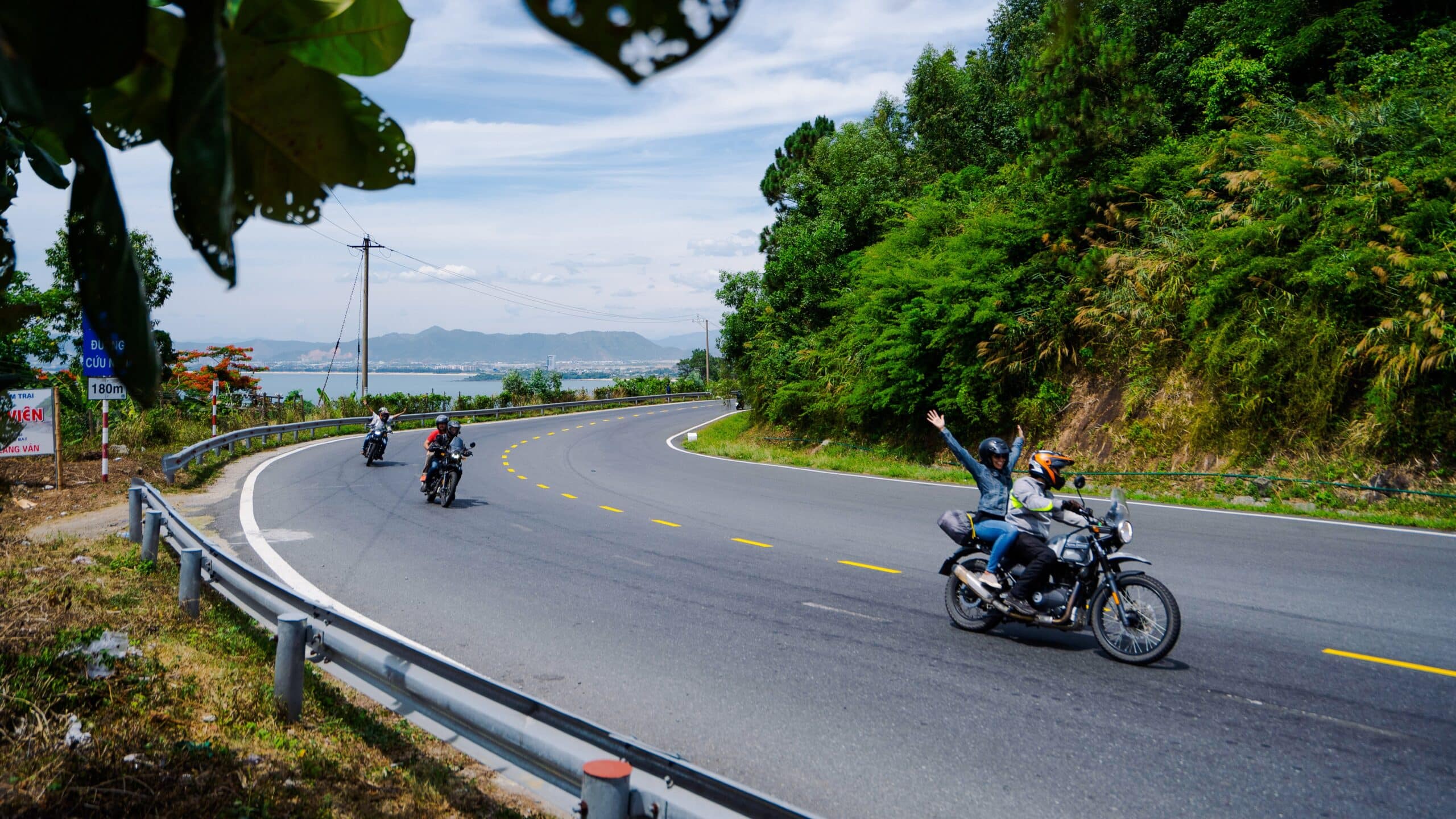
The Hai Van Pass is one of the best short motorcycle rides in Central Vietnam and one of the easiest mountain roads to reach from Danang. Jeremy Clarkson famously described it as “a deserted ribbon of perfection.” The old pass road climbs away from the coast, crosses the ridge between Danang and Hue, then drops towards Lang Co with sea and mountain views appearing throughout the ride.
The pass itself is only around 20–21 kilometres long, so there is no need to turn it into an endurance ride. It works as a short ride to the summit and back, a half-day trip to Lang Co, a full day with Lap An Lagoon, or part of a longer journey to Hue and beyond.
Hai Van means “Sea of Clouds”, and the name is useful to remember as riding advice as well as a description. The ridge forms a real climatic boundary between the Danang and Hue sides. Mist and low cloud can arrive quickly, and it is entirely possible to leave sunny Danang, reach cloud at the summit and find wetter, cooler weather on the Hue side.
If you are staying in Danang and need a motorcycle for the ride, see our Motorbike Rental in Danang page.
Quick Ride Planner
| Route | Allow | Best for |
|---|---|---|
| Danang – Summit – Danang | 2-3hrs | Short ride, uncertain weather or limited time |
| Danang – Lang Co/Lap An – Danang | Half to full day | Best all-round ride with lunch and a proper break |
| Danang – Hai Van – Hue | Full day | Riders continuing north to Hue |
| Hue – QL1 – Lang Co – Hai Van | Full day | More direct southbound ride |
| Hue – QL49B coast – An Bang – Lang Co – Hai Van – Danang | Long full day | Scenic southbound route with villages, lagoon and cultural stops |
WHY THE HAI VAN PASS WORKS SO WELL BY MOTORBIKE
Hai Van is not a huge mountain crossing, and that is part of its appeal. Within a relatively short distance you get a steady climb, repeated bends, changing views, cooler air near the ridge and a long descent towards the coast on the northern side.
Much of the through traffic now uses the tunnel beneath the mountain, so the old pass road is far quieter than it was when it carried most north–south traffic. Do not mistake quieter for empty, though. Fuel tankers and some vehicles carrying petrol or other restricted loads are not allowed through the tunnel and still use the pass. You can therefore meet a very large, slow-moving vehicle on a bend. Give tankers room, be patient behind them and only pass where you have a genuinely clear view.
Half-Day Ride or Part of a Longer Journey
From Danang, you can ride to the summit and return without using an entire day, or continue to Lang Co for lunch and make it a relaxed half-day trip. With more time, add Lap An Lagoon or continue towards Hue.
This flexibility makes Hai Van useful for several kinds of rider. It can be the main event for somebody renting a bike in Danang for a day, or simply one memorable section of a longer Central Vietnam trip.
Who Is the Ride Best For?
You do not need to be an expert adventure rider to enjoy Hai Van Pass. The road is paved and there is no technical off-road riding, so a rider who is already comfortable with normal motorcycle controls, bends, gradients and traffic should find it manageable in good conditions.
It is not a good place to learn to ride for the first time. The combination of downhill braking, tourist traffic, mist, construction vehicles and mountain bends is much easier to enjoy when the basic controls are already automatic.
HOW TO RIDE THE HAI VAN PASS FROM DANANG
The nicest approach from central Danang is along Nguyen Tat Thanh beside Danang Bay towards Nam O and Lien Chieu rather than simply following the fastest main-road option. Much of the ride follows the water and feels noticeably more local than central Danang, with quieter stretches, small cafes and places to stop for a coconut or coffee.
There are also places where you can get down to the bay for a swim. If you have time, this turns the approach into part of the day rather than merely the road used to reach Hai Van. The views back towards the city and Son Tra are particularly good in the morning.
Climbing to the Summit
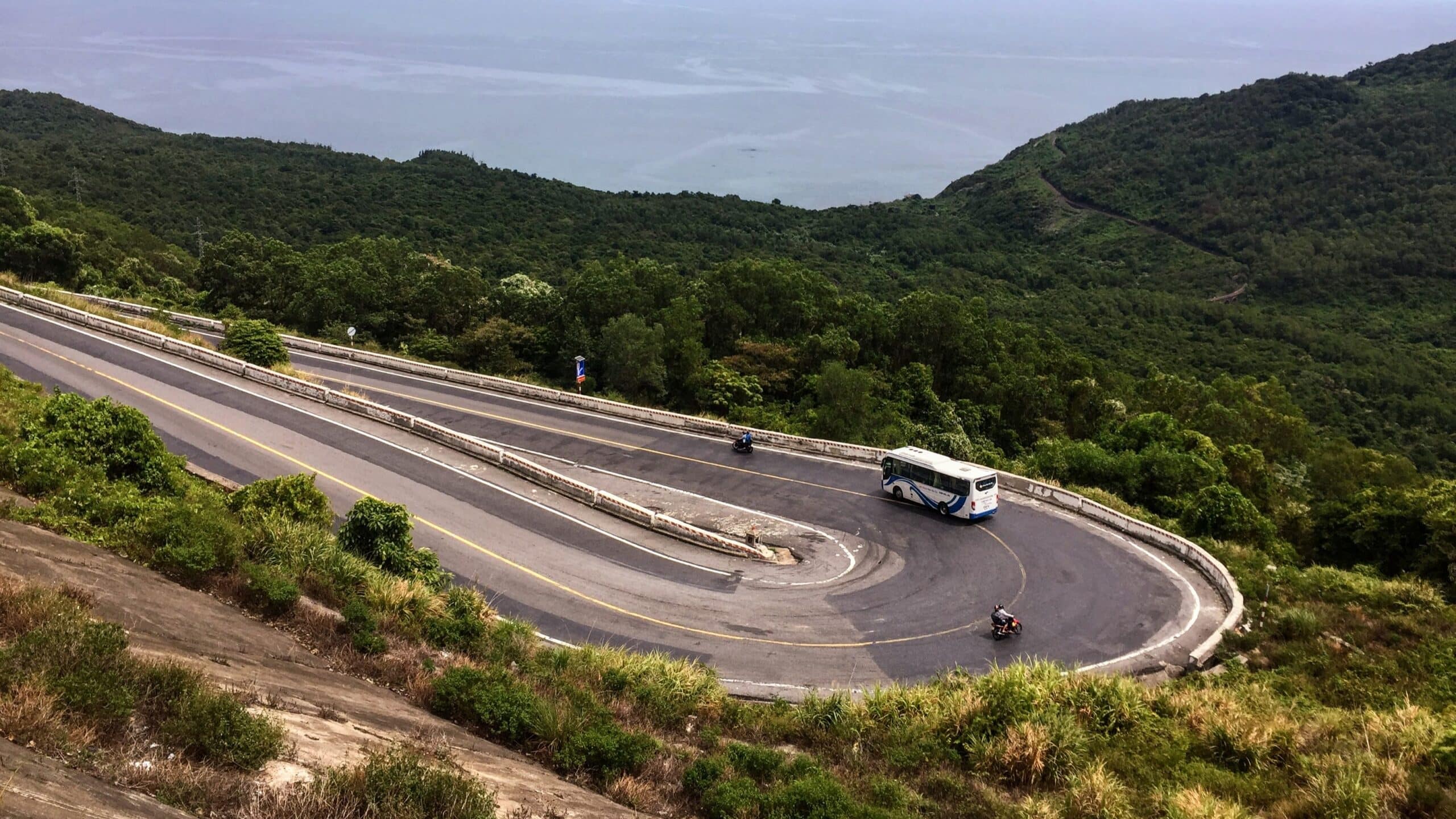
The Danang side contains a sequence of bends and viewpoints as the road gains height. Some corners open into long views while others tighten unexpectedly, so read each bend individually rather than assuming the next one will follow the same shape.
Be careful around informal viewpoints and cafes. Motorcycles, vans and tour vehicles may slow or pull out unexpectedly, and gravel sometimes collects near the road edge where vehicles have been parking.
The Hai Van Summit
At the top of the pass you reach Hai Van Gate and the old fortifications overlooking the route. It is the obvious place for a longer stop and, more importantly, a good place to look at what the weather is doing on the northern side before committing to the descent.
If the weather has closed in, riding to the summit and turning back is not defeat. It is a sensible decision. You have still ridden the southern side, seen the views and experienced the pass. There is no prize for descending into poor visibility simply because that was the original plan.
Descending Towards Lang Co
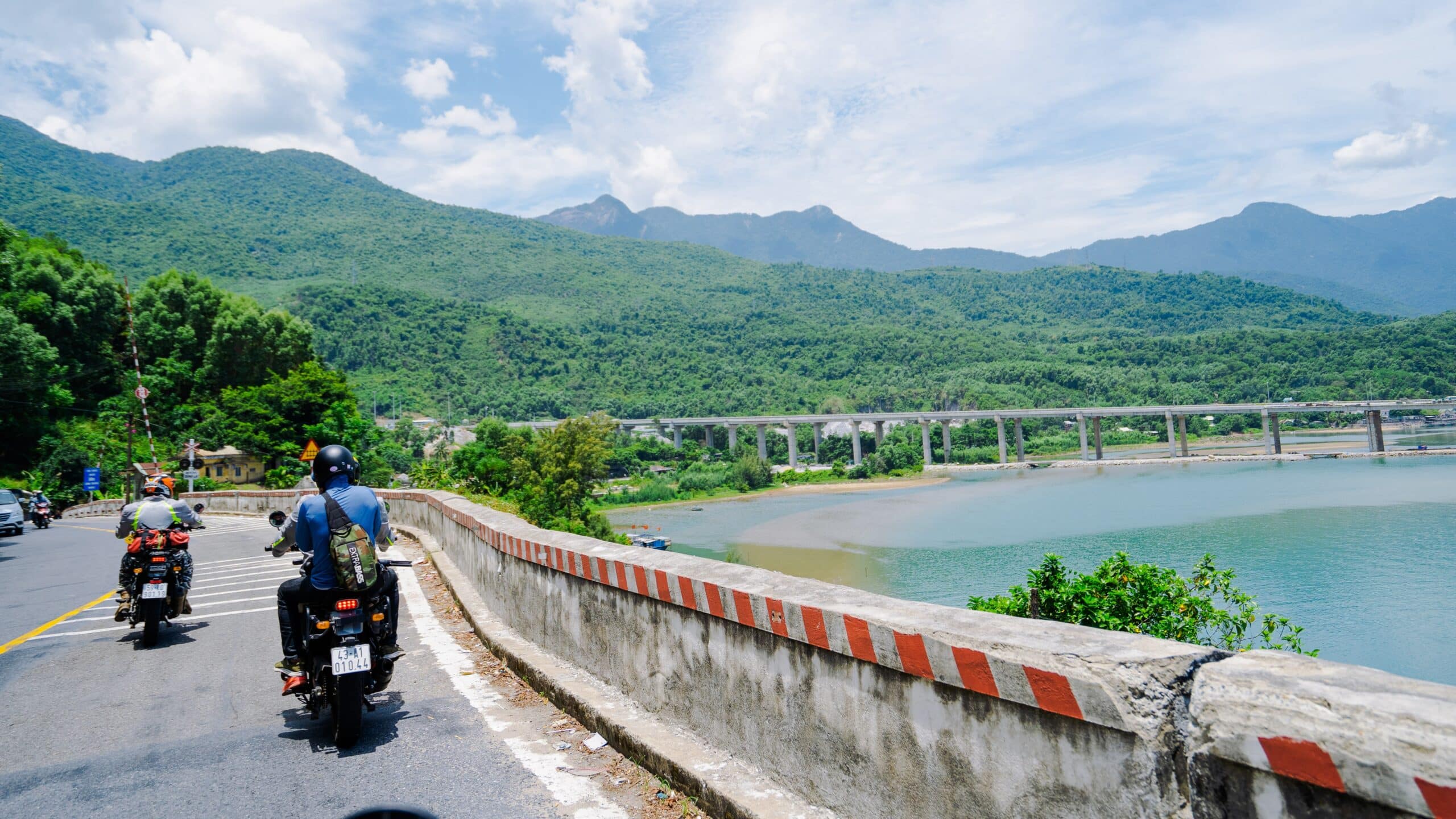
The northern descent gives some of the best views of Lang Co Bay, but it deserves more concentration than the climb. Select a lower gear before the steeper sections and let engine braking control some of the speed rather than dragging the brakes continuously.
Use both brakes smoothly. Be progressive with the front brake rather than grabbing it suddenly, particularly on wet, dirty or gritty surfaces, and try to do harder braking while the motorcycle is upright rather than leaned over. Sudden brake inputs on a downhill bend can cause a skid or quickly upset the bike.
Return to Danang or Continue to Hue
If you are returning to Danang, riding the same road in the opposite direction does not feel repetitive. The views, corners and light present themselves differently southbound.
If you are continuing to Hue, allow the day to develop rather than treating the remaining distance as a quick transfer. Lang Co and Lap An Lagoon are good reasons to stop, and weather north of the ridge can be very different from the conditions you left behind in Danang.
WHERE TO STOP
The southern climb has several places where the road opens out towards Danang Bay. These can be better for a quick photograph than the crowded summit because you can stop briefly and then continue riding.
Do not stop immediately after a blind bend just because the view appears. Use an established pull-off or cafe and get the motorcycle completely clear of moving traffic.
Hai Van Gate
The summit is the best-known stop on the pass. The gate and defensive structures give the ride some historical context, while the ridge gives views towards both Danang and Lang Co when the cloud lifts.
Allow enough time to park properly and walk around. The summit can become busy with tour vans, jeeps and motorcycles, particularly through the middle of the day.
Lang Co: Beach or Lap An Lagoon
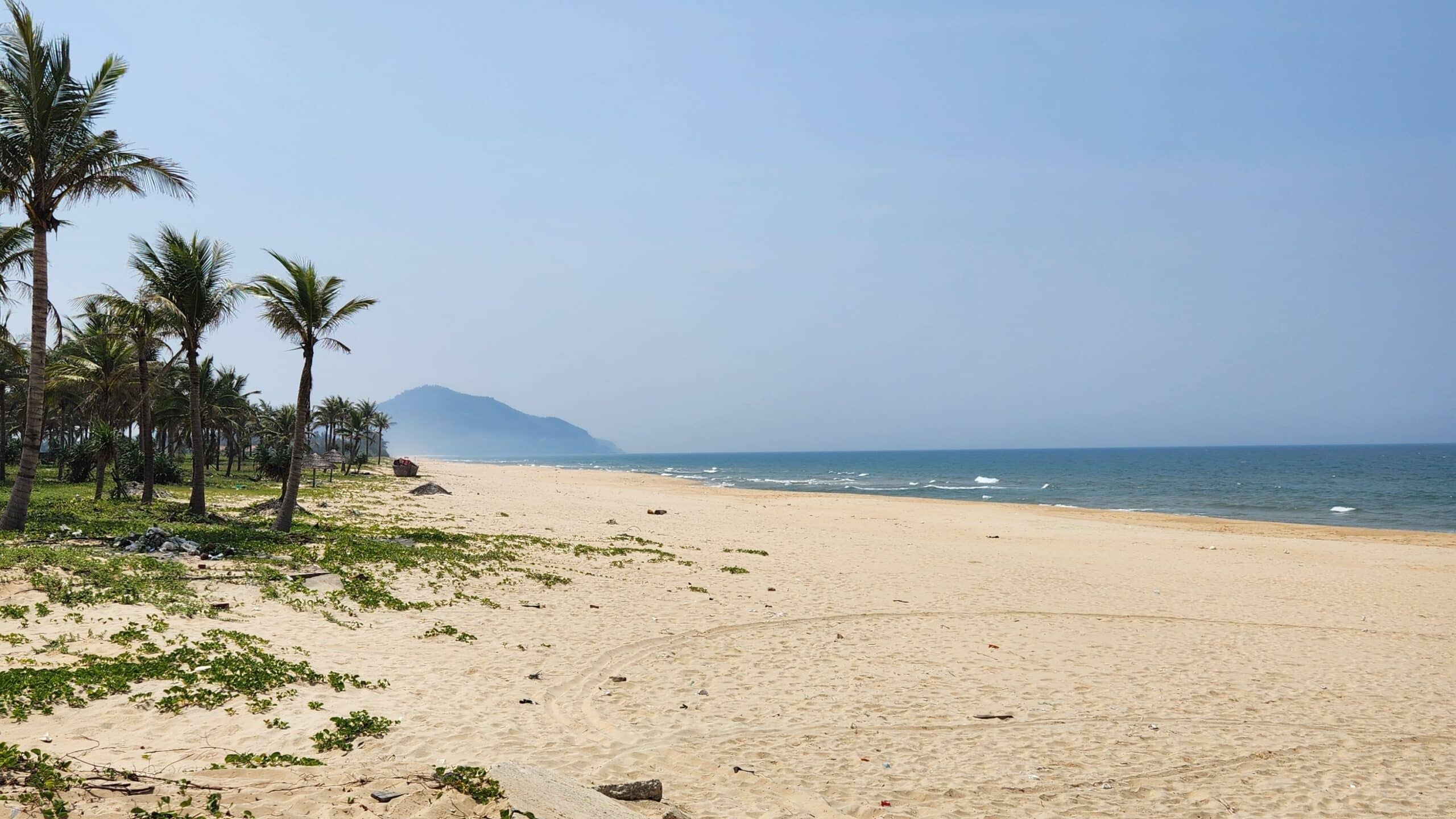
Lang Co is a very good place to stop rather than simply turning around at the bottom of the pass. You can choose a restaurant near the beach or continue towards Lap An Lagoon, where there are places to eat looking across the water and mountains.
Seafood is the obvious choice here: fish, squid, prawns and shellfish are widely available, although there are other dishes if you do not want seafood. In the hotter months, a long lunch and an hour in a hammock can be part of sensible route planning rather than wasted time. Rest through the strongest heat, drink plenty of water and ride back later when the sun has lost some of its force. It reduces fatigue and helps avoid spending the harshest part of the day exposed on the motorcycle.
MOTORCYCLE, WEATHER AND RIDING ADVICE
Hai Van is a genuine climatic boundary. The Bach Ma / Truong Son mountains block and redirect weather systems, and the northern, Hue-facing side is more directly exposed to the northeast monsoon. Historically, the Hue side is more humid and receives considerably more annual rainfall than the Danang side.
For a rider, the practical point is simple: do not check only the Danang forecast. On uncertain days, check both Danang and Hue. Sunshine in Danang does not guarantee clear weather at the summit or on the northern descent.
For more on Vietnam’s regional weather and how it affects motorcycle trips, see our Vietnam motorcycle weather guide.
Mist, Cloud and Rain
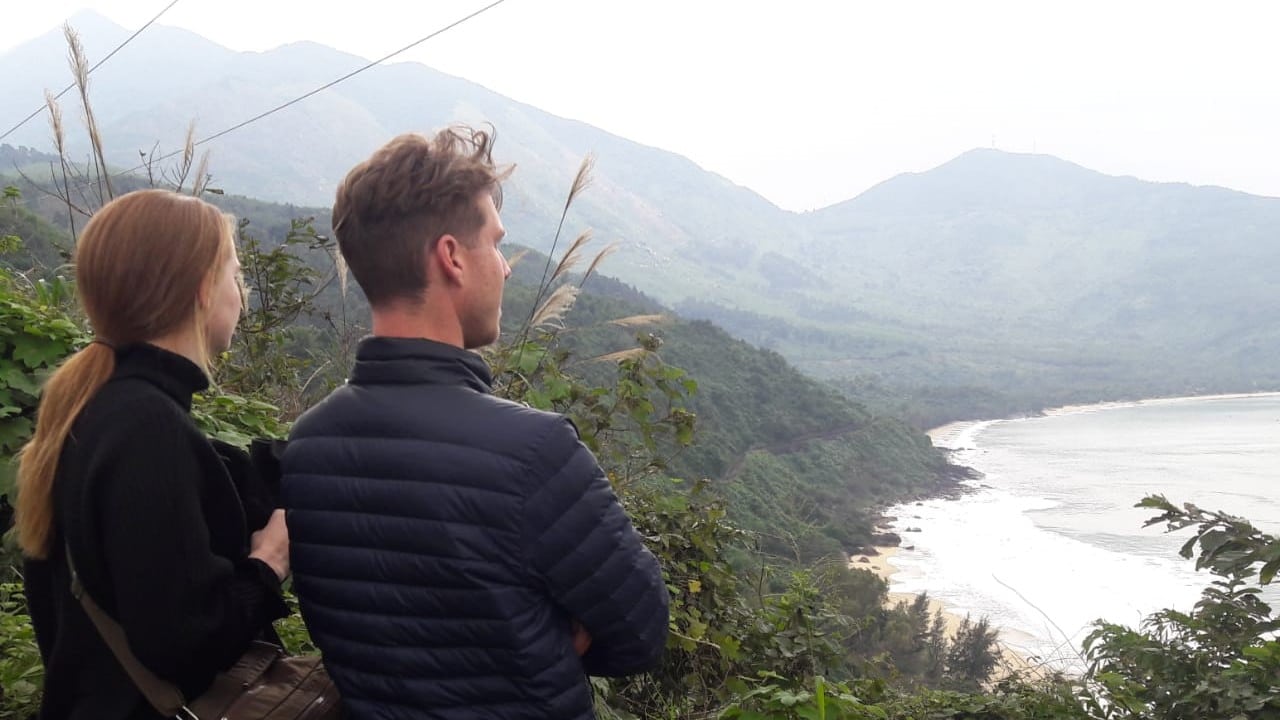
The name “Sea of Clouds” makes sense when you see mist move across the ridge. Visibility can deteriorate surprisingly quickly, and a clear road can become wet and cool within a short distance.
Use low beam in mist and increase the gap to the vehicle ahead. If you cannot comfortably see far enough to read the road and the next bend, slow down or stop somewhere safe and wait. Turning back from the summit when the northern side is buried in cloud is good judgement, not a failed ride.
Pack Waterproofs on Uncertain Days
If the forecast is 50/50, take waterproofs even if Danang looks dry when you leave. A compact motorcycle rain suit takes little space and can make the difference between continuing comfortably and becoming cold and distracted on the mountain.
A rain poncho is common in Vietnam and can also be useful, but avoid anything with loose material that can flap around the controls or get near the wheels. If you carry a poncho, use one that can be secured properly for riding.
Dress for the Crash and for the Sun
Danang can be extremely hot, but heat is not a good reason to ride Hai Van in shorts, flip-flops and a T-shirt. Wear a helmet, gloves, closed footwear and protective clothing that covers your arms and legs. Lightweight or ventilated motorcycle gear is far more comfortable than heavy winter equipment while still giving you useful abrasion protection.
Covering up also protects you from the Central Vietnam sun. The sun can be harsh even when the air feels cooler while you are moving, and riders often do not notice how much exposure they are getting until they stop. Cover your arms and neck just like the locals do, use sunscreen on exposed skin and carry water. The combination of heat, sun and dehydration can reduce concentration long before you feel seriously unwell.
Road Surface and Traffic
The pass is paved and does not normally require an adventure motorcycle. The more relevant hazards are traffic, wet surfaces, dirt from construction, gravel near lay-bys and debris washed onto the road after rain.
Tour vans and coaches still use the pass, and fuel tankers remain an important exception to the general reduction in heavy through traffic. Leave space, expect slow vehicles around blind bends and never let the fact that the road feels quiet encourage you to use the whole lane through a corner.
Which Motorcycle Is Best?
You do not need a large motorcycle for the Hai Van Pass. A Honda Wave, Blade or Future is enough for a solo rider travelling light, while an XR150L or XR190L gives a more comfortable riding position, more suspension travel and greater flexibility if Hai Van is only one part of a longer trip.
For two-up riding, luggage or a longer paved journey through Central Vietnam, a larger touring motorcycle such as the CB500X can make sense for an experienced rider. The best motorcycle is not automatically the biggest one; choose something you are licensed and comfortable to control on tight bends, in traffic and on downhill sections.
For current bike options, see Motorbike Rental in Danang.
PLANNING YOUR HAI VAN PASS RIDE
If time is limited or the weather is uncertain, ride from Danang to the summit, stop at Hai Van Gate and return. This is still a worthwhile journey and gives you the best of the southern climb without committing to the northern descent.
This is also the sensible option when cloud is moving quickly across the ridge. Decide at the summit based on the conditions you can actually see rather than feeling that you have to complete a fixed route.
Lang Co and Lap An Day Ride
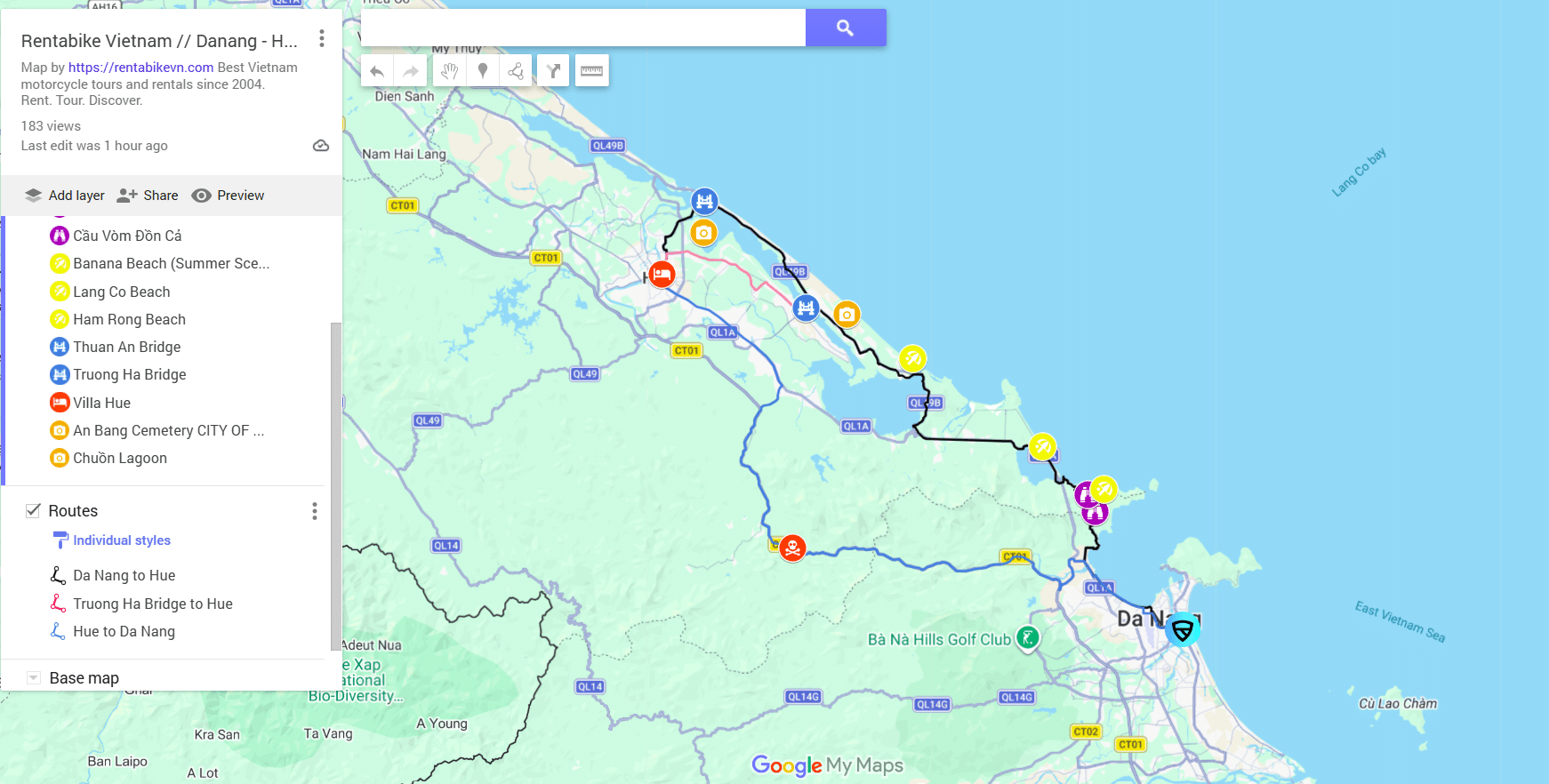
For the classic Danang day ride, cross the pass to Lang Co and decide whether to stop near the beach or continue to Lap An Lagoon. Both are good places for lunch, and allowing several hours for the trip gives you time to stop properly rather than rushing back over the pass.
Danang to Hue by Motorbike
Hai Van is one of the best ways to turn a journey between Danang and Hue into a motorcycle day. Stop at the summit, Lang Co and Lap An Lagoon rather than treating the route simply as transport.
Motorcycles cannot use the Hai Van road tunnel. A motorcycle transport service through the tunnel is available, but touring riders will normally choose the old pass road because the pass itself is one of the main reasons to make this journey by motorcycle.
Contact AZ Motorbikes to confirm motorcycle availability, pickup and return arrangements, included equipment and support for your intended rental.
Hue to Danang: Direct or Coastal Route

Riders leaving Hue have a genuine route choice before they reach Hai Van. The quicker option is QL1 towards Lang Co. If your main aim is to reach the pass and Danang without turning the day into a long sightseeing route, this is the practical choice.
If you have more time, QL49B gives you a much more interesting coastal journey through the country between the sea and the Tam Giang–Cau Hai lagoon system. The route passes fishing communities, aquaculture ponds, beaches and small villages before eventually bringing you back towards Lang Co.
One of the most unusual stops is An Bang Village – City of Ghosts, where the coastal sand is filled with enormous, highly decorated family tombs, many resembling miniature temples or palaces.
Dam Chuon Lagoon is another worthwhile detour close to Hue. For riders continuing south to Danang, it works best as an early stop because it adds time before the longer ride towards Lang Co and Hai Van. If you are using Hue as a base, it is also a very good late-afternoon destination. Stop for a coffee beside the lagoon, stay for dinner, or watch the sunset over the water before riding back into the city.
The return to Hue after dark is not especially difficult, but it deserves more caution. Visibility is reduced and local traffic, pedestrians, bicycles and poorly lit vehicles can be harder to read at night. Take your time rather than treating the ride back into Hue as a fast run.
Do not try to include every stop simply because it is available. For most southbound riders, An Bang plus one lagoon or beach stop is enough before continuing to Lang Co and Hai Van. Keep an eye on the weather and daylight, particularly if you have already spent a long time around the coast.
Weather around Hue can be wetter than Danang, so a grey start does not necessarily mean the entire day will be poor. Carry waterproofs when the forecast is uncertain and check conditions on both sides of the mountain. You may climb from Lang Co in cloud and emerge into much clearer weather overlooking Danang Bay.
FAQ
How long does it take to ride the Hai Van Pass?
The pass itself is only around 20–21 kilometres, but riding it quickly misses much of the point. Allow roughly two to three hours for a relaxed Danang–summit–Danang ride with stops, and at least half a day if you continue to Lang Co. Add more time for Lap An Lagoon or Hue.
Is the Hai Van Pass difficult to ride on a motorbike?
In good weather, the paved road is manageable for a rider who is already comfortable with normal motorcycle controls, bends and downhill braking. It is not an off-road route, but gradients, large vehicles, mist and tighter corners make it a poor place to learn to ride for the first time.
Can motorbikes use the Hai Van Tunnel?
No. Motorcycles cannot use the Hai Van road tunnel. Riders normally use the old pass road, while a motorcycle transport service through the tunnel is available if needed.
What is the best time to ride the Hai Van Pass?
Morning is usually the most practical time because it is cooler and leaves you more daylight if you continue to Lang Co, Lap An or Hue. Check both the Danang and Hue forecasts because the mountain can separate noticeably different weather conditions.
What is the best motorbike for the Hai Van Pass?
A well-maintained small motorcycle is enough for the pass. A Wave, Blade or Future suits a solo rider travelling light, while an XR150L or XR190L is a better all-round choice if you are adding longer routes or carrying luggage. A CB500X can make sense for experienced riders travelling two-up or continuing on a longer paved tour.
CHOOSING THE RIGHT HAI VAN PASS RIDE
Hai Van Pass packs a lot into a short distance: mountain bends, sea views, changing weather, historical stops and the descent towards Lang Co. It is close enough to Danang for a short ride but important enough to form part of a much longer Central Vietnam journey.
Plan the day around the conditions rather than around a fixed target. On a clear day, continue to Lang Co, Lap An or Hue. If cloud closes over the northern side, enjoy the summit and ride back to Danang. Either way, the road itself is worthwhile.
From here, you can choose a motorcycle through Motorbike Rental in Danang, plan another local ride such as Son Tra, continue deeper into the Central Vietnam route network, or join the Run to the Sun motorcycle tour if you would rather have the longer journey organised for you.