
Safety + Legality
Comprehensive List: Traffic Violations & Fines for Motorcyclists (2026)
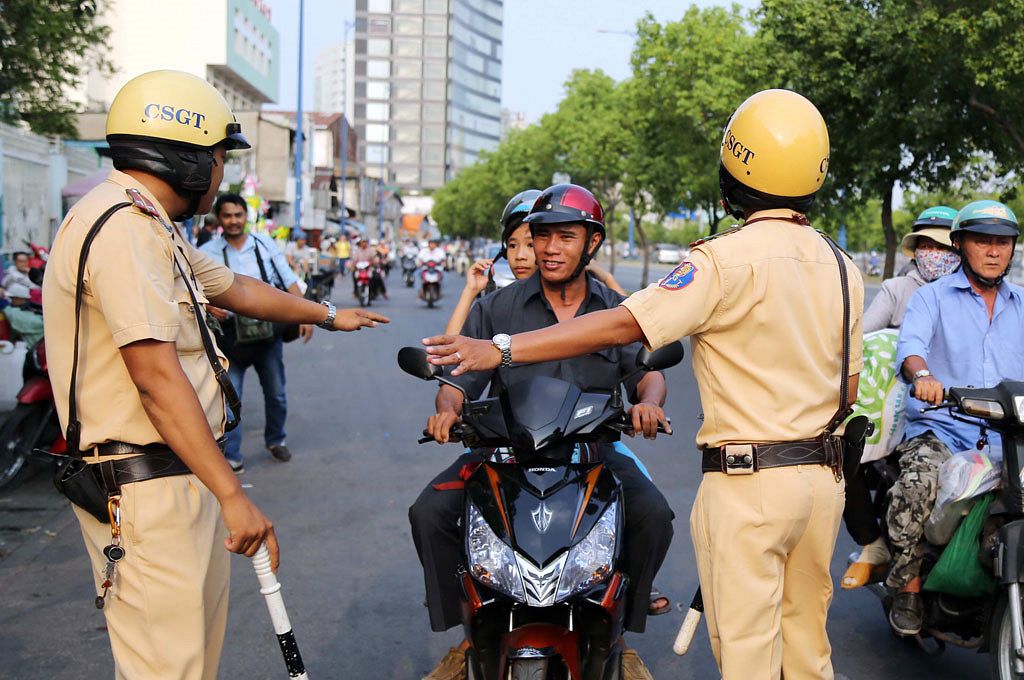
Most visitors do not need a list of every possible motorcycle offence in Vietnam. They need to know the rules that are most likely to cause trouble: licences, traffic lights, helmets, speed, alcohol, wrong-way riding and vehicle documents.
Vietnam’s penalty system changed substantially from 1 January 2025 under Decree 168/2024. That means older fine tables can now be badly out of date, even when the article itself still ranks well in Google.
This page is the broad reference guide. More complicated topics such as alcohol, police procedure and vehicle retention have their own Legal Vault guides.
Common Motorcycle Fines
The table is the core of this page. Keep it concise and limited to offences a foreign rider is realistically likely to need.
| Offence | Current Motorcycle Fine | License Consequence / Note |
|---|---|---|
| No helmet | 400,000–600,000 VND | Rider/passenger rules apply |
| Using a hand held phone while riding | 800,000–1,000,000 VND | 4 points under Vietnam’s licence-point system |
| Failing to obey a traffic signal | 4–6 million VND | Yellow Light Guide |
| Wrong-way riding on a one-way road / where prohibited | 4–6 million VND | 2 points under Vietnam’s licence-point system; stronger rules if an accident occurs |
| Entering a prohibited area/road for that vehicle | 2–3 million VND | 2 points under Vietnam’s licence-point system; check signage and vehicle class |
| Speeding 5 to under 10 km/h over | 400,000–600,000 VND | |
| Speeding 10–20 km/h over | 800,000–1,000,000 VND | |
| Speeding more than 20 km/h over | 6–8 million VND | |
| No valid licence / wrong licence for motorcycle up to 125cc or 11kW | 2–4 million VND | Includes recognised-IDP cases without the matching national licence |
| No valid licence / wrong licence above 125cc or 11kW | 6–8 million VND | Higher motorcycle category |
| No vehicle registration certificate | 2–3 million VND | 2 points under Vietnam’s licence-point system; Blue Card Guide |
| No compulsory CTPL | 200,000–300,000 VND | CTPL Guide |
| Alcohol detected | 2–3m / 6–8m / 8–10m depending level | 2 points under Vietnam’s licence-point system; Zero Alcohol Guide |
Licence and Document Offences
There is a difference between not carrying a document and not having the legal entitlement in the first place. The fine table should preserve that distinction.
For foreign riders, the larger issue is often whether the licence/IDP combination is recognised and covers the motorcycle. Do not turn this section into another IDP guide; link directly to How to Drive Legally.
The motorcycle should also have valid registration and compulsory insurance documentation. The Blue Card guide explains registration documents and the CTPL page explains compulsory liability insurance.
Traffic Signals, Wrong-Way Riding and Speed
Signal offences now carry much more serious penalties than many older guides suggest. The Yellow Light guide explains exactly when the rider should stop and why “yellow means accelerate” is a bad habit.
Wrong-way riding and entering prohibited roads are particularly relevant in cities where one-way systems and restricted routes may not be obvious to a visitor. Riders should pay attention to road signs rather than simply following the motorcycle in front.
Speeding penalties increase by band. Keep the current bands in the table rather than turning this section into several paragraphs of numbers.
Alcohol, Points and Vehicle Retention
Vietnam has a zero-alcohol rule for drivers and riders. The current motorcycle fines depend on the measured alcohol level, and serious cases can also produce licence consequences.
Licence points apply within Vietnam’s current licensing system, while foreign-document situations can be procedurally different. Avoid making a blanket statement that every foreign IDP receives the same point deduction.
A fine and temporary vehicle retention are also not the same thing. If police retain a motorcycle, use the Impound Guide for the recovery process instead of assuming a universal seven-day period.
If Police Stop You
Stay calm, follow lawful instructions and provide the documents requested. Do not make the old article’s suggestion that paying an unofficial “on-the-spot fine” is easier. Bribery is not a legitimate alternative to the formal process.
If language becomes a problem, contact the rental company or a Vietnamese-speaking person who can help. The Police in Vietnam guide covers roadside procedure in more detail.
For a rental motorcycle, tell the rental company if a formal fine, document issue or vehicle-retention problem affects the bike.
Expat Rentals
Live here? Ride like you own it. Our long-term expat rentals are made for those working or living in Vietnam.
✅ Cost-effective monthly rates
✅ Flexible contracts, full maintenance support
✅ Ride like a local: Hanoi, Danang, or Ho Chi Minh City
FAQ
Are motorcycle fines the same for foreigners and Vietnamese riders?
The traffic rule applies to the rider, but licence-point and document procedures can differ depending on what licence the rider holds.
Can police fine me for not carrying my licence?
Yes, and that is different from having no valid entitlement at all. The exact offence and fine should be checked against the current Decree.
What is the fine for no CTPL?
The current motorcycle fine is 200,000–300,000 VND for failing to have the required compulsory civil-liability insurance.
Is a yellow-light offence treated seriously?
Yes. Failing to obey the signal rule carries a substantial motorcycle fine under the current regime. See the dedicated Yellow Light guide.
Can police retain a rental motorcycle?
Temporary retention can be used in some administrative procedures. See the Impound Guide for what happens next.
Avoid the Fines That Matter
The point of the table is to show where the serious risks are, not to create a price list for breaking the rules.
Carry the right documents, ride within your licence entitlement, stop for traffic signals, do not drink and ride, and use the specialist Legal Vault pages when you need the detail behind a particular offence.