
Safety + Legality
Absolute Zero: Navigating Vietnam’s 0% Alcohol Limit
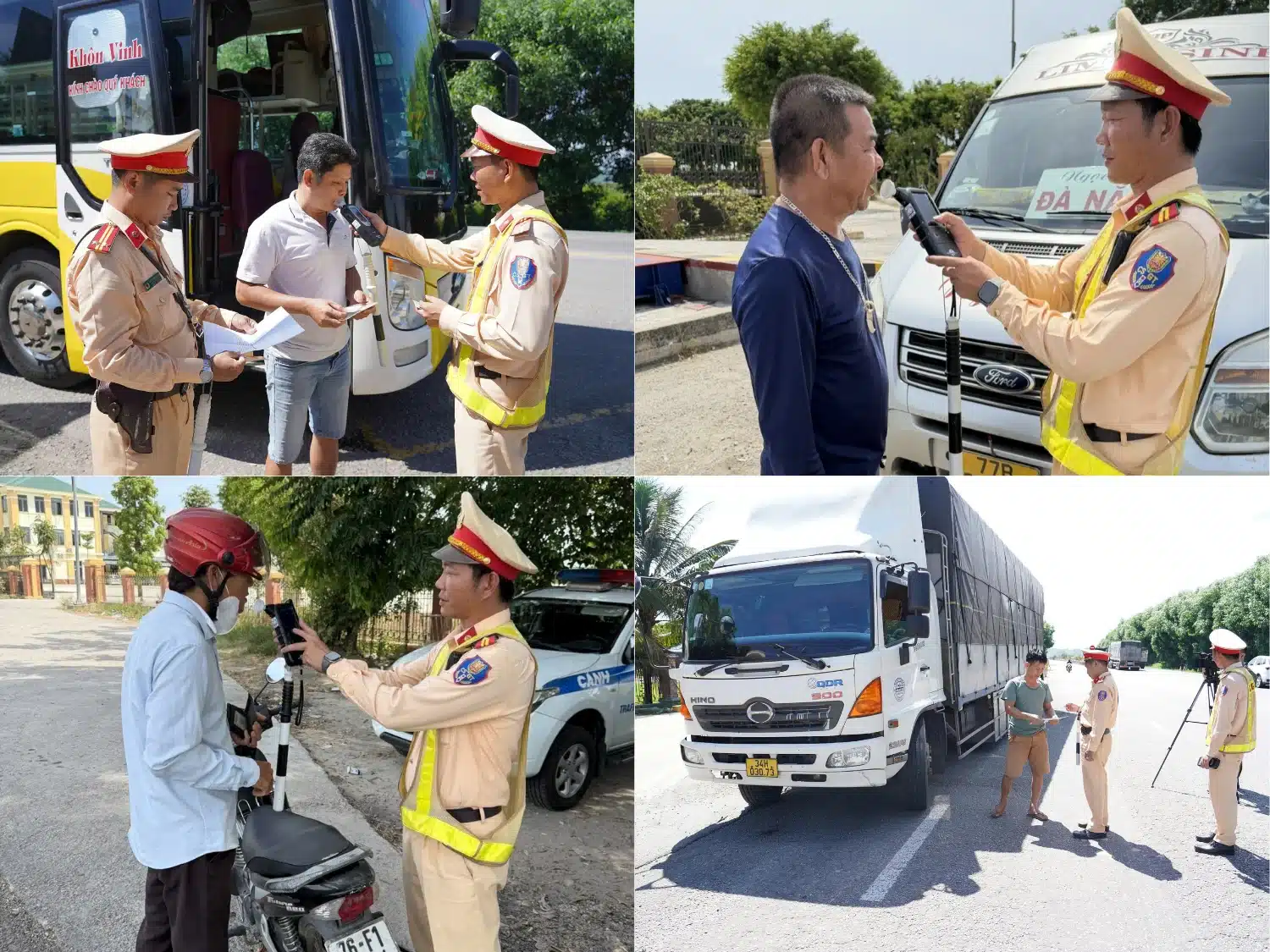
Riding a motorbike through Vietnam is an unmatched experience, but if your evening plans involve a cold Bia Hơi, you need to understand the reality of getting home.
Vietnam operates under a strict, non-negotiable 0.00% Blood Alcohol Concentration (BAC) limit for all drivers and riders. Whether you are on a 50cc scooter, a rented dual-sport, or behind the wheel of a car, having even a trace of alcohol in your system is illegal.
Here is the complete guide to Vietnam’s alcohol traffic laws, how they are enforced, and how to protect yourself, your wallet, and your insurance coverage.
What is the Limit, and Why Does it Exist?
The limit is absolute zero. If a breathalyzer detects any alcohol whatsoever, you will be fined.
The government introduced this hardline approach (originally under Decree 100, now governed by the updated Law on Road Traffic Order and Safety and Decree 168) to combat a historically high rate of alcohol-related road fatalities.
Before these laws, drink driving was culturally normalized. The zero-tolerance policy has radically shifted local habits, dramatically reducing nighttime accidents and fundamentally changing how people commute to dinners and parties.
How is the Law Checked and Enforced?
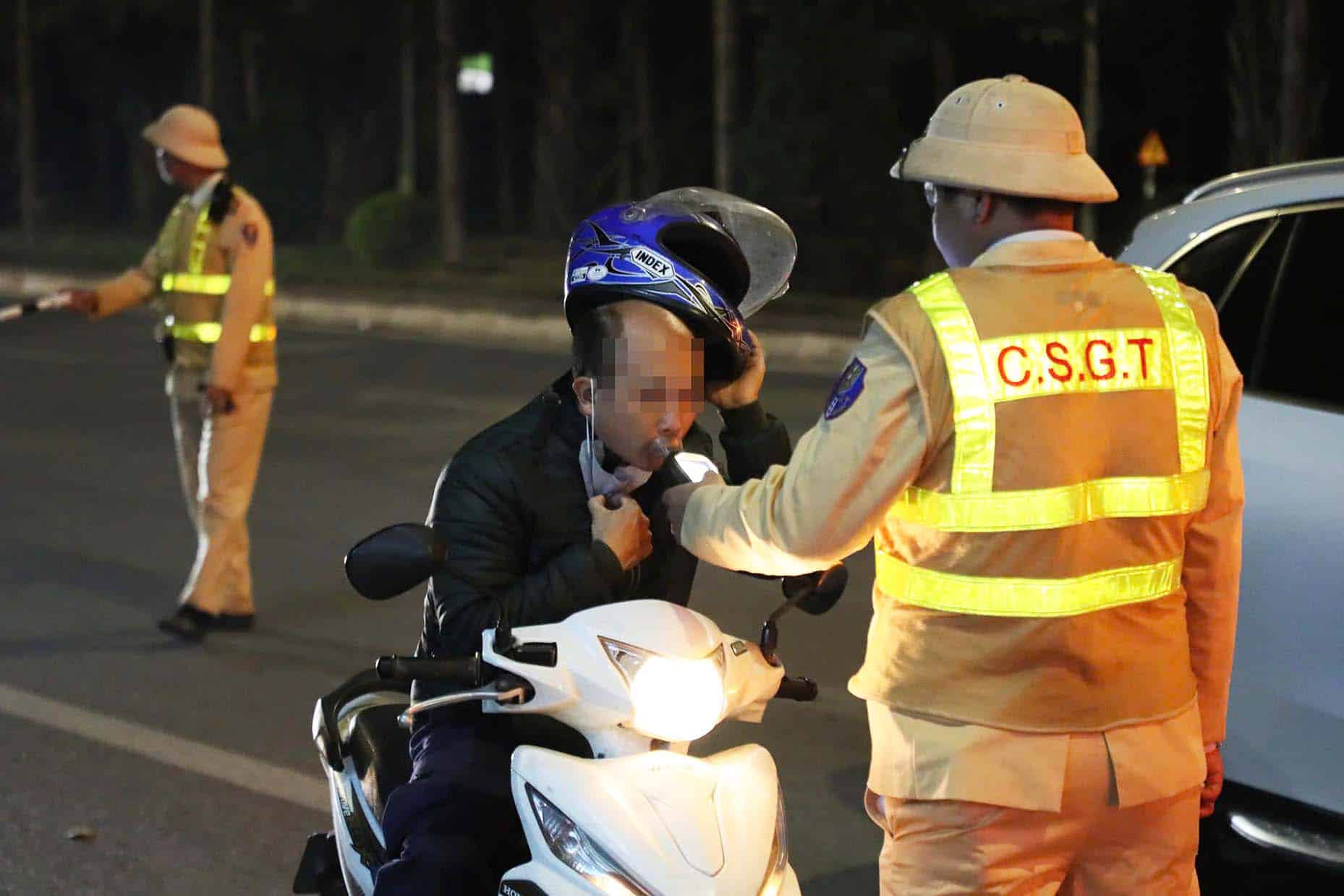
Enforcement is primarily handled by the CSGT (Cảnh sát giao thông – Traffic Police), identifiable by their yellow uniforms.
- The Funnel Checkpoints: Police set up roadblocks on major arteries, intersections, and near nightlife districts. They use orange cones to funnel riders into a single lane.
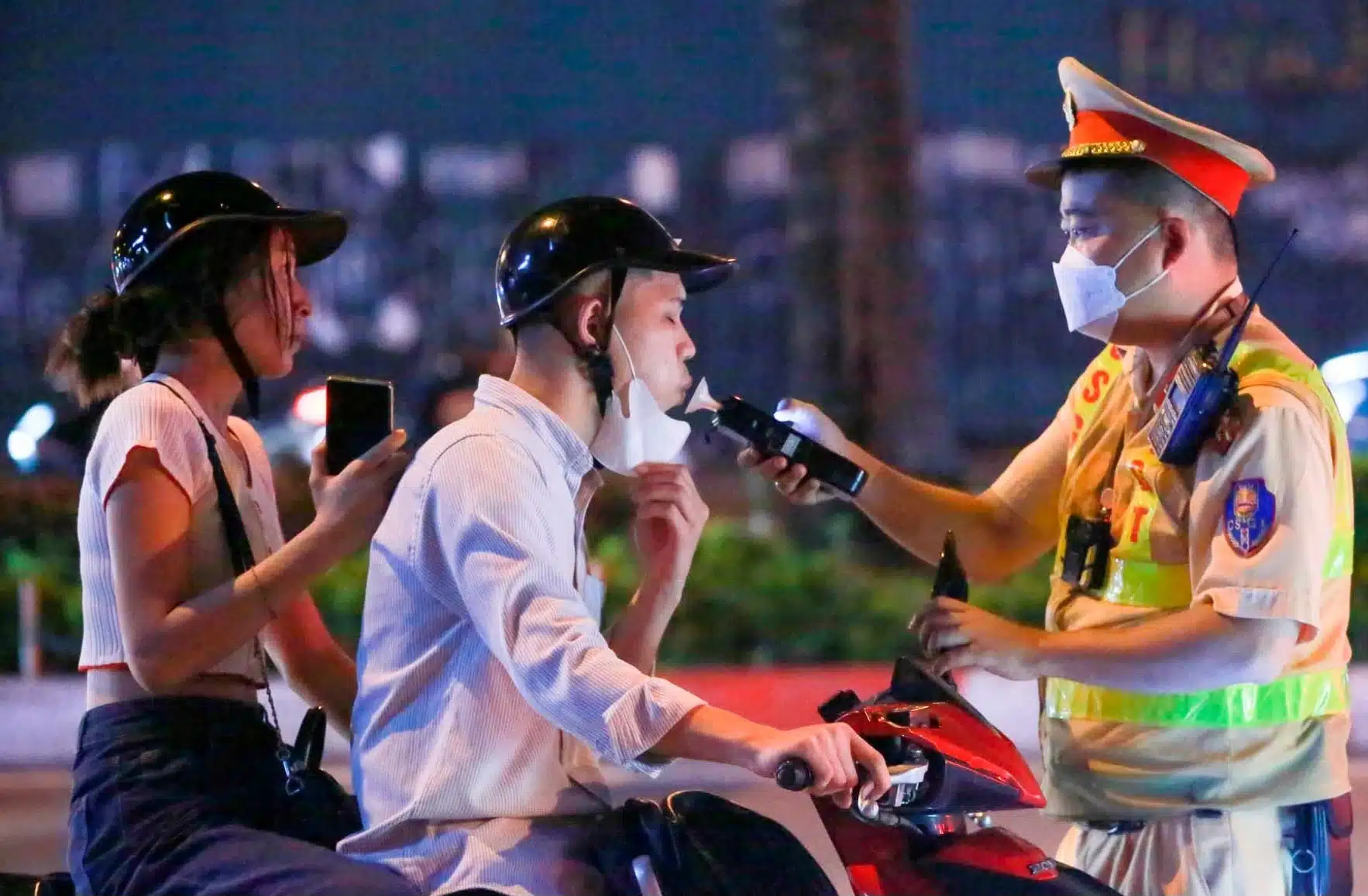
- The “Quick Blow” Test: As you slowly roll through the checkpoint, an officer will hold a funnel-shaped breathalyzer near your face and ask you to blow or count to three. You do not touch the machine.
- The Secondary Tube Test: If the quick test detects alcohol, you are pulled over, asked to turn off your engine, and required to blow into a traditional breathalyzer with a disposable sterile tube to measure your exact BAC level.
The Penalties: Fines, Points, and Impounding
Penalties scale based on how much alcohol is in your system. With the transition to Decree 168, Vietnam also introduced a driver’s license point-deduction system alongside massive fines.
Motorbike Penalties
| BAC Level | Fine (VND) | Additional Penalties |
|---|---|---|
| > 0 to 50mg / 100ml | 2M – 3M | 4 license points deducted |
| > 50mg to 80mg / 100ml | 6M – 8M | 4 license points deducted |
| > 80mg / 100ml | 8M – 10M | License suspended 22–24 months |
Car Penalties
| BAC Level | Fine (VND) | Additional Penalties |
|---|---|---|
| > 0 to 50mg / 100ml | 6M – 8M | Standard violation record |
| > 50mg to 80mg / 100ml | 18M – 20M | 10 license points deducted |
| > 80mg / 100ml | 30M – 40M | License suspended 22–24 months |
The Impound Threat: For serious infractions, the police have the authority to impound your vehicle immediately for up to 7 days. If you are on a rental bike, this creates massive logistical headaches and extra fees to recover the bike from the police lot.
7-Day Due North Motorcycle Tour
Ride deep into Vietnam’s northern frontier: mountain passes, hidden valleys, and rich history packed into one unforgettable week Book NowThe Insurance Implications
This is the most critical factor for foreign riders. If you have any alcohol in your system, your travel and medical insurance is completely invalidated.
If you crash after having one beer:
- Your insurer will not pay your hospital bills.
- Your insurer will not cover the damage to your rental bike.
- You are personally, legally, and financially liable for any medical care or property damage caused to third parties.
Usually, what really happens is that any emergencies are dealt with and then the two parties involved will come to an agreement of blame and work out compensation.
This may happen immediately if it is a minor incident or it may take time and involve the police in a more serious incident.
What to Do If You’ve Had a Drink
Plan ahead so you never have to make a bad decision at the end of the night.
- Use Ride-Hailing Apps: Download Grab or Xanh SM (Vietnam’s electric taxi service). A car or motorbike taxi across town usually costs less than $3 USD.
- Leave the Bike: Almost all restaurants, bars, and cafes in Vietnam have secure overnight parking or a security guard. Ask the staff if you can leave your bike there and pick it up the next day. They will almost always say yes.
- Ask Your Homestay: If you are on a loop or rural tour, walk to the local village shop for a beer, or drink at your homestay.
How Long Does Alcohol Take to Wear Off?
A common trap for expats and tourists is the “morning after” breathalyzer. Police frequently set up checkpoints between 6:00 AM and 9:00 AM to catch commuters who drank heavily the night before.
As a general rule, the human body processes about one standard drink (a 330ml beer) per hour. If you consume 10 beers finishing at midnight, you will likely still blow over the limit at 8:00 AM. If you have a heavy night of drinking, do not ride your motorbike the following morning.
Is There Anything Else You Need to Know?
To make sure you are fully prepared for the realities of Vietnamese roads, here are three extra nuances you must know:
- The Danger of Bribery: Historically, some tourists attempted to pay “coffee money” to bypass traffic tickets. Do not do this for alcohol offenses. CSGT officers are now heavily monitored, often wear body cameras, and face severe disciplinary action for letting alcohol offenses slide. Attempting to bribe an officer for a DUI can escalate the situation from an administrative fine to a criminal offense.
- Always Carry Original Documents: If you are breathalyzed and blow a 0.00%, the police may still ask to see your papers. Always carry your original home country license, your valid 1968 IDP, and the vehicle registration (blue card).
- Foreigners Are Not Exempt: There is no leniency for being a tourist. The law applies equally to Vietnamese citizens, expats, and visitors. Ignorance of the 0% limit will not get you out of a fine or an impounded bike.
Expat Rentals
Live here? Ride like you own it. Our long-term expat rentals are made for those working or living in Vietnam.
✅ Cost-effective monthly rates
✅ Flexible contracts, full maintenance support
✅ Ride like a local: Hanoi, Danang, or Ho Chi Minh City
FAQ
Do passengers on a motorbike need to be sober?
No. The law strictly applies to the operator of the vehicle. As long as the person controlling the handlebars blows a 0.00%, the passenger can be intoxicated.
Can the police test me for drugs at an alcohol checkpoint?
Yes. Mobile checkpoints are increasingly equipped with rapid saliva or urine drug testing kits. Driving under the influence of narcotics carries penalties equal to or harsher than the highest tier of alcohol fines.
Do tourists using an International Driving Permit (IDP) get points deducted?
No. The point-deduction system introduced in Decree 168 applies to Vietnamese domestic licenses. However, foreigners with an IDP will still face the exact same monetary fines, vehicle impoundment, and temporary confiscation of their IDP.
Will eating fermented fruit or using mouthwash trigger the breathalyzer?
It can trigger the initial “quick blow” funnel test. However, if you are pulled over for a secondary tube test, wait 10 minutes and rinse your mouth with water. The blood alcohol reading will register as zero once the mouth alcohol dissipates.
Can I drink non-alcoholic beer and legally ride?
Yes, but check the label carefully. Many “zero alcohol” beers actually contain 0.5% ABV, which is enough to trigger a positive breathalyzer reading if consumed in high volumes right before riding. Stick to verified 0.00% beverages.
Zero Alcohol; Zero Worries
Navigating Vietnam’s zero-tolerance alcohol laws doesn’t have to ruin your trip—it simply requires a bit of smart planning. Whether you’re exploring Hanoi’s chaotic streets or tackling one of our Guided Group Tours, maintaining a strict 0.00% BAC keeps you safe, legal, and fully covered by your insurance.
For more deep dives into local riding regulations, check out our Legal Vault, where we break down everything from licensing requirements to traffic rules. Ready to hit the road with complete peace of mind? Browse our Motorbike Rentals or head to our Contact Page to start planning your next two-wheeled adventure in Vietnam.