Rentals
The Real Fuel Shift: What Vietnam’s Switch to E10 Petrol Means for Your Ride
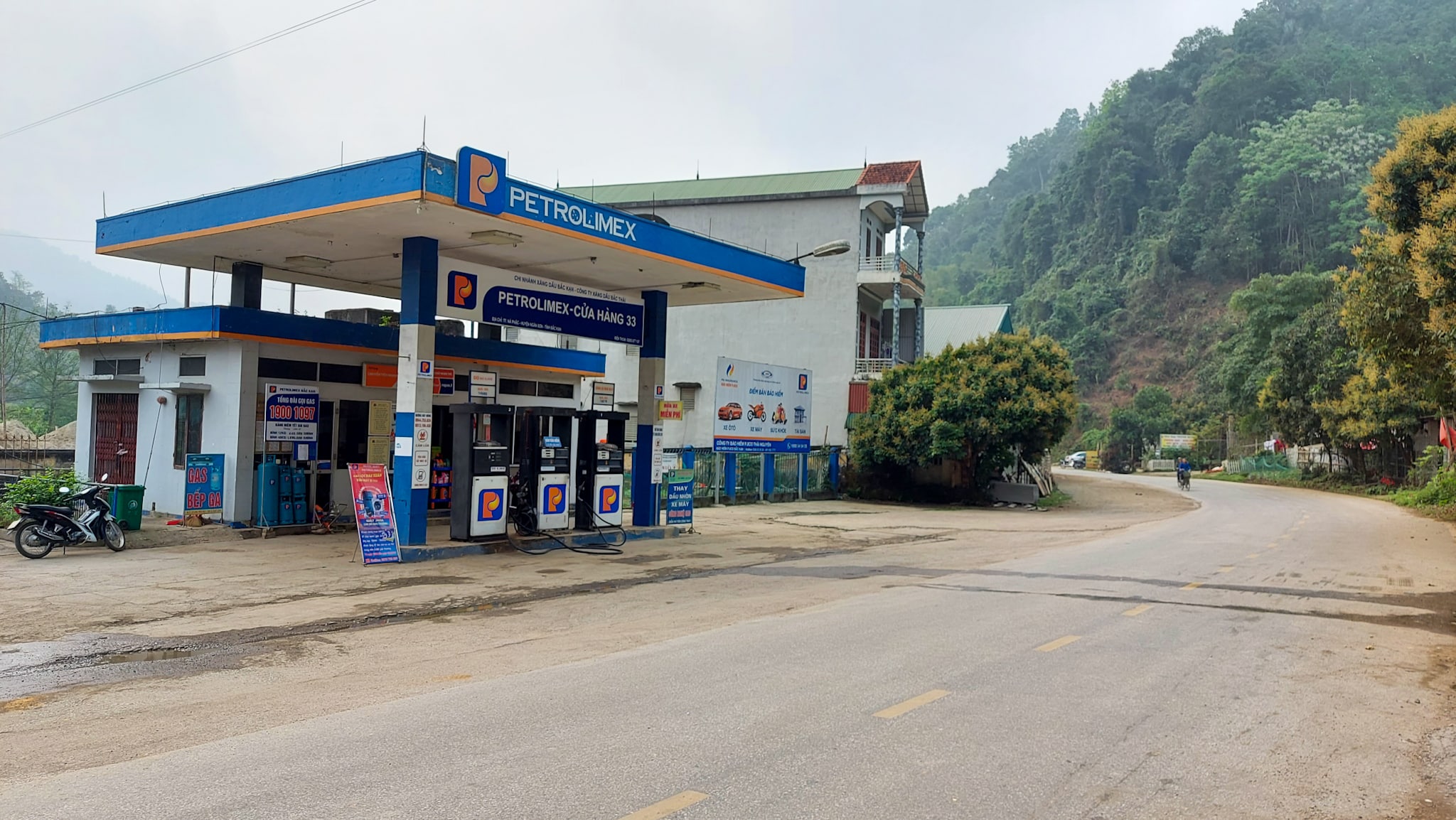
You roll into a Petrolimex station in Hanoi or Ho Chi Minh City, pull up to the pump, and look for the familiar RON 95 sign. Instead, you see a new label staring back at you: E10 RON 95.
If you didn’t get the memo, you might wonder if this new fuel is going to melt your fuel lines or leave you stranded on a mountain pass in Ha Giang.
As of June 1, 2026, the Vietnamese Ministry of Industry and Trade officially went nationwide with E10 biofuel, completely replacing traditional, unblended mineral RON 95 across the country’s retail network.
Before you panic about filling up your daily scooter or a high-performance touring bike, let’s break down exactly what E10 is, why Vietnam just flipped the switch, and what it actually means for your engine.
If you want the broader picture on petrol grades, motorcycle range, fuel economy and planning fuel stops on longer rides, see our complete motorcycle fuel guide for Vietnam.
What is E10 Fuel?
E10 is a fuel blend made of 10% bio-ethanol and 90% conventional unleaded petrol.
The ethanol used in Vietnam is a plant-based alcohol primarily distilled from agricultural feedstocks like cassava and sugarcane. Think of it as mixing a highly refined, renewable biofuel into standard petroleum to stretch the fossil fuel supply and lower tailpipe emissions.
While E5 (a 5% ethanol blend with lower-octane RON 92) has been around for years, E10 uses RON 95 as its base. This means it maintains the high octane rating required by modern, high-compression engines to prevent “knocking” (premature fuel ignition), but carries a higher percentage of biofuel.
Where in Vietnam exactly does it come from?
The primary source of biofuel for both E5 and E10 in Vietnam is cassava (specifically, ethanol produced from cassava starch).
While the nationwide rollout of E10 gasoline relies on a mix of domestic production and international imports, cassava remains the core agricultural foundation of Vietnam’s bioethanol industry.
Why Cassava Rules the Mix?
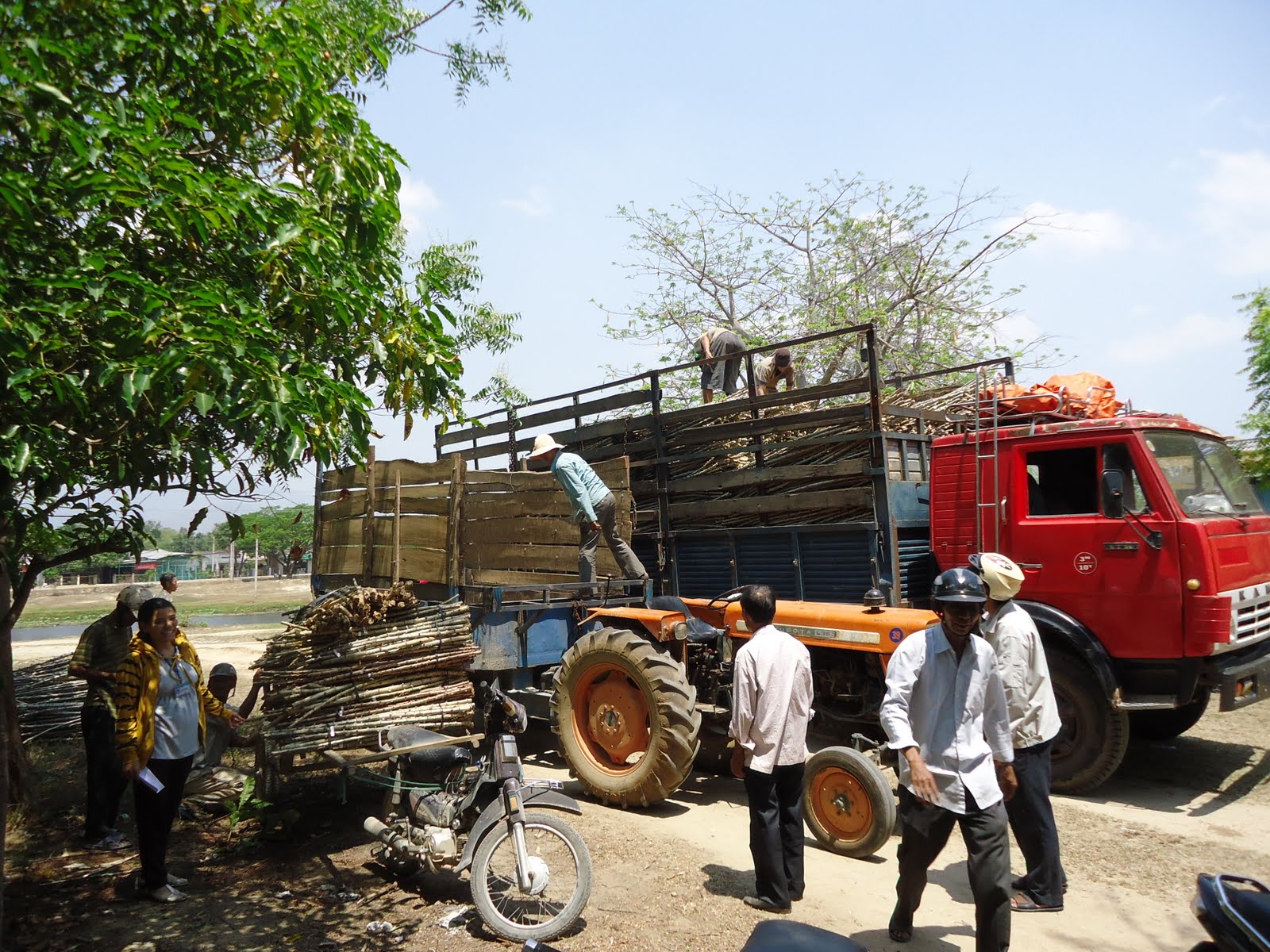
- Abundant Local Supply: Vietnam has over 500,000 hectares of cassava plantations, producing upwards of 10 million tons of fresh roots annually. Major domestic bioethanol producers (such as Tung Lam Bioenergy and PVOIL) built their refining infrastructure specifically to process cassava starch.
- Secondary Feedstocks: Maize (corn) is the secondary domestic source used to stabilize production when cassava supplies fluctuate out of season.
- The Import Gap: Domestic production from cassava currently covers a portion of the market demand. To meet the massive volume required for the full rollout, major fuel distributors like Petrolimex and PVOIL import the remaining ethanol from global markets like the US and Brazil, where the biofuel is primarily derived from corn and sugarcane.
The Future Shift
As the country pushes for stricter green energy targets, the domestic industry is beginning to invest in second-generation (2G) bioethanol. This technology aims to pivot away from food crops entirely, instead utilizing local agricultural waste like rice husks, straw, and corn cobs to produce the ethanol blended into your tank.
Why the Sudden Switch Across Vietnam?
Vietnam’s rapid shift to E10 isn’t an overnight experiment—it’s the climax of a rollout that started with regional pilots back in August 2025. There are three major reasons the government mandated this change:
- Slashing Carbon Emissions: Every liter of standard mineral petrol burned releases roughly 2.3 to 2.5 kg of CO_2. By transitioning the nationwide RON 95 network to E10, the government aims to cut carbon emissions by an estimated 2.5 million tonnes annually.
- The Push for Net-Zero: This transition is a core pillar of Vietnam’s international commitment to reach net-zero carbon emissions by 2050.
- Energy Security & Independence: Geopolitical volatility makes relying purely on imported crude oil risky. Blending 10% domestic or diversified ethanol helps insulate the local economy from global oil shocks.
Can I mix E10 and E5 Fuel?
In general, mixing E10 and E5 is safe for most modern engines, but the “best” choice depends on your bike’s age and how often you ride.
Since you’ve been operating a rental and tour business in Vietnam for decades, you likely know that fuel quality can vary wildly at the pump. Here is the breakdown on whether to stick to one or mix them.
Mixing E5 and E10
Mixing these two fuels is perfectly safe for any engine that is already compatible with E10.
- Resulting Blend: You effectively create a mid-grade ethanol blend (between 5% and 10%).
- Performance: You won’t notice a functional difference. E10 has slightly lower energy density, so a pure tank of E10 might give you roughly 1–2% less mileage than E5, but mixing them essentially splits that difference.
- Emergency: If you’re on a tour and the station only has one or the other, don’t hesitate to top up. Modern ECUs (Engine Control Units) will adjust the timing and fuel mix automatically.
The Octane Factor (RON)
In Vietnam, E5 is often sold as RON 92 or RON 95, while E10 is typically RON 95.
- Don’t Drop Octane: If your bike requires RON 95, don’t mix it with a lower-octane E5 (like RON 92) just to save money. This can cause engine knocking (pre-ignition), which leads to long-term piston damage, especially when riding under heavy load or high heat in the mountains.
- Stick to the Manual: Use the RON rating recommended by the manufacturer. If it calls for 95, you can mix E5 (95) and E10 (95) freely.
When NOT to Mix (or use E10)
There are two specific scenarios where you should stick exclusively to E5 (or pure RON 95/97):
- Long-Term Storage: Ethanol is hygroscopic, meaning it pulls moisture from the air. If a bike is going to sit in a garage for more than a few weeks, E10 is risky. The water can settle at the bottom of the tank (phase separation), leading to rust and clogged injectors or carburetors.
- Older Fleet Bikes: For any older bikes in your rental fleet (pre-2010), E10 can be aggressive toward rubber seals, fuel lines, and fiberglass tanks. If the bike wasn’t designed for high ethanol, stick to E5 to prevent the rubber from “melting” or becoming brittle over time.
Honda CB 500X Motorcycle Rental
Engineered to handle whatever the road throws at you Book NowThe Pros and Cons: How It Affects Your Motorcycle
If you are renting a bike or taking a tour through Vietnam’s rugged terrain, you need to know how this fuel behaves in the real world.
The Positives (The Good News)
- Excellent Octane Performance: Because the base fuel is RON 95, modern engines run incredibly smoothly. Automotive and motorcycle manufacturer associations (including Honda and Yamaha Vietnam) have fully tested and cleared E10 for standard use. Many riders even report slightly crisper acceleration on the highway.
- Cleaner Internal Burns: Ethanol contains oxygen, which promotes a more complete combustion inside your engine cylinder. This leads to fewer carbon deposits on your valves and spark plugs over time.
- Slightly Cooler Engines: Ethanol burns slightly cooler than pure mineral gasoline, which can reduce heat radiation from the engine compartment during heavy city traffic.
The Negatives (The Risks to Watch For)
- The Moisture Trap (Hygroscopy): Ethanol is hygroscopic, meaning it naturally absorbs moisture from the air. In a highly humid country like Vietnam, this is the biggest drawback. If a bike sits idle for months with a half-empty tank, water can bind with the ethanol and settle at the bottom of the tank—a process called phase separation.
- Slightly Lower Energy Density: Ethanol contains about 30% less chemical energy than pure petrol. At a 10% blend, you might notice a negligible drop in fuel economy (around 1-2%), though it’s barely noticeable on a motorcycle.
- Vintage Engine Incompatibility: While modern fuel lines and gaskets are designed to withstand ethanol, older rubber hoses and seals on vintage or carbureted bikes can degrade if exposed to high ethanol concentrations over long periods.
Great Loop | 12-Day Motorcycle Tour
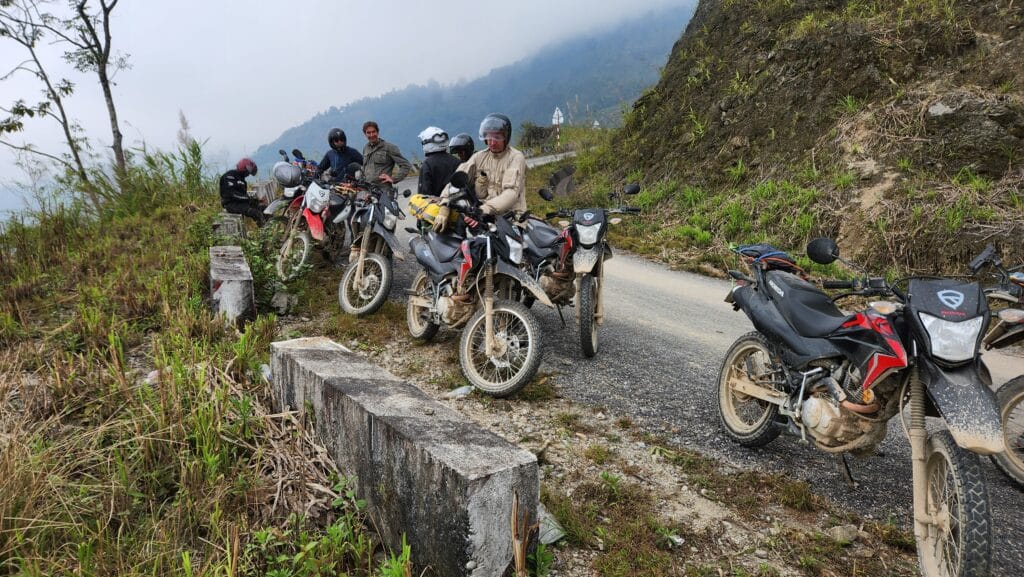
Ready to ride the ultimate northern loop? This 12-day adventure takes you deep into Vietnam’s wildest and most breathtaking landscapes.
✅ Over 1,800 km of tarmac, dirt, and single track
✅ Ride legendary passes, visit remote villages, and cross the Chinese borderlands
✅ Stay with ethnic minority families, experience authentic highland life
FAQ
Can I mix E10 with traditional RON 95 or E5 if a station has mixed stock?
Yes. Ethanol and mineral petrol mix perfectly inside your tank. If you have leftover pure mineral RON 95 or E5 RON 92 in your tank and top it up with E10, they will blend seamlessly without causing any chemical adverse reactions or fueling issues.
Does E10 fuel expire or go bad faster in Vietnam’s humid climate?
Yes, E10 has a shorter shelf life than pure mineral gasoline. Due to Vietnam’s high humidity, E10 should ideally be used within 3 to 4 weeks of sitting in a fuel tank. If left for months, moisture absorption can lead to water contamination at the bottom of your tank, causing starting issues.
What should I do if my motorcycle is an older, carbureted model?
For older or vintage bikes with legacy fuel systems, keep a close eye on your rubber fuel lines and carburetor gaskets for signs of drying or cracking. If you run E10 regularly, consider upgrading your fuel lines to modern, ethanol-resistant fluoropolymer (Viton) hoses.
Will using E10 void my motorcycle rental agreement or manufacturer warranty?
Virtually all major manufacturers operating in Vietnam (including Honda, Yamaha, and Suzuki) explicitly state that their vehicles are compatible with E10. If you are renting from a reputable agency, E10 is completely approved for normal operational use.
How do I safely prepare my bike for long-term storage now that E10 is standard?
If you are parking your bike for more than a month, run the tank as low as possible and drain the carburetor float bowl (if it has one). Alternatively, add a dedicated fuel stabilizer to a completely full tank of fuel to prevent the ethanol from absorbing moisture and separating.
The Verdict for Riders
If you are riding a modern scooter, a solid Japanese commuter, or a high-displacement adventure bike, you can fill up with E10 RON 95 without a worry. The fuel systems on almost all modern bikes built in the last 15-20 years are fully optimized for it.
The only time you need to take precautions is if you plan to store your motorcycle for the winter or an extended off-season. In that case, store it with a completely full tank to leave no room for humid air, or locate one of the suburban stations still mandated to sell E5 RON 92 until 2030 to keep the ethanol percentage minimal during storage.