Live + Work
Can You Rent a Motorbike in Vietnam as a Foreigner? Your Essential Guide
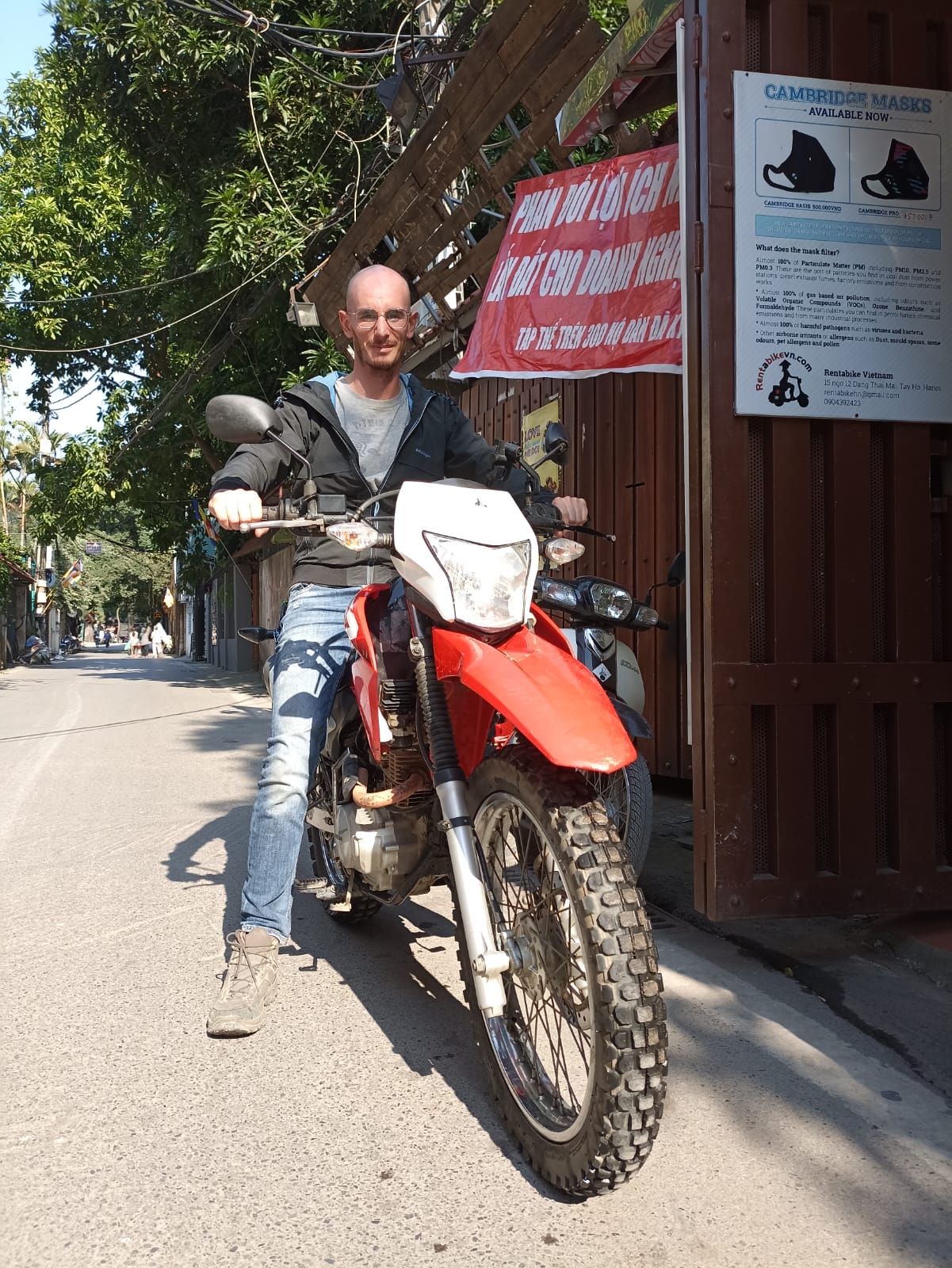
There’s no better way to experience Vietnam than on a motorbike. But if you’re a foreigner planning your trip, you’re probably asking the big question: “Can I rent a motorbike in Vietnam?”
The short answer is yes, you can rent a motorbike in Vietnam. In fact, it’s an incredibly popular way for tourists to get around. However, the legalities and practicalities can be a bit murky. This guide will help you navigate the process, from legal requirements to essential safety tips, so you can have an unforgettable and hassle-free adventure.
The Legal Side: Licenses and Permits
This is the most crucial part to understand before you hit the road. While many rental shops will hand you the keys with just a passport and a smile, how to drive (legally) in Vietnam is a different matter. Oftentimes, you will find that shops are comfortable renting you a small CC bike, say under 150cc without looking at any paperwork, but certainly not a larger CC bike. They will expect you to take responsibility for any consequences and this could be a fine or worse.
1. The International Driving Permit (IDP)
The Law: To legally ride a motorbike in Vietnam, you must have a valid Vietnamese driver’s license or an International Driving Permit (IDP) (IDP) that follows the 1968 Vienna Convention on Road Traffic.
Crucial Distinction: This is where many foreigners get confused. Many countries, including the US, Canada, Australia, and New Zealand, are signatories of the 1949 Geneva Convention, not the 1968 Vienna Convention. This means that an IDP from these countries is technically not valid for riding in Vietnam.
The Reality: Despite this, many tourists ride without a valid IDP. If you are stopped by traffic police, you may face a fine or, in more severe cases, have your bike temporarily confiscated. It’s a risk that many travelers take, but it’s important to be aware of the potential consequences.
Being able to rent a motorcycle and being legally entitled to ride it are different things. Check your documents first in our International Driving Permit for Vietnam guide.
2. What about a Vietnamese License?
For long-term visitors or residents with a valid visa of at least three months, it’s possible to get a Vietnamese driving license.
For short-term tourists, this process is generally not feasible.
3. Can I use an ASEAN License?
Yes, all of the ASEAN member countries signed an agreement to honour each member’s driving licenses. There is one small proviso and that is your license should have English on it as a lingua franca.
You should also apply for an IDP to accompany your ASEAN license. Technically, I think this is not necessary but many traffic cops will ask for it. Having an IDP will make life much easier, whether or not you actually need it.
Many traffic cops will insist that your ASEAN license needs to be translated with a certified copy in Vietnamese but this is not the case. Whether you can get this point across clearly or not depends on the situation.
You can find out full information in this guide to ASEAN Licenses.
4. Small Scooters (Under 50cc)
The exception: Legally, you do not need a license to operate a motorbike with an engine capacity of 50cc or less.
Practicality: These bikes are low-powered and not suitable for long-distance travel or steep terrain. They are best for short trips within a city or town. We discourage and we refuse to rent 50cc bikes for touring.
5. Electric Scooters
Power Concerns: There are two conditions governing the use of these without a license. The scooter should be EITHER 1) not capable of more than 50kmh OR 2) have a power rating of less than 4Kw. Then, you can drive this scooter without a license.
Practicality: These bikes are generally low-powered and do not have the range needed for long trips. They are best for short trips within a city or town.
Reliability: Whereas, these scooters are generally mechanically sound, the batteries can often be degraded and lose charge fast. This can be very inconvenient.
Our Advice
While you may see many people riding without the correct license, the safest and most legally compliant way to ride is with a valid IDP that adheres to the 1968 Vienna Convention.
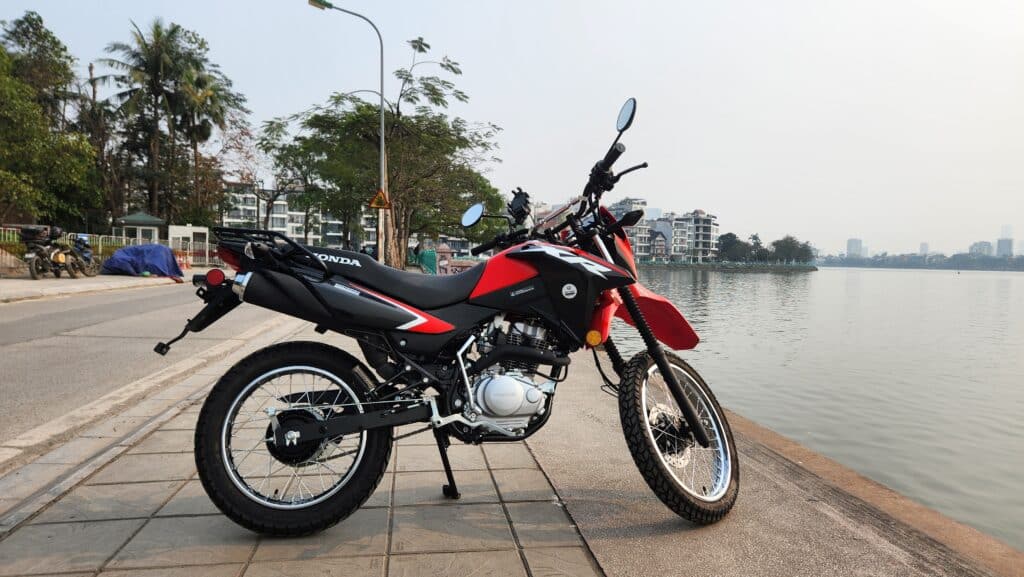
Honda XR 150 Motorcycle Rental
Ready for adventure? The Honda XR150 is your perfect companion for rugged backroads, mountain passes, and open highways.
✅ Lightweight, reliable, and fuel-efficient
✅ Comfortable for long rides and multi-day tours
✅ Trusted by riders across Vietnam for the legendary Ha Giang Loop
How to Rent a Motorbike in Vietnam
Contact AZ Motorbikes to confirm motorcycle availability, pickup and return arrangements, included equipment and support for your intended rental.
1. Finding a Rental Shop
There are motorbike rental shops everywhere. Major cities like Hanoi, Ho Chi Minh City and Danang have so many to choose from. In smaller towns or tourist locations, you should be able to find a rental in your hotel.
Look for businesses with good reviews on Google Maps and TripAdvisor. Watch out for fake reviews and take the time to look carefully. You should also look at the socials (IG, YT, FB) of the business to see how active they are. Hotels will give recommendations, but they often get a kick back so cannot be fully relied on.
2. The Rental Process
Confirm the deposit and required riding and vehicle documents with AZ Motorbikes before collecting your motorcycle.
Cost: Prices vary depending on the type of bike and rental duration. Expect to pay anywhere from $7 to $10 USD per day for a standard scooter. The longer you rent, the cheaper the daily rate as there are discounts.
Inspection: This is arguably the most important step. Before you hand over any money, thoroughly inspect the motorbike. Take photos and videos of any existing damage (scratches, dents, etc.) to avoid being held responsible later. We are happy to note all of this on the contract for you.
3. Checklist for Inspection:
Make sure to check the bike and take it for a spin up and down the road, before you finish the transaction. Tell us if there are any adjustments you would like to make to the bike. Once you have left the shop, we assume you have agreed that the bike is in good working order. A good pre-rental inspection should cover:
Brakes: Test both the front and back brakes.
Tires: Check for good tread and proper inflation.
Chain: Check that it is not too tight/loose and that it doesn’t make noise.
Lights: Test the headlights, taillights, and turn signals.
Horn: Make sure it works! You’ll be using it a lot.
Engine: Start the bike and listen for any unusual sounds.
Mirrors: Ensure they are present and properly adjusted.
Avoiding Common Scams
Unfortunately, there are many tales online of some dishonest shops that prey on tourists. These are a few of the more common scams that we have heard about. Honestly, we think that these are urban legends, rather than the truth because we cannot fathom how any business can thrive when they employ such tactics. It just doesn’t make sense. To us, building a reputation for honesty and transparency is key. However, here are some ideas on how to stay safe:
1. “Pre-existing Damage” Scam:
As mentioned, always take photos and videos of the bike’s condition before you leave the shop. This is your best defense against being charged for damage you didn’t cause. We are happy for you to take photos and as said above, we will even note this on the contract. Be aware that genuine mistakes can happen, especially when a rental firm has many bikes and shop locations. Having evidence gives peace of mind.
2. “Passport Holding” Scam:
Some shops will demand your passport as a deposit and then refuse to return it, claiming damage or other issues. A cash deposit is a much safer option. We have never held anyone’s cash deposit or passport and neither have we lost it.
3. “Bait-and-Switch” Scam:
A shop might show you a nice, well-maintained bike and then give you a different, lower-quality one when you’re ready to leave. Be vigilant and ensure you get the exact bike you inspected. Also, understand that availability is fluid and can change daily so it is best to contact the rental firm just before you intend to visit them, or not have your heart set on one particular bike.
4. “GPS Tracker” Scam:
In a particularly nasty scam, a rental shop places a GPS tracker on your bike, then steals it from a location you parked. This causes a great deal of stress and difficulty and makes a holiday unforgettable. The company then demand you pay for the “lost” motorbike. To avoid this, use a respectable rental company that values their reputation and always use a sturdy lock.
5. “Over-Inflated Repair Cost” Scam:
Ask AZ Motorbikes to confirm the applicable rental terms, damage responsibilities, repair procedure and any available protection options before you book.
7-Day Due North Motorcycle Tour
Ride deep into Vietnam’s northern frontier: mountain passes, hidden valleys, and rich history packed into one unforgettable week Book NowFAQ
1. What is the fine for riding a motorbike without a valid license in Vietnam?
Traffic fines for motorcycles vary depending on the engine size of the motorbike. For motorbikes with a cylinder capacity under 175CC, the fine can be between 1,000,000 VND and 2,000,000 VND. For those with a cylinder capacity of 175CC or more, the fine ranges from 4,000,000 VND to 5,000,000 VND. This is the ‘official fine’ with paperwork, however, many people pay less than this and forego the paperwork.
2. What happens if I get into an accident while riding without a valid license?
The answer to this varies very much on the situation. In the best case scenario, you simply shake hands and walk away. However, you could be held criminally and civilly liable, and be compelled to remain in the country until the matter is resolved. Your insurance will be invalid and the police may also confiscate your bike.
3. What is the process for converting my home country’s license to a Vietnamese one?
To get a Vietnamese driving license, you typically need to have a valid visa or residence permit of at least three months. You will need to prepare a dossier of documents, including a notarized translation of your license, and submit it to the relevant transportation office in a major city like Hanoi or Ho Chi Minh City.
4. What are some of the most popular motorbike routes or destinations in Vietnam?
Popular motorbike routes for tourists include the Ha Giang Loop, the Hai Van Pass between Hue and Da Nang, and the Ho Chi Minh Trail. Look at our maps page
for more information.
5. What is the 1968 Vienna Convention on Road Traffic and which countries are signatories?
The 1968 Vienna Convention is an international treaty that sets standard traffic rules to facilitate international road travel. Many European countries are signatories, as are countries like Vietnam, Brazil, and the Philippines. The United States, Canada, Australia, and New Zealand are not.
Renting a Motorbike in Vietnam
This is a rite of passage for many travelers. By being aware of the legal requirements, carefully inspecting your rental, and choosing a reputable company, you can confidently hit the road and experience Vietnam on your own terms. Remember to ask carefully what they can do if there is an emergency so that you know what to expect.