
Safety + Legality
What to Do If Your Motorbike Breaks Down in Vietnam
A motorbike breakdown in Vietnam can interrupt a short ride across Hanoi or leave you waiting on a mountain road. What matters first is finding a safe place to stop, recognising when the bike must stay off the road, and giving the right information to the people helping you.
Need help now? Stop somewhere safe, move yourself and your passenger clear of traffic, and switch off the engine when safe. If anyone is seriously injured or there is immediate danger, call emergency services first. For a mechanical problem with an AZ rental, call the number provided at handover or contact AZ Motorbikes. AZ’s public contact number is +84 984 916 785. Send your location before discussing repairs.
Get safely off the road
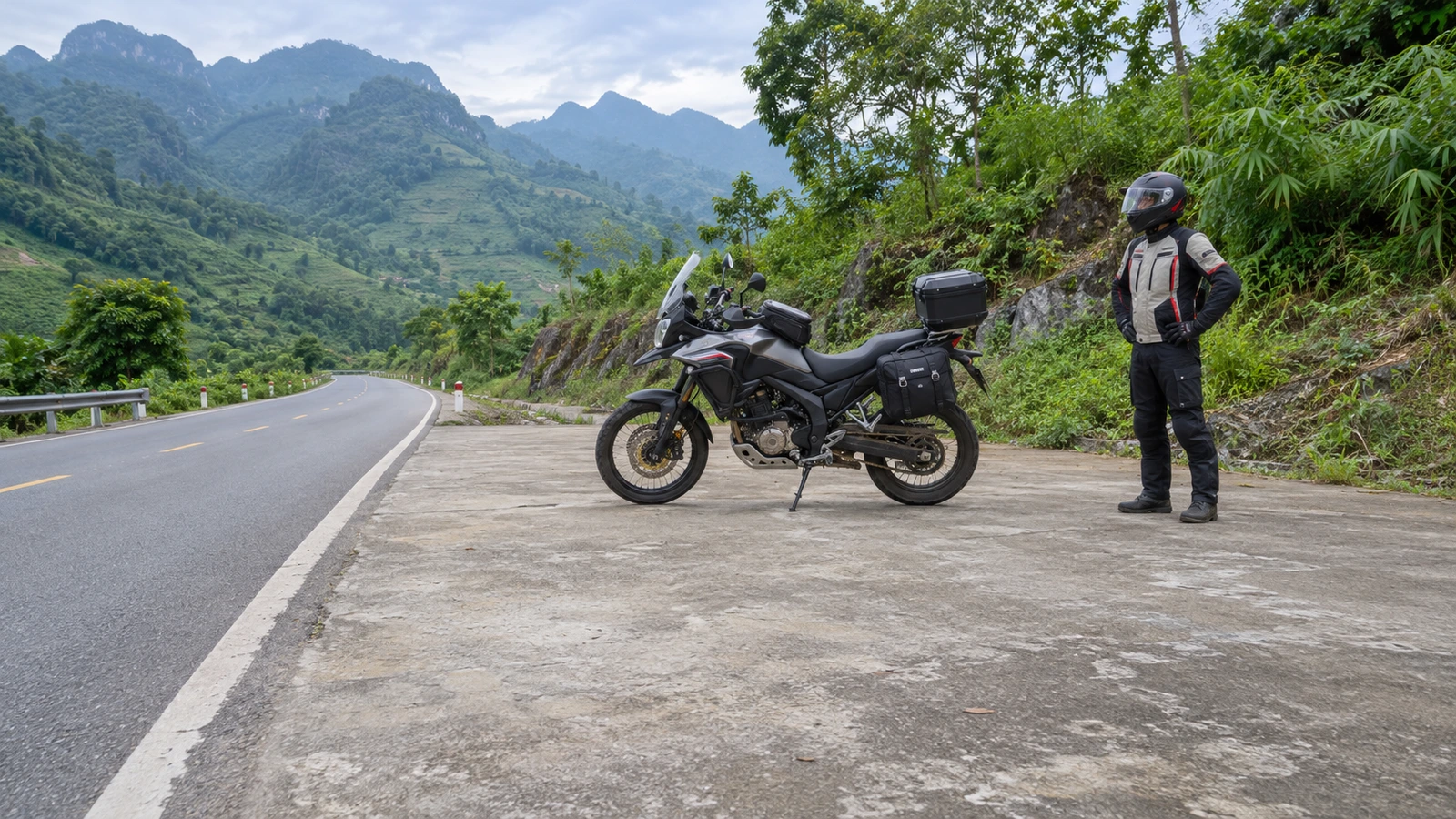
If the motorcycle starts behaving unusually, concentrate on controlling it. Ease off the throttle and avoid abrupt steering or braking. Signal when you can do so safely, and look for a visible stopping place away from moving traffic.
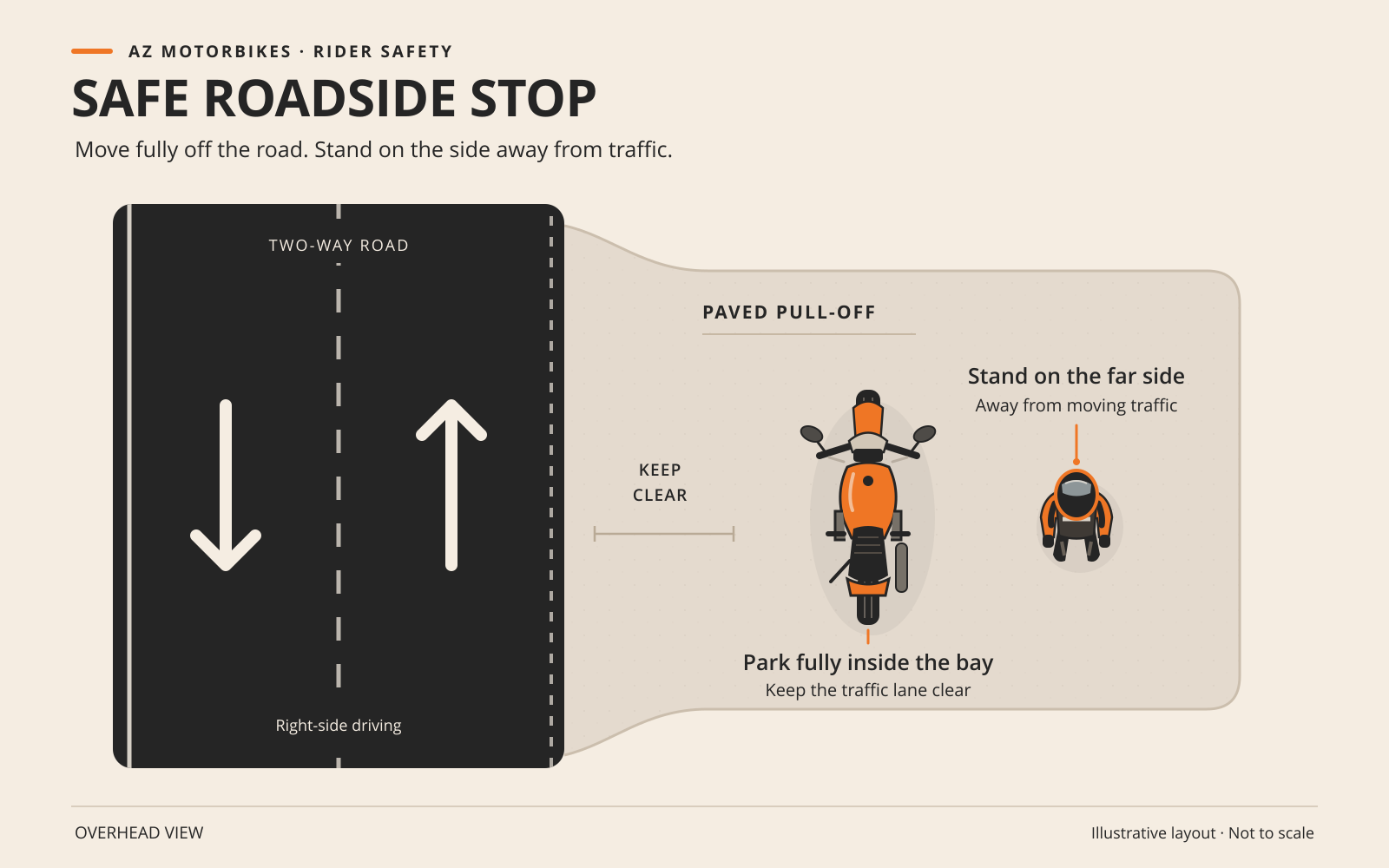
A firm lay-by or a spacious entrance may be suitable. A blind bend, narrow bridge, steep slope or soft verge can make the situation more dangerous. Do not continue to a distant village simply because it appears on your map.
Once stopped, switch off the engine when safe. Use hazard lights if the bike has them and the situation allows. Keep people away from the traffic side of the motorcycle. If moving the bike would put you in danger, prioritise getting yourself to safety.
Only take photographs, check messages or inspect the motorcycle once you are safely stopped. If there is fire, heavy smoke or a dangerous fuel leak, move away and seek emergency help.
Emergency numbers in Vietnam
| Number | Use |
|---|---|
| 112 | National emergency assistance for serious accidents and other dangerous situations |
| 113 | Police emergencies |
| 114 | Fire and rescue |
| 115 | Medical emergencies |
Emergency-call integration is being rolled out. Follow current local instructions and explain your location and what has happened. Ask a Vietnamese-speaking person to help communicate if needed.
A routine puncture or starting problem, with nobody in danger, should go to your rental contact or a suitable mechanic. Emergency numbers are for emergencies.
Recognise when you must not continue
Use this table to choose your next action. It cannot diagnose the fault or confirm that a motorcycle is safe to ride.
| What you notice | What to do next |
|---|---|
| A flat tyre, damaged wheel or sudden instability | Stop safely and arrange inspection or suitable transport |
| Weak or ineffective brakes, damaged steering, or a chain off its sprocket | Keep the bike off the road and contact AZ |
| A high-temperature warning, steam or an oil-pressure warning while the engine is running | Stop safely, switch off the engine and seek model-specific advice |
| Fuel leaking, flames or heavy smoke | Move away; call emergency services if there is immediate danger |
| The engine stopped after entering floodwater | Do not try to restart it; get to safety and arrange inspection |
| The bike will not start after an ordinary stop, with none of the warning signs above | Check only the familiar controls described below, then contact AZ if unresolved |
Common roadside problems and what to do
A flat tyre or puncture
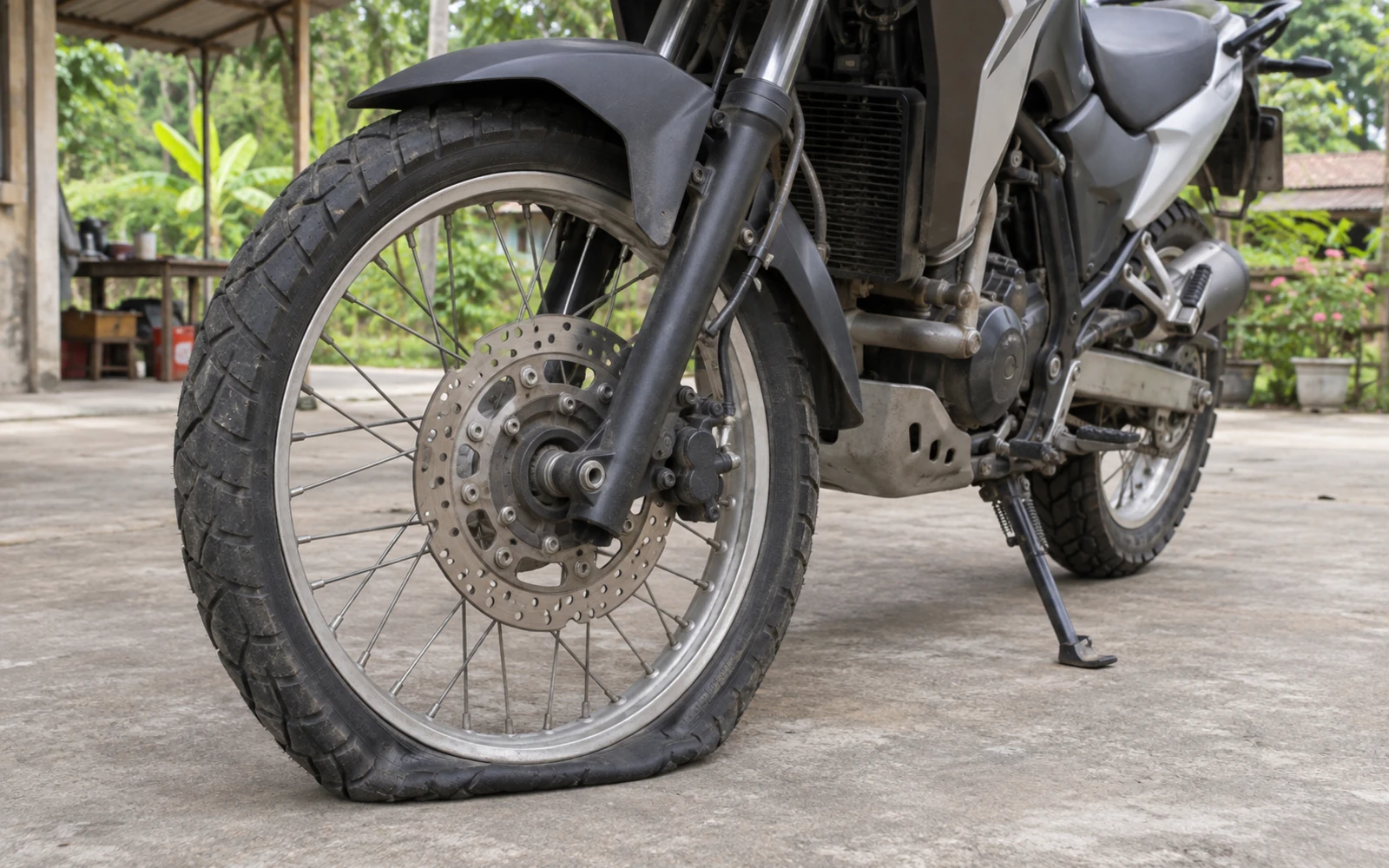
A puncture may first feel like heavy steering, an unsettled rear wheel or an unusual change in handling. Keep control, ease off the throttle and bring the motorcycle to a safe stop without sudden inputs.
Do not ride on a visibly flat tyre, even if a repair shop seems close. Continuing can damage the tyre and wheel, and the motorcycle may become difficult to control.
From a safe position, take a photo of the affected wheel and any visible damage. Ask AZ about an appropriate mechanic or transport. Whether a repair is suitable depends on the tyre construction and damage; an externally fitted plug is not proof that the tyre is ready for a long journey.
A qualified tyre technician should remove the tyre for an internal inspection before deciding whether it can be repaired. A sidewall puncture cannot be safely repaired, and damage from running flat may also require replacement. Do not remove the wheel or try an unfamiliar repair beside moving traffic.
The engine will not start
Only make basic checks if the motorcycle has not just crashed, overheated or stalled in water, and there is no fuel leak or other serious warning sign.
Review the starting procedure demonstrated at handover. Depending on the model, check the ignition, engine-stop switch, neutral position, clutch or brake requirement, and side-stand position. A scooter, semi-automatic and manual motorcycle may have different starting conditions.
Tell AZ whether the dashboard lights up, whether the starter turns, and what happened immediately before the problem. A click, dim display or silent starter is useful information, but does not establish the cause on its own.
Avoid repeated starting attempts, bypassing safety switches or improvised electrical work. Do not attempt a jump-start using an unfamiliar method; the correct procedure depends on the motorcycle and battery.
You have run out of petrol
Stop safely and check the fuel display if fitted. Ask AZ or a nearby business for help locating a suitable petrol station and arranging a safe way to obtain fuel.
Do not make an uncontrolled downhill roll or accept a rope tow to reach the next station. Push the motorcycle only if the route, traffic, surface and condition of the bike make doing so safe.
Use the fuel specified for your motorcycle. Refuel with the engine off, outdoors, away from flames or sparks. If you notice leaking fuel, treat it as a separate fault and leave the engine off.
For fuel planning before the next stage, read our guide to buying petrol in Vietnam.
The engine overheats or a warning light appears
A high coolant-temperature warning or steam calls for a safe stop and further assessment. Switch off the engine, allow it to cool and contact AZ. Continuing with an overheated engine can cause serious damage.
Never remove a radiator cap while the engine is hot. Pressurised coolant can escape and burn you. Some motorcycles are air-cooled and have no radiator, so do not apply one model’s cooling instructions to every bike.
An oil-pressure warning while the engine is running also needs prompt action: stop safely and shut the engine off. Do not assume adding oil will resolve the underlying problem.
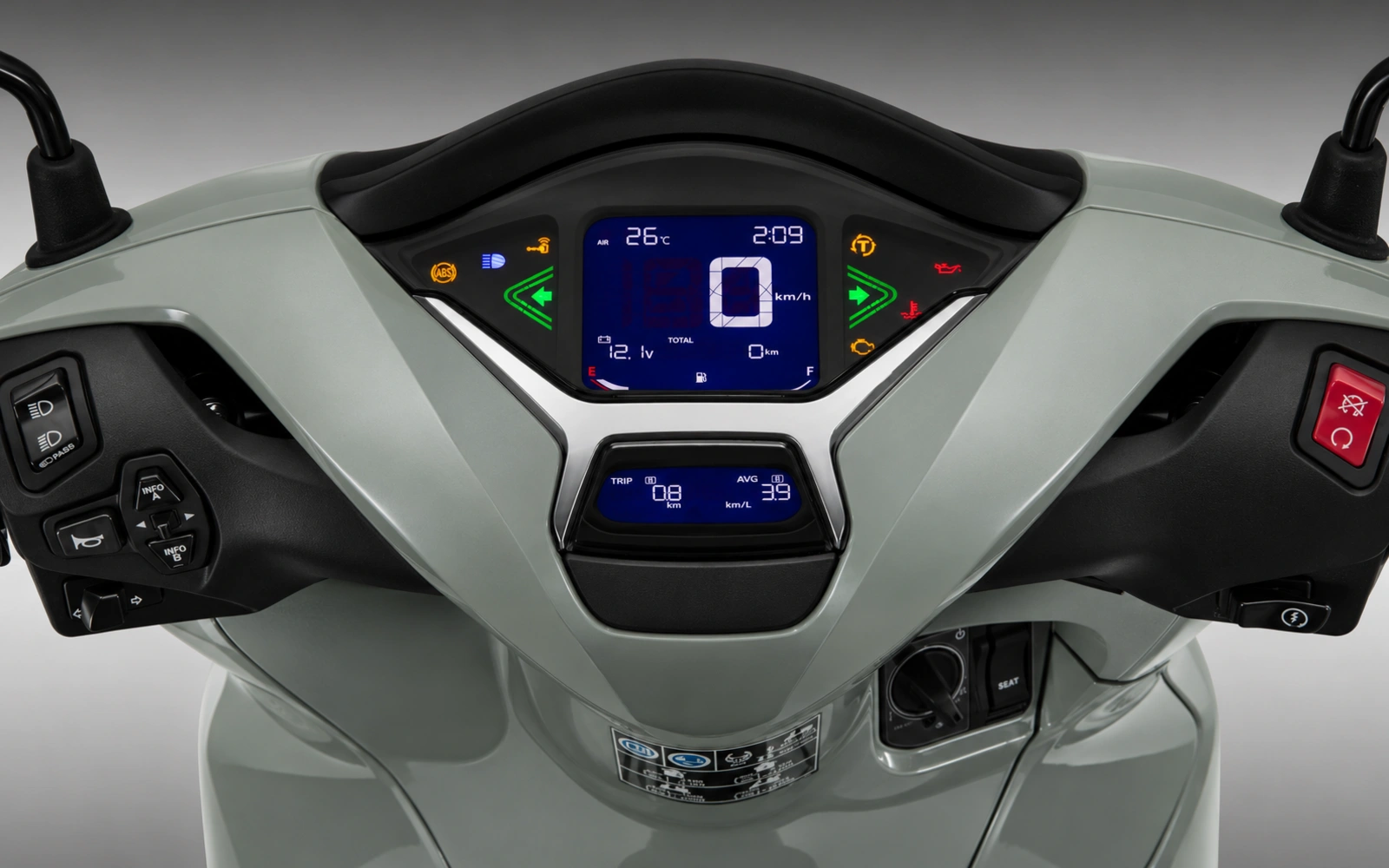
Some dashboard lights illuminate normally during startup checks. Photograph the display only while stopped, and explain whether the light appeared while riding or before starting. Identify the symbol using the correct owner’s manual; do not rely on its colour alone.
Brakes, steering, chain or unusual leaks
If braking feels weak, steering changes, the chain comes off, or the bike develops severe vibration or a new mechanical noise, stop and ask for assistance. Do not test a suspected brake fault by riding further down a mountain.
On chain-driven models, keep hands and clothing away from the chain and sprockets. Do not run the engine to inspect the chain or assume putting it back in place makes the motorcycle safe.
Photograph leaks from a safe distance without touching hot parts. Describe where the fluid appears rather than trying to identify every liquid yourself. Problems affecting control, tyres or braking need professional assessment before the bike returns to the road.
The bike stops after entering water
If the engine stalls after entering floodwater, do not try to restart it. Water may have entered the engine, and turning it over can cause further damage.
Get yourself to safety. Move the motorcycle only if this can be done without entering dangerous water or traffic. Tell AZ how the incident happened and arrange inspection.
Do not use a working engine as proof that a flooded route is passable. For planning and route decisions, see our guide to motorcycle safety in flooded conditions.
Send AZ the information that helps
Once you are safe, use the contact you received at collection. If you need the current public details, use the AZ contact page linked above.
Send one clear message with:
- Your name or booking reference, plus the bike model and registration.
- A map pin or coordinates, nearby village or landmark, and direction of travel.
- A short description of what happened and when.
- Whether anyone is injured, whether there is a leak, and whether the location is safe.
- Photos of the dashboard and relevant part, taken without restarting an unsafe engine.
- Your phone number and whether calls or messages are reaching you.
You can use this message:
Hi AZ, this is [name / booking reference]. I am riding [model / registration]. I am stopped at [map pin], near [landmark], travelling towards [destination]. The problem is [symptoms]. [No one is injured / someone needs emergency help]. The bike is [safely parked / difficult to move]. I have attached photos. Please advise on the next step and any repair or transport arrangements.
If someone needs urgent medical help, call emergency services before sending this message.
Tell AZ if you move to another safe location. Agree who will contact the mechanic or transport provider so that different people do not make conflicting arrangements.
Use a local repair shop with a clear plan
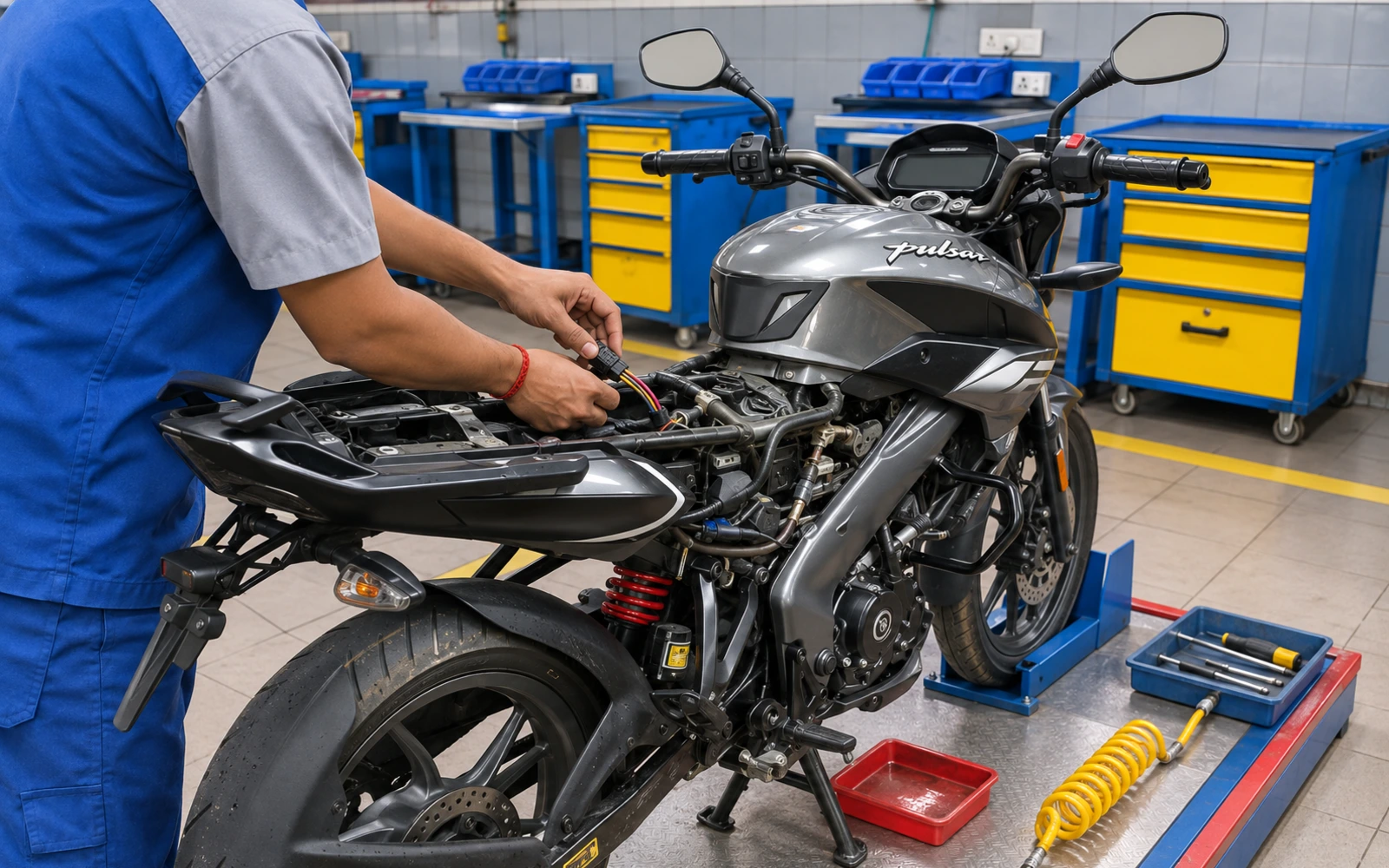
The words “sửa xe” mean vehicle repair; “sửa xe máy” is more specific to motorbikes. A nearby workshop may be useful, but parts, tools and experience vary. A shop’s proximity does not establish that it can diagnose your particular motorcycle.
Before allowing significant work, discuss the proposed repair with AZ. Share the shop’s location, a description of the fault, the proposed parts and the estimated total. Ask how payment and any transport costs will be handled under your rental agreement.
Keep photographs, the agreed quote and a receipt or written record of the work. Do not assume an unapproved expense will be reimbursed.
If the bike cannot be repaired safely where it is, discuss suitable motorcycle transport. Avoid improvised rope towing. Before collection, confirm the destination, price and who will receive the motorcycle.
Read how your AZ rental works for the wider repair and handover process.
Useful Vietnamese phrases
| English | Vietnamese |
|---|---|
| My motorbike has broken down | Xe máy của tôi bị hỏng |
| The tyre is flat | Xe bị xịt lốp |
| Please help me call the rental company | Làm ơn giúp tôi gọi bên cho thuê xe |
| Please wait while I contact the rental company | Xin chờ một chút để tôi liên hệ bên cho thuê xe |
| How much will the repair cost in total | Tổng chi phí sửa chữa là bao nhiêu |
| Please call an ambulance | Làm ơn gọi xe cấp cứu |
If you have no signal or are far from a town
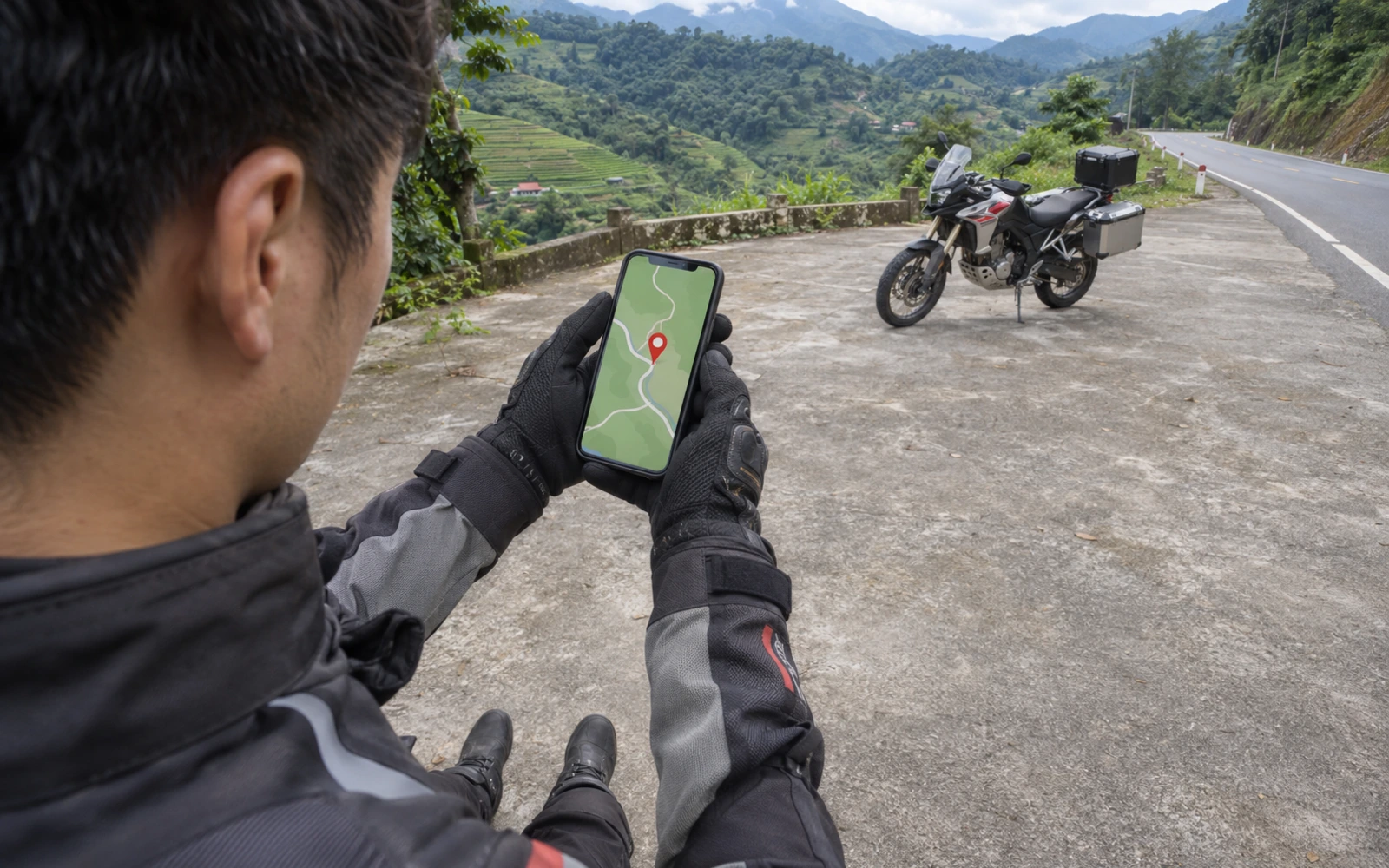
Stay in the safest available place while deciding how to contact help. Do not walk along a blind mountain road or enter floodwater simply to search for reception.
If you can safely reach a nearby shop, homestay or staffed building, ask to use a phone. Give the road name, nearby landmark and direction of travel as well as any saved coordinates.
Keep your phone available for incoming calls and conserve its battery. An offline map can help you describe where you are, but it cannot transmit a location message without a connection.
If you cannot reach AZ, prioritise a safe place to wait and suitable local assistance; do not remain in a hazardous position waiting for a reply.
If darkness or weather makes the next stage unsafe, discuss an overnight stop or transport. A mechanical delay is a reason to change the day’s plan.
After a fall or collision
Check people first and request emergency help when needed. A running engine does not prove that the motorcycle is safe: a fall can damage wheels, steering, controls or brakes in ways that are not immediately obvious.
When it is safe, record the location and visible damage, contact AZ and follow the instructions of attending authorities. Do not continue if the bike’s handling or braking has changed. Ask AZ about arranging a qualified inspection, as damage may be hidden.
For the separate steps involving a crash, documentation and communication, read what to do after a motorcycle accident in Vietnam.
Prepare before each riding day
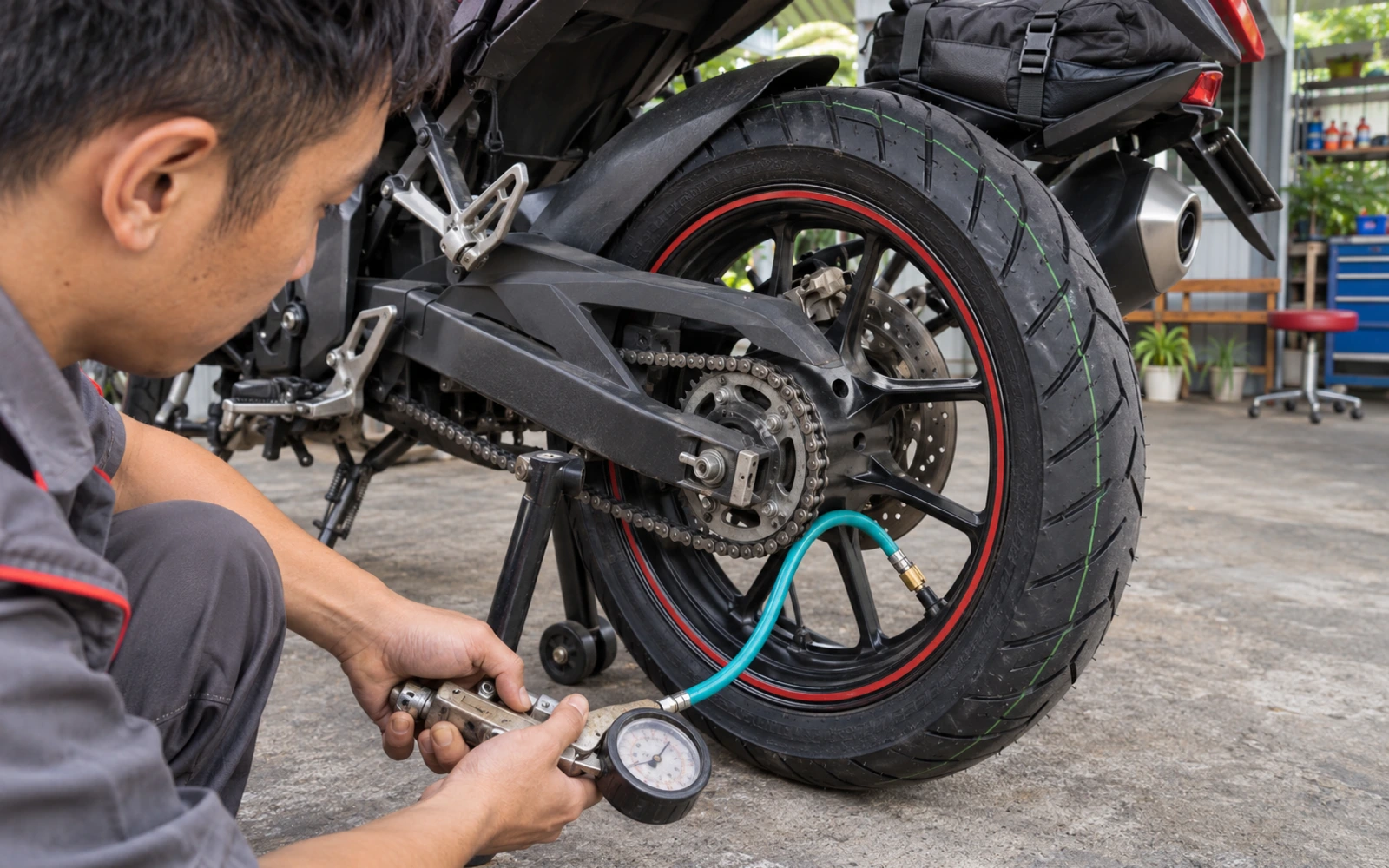
A short check can reveal problems before you leave your accommodation. Look at the tyres and wheels, check that the controls operate normally, confirm the lights work, and look for new leaks. Check the chain where applicable, secure luggage and make sure the stands work correctly.
Use the pressure and maintenance instructions for the actual model and load. Ask AZ if you are unsure; do not copy a pressure figure from another motorcycle.
Before a longer stage, save the rental contact offline, charge your phone, carry a power bank and some cash, and plan fuel stops with a margin. Ask at handover how support and repairs should be arranged on your intended route.
Our pre-rental motorcycle inspection guide explains what to discuss when collecting the bike.
Frequently asked questions
Can I ride slowly to a mechanic with a flat tyre?
No. Stop safely and arrange suitable help. A short distance on a flat tyre can still compromise control and cause further damage.
Can any local mechanic repair my rental motorcycle?
It depends on the model, fault and equipment available. Contact AZ before significant work so that the proposed repair and costs can be discussed.
Who pays for a breakdown or roadside repair?
The cause of the problem and the agreed rental terms matter. Ask AZ to confirm responsibility and the payment process before authorising work. Avoid assuming every repair, puncture or recovery charge is included.
Should I restart a motorcycle that stopped in floodwater?
No. Leave the engine off and arrange inspection. Attempting to restart can worsen water-related damage.
Plan your ride with the right information
Before departure, choose a motorcycle suited to your experience and route, and confirm how to contact AZ if plans change or the bike develops a problem.
You can compare motorbikes for your route and talk to AZ about your rental before booking.