Rentals
Motorcycle Fuel in Vietnam: Petrol, Range, Costs & Fuel Stops
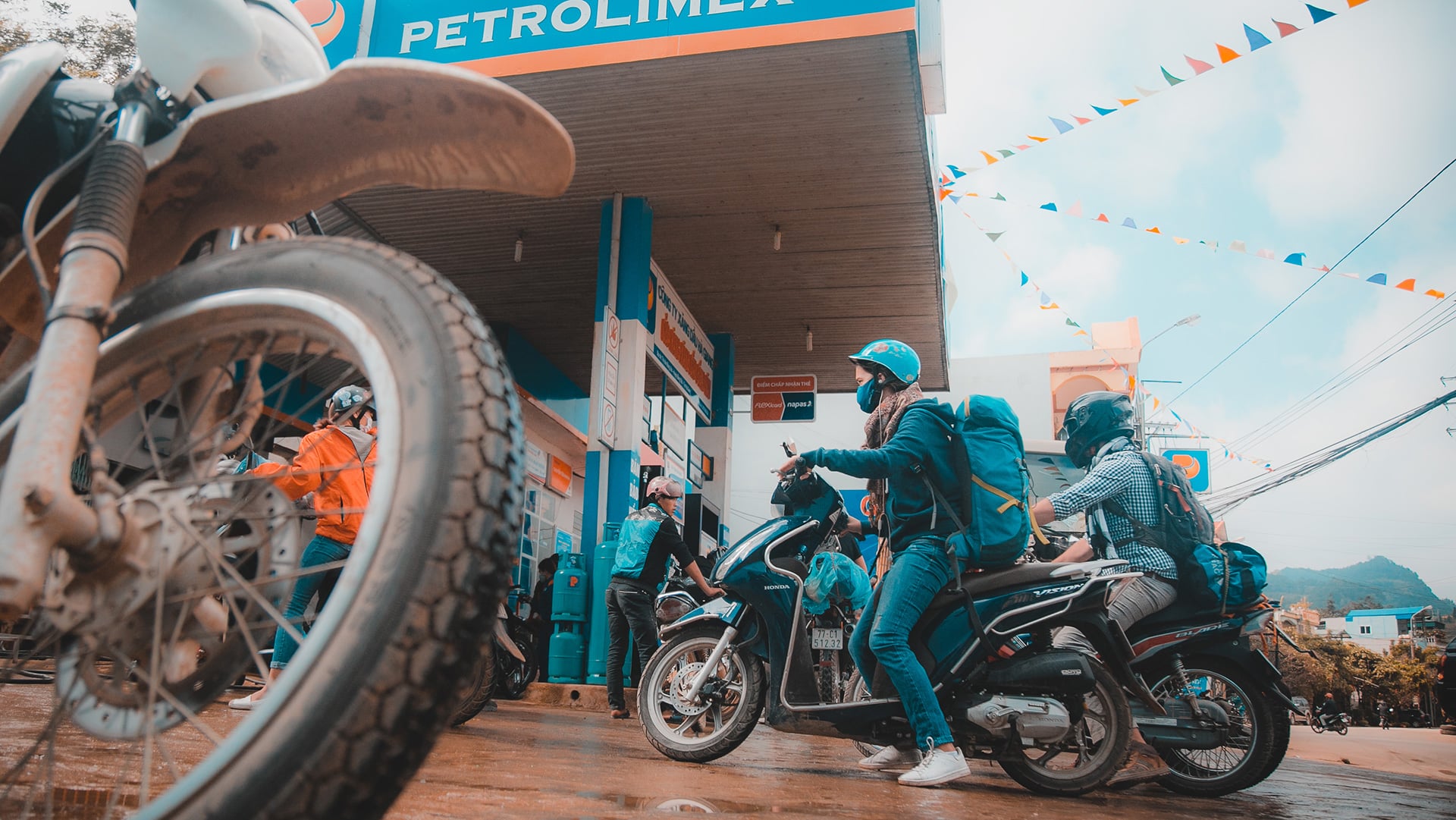
Fuel is rarely a major problem when travelling by motorcycle in Vietnam, but it is something worth understanding before you set off. Riders often want to know which petrol to use, how far their motorcycle will travel on a tank, whether fuel is available in remote areas and how much attention they really need to give to fuel planning.
This guide brings all of our motorcycle fuel information together in one place. Use it for the quick answers, then follow the links to our more detailed guides on petrol in Vietnam, fuel types, motorcycle fuel efficiency, individual bikes and route planning.
Motorcycle Fuel in Vietnam: The Quick Guide
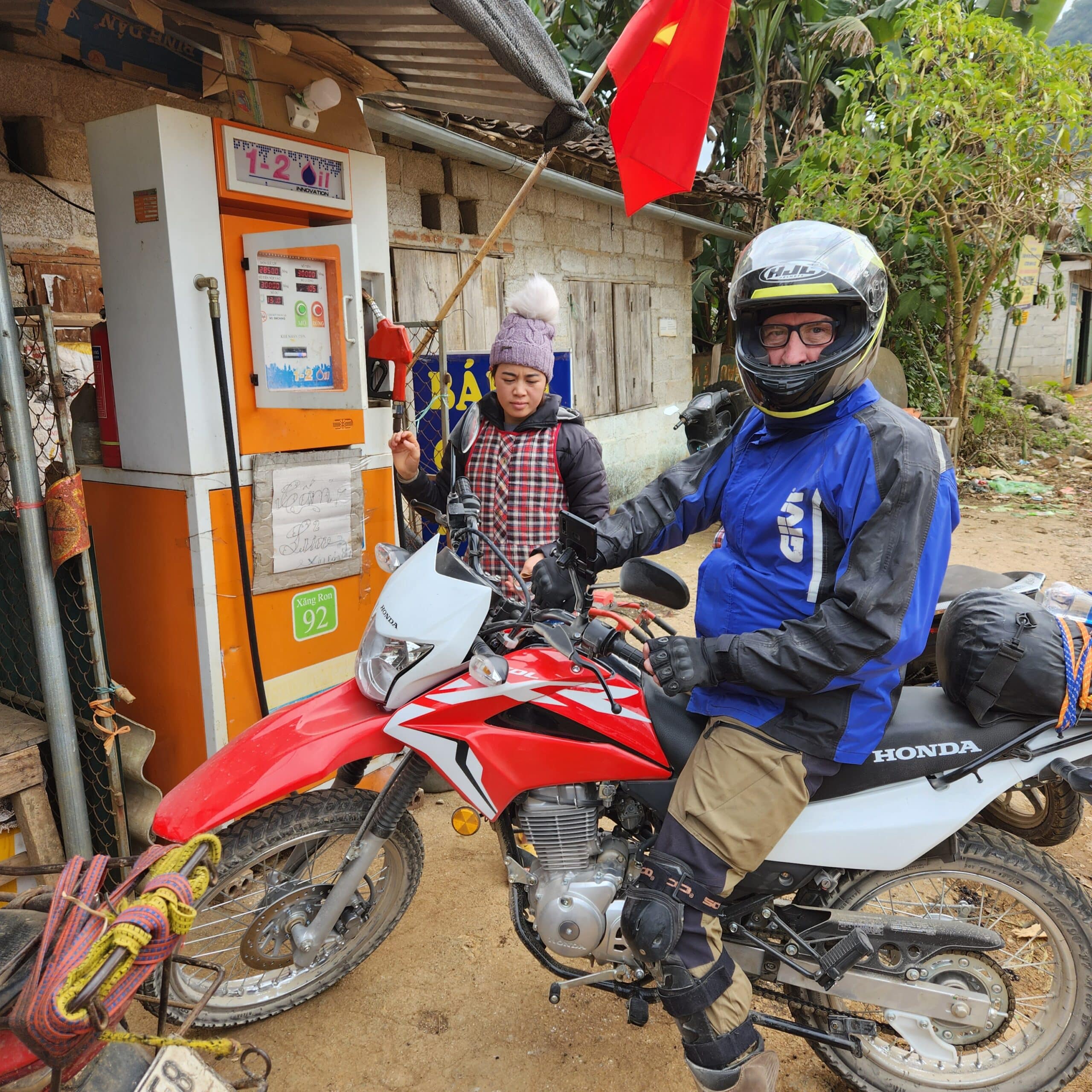
Vietnam runs on motorcycles, so finding petrol is usually straightforward. Cities, towns and the main roads between them have plenty of filling stations, while even relatively remote areas generally have places to refuel.
The important difference when touring is that you should not treat the theoretical range of your motorcycle as a target. If you are heading into the mountains or onto smaller roads, fill up when a convenient proper petrol station appears rather than waiting until you desperately need one.
QUICK ANSWERS
Is petrol easy to find in Vietnam? — Usually, yes.
Should I fill up before remote sections? — Yes.
Is RON 92 or RON 95 available? — Both are commonly encountered.
Should I use roadside bottled fuel? — Only when necessary.
Does bike choice affect fuel range? — Considerably.
Should I try to use every kilometre of the tank? — No.
For a practical explanation of finding a filling station, communicating with attendants and buying fuel, start with our Petrol in Vietnam – All You Need to Know guide.
Which Petrol Should I Put in a Motorcycle in Vietnam?
You will encounter different petrol grades in Vietnam, and the best choice depends on the motorcycle. Higher octane does not automatically mean better fuel economy or better performance if the engine was designed for a lower grade.
Our rental team will tell you what we recommend for the motorcycle you are taking. If you want to understand the differences between the fuels available here, read our Comprehensive Guide to Fuel Types in Vietnam.
The simplest rule for a rental rider is not to overthink it. Know what your particular motorcycle requires before leaving the shop and use reputable filling stations whenever possible.
Is Petrol Easy to Find in Vietnam?
In most of Vietnam, yes. The country has an enormous number of motorcycles with relatively small fuel tanks, so filling stations are part of the everyday road network.
Things become slightly different once you start using quiet mountain roads and smaller backroads. You may still find fuel, but the distance between proper stations can increase and a station shown on a map is not necessarily guaranteed to be open when you arrive.
That is why we prefer the simple touring rule: if you are approaching a remote section and see a convenient filling station, top up.
Motorcycle Fuel Range: How Far Can You Ride?
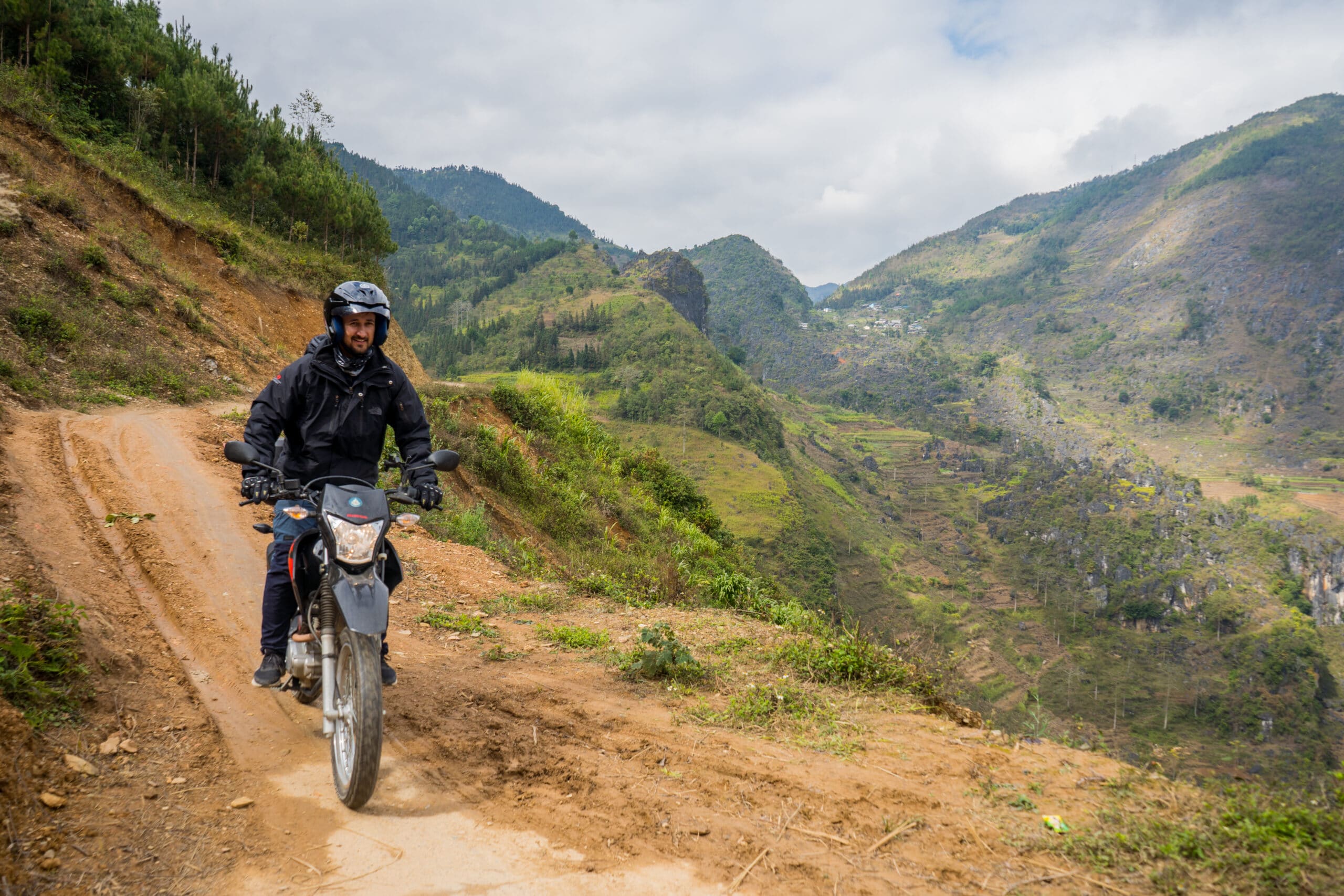
Fuel range depends on much more than tank capacity. Motorcycle size, engine type, speed, luggage, passenger weight, road surface, gradients, traffic and riding style can all affect consumption.
This is particularly relevant in Northern Vietnam. A motorcycle may use relatively little fuel cruising steadily on a main road but work considerably harder climbing mountain passes, accelerating out of tight bends or carrying a passenger and luggage.
You therefore do not need to calculate your remaining range down to the last kilometre. Give yourself a comfortable margin.
Honda Future Fuel Range
The Honda Future has a much smaller 5.4-litre tank on our rental specification, but its 125cc PGM-FI engine is extremely economical. Honda’s current Future 125 FI is rated at just 1.47 litres per 100 km, which shows why this type of semi-automatic can cover surprisingly long distances on a small amount of fuel.
For touring, we would use roughly 250 km as a sensible planning range for the Future rather than relying on a theoretical maximum. Its small tank means you will normally refuel more often than on an XR150 or XR190, but fuel consumption itself is rarely a concern.
Honda XR150 Fuel Range
The Honda XR150 is particularly good in this respect. Its combination of a relatively large tank and economical engine means that we normally work on a conservative touring range of more than 300 km.
In reality, that is farther than we would normally recommend travelling in a day on many of the mountain routes in Northern Vietnam. Fuel range is therefore rarely a serious limitation on an XR150.
Some of our carburetted XR150s do not have a conventional fuel gauge and instead use a reserve fuel tap. If you are unfamiliar with that system, read 3 Things You MUST Know Before Riding a Honda XR150 before setting off.
For a broader look at why this bike works so well for touring, see 10 Reasons We Love the Honda XR150.
Honda XR190 Fuel Range
The Honda XR190 uses a 12-litre tank, the same nominal capacity as the XR150, but combines it with a fuel-injected 184cc engine. In normal touring use it gives very useful range, and we would treat around 300–350 km as a comfortable planning figure rather than trying to reach the bike’s absolute maximum.
That makes the XR190 particularly reassuring on longer mountain stages: it offers more torque and power than the XR150 without sacrificing the large-tank advantage. As always, gradients, luggage, road surface and riding style will change the actual distance you achieve from a tank.
Honda CB500X Fuel Range
For riders wanting considerably more performance and touring comfort, the Honda CB500X combines a 17-litre fuel tank with good touring economy.
That gives the CB500X enough range for long riding days without constantly looking for petrol stations. Exactly how far it travels will depend on traffic, speed, load and road conditions, which is why real-world touring range is more useful than relying on a single manufacturer’s consumption figure.
We have a dedicated guide explaining this in Honda CB500X Fuel Consumption and Range.
If you are deciding between a lightweight dual-sport and a larger touring motorcycle, fuel range should be part of the decision, but not the only factor. The best motorcycle is the one that suits your route, experience, luggage and the kind of roads you actually want to ride.
Refuelling on a Motorcycle Trip
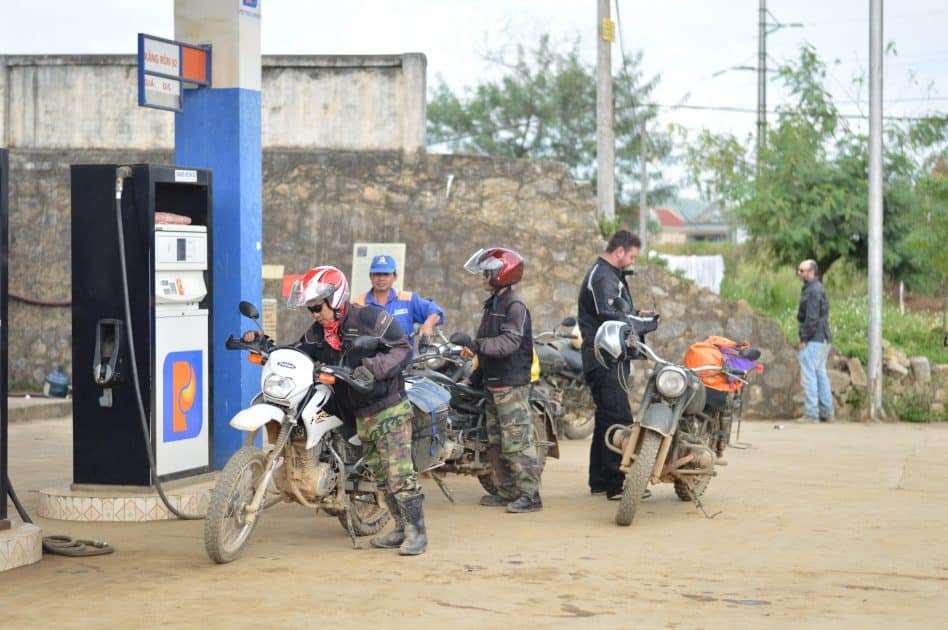
A little fuel planning is useful, but it should not dominate your motorcycle trip. On most routes you will simply pass filling stations naturally during the day and can refuel when convenient.
Whenever possible, we prefer proper petrol stations rather than fuel sold from bottles or small roadside containers. Roadside fuel can be invaluable if you are genuinely stuck, but a recognised filling station is the better normal choice.
When you rent a motorcycle from us, ask the team to show you how to open the tank, which fuel to use and any model-specific details before you leave. That is particularly useful on motorcycles such as the XR150, where the fuel tap and reserve system may be unfamiliar.
Fuel Planning on Remote Roads
Fuel becomes more important when you start exploring remote parts of Hà Giang, Cao Bằng, Bắc Kạn, the Northwest and the smaller roads connecting them.
The solution is not carrying huge quantities of spare petrol. Usually, it is simply sensible route planning and filling the motorcycle before entering a long or unfamiliar section.
Our Vietnam Motorcycle Route Maps can help you understand the distance and expected riding time between destinations before setting off. The maps include A-to-B routes and multi-day loops, so you can see whether you are facing a short connection or a long day through the mountains.
If you are still deciding which part of the north to ride, our Northern Vietnam Motorcycle Routes guide is a useful starting point before moving into the individual route maps.
The important thing is to plan fuel around the road ahead rather than around the maximum theoretical capacity of the tank.
How to Use Less Fuel
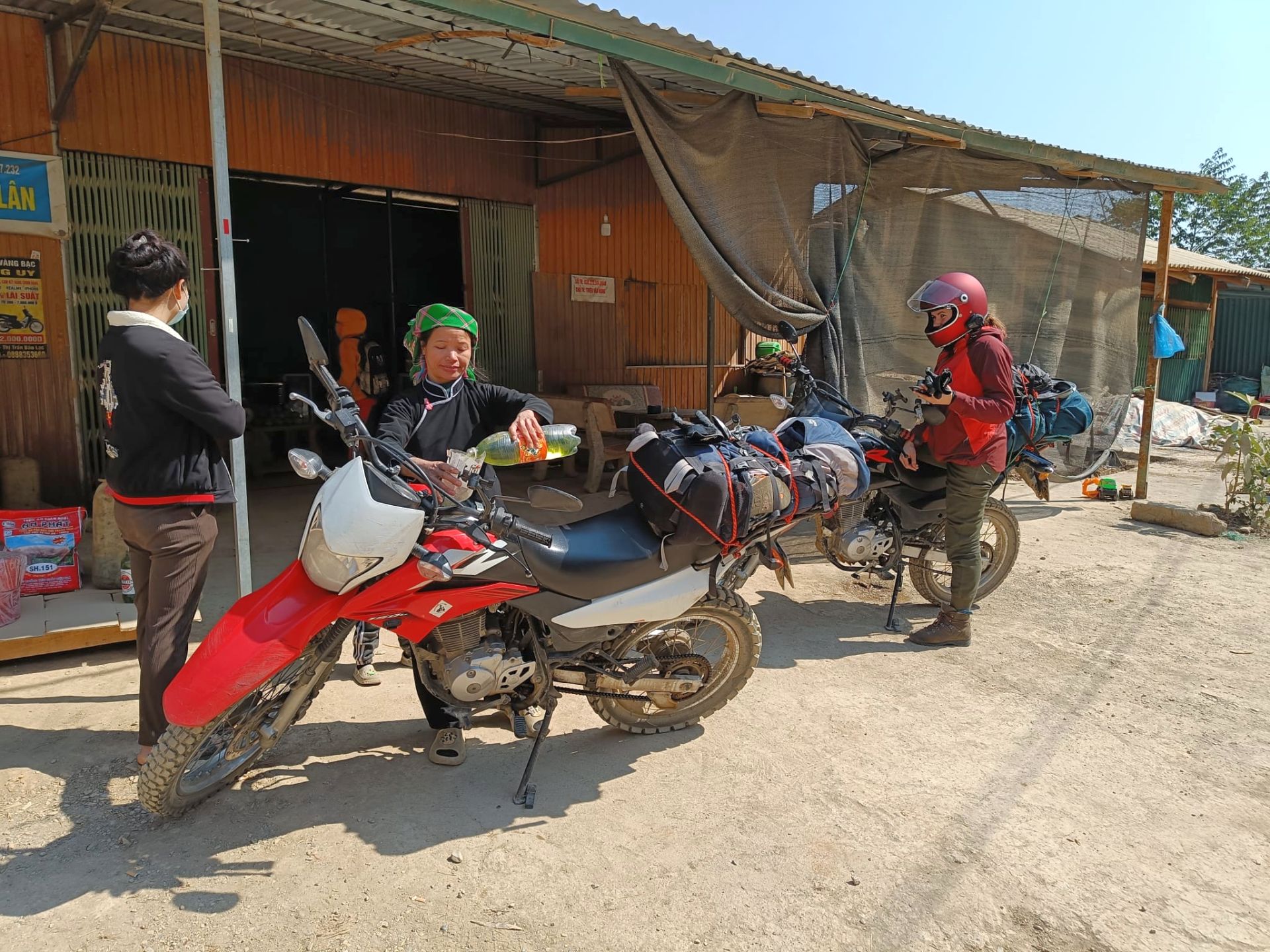
Motorcycle fuel consumption is partly determined by the machine and partly by the rider. A correctly maintained bike ridden smoothly will usually use less petrol than the same motorcycle carrying excessive weight, running incorrect tyre pressures or being constantly accelerated and braked hard.
This matters on a long Vietnam trip because improving fuel efficiency also tends to encourage smoother riding. That is particularly useful on mountain roads where maintaining momentum and looking well ahead are more important than aggressive acceleration.
For a full explanation, see our Motorcycle Fuel Efficiency Guide.
What Affects Motorcycle Fuel Consumption?
Riding style is one of the most obvious factors. Hard acceleration, high speeds and repeated braking will generally use more fuel than smooth throttle inputs and consistent progress.
The motorcycle’s condition matters too. Tyre pressures, chain adjustment, brakes, servicing and the amount of weight you carry can all influence how efficiently the bike runs.
Road conditions then add another variable. A long, steady road through the lowlands is very different from several hours of climbing and descending mountain passes.
For that reason, be careful when somebody tells you that a particular motorcycle will always achieve an exact fuel-consumption figure. Treat published figures as a guide and leave yourself a margin when touring.
Choose the Bike and Plan the Trip
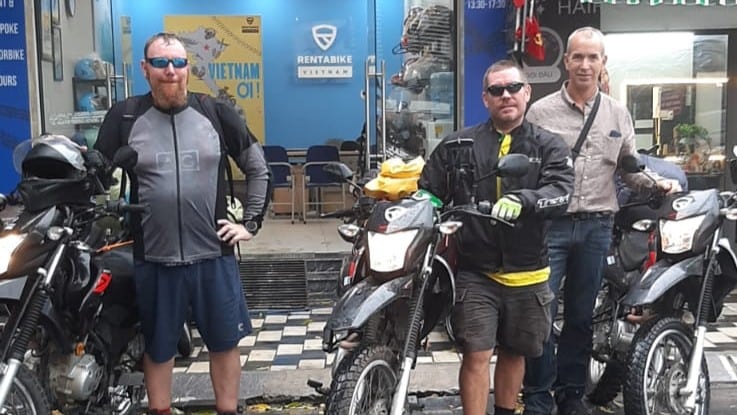
For most riders in Vietnam, fuel range should be considered alongside comfort, engine size, luggage capacity, road conditions and riding experience.
A lightweight motorcycle such as the Honda XR150 offers excellent range and is particularly well suited to smaller roads and mountain riding. The Honda XR190 offers more power while retaining the advantages of a relatively light dual-sport motorcycle.
For longer journeys, carrying a passenger or spending more time on major roads, the Honda CB500X offers considerably more power and touring comfort while still providing useful fuel range.
Your journey matters just as much as the motorcycle. Use our Vietnam Motorcycle Route Maps to work out the distances you are likely to cover each day before choosing your bike.
If you are planning to travel through the country rather than return to your starting point, our One-Way Motorbike Rental in Vietnam guide explains how you can collect and return motorcycles between Hanoi, Danang and Ho Chi Minh City.
Fuel Range Is Only Part of Bike Choice
It can be tempting to compare motorcycles using numbers alone: tank capacity, litres per 100 km and theoretical range. Those figures are useful, but they do not tell you whether you will enjoy riding the motorcycle for seven days.
An XR150 may make more sense for somebody travelling solo through remote mountain roads, while a CB500X can be the better choice for a rider who values highway performance, luggage capacity and two-up comfort.
Choose the motorcycle for the journey first. As long as you understand its range and refuel sensibly, petrol is unlikely to be the thing that limits your Vietnam motorcycle trip.
FAQ
Is petrol easy to find when travelling by motorcycle in Vietnam?
Yes, in most parts of Vietnam petrol is readily available. When travelling through remote mountain areas, however, it is sensible to fill up when you have the opportunity rather than waiting until the tank is almost empty.
Should I use RON 92 or RON 95 in my rental motorcycle?
That depends on the motorcycle. We explain the recommended fuel during the rental handover. If you want to understand the different grades available, read our guide to fuel types in Vietnam.
How far can a Honda XR150 travel on a tank?
We normally work on a conservative touring range of more than 300 km for the XR150 rather than encouraging riders to test its absolute maximum range. Riding style, luggage, road conditions and the individual motorcycle can all affect consumption.
Do I need to carry spare petrol in Northern Vietnam?
Usually not. Sensible route planning and filling up before remote sections are normally enough. For longer or unusual routes, check the distances beforehand and ask about current local conditions before leaving.
Which motorcycle is best if I am worried about fuel range?
Both the XR150 and CB500X offer very useful touring range, but they suit different riders. The XR150 is lighter, economical and particularly useful on smaller roads, while the CB500X offers more power, comfort and luggage capacity for longer journeys. Choose according to the trip rather than fuel range alone.
Motorcycle Fuel in Vietnam: Keep It Simple
You do not need to spend your Vietnam motorcycle trip worrying about the next petrol station. Know which fuel your motorcycle uses, start remote sections with plenty in the tank and fill up when a convenient proper station appears.
The more useful question is where you want to ride and which motorcycle suits that journey. Start with our Vietnam Motorcycle Route Maps to explore possible routes, then compare the Honda XR150, Honda XR190 and Honda CB500X to find the right bike for the trip.
If you are still unsure which motorcycle or route would suit you, contact AZ Motorbikes and tell us where you want to go, how many days you have and what sort of riding you enjoy.