
Culture
Happy Water in Vietnam: Rice Wine, Corn Wine & Ha Giang
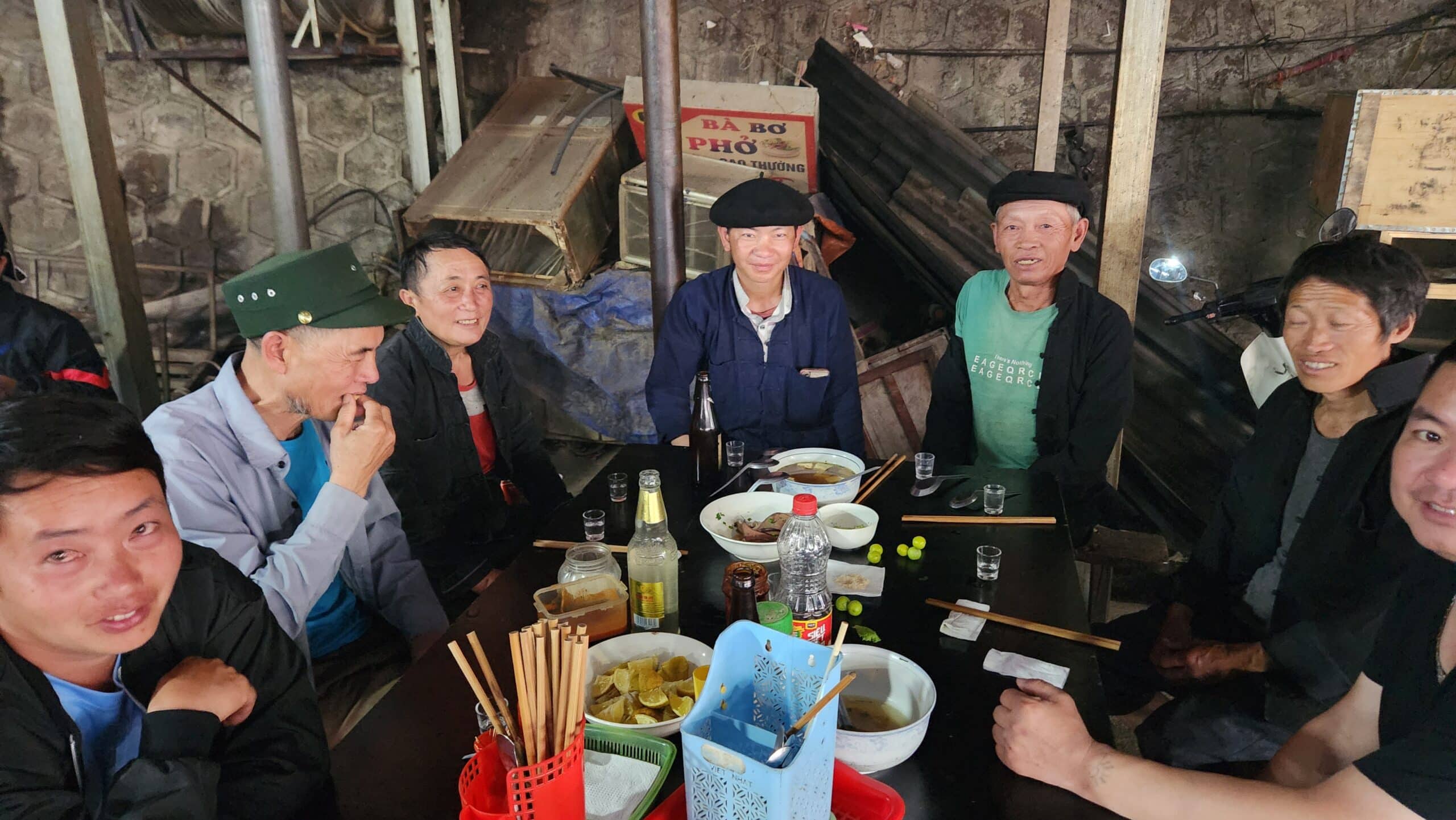
“Happy water” is the informal name travellers often use for Vietnam’s homemade rice or corn spirit. In Ha Giang, much of what visitors call rice wine is actually rượu ngô, a distilled corn spirit commonly served with meals, at homestays and during social gatherings.
The strength and flavour can vary considerably because production methods differ between families and communities. If you ride the Ha Giang Loop, there is a good chance somebody will offer you a small glass, but alcohol and motorcycles should remain completely separate.
Short answer: Happy water is not one specific Vietnamese drink. It is a traveller’s nickname for locally produced spirits, particularly rice and corn alcohol, and in the mountains of Ha Giang it is often made from corn.
What Is Happy Water in Vietnam?
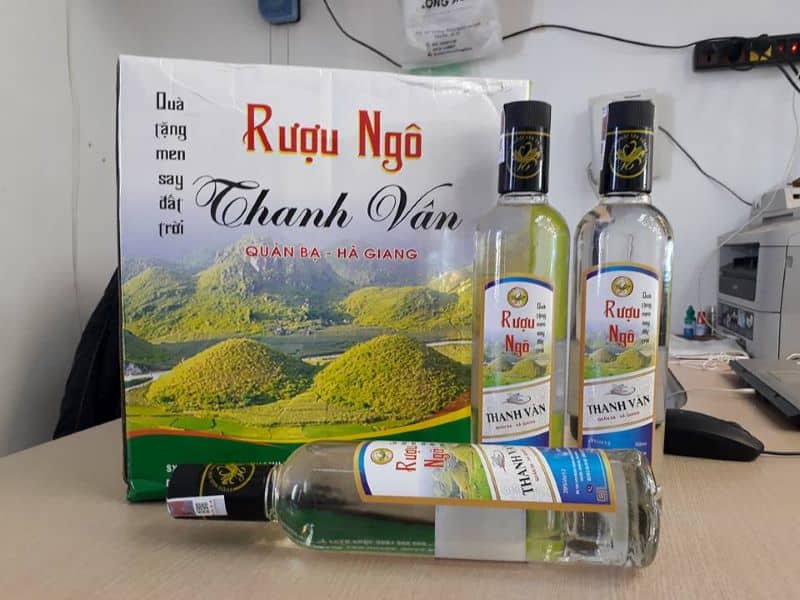
“Happy water” is a traveller’s nickname for traditional homemade alcohol in Vietnam. Depending on where you are, it may be made from rice, corn or other local ingredients, and the Vietnamese name will usually begin with rượu, referring to an alcoholic drink or spirit.
In Ha Giang, the drink commonly offered to visitors is often rượu ngô, or corn spirit, rather than rice wine. It is commonly encountered at shared meals, homestays, markets, celebrations and other social occasions.
The expression “happy water” is not the traditional Vietnamese name for the drink. It has become popular among travellers because the alcohol is often served socially in small glasses, accompanied by food, conversation and repeated toasts.
Is Ha Giang Happy Water Rice Wine or Corn Wine?
In Ha Giang, the drink commonly described by travellers as “rice wine” is often actually made from corn. Rượu ngô means corn spirit, while rượu gạo refers to alcohol produced from rice.
Corn is an important crop in the rocky highlands of Ha Giang, where steep limestone terrain along the Happiness Rd makes agriculture difficult. Local communities have adapted to the landscape by cultivating corn, and some of the crop is traditionally fermented and distilled into alcohol.
This is why calling every glass of homemade alcohol in Ha Giang “rice wine” can be misleading. You may encounter rice-based spirits, but corn-based rượu is particularly associated with the northern highlands.
How Is Happy Water Made?
Traditional happy water is generally produced by fermenting an ingredient such as rice or corn and then distilling the fermented mixture. Methods vary between regions, communities and individual producers, so there is no single recipe for Vietnamese happy water.
With corn spirit, the corn is cooked and allowed to cool before being combined with a fermentation starter. After fermentation, the mixture is distilled to produce the clear spirit that is eventually served.
Small-scale production remains part of rural life in parts of northern Vietnam. Differences in ingredients, fermentation and distillation help explain why two glasses of homemade rượu can taste surprisingly different.
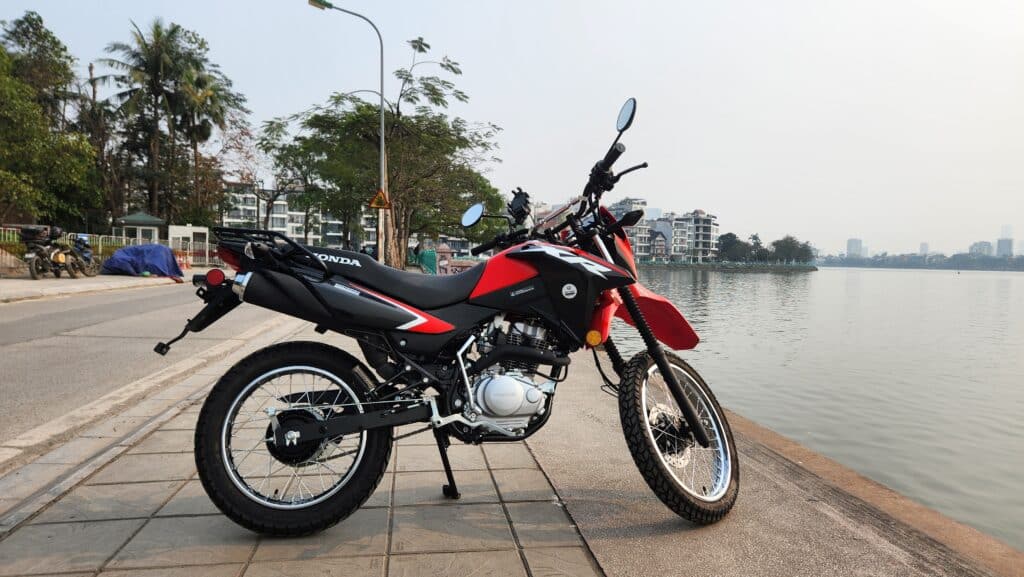
Honda XR 150 Motorcycle Rental
Ready for adventure? The Honda XR150 is your perfect companion for rugged backroads, mountain passes, and open highways.
✅ Lightweight, reliable, and fuel-efficient
✅ Comfortable for long rides and multi-day tours
✅ Trusted by riders across Vietnam for the legendary Ha Giang Loop
How Strong and Safe Is Happy Water?
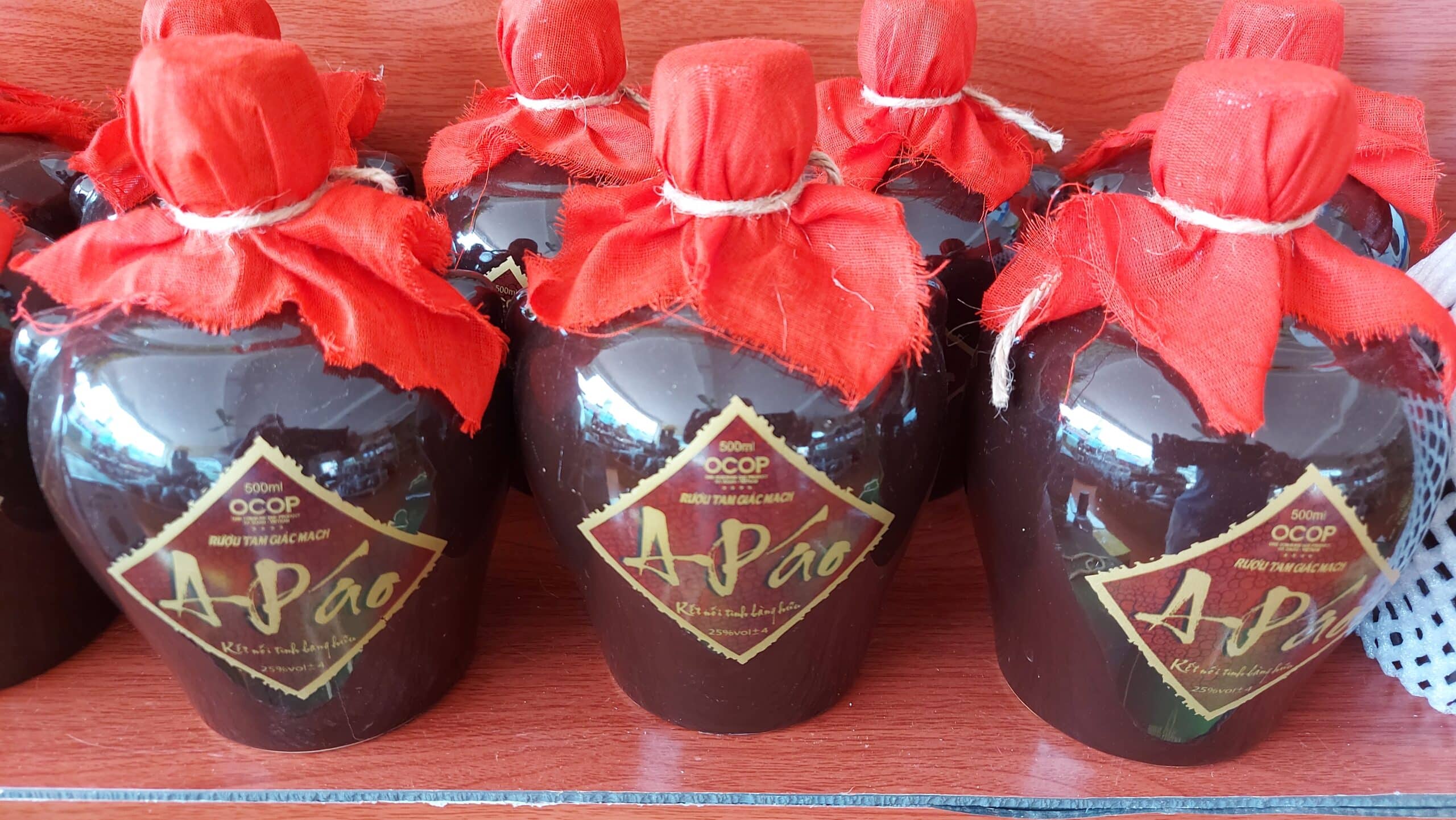
One of the difficulties with homemade alcohol is that there is no single strength or recipe. A glass served in one village may be noticeably different from one served somewhere else.
That matters particularly for travellers who are unfamiliar with locally distilled spirits. Treat happy water as a spirit rather than assuming that the word “wine” means it has the strength of an ordinary glass of wine.
How Strong Is Happy Water?
There is no single alcohol percentage for happy water in Vietnam. Homemade rice and corn spirits can vary considerably in strength depending on the ingredients, fermentation and distillation process.
Some batches may be relatively mild while others can be much stronger than their flavour suggests. It is therefore better not to estimate the alcohol content from taste or assume that every small glass contains the same amount of alcohol.
If the drink is homemade and there is no label, you may simply not know its alcohol percentage. That is a good reason to drink slowly and keep the quantity small.
Is Happy Water Safe to Drink?
Happy water can be safely consumed when it comes from a trusted source, but homemade alcohol does not offer the same consistency as a commercially produced and labelled spirit. Ingredients, strength and production methods can vary considerably.
In Ha Giang, use normal judgement about where a drink has come from. A reputable homestay, restaurant or family you know is very different from an unidentified bottle from an uncertain source.
Avoid unknown spirits when you do not know how they were made or what has been added to them. If you are unsure about a homemade drink, declining it is perfectly reasonable.
Drinking Happy Water in Ha Giang
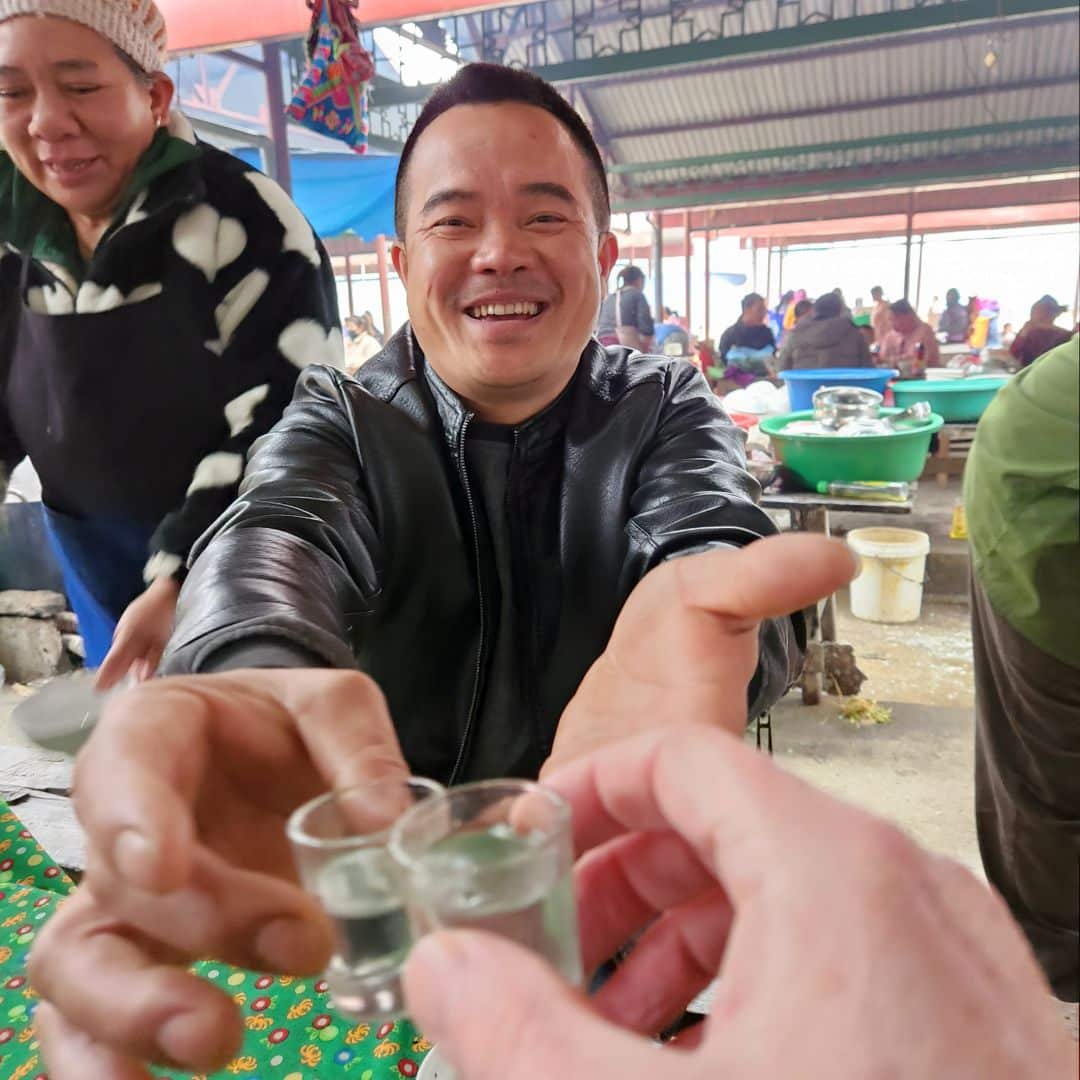
In Ha Giang, happy water is often part of a shared meal rather than something people drink on its own. You may encounter it at family dinners, homestays, local restaurants, markets or celebrations, usually served in small glasses and accompanied by food.
Being offered a drink can be a gesture of hospitality. The interesting part for a visitor is often not the alcohol itself, but the meal, conversation and opportunity to spend time with people you meet along the journey.
Food and accommodation are an important part of travelling through the mountains too. Our guide to eating on a motorcycle trip in Vietnam explains how meals, homestays and roadside stops fit into a riding day.
Happy Water Etiquette
If you are offered happy water, treat it as part of the social occasion rather than as a drinking challenge. Toasts are common, and people may raise their glasses together before taking a sip.
Customs vary between families and communities, so avoid treating any particular drinking ritual as a fixed rule throughout Ha Giang. Follow the lead of your hosts, be friendly and drink at your own pace.
You do not need to match another person drink for drink. If you would rather not drink, politely declining or explaining that you are riding is a perfectly sensible response.
What Does Happy Water Taste Like?
There is no single flavour because ingredients and production vary. Rice spirit and corn spirit can taste quite different, while individual homemade batches can also range from relatively smooth to noticeably sharp.
You may notice sweetness from the grain, a warming alcohol character and sometimes distinctive flavours from the fermentation process. The clearest expectation to have is simply that homemade happy water will not necessarily taste the same each time you encounter it.
Happy Water and Riding a Motorcycle
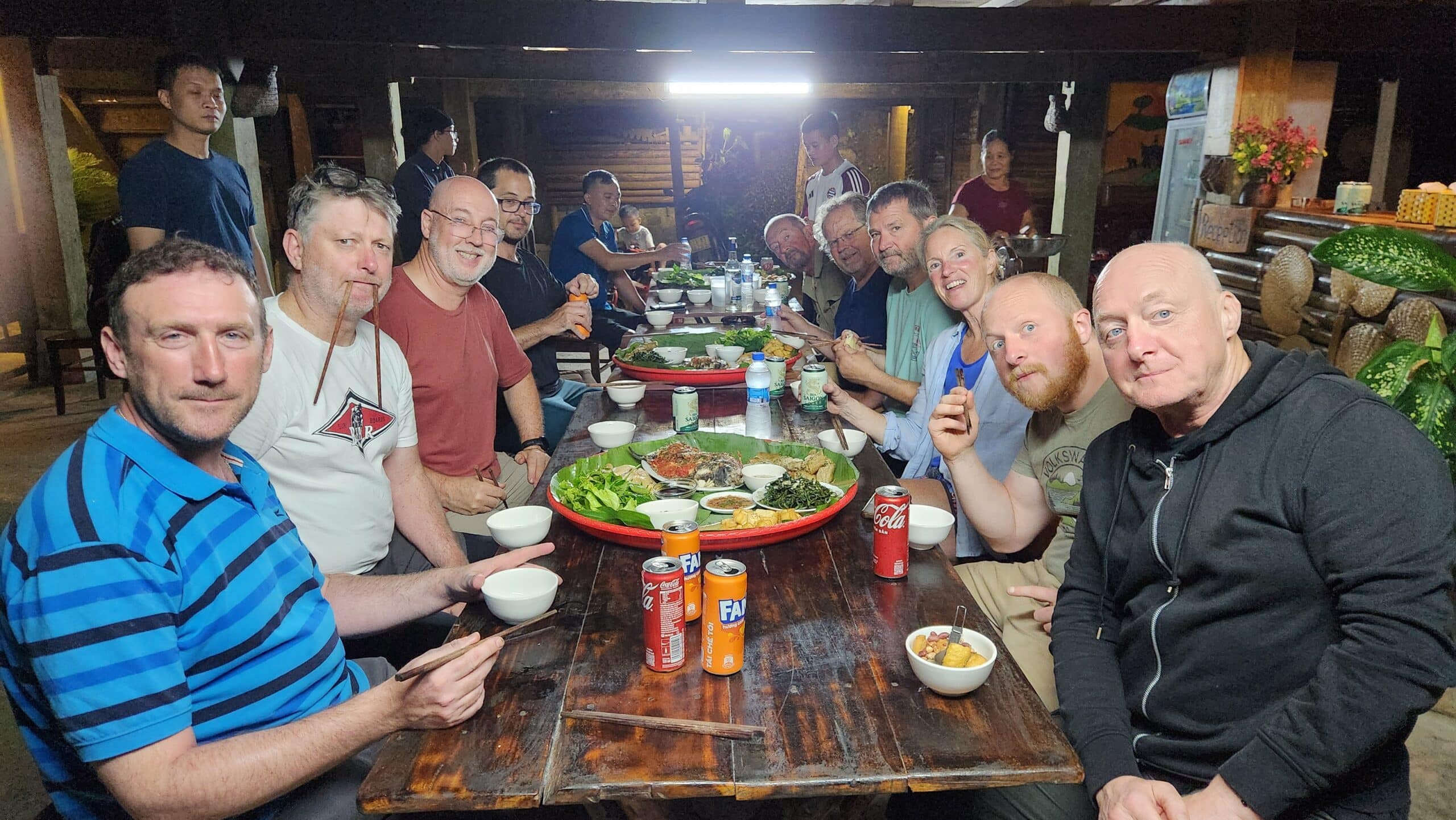
This is the simple part: do not drink happy water and then ride a motorcycle. Vietnam applies a zero-alcohol rule to drivers and riders, so even a small social drink is incompatible with getting back on the bike.
If someone offers you happy water during lunch on a riding day, decline it and enjoy the food instead. Save any tasting for after the motorcycle has been parked for the night and you know that you will not be riding again.
Our Vietnam zero-alcohol riding guide explains the current rules, penalties and practical consequences in much more detail. If you are planning to ride Ha Giang yourself, our Ha Giang motorcycle safety guide is also worth reading before setting off.
Alcohol strength is another reason to be cautious. Because homemade spirits can vary considerably, trying to calculate when you will be “safe to ride” based on the number of glasses you have consumed is not a sensible approach.
Park the motorcycle first. Happy water can wait.
Shot Glass or Baby Bowl?
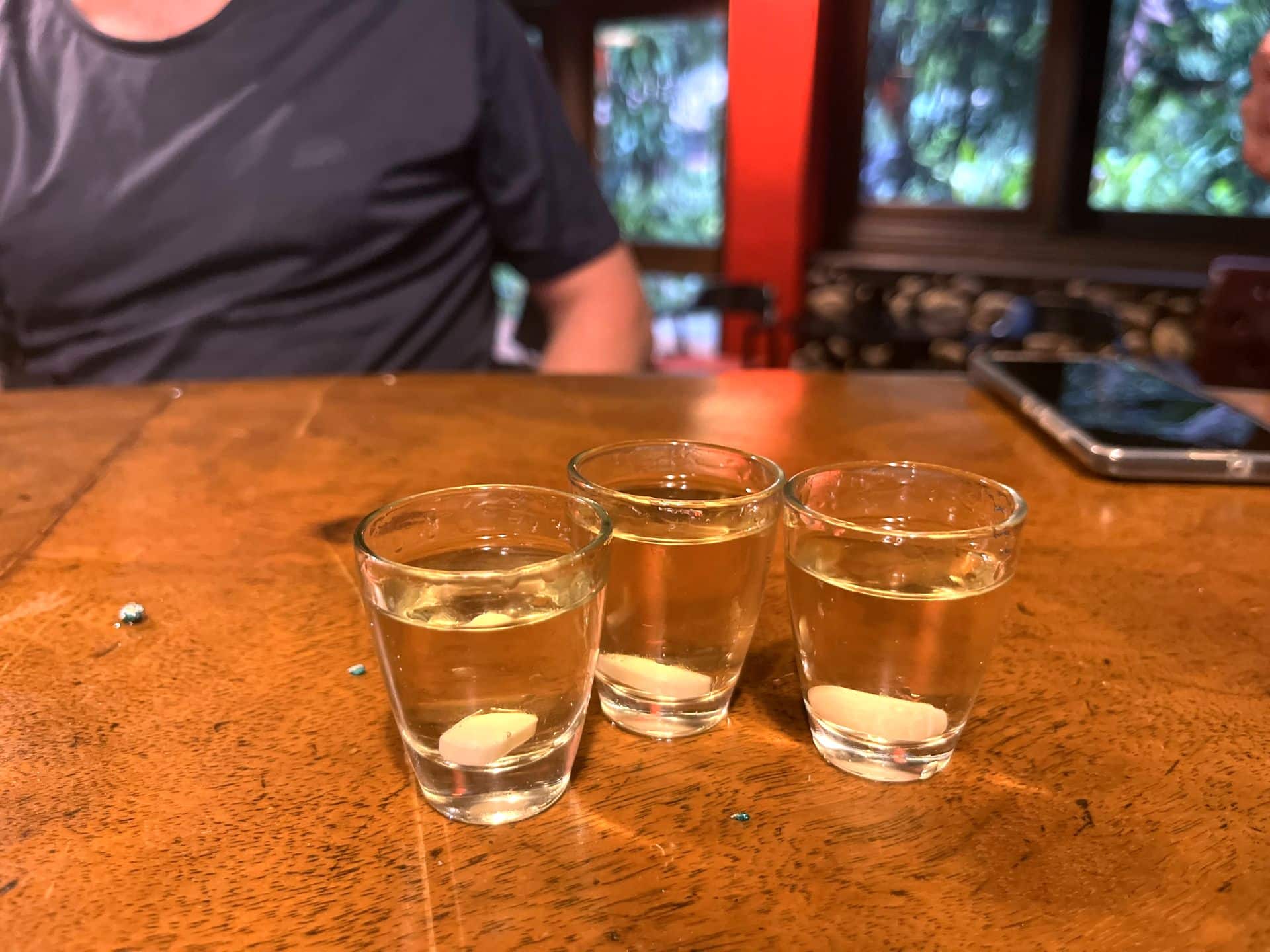
In most regions, ruou is drunk from small shot glasses. However, when drinking rice wine in Ha Giang, you will often see the local ethnic people using baby bowls. This is because shot glasses were traditionally unavailable, whereas baby bowls are something that are used every day.
One consideration is that you are expected to fill a shot glass when pouring and empty it in one when drinking. This is not the same with the baby bowl, unless, your host (drinking nemesis) declares the intention. Quite the art, it is.
Happy Water on a Ha Giang Trip
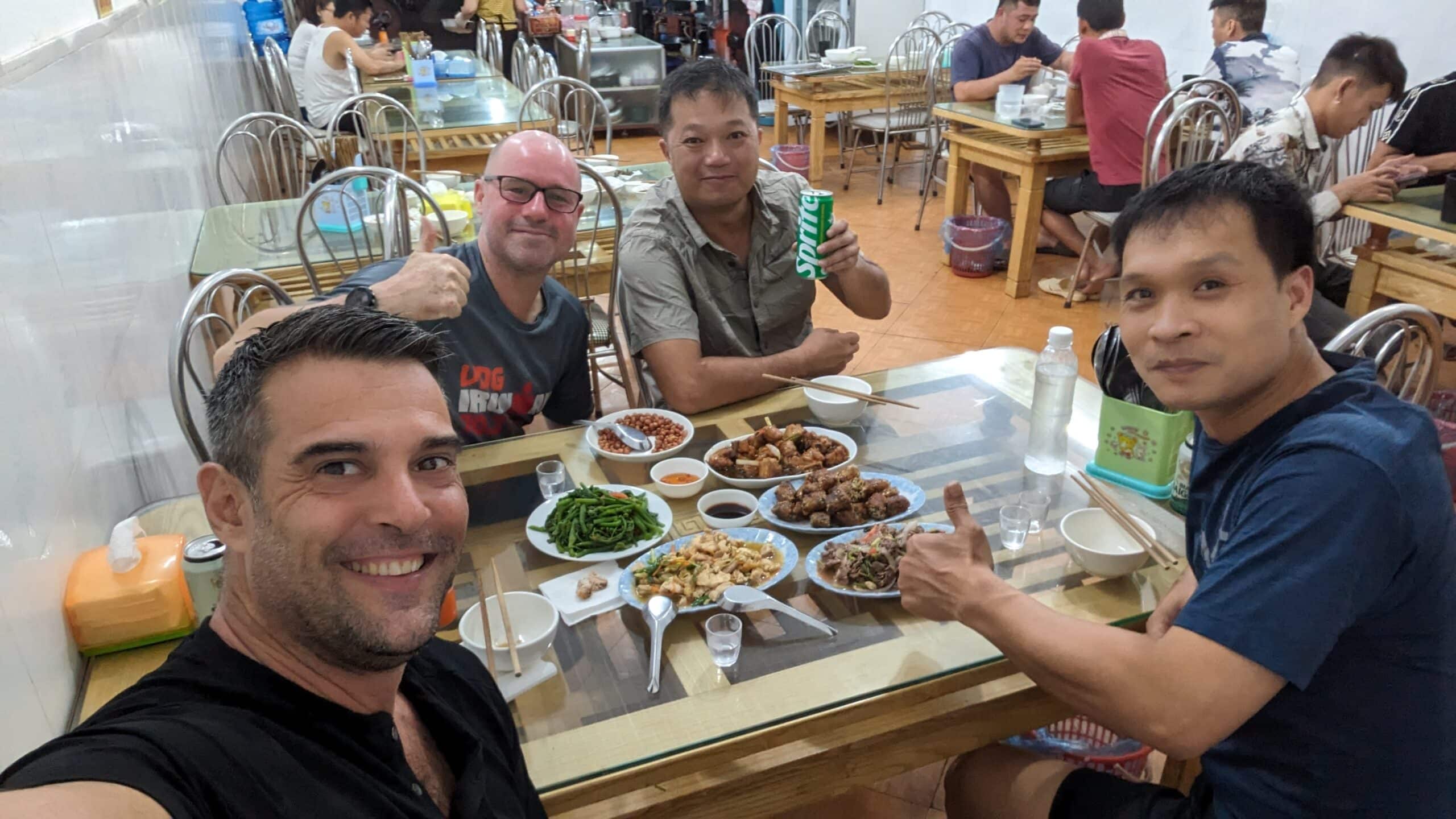
You are most likely to encounter happy water when you stop overnight rather than while you are actually riding. Homestay dinners, meals with local families and social gatherings are natural places for visitors to be offered a glass.
That fits well with travelling Ha Giang slowly. Staying overnight in smaller towns and villages gives you much more opportunity to experience local food and hospitality than simply racing around the famous roads.
Where Might You Encounter Happy Water?
Homestays are probably the most common place for travellers riding the Ha Giang Loop to encounter it. A shared evening meal may include a bottle on the table and a few small toasts between guests and hosts.
You may also see locally produced spirits at markets, restaurants and small shops. What is being sold or served will vary from place to place, so do not assume that every clear liquid labelled “happy water” is made from the same ingredient or to the same strength.
Make It Part of the Trip, But Not the Riding Day
Ha Giang is much better when you allow enough time to stop, eat and spend an evening somewhere interesting. If you want to build your journey around realistic riding stages, use our Ha Giang Route Planner to compare complete loops and individual A-to-B motorcycle routes.
That gives happy water a sensible place in the journey: after the bike is parked, with dinner and somewhere to sleep nearby. The following morning, leave the alcohol behind and concentrate on the road.
7-Day Due North Motorcycle Tour
Ride deep into Vietnam’s northern frontier: mountain passes, hidden valleys, and rich history packed into one unforgettable week Book NowFAQ
What is happy water in Vietnam?
Happy water is an informal traveller’s name for locally produced Vietnamese alcohol. It commonly refers to homemade rice or corn spirits rather than one specific type or brand of drink.
What is happy water made from in Ha Giang?
In Ha Giang it is often made from corn and is known in Vietnamese as rượu ngô. Rice-based alcohol, or rượu gạo, also exists, so the exact ingredients depend on what you are being served.
What percentage alcohol is happy water?
There is no standard percentage because homemade spirits vary according to the ingredients and production method. If the drink is not commercially labelled, you may not know its exact alcohol strength.
Is happy water in Vietnam safe?
Alcohol from a trusted source may be fine to drink in moderation, but homemade spirits vary in strength and production standards. Avoid unidentified alcohol from uncertain sources and decline anything you are not comfortable drinking.
Can I drink happy water while riding the Ha Giang Loop?
Not during the riding day. Vietnam has a zero-alcohol rule for drivers and motorcycle riders, so wait until the motorcycle is parked for the night before considering any alcoholic drink.
Happy Water Is Part of the Ha Giang Experience — Not the Ride
Happy water can be an enjoyable introduction to the food, hospitality and social side of travelling through Ha Giang. Understanding that it may be corn spirit rather than rice wine, that its strength can vary and that you are never obliged to drink makes the experience easier to approach sensibly.
If you are riding through the region, plan the roads first with our Ha Giang Route Planner and save the social drinking for the end of the day. For the rules that matter once you are on the motorcycle, read our Vietnam zero-alcohol riding guide before you travel.