Rentals
Petrol in Vietnam: Fuel Types, Prices & How to Fill Up
Buying petrol in Vietnam is straightforward once you know what the pump labels mean. The important change for 2026 is that the old simple choice between RON92 and unblended RON95 is no longer the whole story: E10 petrol has been rolled out nationwide, while E5 RON92 remains widely available.
For most travellers, the practical rule is simple: use the fuel grade recommended for the motorcycle you are riding, fill early in rural areas and do not wait for the warning light before looking for the next station. This guide explains the current fuel choices, how to use a Vietnamese petrol station and what to do on longer motorcycle trips.
For the bigger picture, including motorcycle range, fuel economy and planning petrol stops on longer routes, see our complete guide to motorcycle fuel in Vietnam.
What changed with E10?
Vietnam introduced E10 nationwide from 1 June 2026. That means riders who previously looked for ordinary RON95 will increasingly see E10 RON95-III instead. If you want the technical explanation of ethanol content, compatibility and older motorcycles, read our E10 petrol guide.
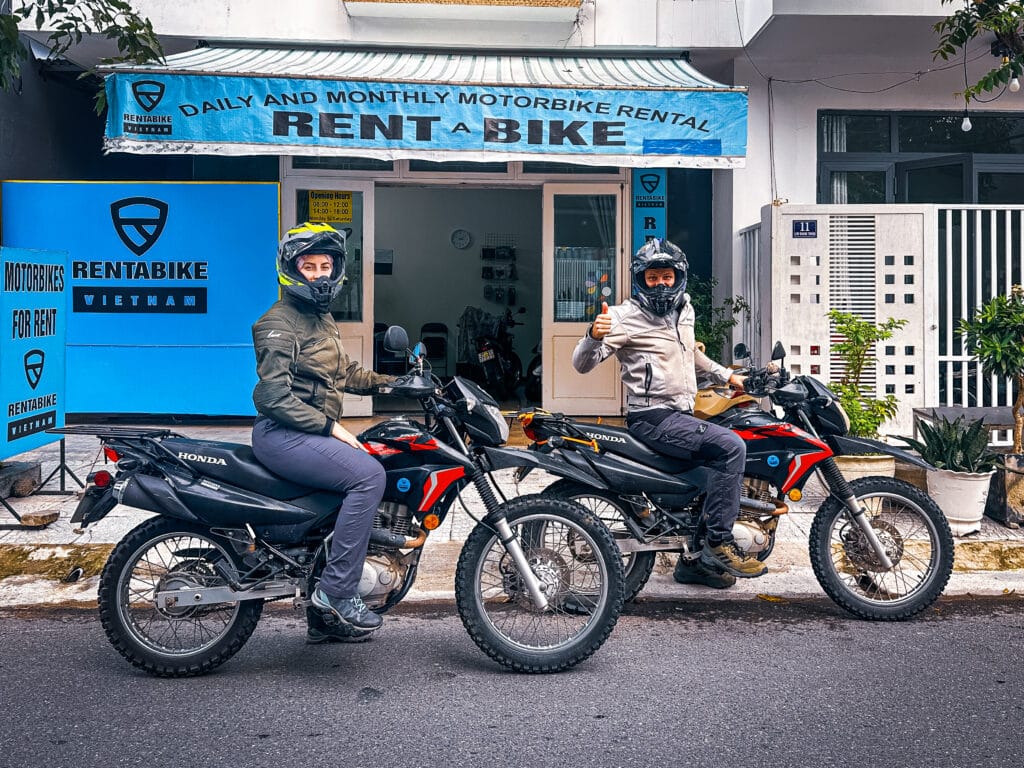
For a rental bike, the easiest approach is to ask at collection which pump you should use and follow that advice for the trip. The correct fuel depends on the motorcycle, not on a blanket rule that every rental bike needs 92 or every touring bike needs 95.
Can you mix E5 and E10?
If the motorcycle is compatible with both fuels and both octane ratings meet the manufacturer’s requirement, topping up one with the other is normally not a problem. The important point is not to drop below the octane requirement of the engine just to save a small amount of money.
One-Way Rentals
Ready for ultimate freedom? Our one-way rentals let you blaze your own trail across Vietnam — no need to loop back!
✅ Pick up/drop off in Hanoi, Danang, or Ho Chi Minh City
✅ Explore Vietnam at your pace
✅ No backtracking—just pure, open-road freedom
Finding petrol stations and planning fuel stops
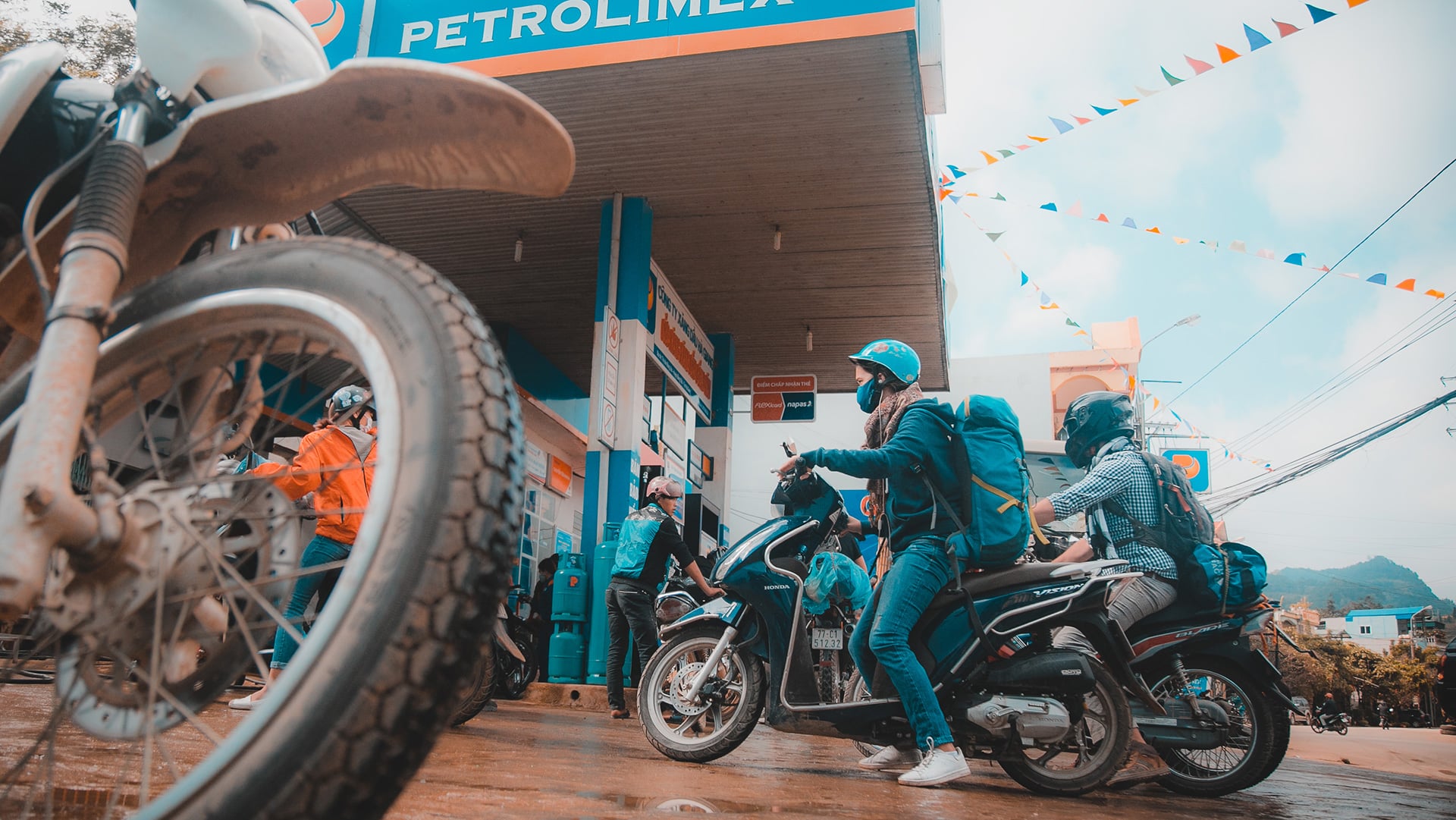
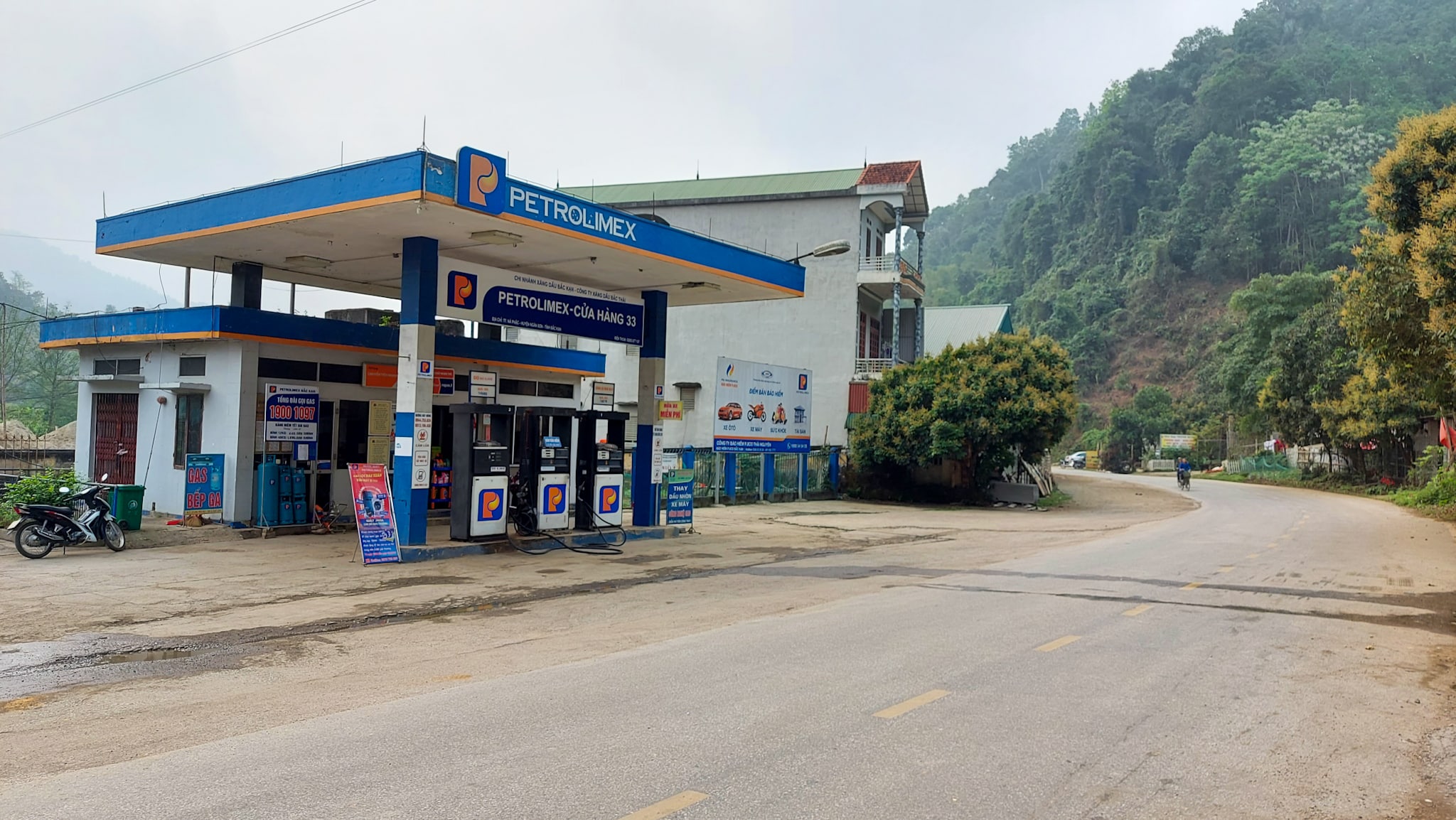
In cities and larger towns, fuel stations are common and easy to find. Petrolimex and PVOIL are among the most familiar national brands, and there are many other authorised stations across the country.
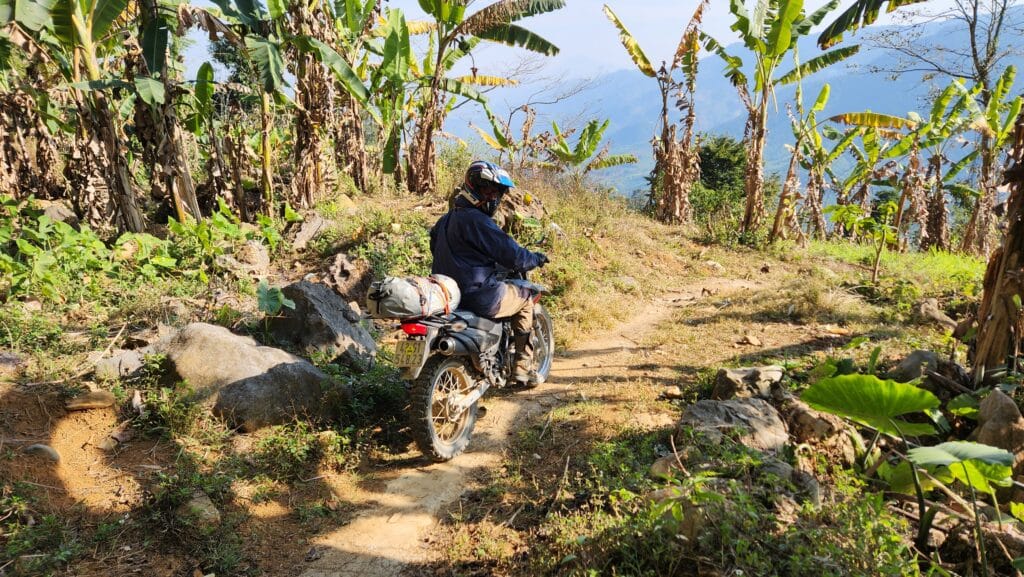
The situation changes on smaller mountain roads. You can often still find fuel in district towns and villages, but the distance between proper stations can increase, opening hours may be shorter and a mapped station may not always be operating exactly as expected.
Use maps, but do not trust one pin blindly
Google Maps is useful for finding petrol stations. Search for “petrol station”, “gas station”, “cây xăng” or “trạm xăng”. Download offline map areas before entering remote regions, but remember that business listings and opening hours can be wrong.
Our Vietnam motorcycle route maps help you choose the road and understand the shape of the riding day, but current local information is still useful when you are travelling through remote areas.
Fill early in the mountains
A good touring habit is to refill when you have a convenient opportunity rather than trying to use every last kilometre of range. If you are leaving a district town for a long mountain stage, fill the tank there even if it is not close to empty.
Roadside petrol sold from bottles still exists in some rural places, but treat it as a backup rather than your first choice. The quantity, storage conditions and fuel quality are less predictable than at a proper filling station.
How to fill up a motorcycle in Vietnam
Most Vietnamese petrol stations use attendants rather than self-service. Ride to an available pump, stop where the attendant can reach the tank, switch off the engine and open the fuel cap.
Useful Vietnamese at the pump
The most useful phrase is “đầy bình”, meaning “fill the tank”. If you only want a fixed amount, you can say the amount followed by “nghìn”. For example, “năm mươi nghìn” means 50,000 VND.
If pronunciation is difficult, pointing to the tank and showing the amount on your phone usually works perfectly well. You can also point to the correct fuel label on the pump before the attendant starts.
Paying for fuel
Cash is still the safest payment method to rely on, especially outside major cities. QR payments through Vietnamese banking apps are common, while card acceptance varies by station.
Before paying, glance at the pump total and make sure the transaction you are paying for is yours. At busy stations, several motorcycles may be moving through the same pump in quick succession.
TOP TIP – I always pay for petrol with a 500,000vnd note. They always have change and this means that I always have change for whatever I need throughout the day 🙂
Expat Rentals
Live here? Ride like you own it. Our long-term expat rentals are made for those working or living in Vietnam.
✅ Cost-effective monthly rates
✅ Flexible contracts, full maintenance support
✅ Ride like a local: Hanoi, Danang, or Ho Chi Minh City
Petrol prices, range and remote riding
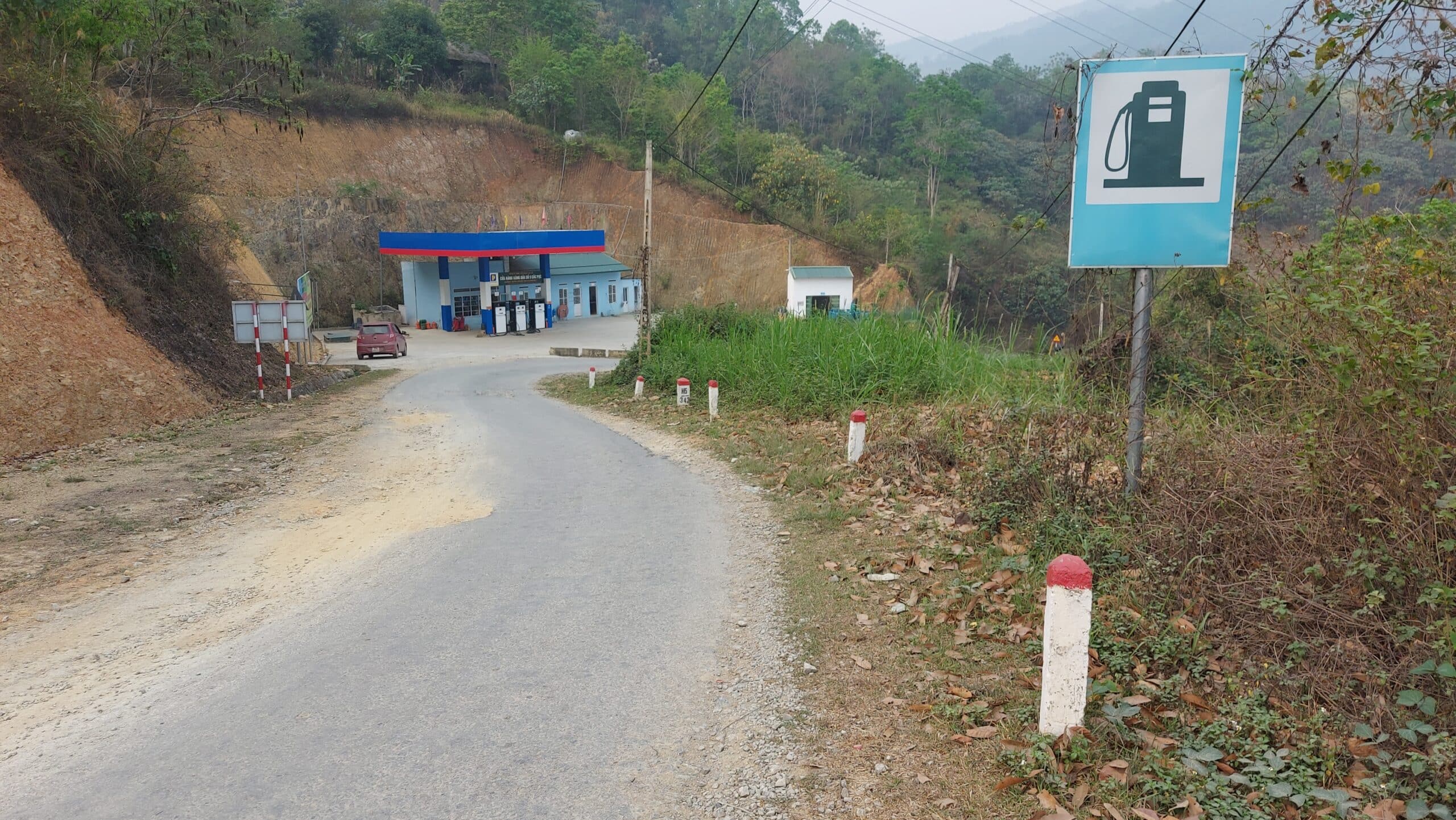
Vietnamese petrol prices are adjusted regularly, so fixed numbers become outdated quickly. As a current reference, the official ceiling prices from 1 October 2026 were 26,569 VND per litre for E5 RON92 and 27,189 VND per litre for E10 RON95-III.
Those figures will change, so use them as a snapshot rather than a permanent price guide. For most motorcycle travellers, fuel is still a relatively small part of the trip budget compared with accommodation, food, motorcycle rental and transport.
Know your real range
Do not assume every small motorcycle will automatically cover more than 200 km on a tank. Tank size, engine type, speed, luggage, hills, wind and riding style all affect consumption.
If you are unfamiliar with the motorcycle, ask the rental company for a realistic touring range and reset the trip meter after each fill. Our Honda CB500X fuel-consumption guide shows why real-world range is more useful than simply quoting tank capacity.
Should you carry extra petrol?
For normal tourist routes, carrying a separate fuel can is usually unnecessary. It adds weight, creates a spill and fire risk, and can be awkward to secure safely on a small motorcycle.
The better strategy is to know the approximate range, fill early and ask locally when heading into a genuinely remote section. Organised tours may carry fuel differently when a route requires it, but that is a support decision rather than something every independent rider needs to copy.
Common fuel mistakes to avoid
The most common mistake is using a generic rule such as “always choose 92” or “95 is always better”. The correct answer is whichever fuel meets the motorcycle manufacturer’s requirements and the rental company’s instructions.
A second mistake is treating the fuel gauge as perfectly accurate. Some small motorcycles have basic gauges that move quickly near empty. Use the trip meter, your known range and early refuelling together.
Finally, do not build an itinerary that requires one specific small station to be open. Mountain routes are easier when you keep a fuel margin and have a second option.
FAQ
How much does petrol cost in Vietnam?
Fuel prices are adjusted regularly. On 1 October 2026, the official ceiling prices were 26,569 VND/litre for E5 RON92 and 27,189 VND/litre for E10 RON95-III, but always check the current pump price.
Should I use E5 RON92 or E10 RON95?
Use the grade recommended for that motorcycle. Many small bikes can use E5 RON92, while motorcycles that require RON95 should use E10 RON95-III. Ask the rental company if you are unsure.
Are petrol stations in Vietnam self-service?
Usually not. An attendant normally fills the motorcycle for you. Tell them “đầy bình” for a full tank or give a fixed amount in VND.
Is fuel easy to find in rural Vietnam?
Usually yes in towns and along major routes, but stations are farther apart on some mountain roads. Fill early, keep a margin and ask locally before very remote sections.
Should I buy petrol sold in bottles by the roadside?
Use it as a backup rather than your first choice. A proper filling station gives you more confidence about storage, quantity and fuel quality.
Petrol in Vietnam is simple once you know the labels
For most motorcycle travellers, buying fuel in Vietnam becomes routine after the first stop. Learn the two current pump labels, use the grade your motorcycle requires, carry some cash and fill earlier when you leave the main roads.
If you want the deeper technical explanation of Vietnam’s switch to E10, read our E10 petrol guide. For independent touring, combine sensible fuel planning with the Vietnam motorcycle route maps and choose a rental motorcycle whose range suits the journey you want to ride.