
Culture
Local Markets in Cao Bằng: A Guide for Motorcycle Riders
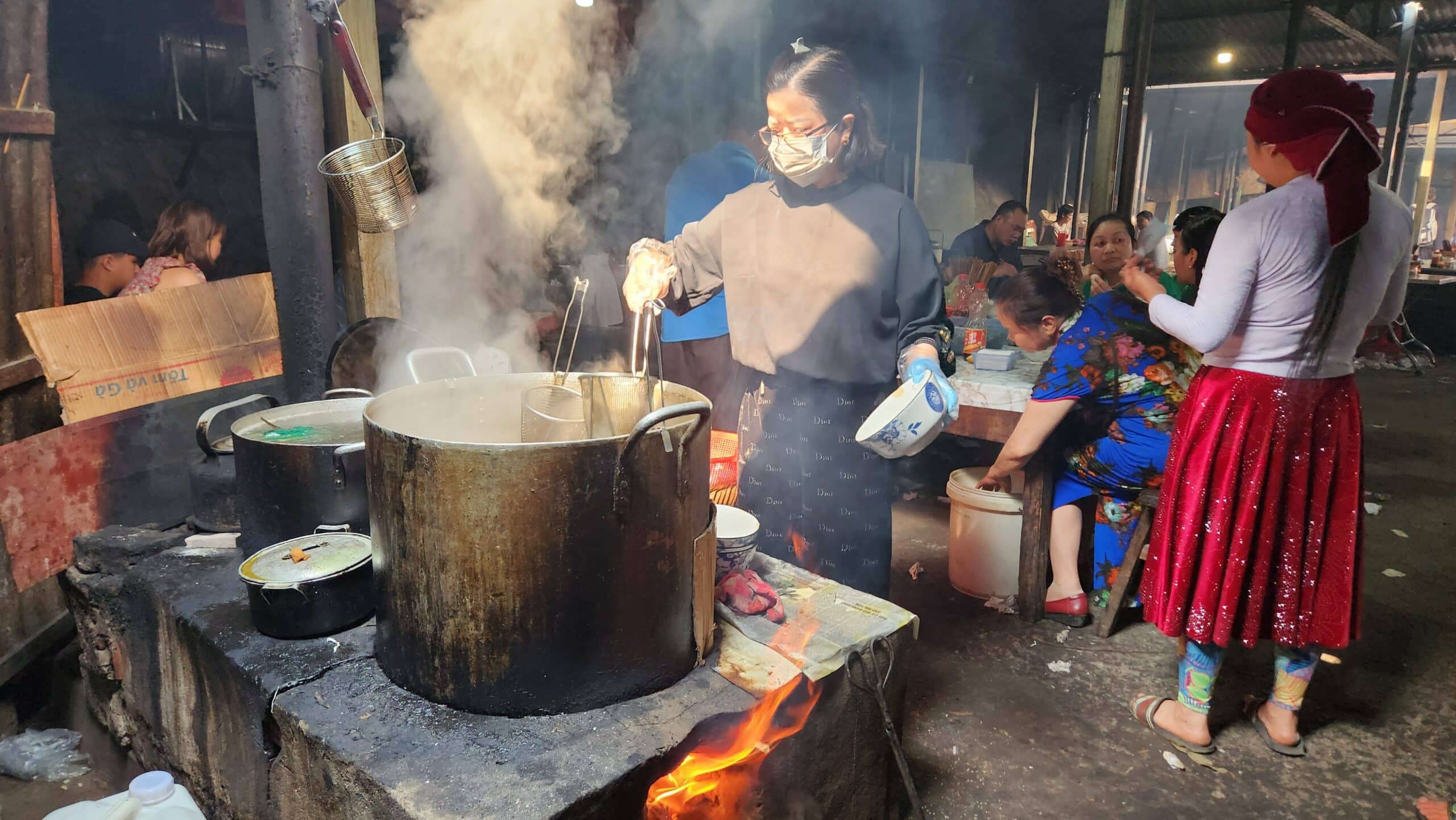
One of the best things about riding through Cao Bằng is that an ordinary-looking town can be completely transformed on market morning. People travel in from the surrounding villages to buy and sell food, livestock, vegetables, clothes, tools and household goods, while food stalls appear and the streets suddenly become much busier.
If you happen to be staying in a place that has a market, it is well worth making time to have a wander around before setting off. You do not need to plan the whole trip around them, but places such as Cao Bằng, Quảng Uyên and Trùng Khánh are already on many motorcycle routes around Bản Giốc, making their markets very easy to include.
Understanding Cao Bằng’s Lunar Market Days
Many traditional markets in Cao Bằng do not operate on a particular weekday. Instead, their main market days follow the Vietnamese lunar calendar.
You may therefore see a market described as 1/6, 2/7, 3/8, 4/9 or 5/10. The numbers tell you which lunar dates the market operates.
| Market Cycle | Market Days |
|---|---|
| 1/6 | 1st, 6th, 11th, 16th, 21st, 26th |
| 2/7 | 2nd, 7th, 12th, 17th, 22nd, 27th |
| 3/8 | 3rd, 8th, 13th, 18th, 23rd, 28th |
| 4/9 | 4th, 9th, 14th, 19th, 24th, 29th |
| 5/10 | 5th, 10th, 15th, 20th, 25th, 30th |
These are lunar dates, not the normal calendar dates on your phone. For example, if Quảng Uyên has a 1/6 market, it means the main market sessions fall on the 1st, 6th, 11th, 16th, 21st and 26th days of the lunar month.
Check the Market Map Before You Ride
You do not need to design your Cao Bằng motorcycle tour around market days.
Instead, check the lunar date, through this link and look at our Cao Bằng market map, and see whether there is a market close to the route you are already planning to ride.
If there is, allow extra time for breakfast and spend an hour walking around before continuing your journey. It is an easy way to add something genuinely local to a riding day without changing the trip completely. You are also bound to get some cracking photos.
Markets That Are Easy to Visit on a Cao Bằng Motorcycle Tour
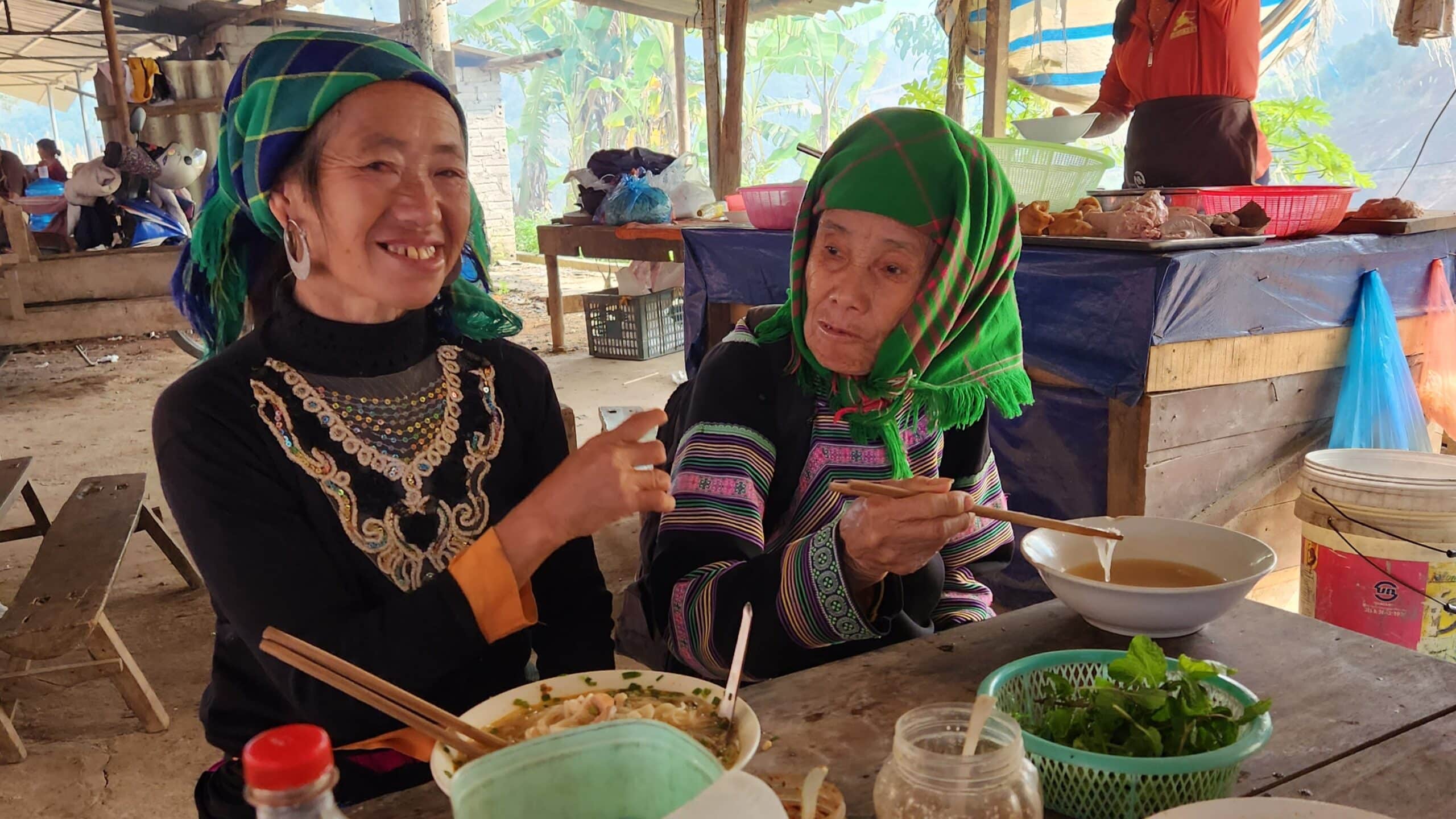
Cao Bằng City
Cao Bằng is usually where many riders spend a night before heading towards Bản Giốc or deeper into the northeast. There are markets and food stalls operating regularly in the city, so you do not need a particular market day simply to experience a busy Vietnamese market.
Periodic markets in the countryside surrounding the city become considerably busier on their designated lunar dates, as people travel in from surrounding villages with agricultural produce and goods to sell.
If you are staying in Cao Bằng, an early walk through the market area before breakfast and before getting on the bike is an easy addition to the day.
Quảng Uyên
Quảng Uyên is directly on our main Cao Bằng to Bản Giốc motorcycle route, so this is probably the most useful traditional market for riders to know about. If you are breaking the journey into stages, you can also compare the Cao Bằng to Quảng Uyên and Quảng Uyên to Bản Giốc routes separately.
The main Quảng Uyên market follows the 1/6 cycle: the 1st, 6th, 11th, 16th, 21st and 26th of the lunar month. If your riding day happens to coincide with one of these dates, leave Cao Bằng a little earlier, stop for breakfast and a walk around the market, then continue towards Bản Giốc.
On market mornings the town becomes much busier, with people arriving from the surrounding countryside. Expect vegetables, fruit, meat, chickens, agricultural produce, clothing, household goods and plenty of local food.
You do not need to make a special journey to see it. If your ride towards Bản Giốc happens to coincide with a 1/6 day, simply leave Cao Bằng early and stop in Quảng Uyên for breakfast and a walk around before continuing.
Trùng Khánh – 5/10
Trùng Khánh is the main town before Bản Giốc and another very easy market stop for motorcycle travellers. However, it is a little difficult to get there very early in the morning unless you stay there overnight.
Its main periodic market follows the 5/10 cycle, with the busiest traditional market sessions on the 5th, 10th, 15th, 20th and 25th lunar days.
This is a larger regional centre, so there is activity outside the main market days as well. However, periodic market mornings bring considerably more people into town from the surrounding villages.
Trùng Khánh is also famous for its local chestnuts, particularly during the autumn harvest. The market is a good place to look for seasonal fruit, vegetables and other locally produced food before continuing the short ride towards Bản Giốc.
Bản Giốc and Bản Rạ – 4/9
There is not a large traditional periodic market directly beside Bản Giốc Waterfall. For a big market experience, Trùng Khánh is the better choice.
However, riders staying around Bản Giốc can look out for Bản Rạ Market, in the Đàm Thủy area close to the waterfall. It follows the 4/9 cycle: 4th, 9th, 14th, 19th, 24th and 29th lunar days.
This is a much smaller local market than Trùng Khánh or Quảng Uyên. That is part of its appeal: it feels like a village market rather than a destination in its own right. Do not mistake it for the hawkers selling souvenirs at the entrance to the falls itself.
Trà Lĩnh – 4/9
If you take our sightseeing route between Cao Bằng and Bản Giốc through Trà Lĩnh and the Angel Eye Mountain area, it is worth checking whether your ride coincides with a Trà Lĩnh market morning.
Trà Lĩnh follows the 4/9 lunar cycle and is particularly known for its livestock trading.
This is the one market that can justify adjusting your morning slightly because the livestock section is very different from an ordinary town market. Arrive early, if you can, to see it at its busiest.
What Will You Find at the Markets?
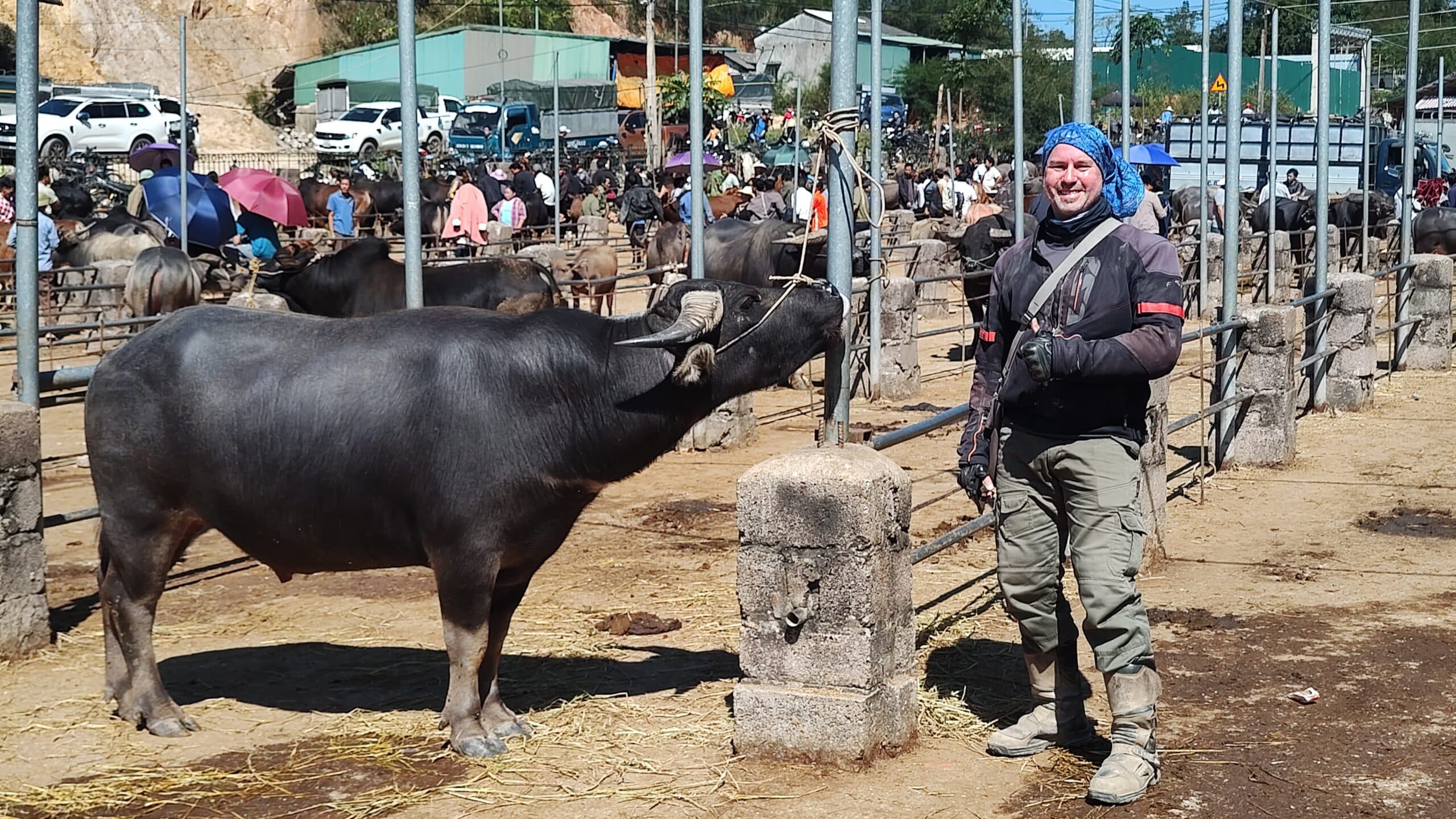
Do not expect rows of souvenir shops. These are working local markets used by the people who live in the surrounding villages.
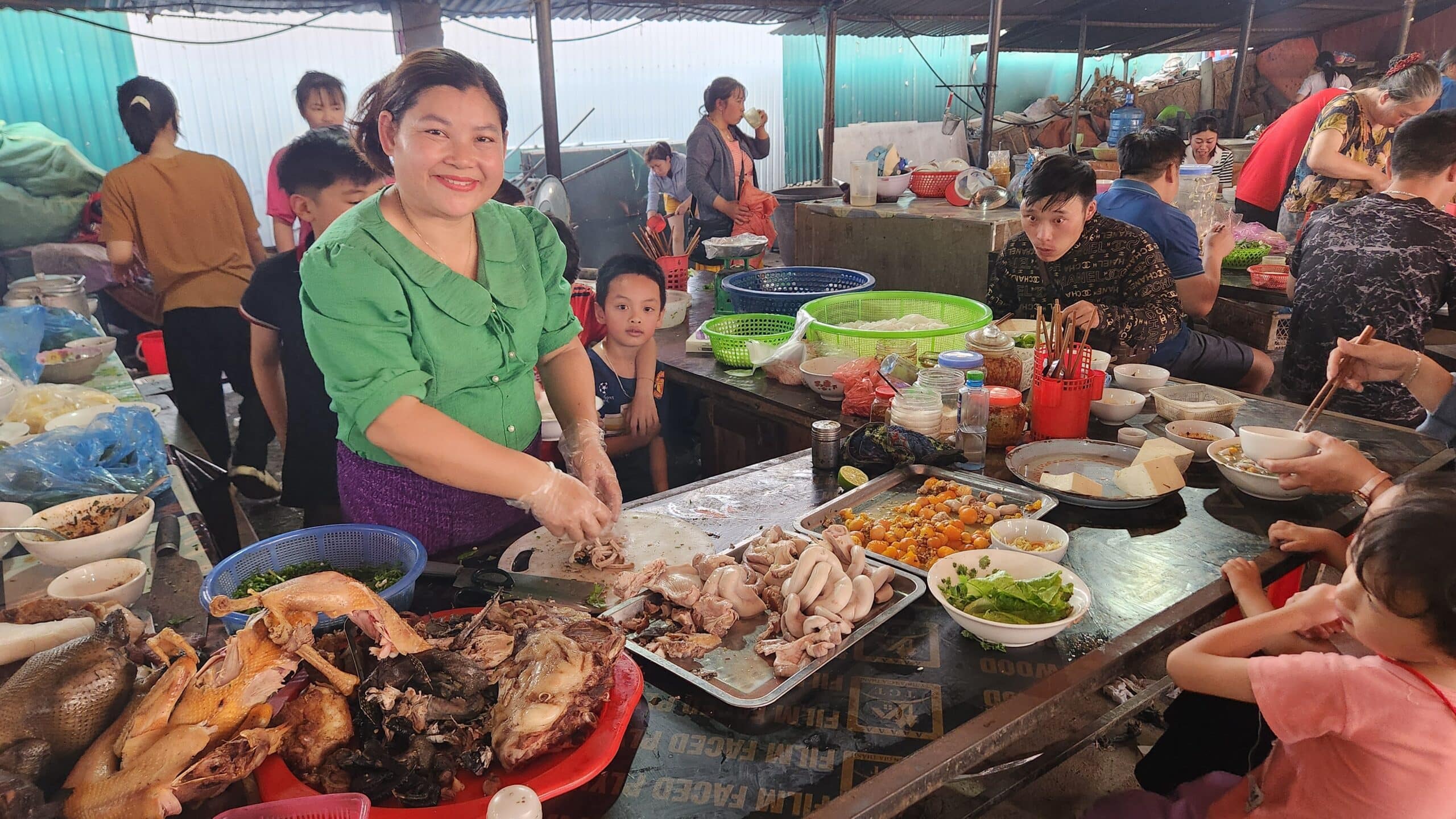
Depending on the season and location, you may see vegetables, bamboo shoots, herbs, fruit, rice, corn, chickens, ducks, pigs, cattle, farming tools, knives, clothes, baskets and everyday household goods. Markets are also social occasions, so eating, drinking tea and catching up with friends can be as important as buying and selling. You will usually find a large food hall at any decent market. This is often one of the best reasons to visit.
Look for bánh cuốn Cao Bằng, which is served differently from the Hanoi version and is often eaten with a warm pork-bone broth. You may also find sticky rice, noodles, roast duck flavoured with mắc mật leaves, sausages and simple bowls of soup or noodles. Seasonal specialties include Ant Egg Rice Cake and Trung Khanh Chesnuts
A good rule is: if you are planning to visit a market, don’t eat breakfast first.
Best Time to Visit
Try to arrive between approximately 06:30 and 09:00. Markets are primarily morning events and this is when you are most likely to see people arriving from the surrounding villages, stalls fully stocked and food being prepared. By late morning, smaller markets can already be winding down. So, consider whether you should start out early or late when you know there is a market.
Take Care when approaching because market mornings also change riding conditions. Roads approaching town can suddenly contain much more pedestrian traffic, overloaded motorbikes, livestock, minibuses and vehicles stopping without warning. Slow down well before reaching the market and, where possible, park the motorcycle nearby and explore on foot.
Markets are often marked with a road sign with the work CHO written on it. When you see this you should instinctively slow down because there will likely be hazards.
Market Days Around Festivals
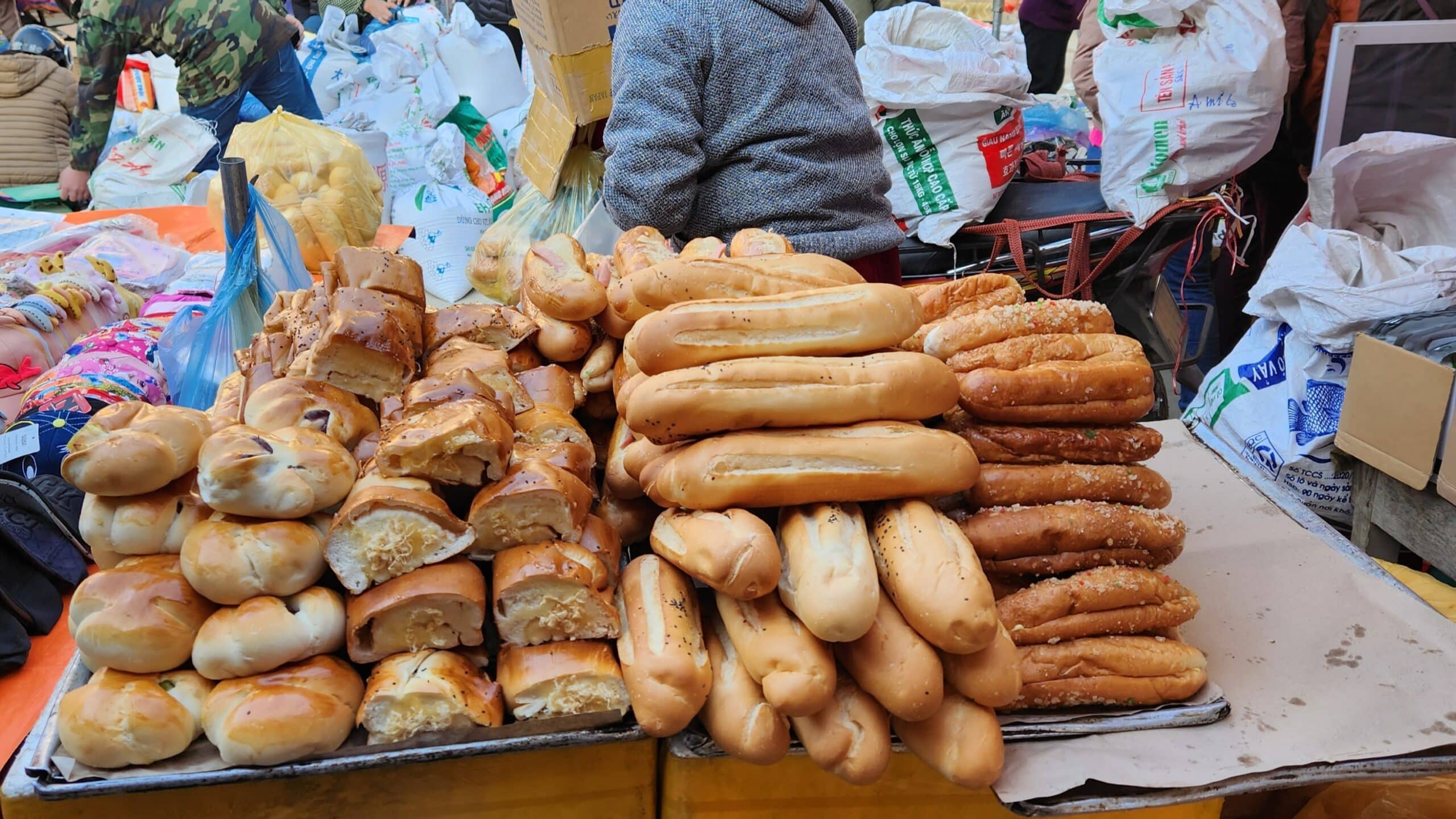
Markets become particularly interesting before Tết, (late Jan, early Feb) when families travel into town to buy food, clothes, decorations and everything needed for the Lunar New Year celebrations. Cao Bằng’s provincial newspaper describes the pre-Tết periodic markets as especially busy, with Tày, Nùng, Mông and Dao communities bringing local produce into the markets.
Other important lunar festivals can also make particular market sessions larger than normal. This can make them more interesting to visit, but expect heavier local traffic and considerably busier roads.
FAQ
Do I need cash at Cao Bang local markets?
Yes. Cash is the safest option, especially at smaller periodic markets where only some sellers will accept digital payments. Also, be sure to carry small Vietnamese dong notes if you are very early, because vendors may struggle to change large denominations early in the morning.
Is it acceptable to bargain at local markets?
For some goods, yes, but not everything needs to be negotiated. Clothes, household items and non-food goods may have some flexibility, while simple food, vegetables and low-cost produce are often already priced very cheaply. Keep bargaining friendly and avoid pushing hard over a small amount.
Can foreign visitors buy livestock or agricultural products?
You may be able to buy some agricultural goods, but livestock markets are mainly for local trade and are best treated as something to observe rather than participate in. Food, fruit, snacks, local produce and simple household goods are much easier purchases for travellers.
What happens if the market day falls during bad weather?
Markets usually still operate. Put simply, people have to eat. However, heavy rain can reduce attendance, especially at smaller rural markets where traders travel in from surrounding villages. Roads can also become more slippery and congested, so allow extra time and do not force a detour just to reach a market in poor conditions.
Can I take photos of people at the markets?
Wide market scenes are usually fine, but ask before taking close-up portraits, especially of older people, children or people in traditional clothing. A smile and simple gesture towards your camera is normally enough to make your intention clear.
And respect a “No.”
Add a Market Stop to Your Cao Bằng Ride
Cao Bằng’s local markets are not something you need to build an entire trip around, but they can make a good riding day much more memorable. If your route happens to match a market morning, leave a little earlier, stop for breakfast, walk around for an hour and then continue into the mountains.
If you are planning to ride towards Bản Giốc, use our Cao Bằng to Bản Giốc route guide to compare the different roads and see which one best fits your day. Riders looking for a more scenic route can also explore our other Cao Bằng route maps to combine markets, viewpoints and quieter backroads into the same journey.
If you would rather have the route planning taken care of, have a look at our Vietnam motorcycle tours. And if you prefer to travel independently, you can also rent a motorcycle in Vietnam and build your own Cao Bằng loop around the places that interest you most.
Sometimes the best stop of the day isn’t a waterfall, viewpoint or famous attraction. It is simply arriving in a small Cao Bằng town on exactly the right morning.