
Safety + Legality
Flooding in Vietnam: Motorcycle Safety Guide
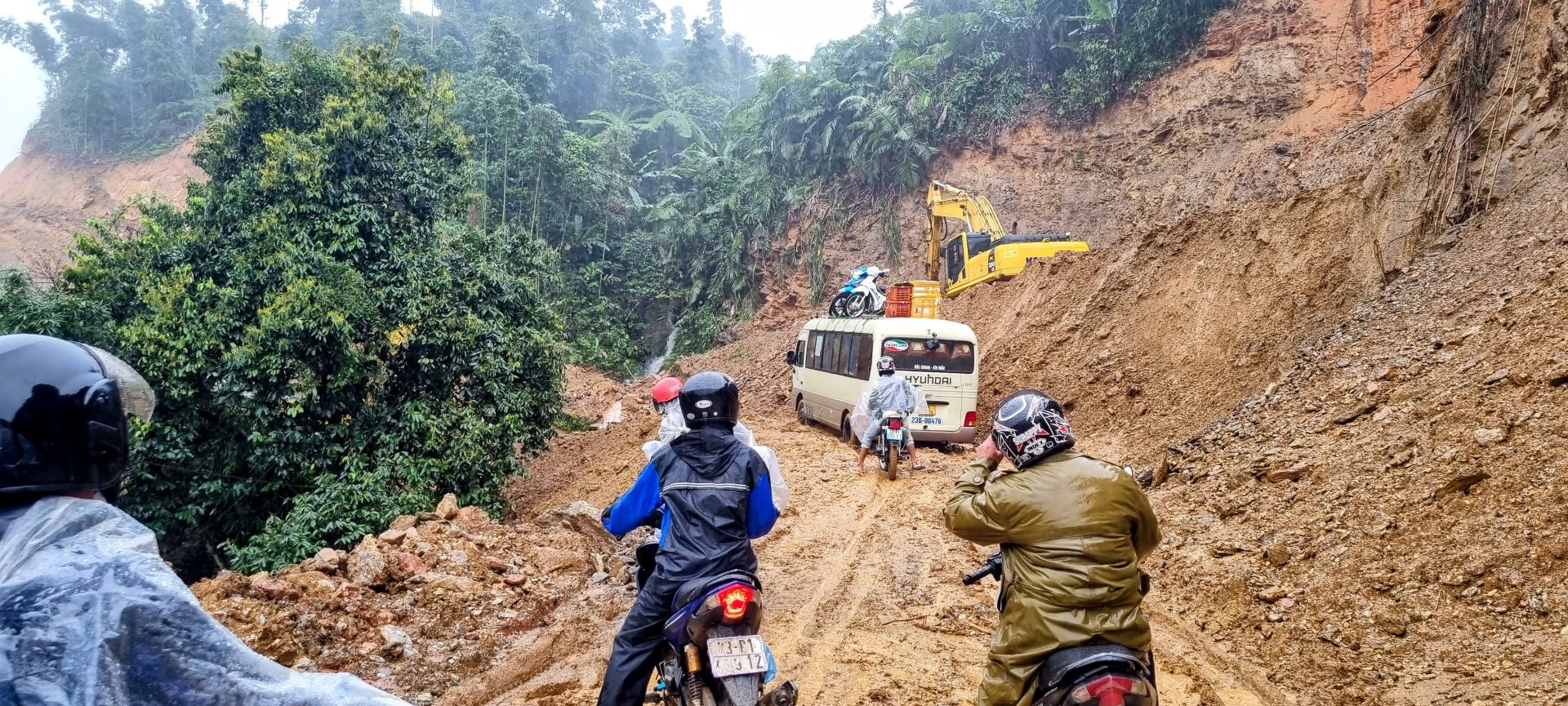
Flooding can turn an ordinary motorcycle day in Vietnam into a serious route decision very quickly. A road that was clear an hour earlier may be covered by water, traffic can divert onto smaller roads, and heavy rain can trigger landslides or fast runoff long after the worst of the storm has passed.
The key is not learning how to “conquer” floodwater. It is knowing when the road is no longer predictable enough to ride safely. A motorcycle gives you less stability, less ground clearance and less protection than a car, and floodwater can hide hazards you simply cannot see.
If flooding is part of a wider wet-weather trip, start with our Vietnam Rainy Season guide. For broader seasonal planning across the country, our Vietnam Motorcycle Weather Guide explains when different regions are most exposed to heavy rain.
Decide whether the water is safe to approach
The first decision is whether you should enter the flooded section at all. Do not commit simply because another motorcycle, bus or truck has gone through.
Floodwater can hide potholes, broken road edges, open drains, debris and sudden changes in depth. Even relatively shallow water can push a motorcycle sideways if it is moving quickly across the road.
Assess depth and current before moving
Use fixed reference points such as kerbs, road signs, parked vehicles or bridge edges to judge how deep the water may be and whether it is rising. Watch what local traffic is doing, but remember that another rider may know the road, be on a lighter bike or be taking a risk you do not need to copy.
If the water is moving visibly across the road, carrying debris or changing depth quickly, turn around. Moving water is much more dangerous than standing water because it can push the wheels off line before you have time to react.
If you cannot see the road surface, treat that as a warning
You need to know what your tyres are about to roll over. If muddy water hides the road completely, you may be riding towards a pothole, missing drain cover, collapsed shoulder or submerged object.
A safer alternative route is almost always preferable to experimenting with unknown depth. Our Vietnam motorcycle route maps can help you compare other roads, but after severe weather always combine them with current local information.
Protect the motorcycle and your control of it
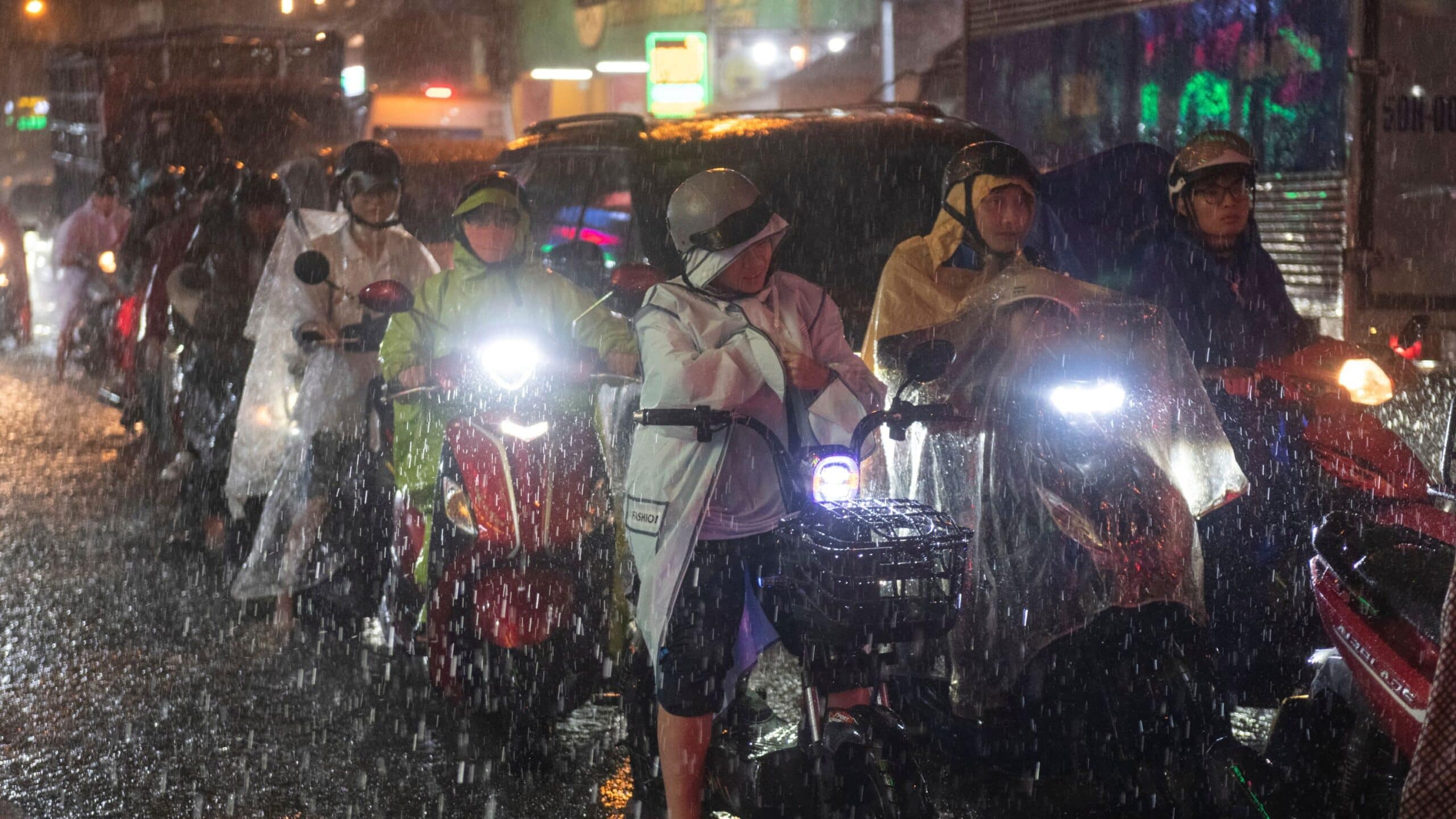
Floodwater creates mechanical problems as well as balance problems. The deeper the water, the greater the risk of water reaching the air intake, electrical components, bearings and other parts that are not designed for prolonged submersion.
Even if the motorcycle keeps running, that does not mean the crossing caused no damage. Dirty water can affect brakes, chains and exposed components long after you have left the flooded section.
If the engine stops in water
Do not repeatedly try to restart the motorcycle if the engine stops unexpectedly in floodwater. If water has entered the intake, repeated starting attempts can make the problem worse.
Move the motorcycle to a safe place if you can do so without putting yourself at risk, then get local mechanical help. If you are renting, contact the rental company before trying to solve a potentially serious mechanical problem on the roadside.
After a wet crossing
Once you are clear of the water, test the brakes gently at low speed before returning to normal riding. Wet brake surfaces can temporarily reduce braking performance, while mud or grit can affect feel and traction.
Check the chain and exposed components later in the day, especially after dirty or muddy water. A short inspection and clean-up is much easier than finding a problem hundreds of kilometres farther along the route.
Treat mountain flooding and city flooding differently
Flooding in a city and flooding in the mountains may look similar, but the risks are different. Urban flooding is usually about drainage, traffic, hidden holes and standing water, while mountain flooding adds landslides, rockfall, damaged shoulders and fast runoff.
The location changes the decision. A short flooded city street with a clear alternative is very different from a remote mountain road where the next safe town may be hours away.
Mountain roads after heavy rain
In Northern Vietnam and the Central Highlands, roads can remain dangerous after the rain improves because the ground is saturated. Landslides, falling rocks and collapsing road edges do not necessarily stop when the sky clears.
Turn around if you see fresh landslide debris, repeated rockfall, large cracks at the road edge, water crossing the road with force or traffic being held by local authorities. Local hotels, residents, police and road crews often know more about the immediate situation than a navigation app.
Urban roads and hidden drainage hazards
In cities, the main danger is often what is under the water. Open drains, missing covers, deep potholes and uneven kerbs can be difficult to see once a street floods.
Ride slowly enough that you can change line without sudden braking or steering. Keep extra distance from the vehicle ahead so you have time to react if it hits a hidden hole or stops abruptly.
Know when to stop, reroute or end the day
Stopping is often the safest decision, but where and when you stop matters. Do not wait under an unstable slope, beside a swollen river, at the bottom of a steep valley or directly beside fast traffic.
Petrol stations, cafés, hotels and solid buildings on higher ground are usually much better places to reassess the route. Use the delay to check the weather, ask about the road ahead and decide whether the original plan still makes sense.
Do not race daylight after a delay
Flooding slows traffic, creates diversions and makes navigation less predictable. If a delay means you are likely to reach the next town after dark, shorten the day.
An extra hotel night is a small cost compared with forcing a damaged or unfamiliar road in poor visibility. This is where flexible trip planning matters more than sticking rigidly to a schedule.
Plan wet-season trips with alternatives and support
The best way to deal with flooding is to leave room for route changes before the problem appears. Wet-season itineraries work better when every day is not pushed to the maximum possible distance.
Check forecasts, but also ask what yesterday’s weather did to the road. A forecast tells you what may fall from the sky; it does not necessarily tell you whether a pass has been blocked, a bridge damaged or a valley road flooded.
Use route options rather than one fixed line
When several roads connect the same overnight stops, keep at least one alternative in mind. Our route maps are useful for comparing A-to-B options, but current road information should always override a normal route recommendation after severe weather.
For independent riders, a properly maintained motorcycle and reliable local support can make route changes much easier. You can compare our Vietnam motorcycle rentals if you are planning to ride independently.
Consider guided support for longer or changeable routes
Some riders would rather have route decisions, accommodation and local conditions handled as part of the trip. That becomes more valuable on longer journeys or during periods when weather may force daily changes.
Our Vietnam motorcycle tours are fully supported, with guides able to adjust the route when conditions change rather than forcing the group down a road simply because it was planned in advance.
Expat Rentals
Live here? Ride like you own it. Our long-term expat rentals are made for those working or living in Vietnam.
✅ Cost-effective monthly rates
✅ Flexible contracts, full maintenance support
✅ Ride like a local: Hanoi, Danang, or Ho Chi Minh City
FAQ
Is it safe to ride a motorbike through floodwater in Vietnam?
Only if the water is shallow, slow-moving and you can clearly see the road surface. Floodwater can hide potholes, broken drains, debris and sudden drops, while moving water can push a motorcycle sideways surprisingly quickly.
If you are unsure about the depth or current, the safest option is to stop and wait or find another route. For broader wet-weather planning, see our Vietnam Motorcycle Weather Guide.
How deep is too deep for a motorbike in floodwater?
There is no single safe depth because different motorcycles have different air-intake and exhaust heights. As a practical rule, once water is approaching the engine, air intake or other vulnerable components, the risk of stalling or damaging the motorcycle rises sharply.
Never follow another rider blindly just because they made it through. Their motorcycle may be different, and the road surface or water depth can change within a few metres.
What should I do if my motorbike stalls in floodwater?
Do not repeatedly try to restart the engine while the motorcycle is still in deep water. If water has entered the air intake or engine, repeated attempts to start it can cause serious mechanical damage.
Contact AZ Motorbikes to confirm motorcycle availability, pickup and return arrangements, included equipment and support for your intended rental.
When is flooding most common in Vietnam?
Flooding can occur at different times depending on the region. Northern Vietnam is generally wetter during the summer months, while central Vietnam often experiences its heaviest rain and flooding later in the year. Tropical storms can also create sudden local flooding almost anywhere.
Because Vietnam has several different climate zones, check the conditions for the region you are actually riding in. Our Vietnam Motorcycle Weather Guide explains how the riding seasons differ between North, Central and South Vietnam.
Does motorcycle insurance cover flood damage in Vietnam?
Do not assume that it does. Compulsory third-party liability insurance is intended to cover certain liabilities to other people; it is not comprehensive cover for flood damage to the motorcycle you are riding. Rental-bike damage, theft, travel insurance and compulsory third-party insurance are separate issues.
Before riding, read our Motorbike Insurance in Vietnam: Complete Guide and make sure you understand what protection actually applies to you and the motorcycle.
Flooding is a route decision, not a riding challenge
Flooding should not be treated as a test of courage or motorcycle skill. The important decision is whether the road is still predictable enough to ride safely.
If you cannot judge the water depth, the current is strong, the road is damaged or local advice says the route is unsafe, turn around. Vietnam has plenty of alternative roads, and another riding day is always more valuable than forcing one dangerous crossing.
For broader wet-season preparation, read our Vietnam Rainy Season guide. For seasonal route planning, use our Vietnam Motorcycle Weather Guide and route maps. If you want local support built into the trip, compare our Vietnam motorcycle tours or browse our motorcycle rentals.