
Culture
Bitumen Furnace – Ha Giang
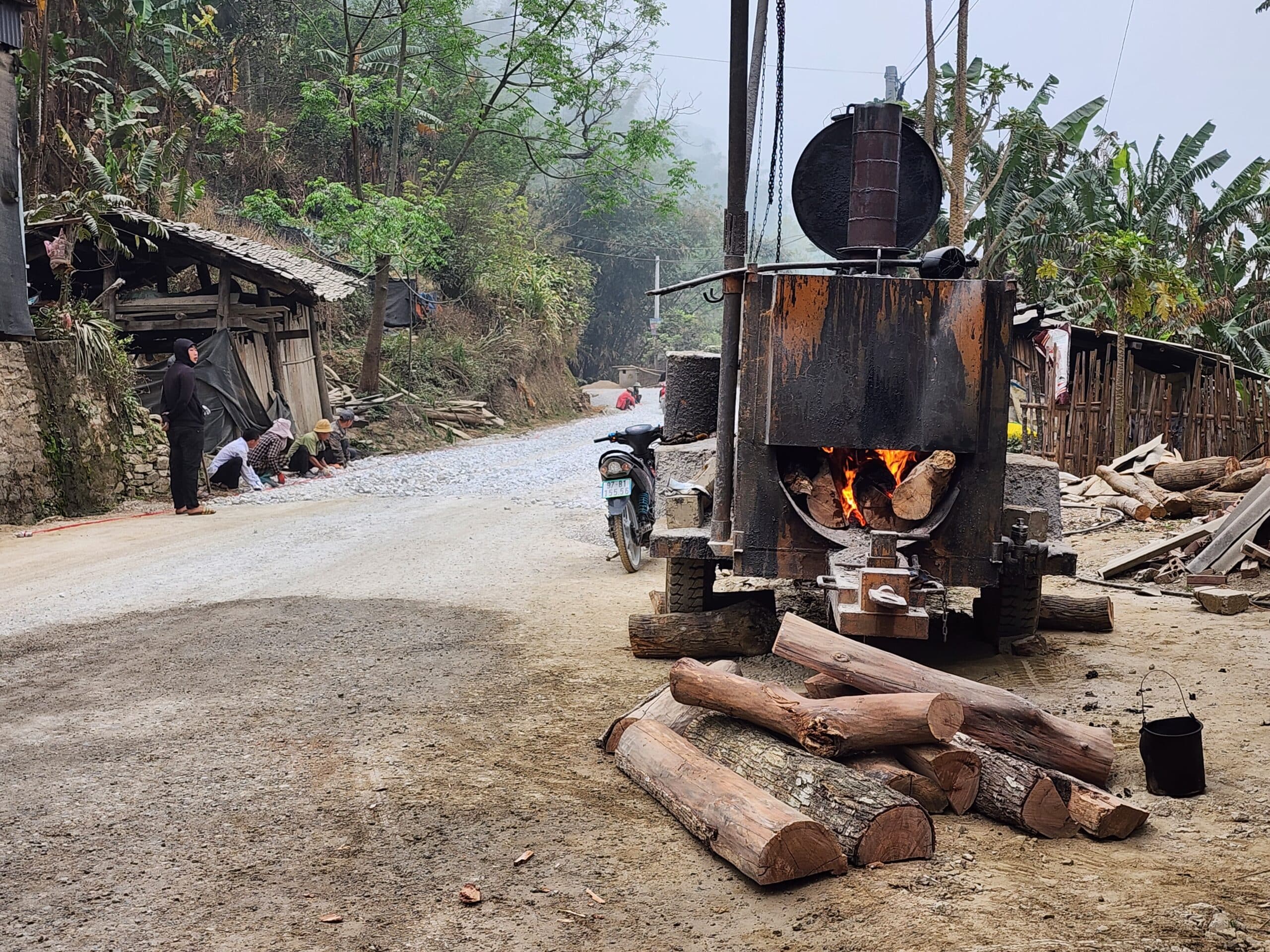
Occasionally, on the roadside you will see these large furnaces. They are used to melt down the bitumen that is to be laid on the ever expanding road network throughout the province. This is by no means a ‘Ha Giang only’ thing and you will see them in other areas. We saw this one on our 7 Day Due North Tour just outside Meo Vac City.
A Bitumen Furnace in Ha Giang
As you drive along you will see small sections of road that are new, littered amongst those that are quite old and in need of update. The reason is because the locals can only do so much at a time and need to fit in this work when they are not working in the fields.
It is difficult to get larger machinery into these locations. Also, most of the infrastructure update projects are quite small and local in nature. You’ll see that they are portable and have wheels. They can be towed, slowly, behind a small truck or even carried on a larger vehicle if need be.
In many cases, you will find that the local government are happy to provide the materials for road improvement along with a small crew of technicians. The local people are then expected to provide the raw labour needed to get the unskilled work done. A real win win.
Photo Cr. Steve Coupland / Siam Enduro
7-Day Due North Motorcycle Tour
Ride deep into Vietnam’s northern frontier: mountain passes, hidden valleys, and rich history packed into one unforgettable week Book NowFAQ
What are the most common types of road works I’ll encounter in Vietnam?
You’ll frequently see:
- Resurfacing/Pothole Repair: Often involves loose gravel, fresh asphalt, or uneven patches.
- Drainage/Utility Works: Ditches dug alongside or across the road, often with temporary covers or open hazards.
- Bridge/Culvert Construction: Temporary detours, single-lane traffic, or rough bypasses around new structures.
- Major Infrastructure Projects: Large-scale highway or city road expansions, which can lead to significant diversions and heavy machinery.
How are road works typically marked in Vietnam?
Of course, in many cases road work zones are marked by the usual methods:
- Cones and barriers: Often orange or red plastic cones, sometimes with reflective tape.
- Warning signs: Yellow triangular signs with red borders, depicting bumpy roads, narrowing roads, or construction workers.
- Temporary speed limits: Blue circular signs indicating a reduced maximum speed.
- Flags and lights: Workers may use flags during the day, and flashing lights or lanterns might be present at night, though lighting can be minimal in rural areas.
However, local people and some workers may use more informal indicators such as a pile of dirt, a branch from a tree or a few rocks to indicate a hazard.
What’s the best way to approach a road work zone on a motorbike?
- – Slow down immediately.
- – Observe the flow of local traffic, which often weaves around obstacles.
- – Be prepared for sudden stops, loose surfaces, and unexpected movements from other vehicles or pedestrians.
- – Use your horn to signal your presence, especially if visibility is reduced.
- – Maintain a safe following distance.
How do vietnamese drivers typically react to road works?
Locals are really used to dynamic road conditions. They:
- – Are highly adaptable: They navigate obstacles with remarkable fluidity.
- – Use their horns frequently: Not aggressively, but to signal presence and intentions.
- – Are patient (mostly): They expect delays and often “flow” with traffic rather than fighting it.
- – Prioritize progress: They will find any available gap to move forward.
Learn to be patient, observant, and adaptable. Don’t try to mimic aggressive maneuvers if you’re not comfortable.
Are there specific dangers to watch out for at night near road works?
Generally, we say: AVOID RIDING IN THE DARK, but you may have to at some point, so pay attention to….
- – Poor lighting: Many construction zones, especially outside major cities, lack adequate lighting.
- – Unmarked hazards: Open trenches, parked machinery, and loose materials may be unlit or poorly marked.
- – Reduced visibility: It’s harder to spot potholes, gravel, or debris.
- – Fatigue: Both drivers and construction workers may be less alert.
RENT, TOUR, DISCOVER
There are so many more sights, sounds and wonders to experience in Vietnam. Call us bias, but we feel the best way to experience the country is by motorbike, as the locals do.
Whether you would like to RENT or TOUR, get in touch with us to DISCOVER Vietnam