Safety + Legality
Is It Safe to Ride a Motorbike in Vietnam?
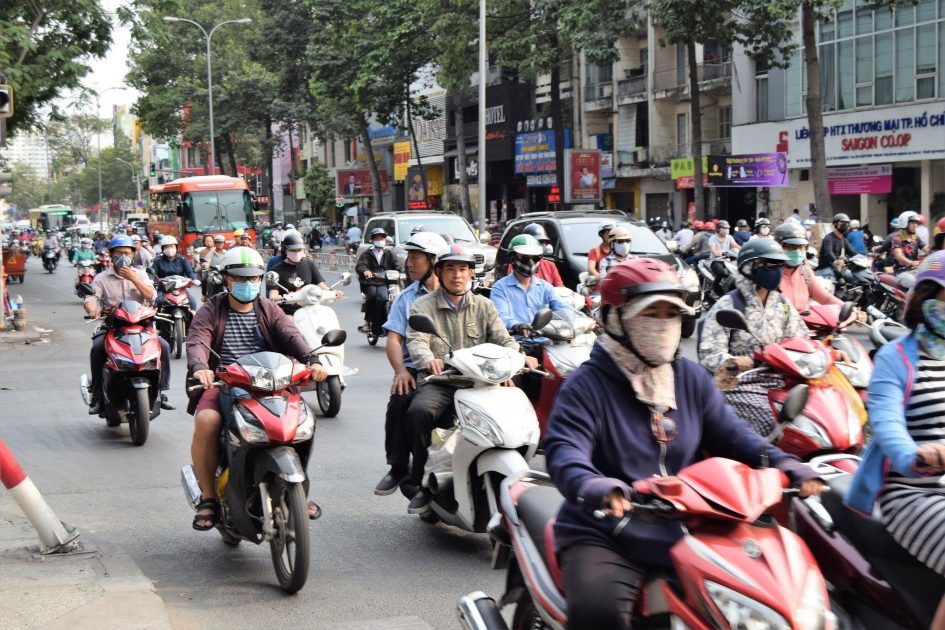
If you’ve watched any travel vlog about riding in Vietnam, you’ve seen the footage: a river of scooters, an endless chorus of honking, and intersections in Hanoi or Ho Chi Minh City that look like a swarm of bees.
For many travelers, this is terrifying. For others, it’s an adrenaline rush. At AZ Motorbikes, we get asked the same question almost every day: “Is it actually safe to ride a motorbike in Vietnam?”
The honest answer? It depends on how you prepare.
Vietnam’s roads can be dangerous. The statistics are real, and as a professional rental company, we aren’t going to sugarcoat them. But riding here is not a lottery; it is an exercise in risk management. The difference between a nightmare story and the trip of a lifetime usually comes down to two things: Preparation and Quality Equipment.
We don’t just rent bikes; we rent peace of mind.
“The Traffic is Insane”
The Reality: The traffic flows like water. It is not aggressive, but it is constant. The danger usually comes from tourists who treat Vietnam like a limitless playground without understanding the “unwritten rules” of Vietnam traffic safety.
The AZ Motorbikes Safety Standard: Honest Skills Assessment
We are not a “grab the cash and go” shop. We care more about your safety than your rental fee. We have been known to refuse customers who we feel are putting themselves too much at risk.
- The Mandatory Test Ride: Before you sign anything, we watch you ride. We need to see that you can balance, brake, and navigate comfortably.
- The Refusal Policy: If we don’t think you are safe, we will not rent to you. It’s that simple. We would rather lose a customer than lose a rider.
- The “Flow” Briefing: We take the time to explain how to navigate the roads—why you shouldn’t check your blind spot (keep eyes forward!), how to use your horn as a communication tool, and why slow and steady always wins.
“The Bike Will Break Down in the Middle of Nowhere”
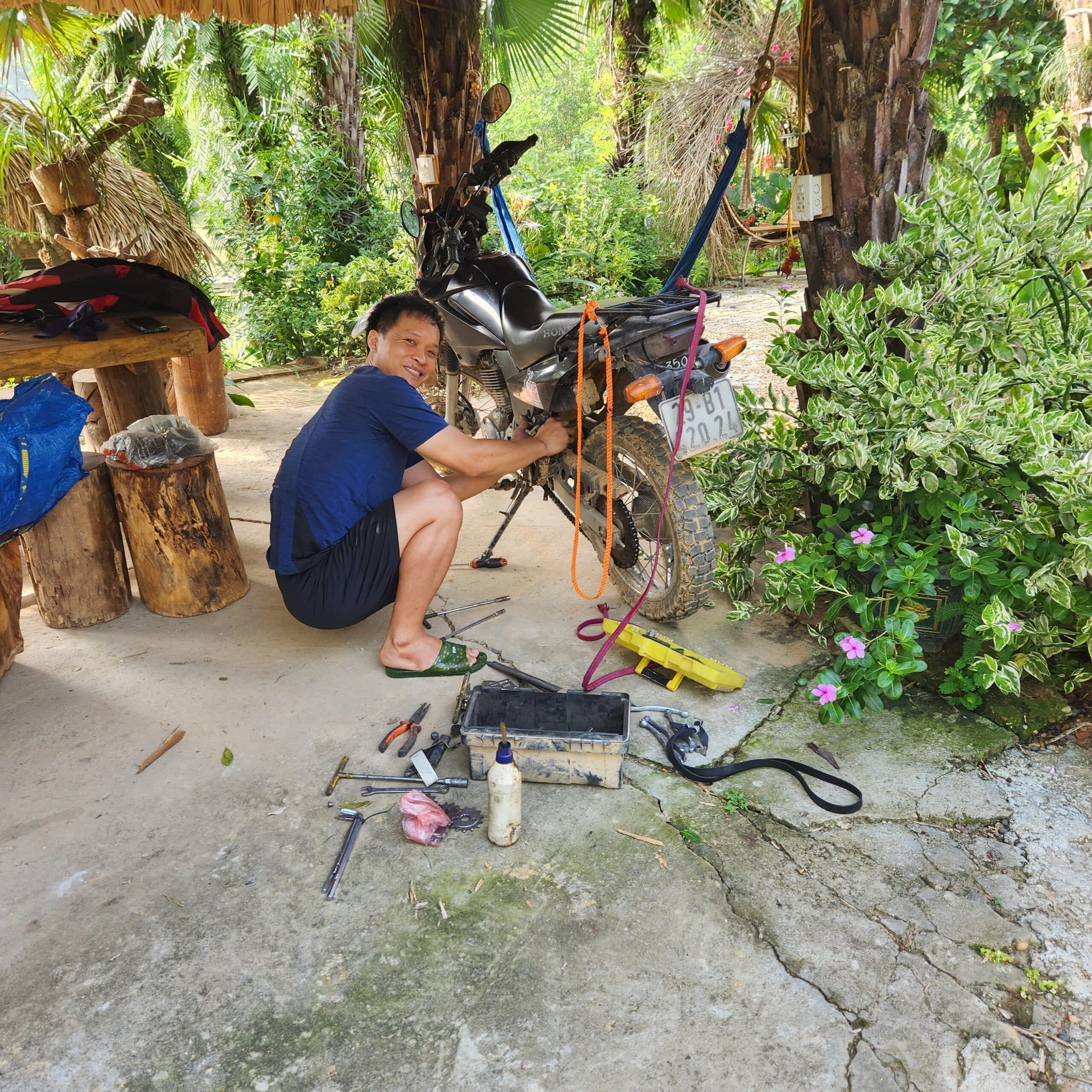
The Reality: There is a backpacker myth that buying a cheap $300 motorbike is a great idea. In reality, these are often “Franken-bikes”—cobbled together from scrap parts with brakes that fail on mountain passes and engines that overheat. A mechanical failure is a major safety risk.
Confirm support and rental arrangements
We don’t wait for a bike to break before we fix it. We operate on a strict schedule of preventative maintenance.
- The Checklist: Every bike that comes back to our shop goes through a rigorous multi-point inspection. We check brake pad thickness, chain tension, tire tread depth, and fluid levels.
- OEM Parts Only: We use genuine manufacturer parts. We do not use the cheap Chinese knock-off components that flood the local market and fail under stress.
- Reliability is Safety: A reliable engine gets you out of a sticky situation. Good brakes keep you out of a hospital. We ensure both are perfect before you turn the key.
“I’ll Get Arrested or Fined” (The Legal Reality)
The Reality: Vietnam motorbike laws can be confusing for foreigners. Police stops are common, and “coffee money” (bribes) is a grey area many tourists struggle with. Furthermore, riding without a valid license often voids your travel insurance, leaving you financially vulnerable.
The AZ Motorbikes Safety Standard: Legal Transparency
We are experts on the current legal landscape. We don’t say “don’t worry about it”; we tell you exactly what you need.
- The IDP Reality: We will check your paperwork. To ride legally, you generally need a valid motorcycle license from home AND a 1968 Convention International Driving Permit (IDP).
Note: The 1949 convention IDP (often issued in the USA, Australia, and UK) is not accepted here.
- The Blue Card: Every bike in our fleet has an original “Blue Card” (registration). You will never be caught riding a “ghost bike” with no papers.
“What If I Crash?”
The Reality: Road rash is the most common injury in Vietnam. But a minor slide can turn into a major trauma if you are wearing a baseball cap and a tank top.
Confirm support and rental arrangements
- Certified Helmets: We do not rent the $2 plastic “eggshell” helmets you see on the street. Our motorbike rental packages include helmets that meet safety standards (DOT, ECE, or high-quality local certification). Your brain is your most valuable asset; we protect it.
- The Lifeline: When you rent from us, you are never riding alone. We provide a support line. If you get a flat tire or have a minor tumble, we are a phone call away to translate with locals, find a mechanic, or arrange transport.
“I’ll End Up on a Dangerous Highway”
The Reality: Google Maps often defaults to the “fastest” route, which usually means Highway 1 (QL1A). This road is dominated by massive container trucks and buses and is not enjoyable—or safe—for motorbikes.
The AZ Motorbikes Safety Standard: Expert Route Planning
We have ridden these roads for years. We know the difference between a “road” on a map and a buffalo track in reality.
- Route Review: Show us your plan. We will help you steer away from the truck-heavy highways and onto the scenic, paved backroads where the riding is safer and significantly more beautiful.
- Local Knowledge: We know which mountain passes are prone to landslides in the rainy season and which coastal roads offer the best visibility.
Check out our MAPS
One-Way Rentals
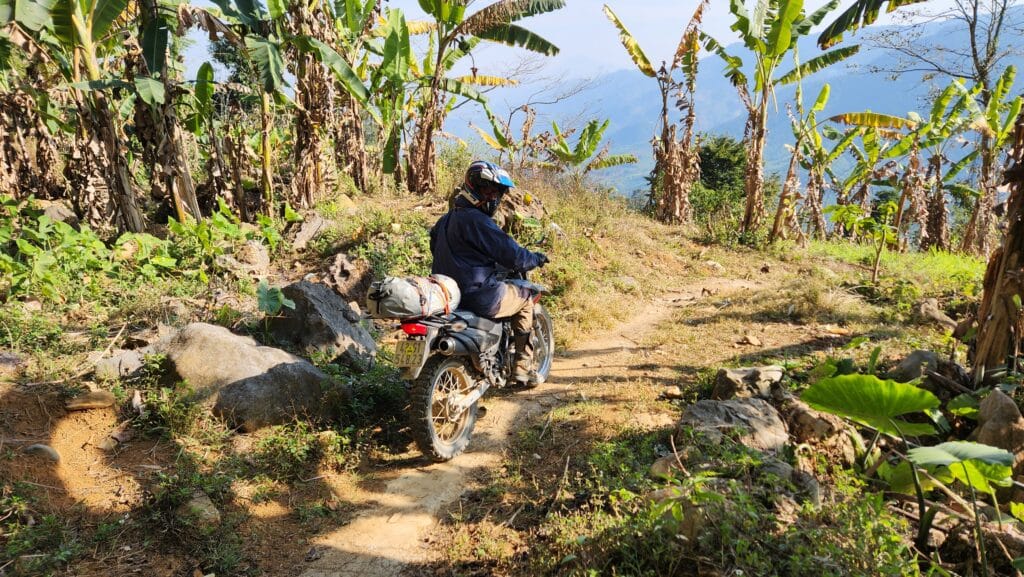
Ready for ultimate freedom? Our one-way rentals let you blaze your own trail across Vietnam — no need to loop back!
✅ Pick up/drop off in Hanoi, Danang, or Ho Chi Minh City
✅ Explore Vietnam at your pace
✅ No backtracking—just pure, open-road freedom
FAQ
How do I prevent bike theft?
Bike theft is common in cities. Never leave your bike unattended on the street overnight.
Daytime: Always use designated parking lots with guards (look for signs saying “Giữ Xe”). You will get a ticket—do not lose it.
Nighttime: Most hotels/homestays will bring the bikes inside the lobby or have a locked compound. Ask the receptionist where to park safely.
What is the situation with fuel?
It is best to stick to official gas stations (Petrolimex is the most reliable) rather than buying “roadside gas” from glass bottles, which can be diluted and damage the engine.
Most stations are full-service (attendants pump for you). Cash is king; credit cards are rarely accepted at pumps but QR payments are.
What should I do if the police stop me?
Stay calm, be polite, and remove your keys from the ignition immediately (to prevent the bike being moved/impounded).
Have your Blue Card (registration) OR A COPY, IDP, and home license ready.
Aggression or arguing never helps. Begging and pleading can.
Can I mount my phone for GPS?
Yes, but be careful. In major cities (especially Ho Chi Minh City), “snatch theft” is a risk. Riders may grab your phone right off the handlebars.
We recommend keeping your phone in a zipped pocket or using a very secure, low-profile mount. If you need to check the map, pull over safely away from traffic.
Is it safe to carry a passenger (pillion)?
Only if you are an experienced rider. The extra weight changes the bike’s balance and braking distance significantly. Ensure your passenger also has a high-quality helmet and knows how to sit still (leaning with the bike, not against it).
Safety is a Choice
Vietnam is an incredibly rewarding place to ride, but it demands respect.
You can choose to gamble with a cheap bike, a plastic helmet, and no backup plan to save a few dollars a day. Or, you can choose to ride with professional support, high-quality machines, and proper safety gear.
Don’t let fear stop you from exploring this amazing country—but let common sense dictate how you do it.
Ready to ride safely?