
Tours
The Pack Mentality: How to Ride Motorcycles in a Group in Vietnam
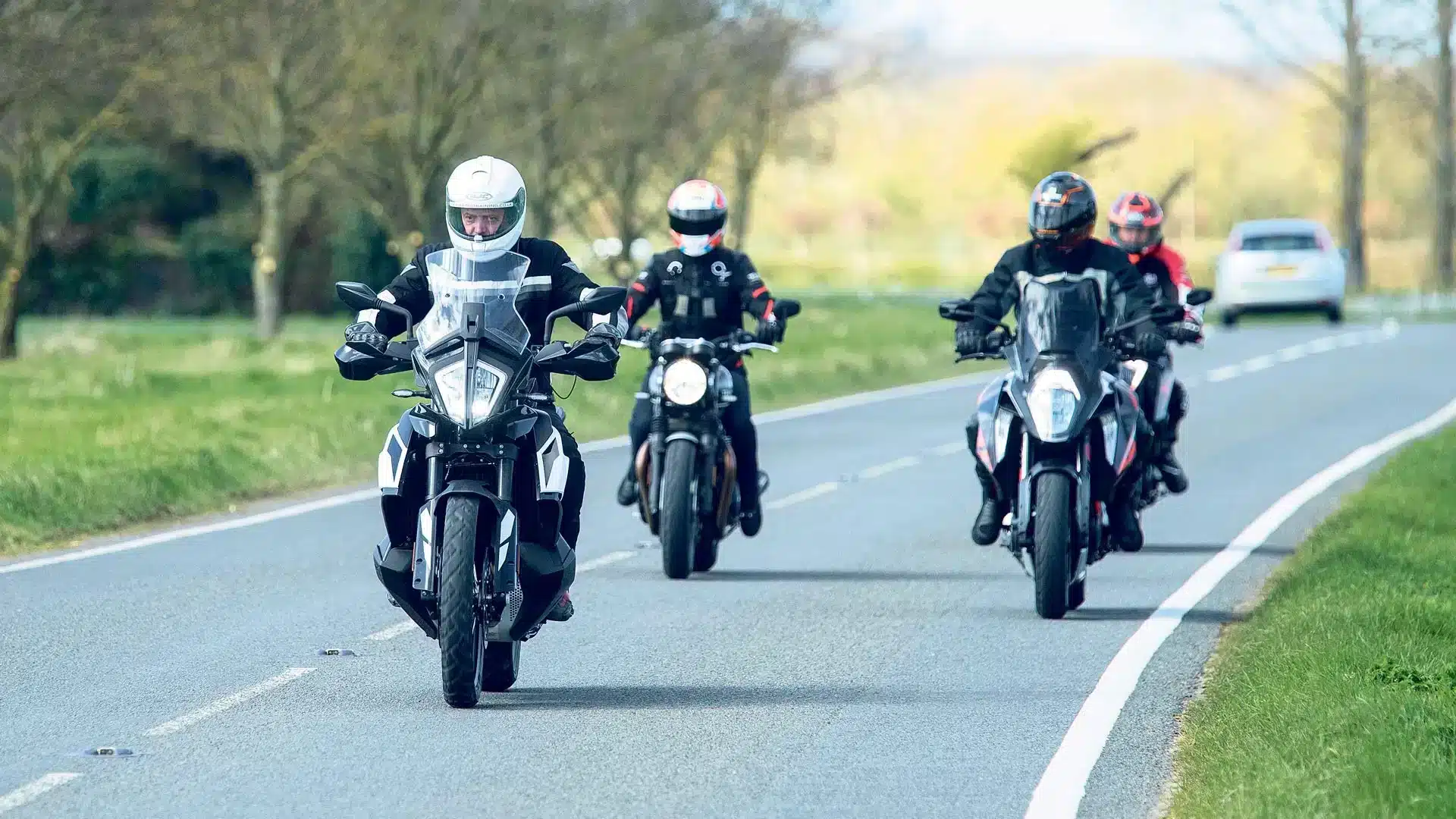
Riding a motorbike through Vietnam is a transformative experience, but sharing that road with friends or a guided tour group adds a layer of complexity. Whether you are navigating the chaotic urban flow of Hanoi or carving the limestone passes of Ha Giang, maintaining cohesion without compromising safety is a skill.
At AZ Motorbikes, we cater to both solo adventurers and organized tours. We know that a group ride is only as good as its communication. This guide dives deep into the mechanics of moving as a unit, ensuring your crew arrives at the destination smiling, safe, and together.
The Pre-Ride Briefing: The “Daily Bread” of Touring
Before a wheel turns, the group must be mentally aligned. In Vietnam, where road conditions change by the hour, the morning briefing is non-negotiable. It establishes the hierarchy and the expectations for the day.
- Designate a Road Captain: On our guided tours, this is your AZ Motorbikes guide. For self-guided rentals, nominate your most experienced rider to lead. They set the pace and make the navigational decisions.
- Appoint a “Sweep”: The rider at the back (Tail End Charlie) is just as important as the leader. They ensure no one is left behind and secure the lane during lane changes. The Sweep should never overtake anyone in the group.
- The Route & Stops: Everyone should have a rough idea of the destination. However, agree on specific “regrouping points” (e.g., every 50km or at major junctions) in case technology fails.
- Pace Discipline: Agree to ride at the pace of the least experienced rider. Pushing a novice to keep up with experts is the fastest recipe for an accident.
Formation Fundamentals: Staggered vs. Single File
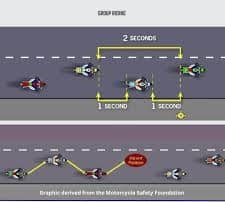
Riding in a tight formation looks good in movies, but on public roads, spacing is your lifeline. The formation you choose depends entirely on the environment.
- The Staggered Formation: This is the standard for open highways. The leader rides in the left-third of the lane; the second rider takes the right-third, one second behind. The third rider takes the left-third, two seconds behind the leader. This creates a safety buffer while keeping the group compact.
- Single File (The Vietnam Standard): In Vietnam, narrow mountain passes and heavy traffic often make staggered riding dangerous. When roads narrow or curve sharply, switch immediately to single file. Increase your following distance to at least 3 seconds to allow for reaction time against sudden obstacles like buffalo, trucks, or potholes.
- The “Rubber Band” Effect: Expect the group to stretch out on straights and compress in towns. Do not panic and speed if you fall behind; the “Corner Marking System” (discussed below) will keep you on track.
The “Corner Marking” (Drop-Off) System
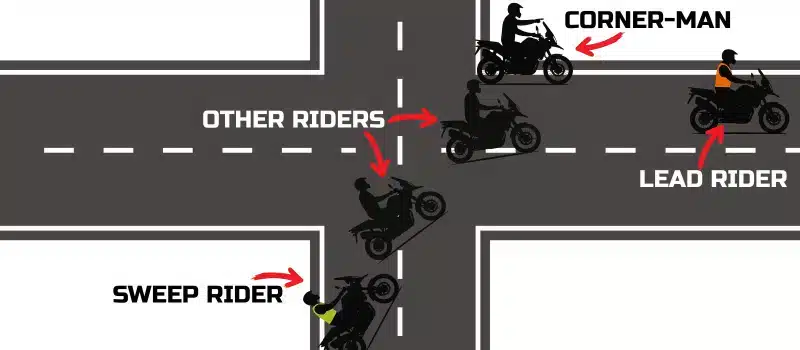
This is the gold standard for motorcycle logistics, used on all professional AZ Motorbikes tours. It eliminates the anxiety of getting lost and allows riders to ride at their own pace.
- How it Works: The Road Captain leads. When the route changes direction (a turn), the Captain signals the rider immediately behind them to stop and “mark” the corner.
- The Marker’s Job: That rider waits at the turn, pointing clearly in the direction the Lead went. They remain there until every bike has passed.
- Rejoining: Once the Sweep (Tail Gunner) arrives, the marker rejoins the group in front of the Sweep.
- Why it Matters: This system means you never need to keep the rider in front of you in sight. You simply ride until you see a marker. No marker? Go straight.
Analog Communication: Essential Hand Signals
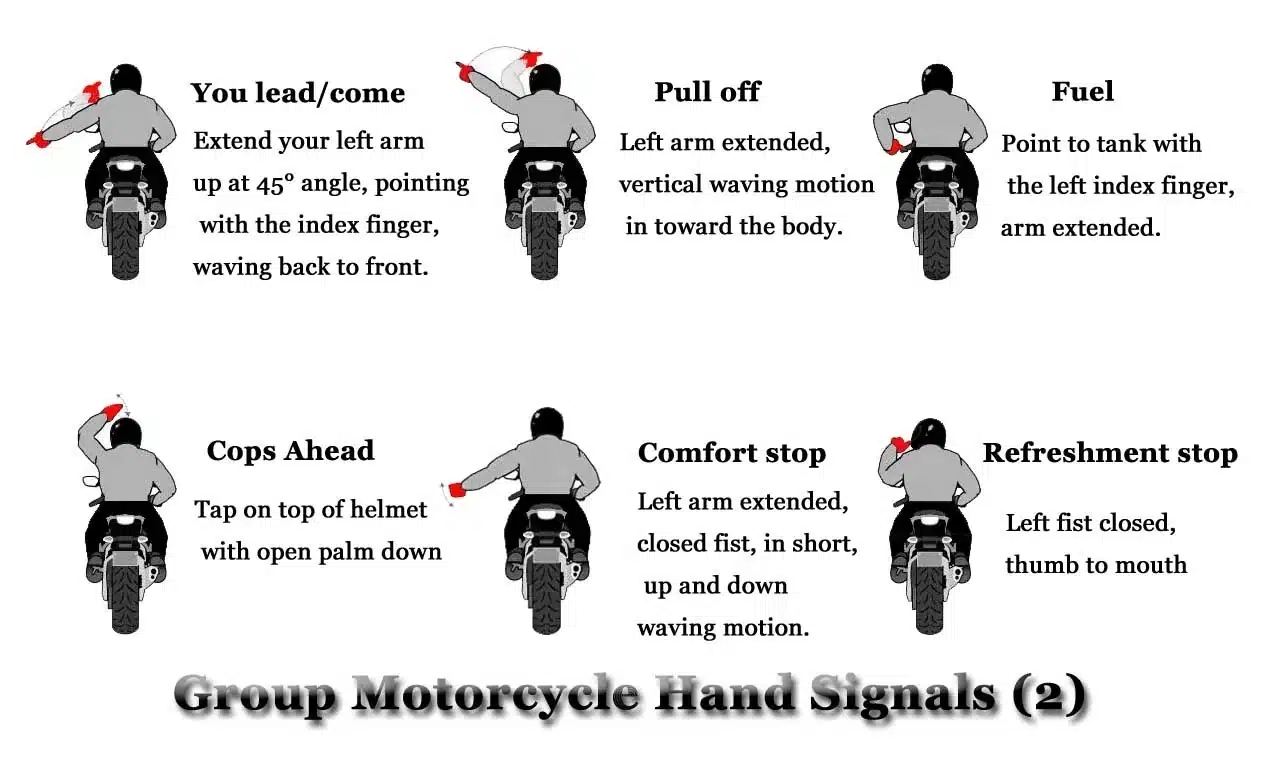
Bluetooth comms (Cardo/Sena) are fantastic, but batteries die and connections drop. Universal hand signals are the fail-safe language of the road.
- The “Slow Down”: Left arm extended, palm facing down, moving up and down. This is the most critical signal in Vietnam, often indicating a hidden hazard or police checkpoint.
- Single File: Left arm raised high, index finger pointing up. Use this when entering villages or twisty sections.
- Road Hazard: Left arm or right leg pointing specifically at the hazard (pothole, debris) on the road.
- Fuel/Comfort Stop: Pointing to the tank for fuel; a fist with thumb to mouth for a drink/food stop.
Overtaking Etiquette in a Group
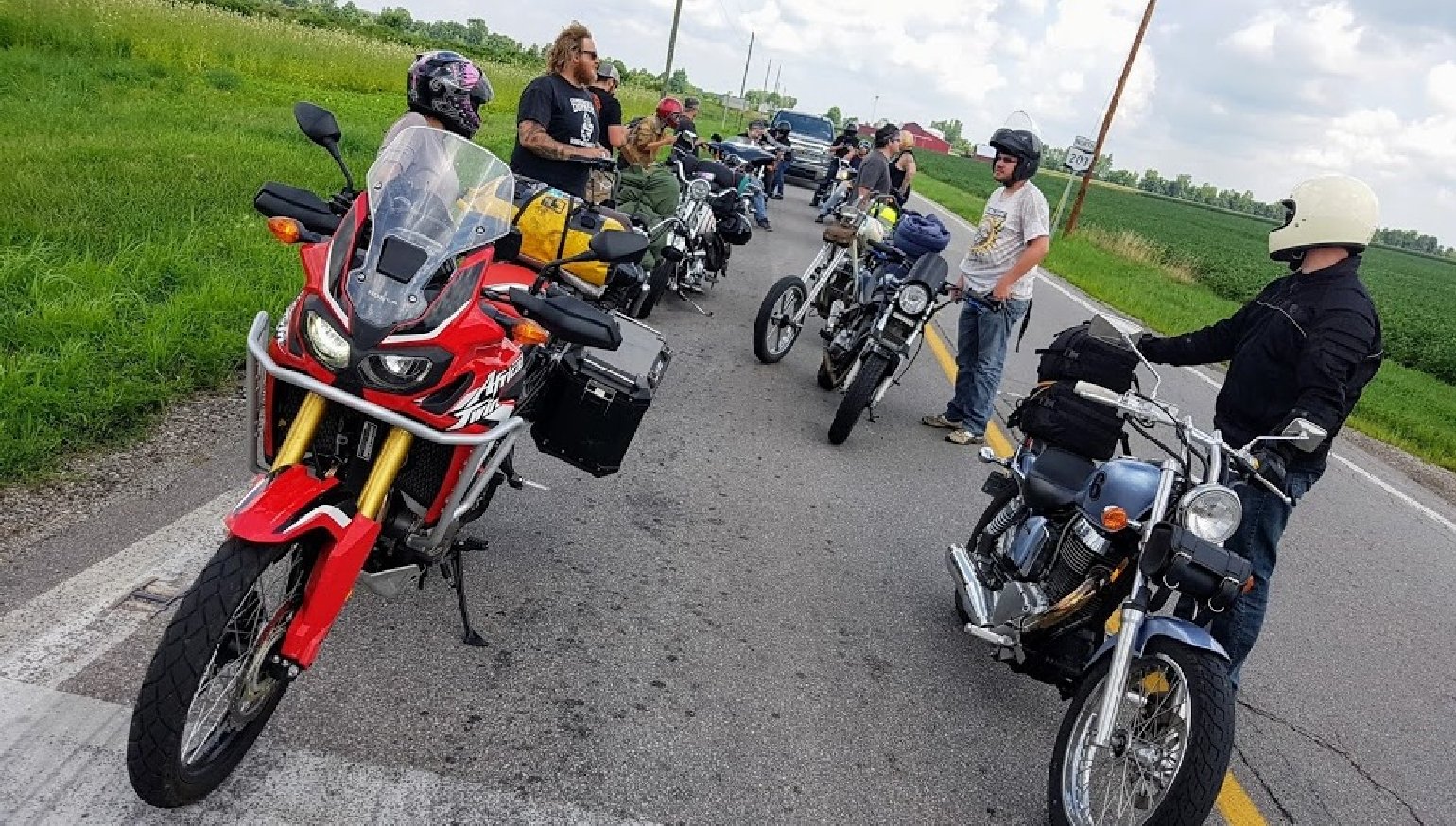
Passing slower traffic (trucks, buses) is the most dangerous maneuver in group riding. It requires patience and individual judgment.
- Own Your Overtake: Never blindly follow the rider in front of you during an overtake. Just because the Leader made it through a gap doesn’t mean the gap is still open for you.
- The “Slingshot”: When the Leader overtakes a truck, they should maintain speed and move far forward to create space for the riders behind to slot in.
- Don’t Bunch Up: If you can’t overtake immediately, wait. Do not crowd the rear bumper of the vehicle you are trying to pass; it reduces your visibility and escape routes.
- Regroup After Passing: Once the obstacle is cleared, the leader will usually slow down slightly to allow the group to reform.
FAQ
Confirm support and rental arrangements
Yes, for many of our guided tours it is free, we can arrange a support van to carry luggage, spare parts, and a mechanic, allowing you to ride unencumbered.
Can I bring a pillion (passenger) on a guided group tour?
Absolutely. Many of our bikes (like the Honda CB500X or Himalayan) are suitable for two-up riding. We recommend upgrading to a larger displacement bike for passenger comfort on mountain routes.
Do we need international driver’s licenses to rent as a group?
To ride legally in Vietnam and be covered by insurance, you must hold a valid motorcycle license from your home country and a 1968 Vienna Convention International Driving Permit (IDP).
What is the maximum group size AZ Motorbikes allows?
To ensure safety and a personalized experience, we generally cap our guided tours at 10 bikes. For self-guided rentals, there is no limit, but we recommend splitting huge groups into smaller “sub-packs.”
How many kilometers do we cover per day on a group tour?
We aim for a “quality over quantity” approach, usually averaging 150km–200km per day. This accounts for the slower average speeds in Vietnam and allows plenty of time for photos and coffee.
Ride Smart
Riding a motorcycle in Vietnam is a symphony of chaos and beauty. Doing it with a group of friends amplifies the experience, provided you respect the rules of the formation. Whether you are on one of our fully guided premium tours or renting our XR150s for a self-guided expedition, applying these group riding principles ensures the only drama you experience is the landscape.
Ready to ride? Check out our Premium Motorbike Fleet or book a Guided Tour today.