Safety + Legality
How to Avoid Scooter Accidents in Vietnam: Practical Safety Tips for Riders
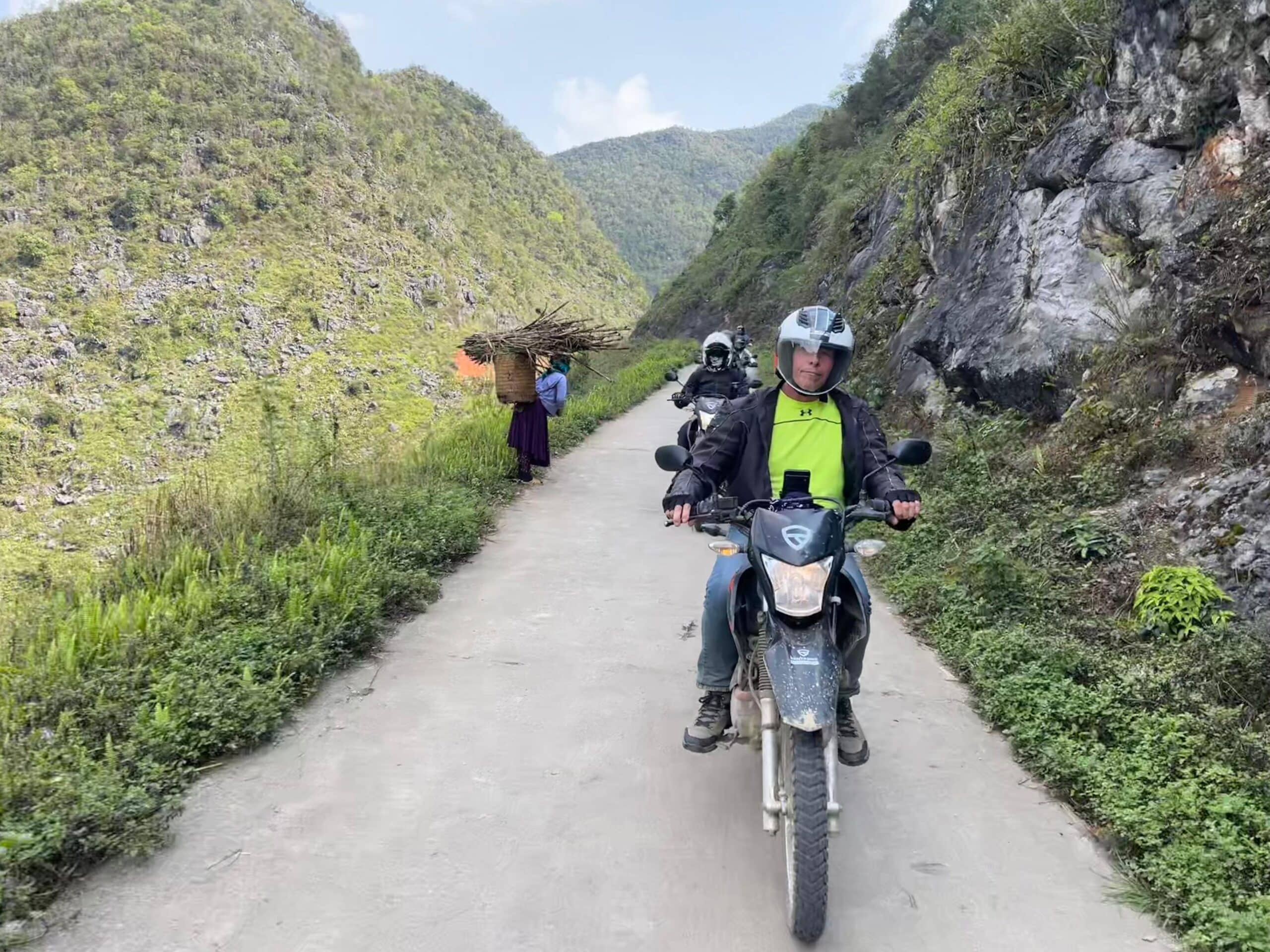
Riding a scooter or motorcycle through Vietnam can be one of the best parts of travelling here. It gives you the freedom to leave the main tourist routes, stop when something catches your attention and experience places that are difficult to reach any other way.
The challenge is that Vietnamese traffic does not always behave the way a visiting rider expects. A scooter may emerge from a side road without apparently looking, a bus may move across your lane, a perfectly dry road can become slippery after five minutes of rain, and a mountain corner may hide gravel, livestock or a truck taking considerably more than its half of the road.
The important point is that many of these situations do not need heroic riding skills if you recognise them early enough.
Good accident prevention is mostly about seeing problems developing, giving yourself time and preserving enough space to react.
If you want the broader principles behind riding here, start with our How to Ride a Motorcycle Safely in Vietnam guide. This article concentrates on something more specific: the everyday situations most likely to catch visiting riders out and what you can do to avoid them.
BEFORE YOU ENTER TRAFFIC
Many of the decisions that influence your safety are made before the motorcycle even starts moving. Choosing an appropriate bike, checking its condition, wearing suitable equipment and understanding your legal position all reduce the number of problems you have to deal with later. None of these things guarantees a trouble-free journey, but together they provide a much better starting point.
Do Not Learn to Ride From Scratch in Vietnamese Traffic
An automatic scooter may appear simple because there are no gears or clutch to manage, but that does not make Vietnamese traffic a good environment in which to learn basic motorcycle control. New riders are often still concentrating on the throttle, brakes, balance and steering, which leaves less attention available for traffic, pedestrians, junctions and changing road surfaces.
A rider with some previous experience can spend more of their attention observing what is happening around them. A completely new rider is often still concentrating on the motorcycle itself, and that difference becomes important when traffic begins moving unpredictably. If you have never ridden before, gaining some training or experience in a controlled environment before entering busy Vietnamese traffic is a much safer approach.
Check the Motorcycle Before You Leave
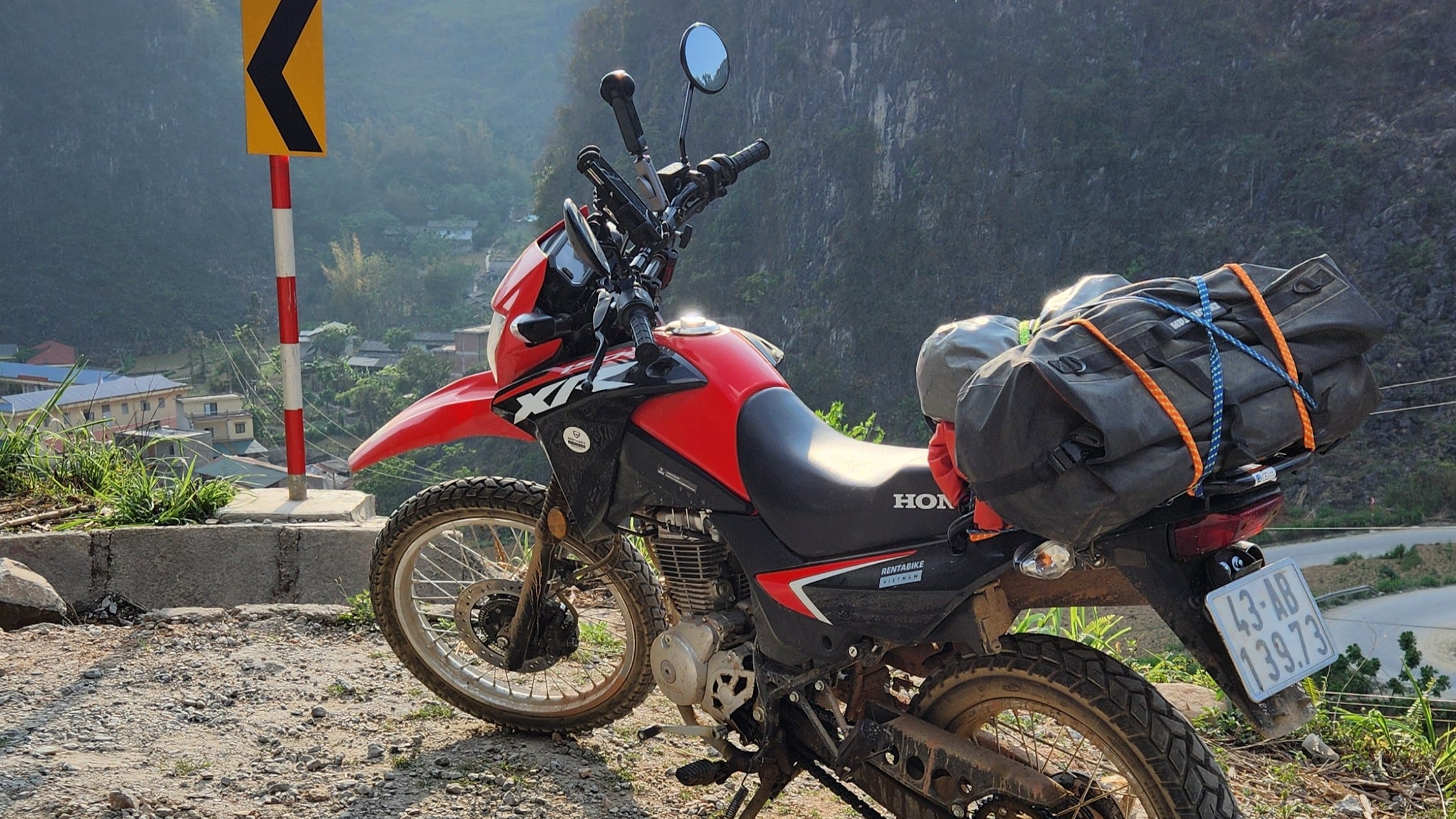
Before accepting a rental motorcycle, take a few minutes to check the tyres, brakes, lights, indicators, horn and mirrors. Sit on the bike, make sure you are comfortable with its height and weight, and familiarise yourself with the controls before entering traffic. Even experienced riders should do this because two motorcycles of the same general type can have noticeably different brake feel, throttle response and steering.
The brakes and tyres deserve particular attention because they are central to how the motorcycle responds when something goes wrong. You should also look for obvious fluid leaks, damaged controls or anything that simply does not feel right during the first few metres of riding. If something concerns you, stop and have it checked rather than assuming you will get used to it later.
Contact AZ Motorbikes to confirm motorcycle availability, pickup and return arrangements, included equipment and support for your intended rental.
Wear a Proper Helmet and Suitable Clothing
A helmet should be treated as protective equipment rather than something you wear simply because the law requires it. It should fit securely, sit correctly on your head and remain in position when you move your head from side to side. The chin strap also needs to be properly fastened, because an unfastened or badly fitting helmet offers considerably less protection when you actually need it.
For longer journeys, especially in the mountains, additional equipment becomes increasingly worthwhile. Gloves, sturdy footwear, long trousers and a suitable riding jacket can reduce injuries from even relatively low-speed falls. Vietnam can be hot, but riding hundreds of kilometres in shorts and flip-flops is a poor trade-off simply for temporary comfort.
You cannot remove the possibility of falling from a motorcycle entirely. What you can do is influence what happens if you do.
Make Sure You Are Legal and Insured
Before riding, check that you hold the correct licence or permit for the motorcycle you intend to use and understand the conditions of your travel insurance. Do not assume that because somebody is willing to rent you a motorcycle, you are automatically legally entitled or properly insured to ride it.
Insurance policies vary considerably, and some contain specific conditions regarding motorcycle engine size, licence validity or the type of International Driving Permit being used. The legal requirements can also change, which is why it is better to check current information rather than rely on something a traveller told you several years ago.
The legal requirements can also change, which is why it is better to check current information rather than rely on something another traveller told you several years ago. Before renting, check our guide to motorcycle licences and International Driving Permits in Vietnam so you understand the current requirements and can compare them with the conditions of your own insurance.
Expat Rentals
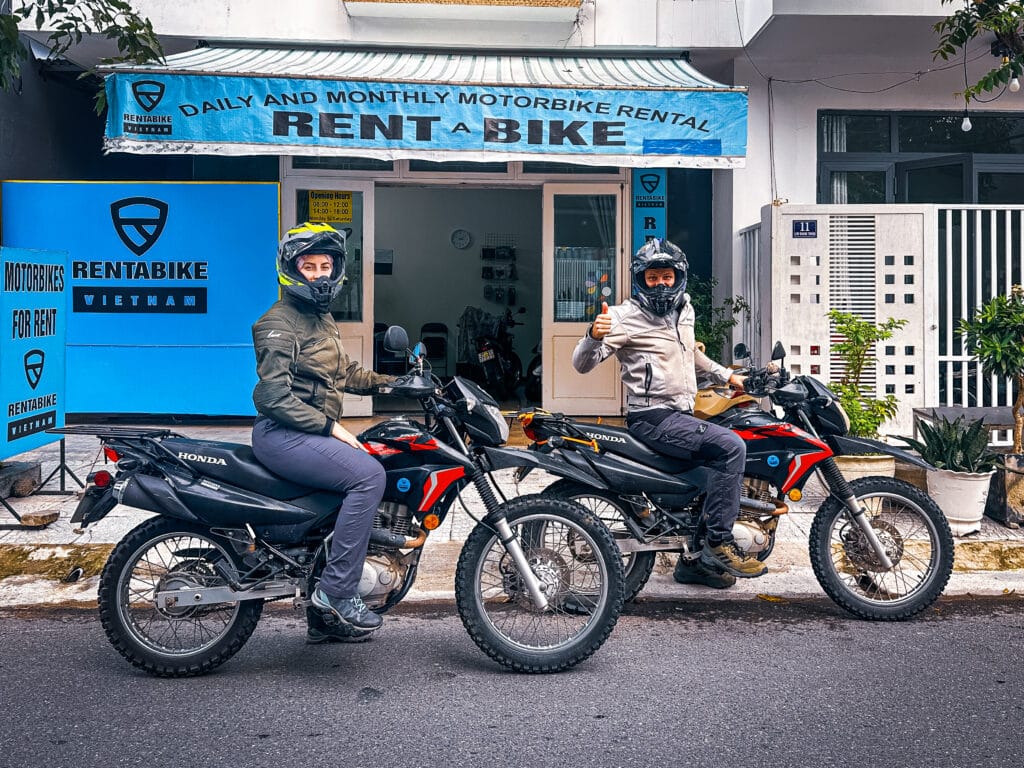
Live here? Ride like you own it. Our long-term expat rentals are made for those working or living in Vietnam.
✅ Cost-effective monthly rates
✅ Flexible contracts, full maintenance support
✅ Ride like a local: Hanoi, Danang, or Ho Chi Minh City
THE TRAFFIC SITUATIONS MOST LIKELY TO CATCH YOU OUT
Vietnamese traffic often looks chaotic when you first encounter it, particularly in Hanoi or Ho Chi Minh City. After a while, however, you begin to see that much of it depends on riders anticipating one another and moving relatively predictably. The safest approach is not to try to control everybody around you, but to control your own position and preserve room to react.
Ride as Though Nobody Has Seen You
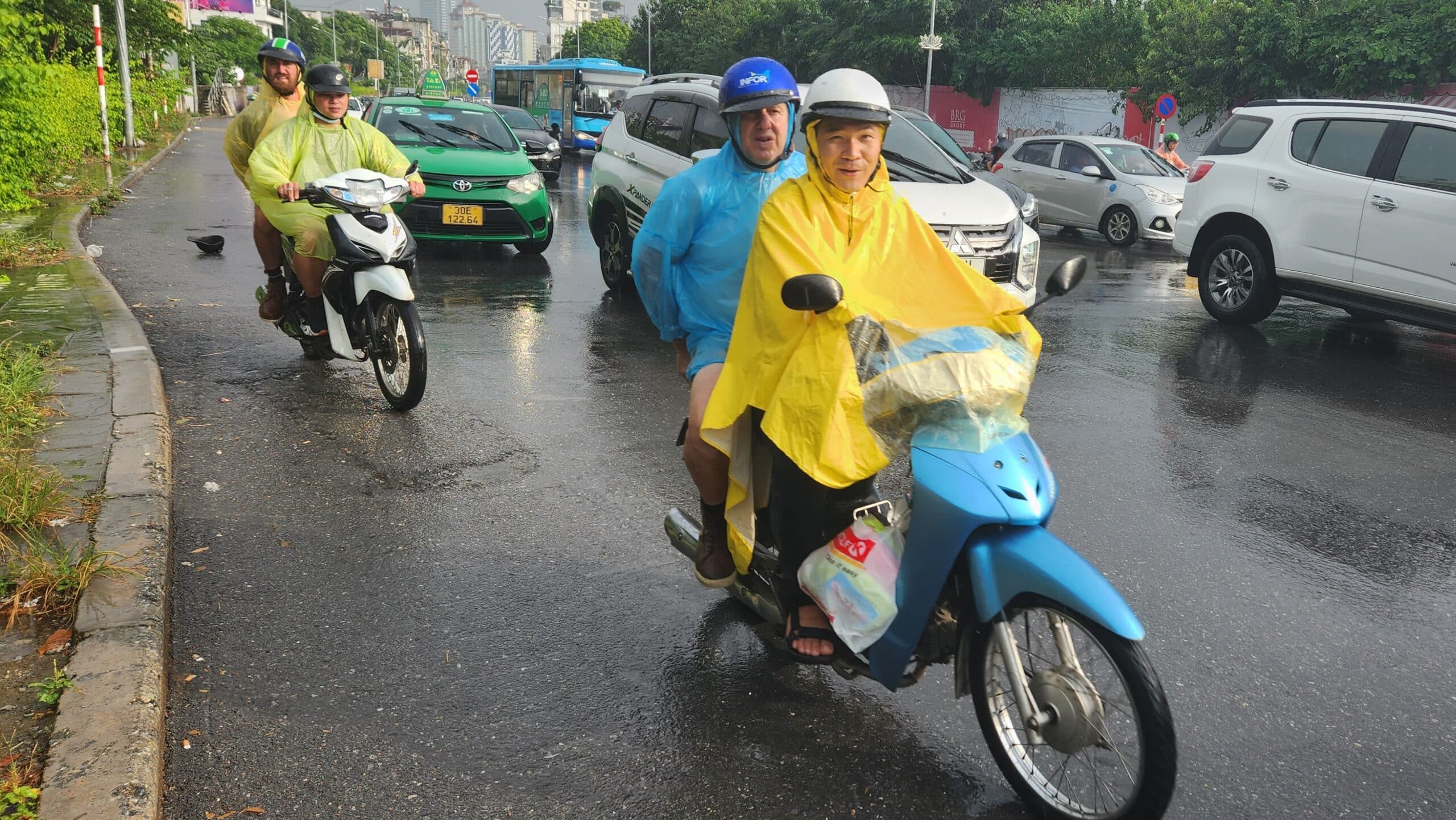
One of the most useful defensive riding habits in Vietnam is to behave as though other road users may not have noticed you. A car may pull away from the kerb, a scooter may suddenly turn across the road or somebody may begin entering a junction even though you appear to have priority. The fact that somebody looked in your direction does not necessarily mean they have registered your presence.
This does not mean assuming every other road user is incompetent. It means avoiding situations where your safety depends entirely on another person doing what you expect. Try to keep some escape space around you and regularly ask yourself what you would do if the vehicle ahead, beside you or waiting at a junction suddenly moved.
That small change in mindset makes Vietnamese traffic much easier to manage. Instead of reacting with surprise when somebody does something unexpected, you begin preparing for the possibility before it happens.
Be Predictable
Vietnamese traffic may be busy and fluid, but sudden movements still create danger. Abruptly stopping, changing direction or cutting across several lanes gives everybody around you less time to understand what you are trying to do. This becomes particularly risky when several scooters are travelling close together.
Use your indicators, change position progressively and try to maintain a steady line whenever possible. If you miss a turn, continue safely and find another route rather than making a desperate last-second manoeuvre. Being predictable does not mean riding slowly everywhere; it means giving other road users enough information to anticipate your movement.
A useful roadcraft sequence is to see what is happening, predict what may happen next, create space and then make your own intentions clear. Those habits are useful in almost every traffic situation you encounter in Vietnam.
Treat Junctions With Respect
Junctions are one of the places where several different types of traffic can interact at the same time. Scooters may be turning across one another, cars may be edging forward, pedestrians may be crossing and larger vehicles may be entering or leaving the road. Approaching quickly and relying entirely on right of way gives you very little margin if somebody else makes a mistake.
Reduce your speed before reaching the junction and scan beyond the vehicle immediately in front of you. Look for scooters approaching from both sides, vehicles preparing to turn and anyone whose road position suggests they may move even if they have not yet indicated.
The same principle applies when a traffic light changes to green. Do not accelerate into the junction automatically just because the signal says you can go; first make sure the crossing traffic has actually stopped. Traffic rules tell you who should wait, but observation tells you whether they really are waiting.
Give Trucks and Buses Space
Large vehicles need to be treated differently from scooters because their size creates several additional risks. They have larger blind areas, require more distance to stop and need considerably more room when turning. They can also completely block your view of whatever is happening further along the road.
Avoid spending unnecessary time alongside trucks and buses, especially near junctions, corners or narrowing roads. If you are overtaking, make sure you have enough clear space to complete the manoeuvre rather than sitting beside the vehicle for a long period. If you cannot see the driver or their mirrors, you should assume there is a possibility they cannot see you either.
Be especially cautious about squeezing between a large vehicle and the kerb. A gap may look wide enough when everything is stationary, but buses and trucks can move sideways while turning, and the space can disappear much more quickly than expected.
Expect Vehicles to Enter the Road
Side roads, petrol stations, cafés, homes and small businesses create constant points where vehicles can enter the road. A scooter may emerge while the rider is looking in another direction, or the rider may simply expect the moving traffic to adjust around them.
When you see a potential entrance, treat it as information rather than waiting for something to move. Ease off slightly if necessary, create more space and watch the front wheel or body position of any waiting motorcycle or car. Small movements often tell you that a vehicle is about to pull out before the rider or driver actually commits.
A slight reduction in speed made early is usually far easier than emergency braking later. The aim is to turn potential surprises into ordinary, manageable traffic situations.
Use the Horn as Communication
The horn plays a much more normal role in Vietnamese traffic than it does in many Western countries. A short, friendly beep often means nothing more aggressive than “I am here” or “I am coming past.” Used properly, it can give another road user useful information before they move into your path.
Once you understand how it is used locally, the horn becomes another useful source of communication rather than background noise. Our guide to the language of the horn in Vietnamese traffic explains the different situations where a short warning can help another road user understand your position or intention.
SPEED, BRAKING AND ROAD SURFACE
Many accidents become difficult to avoid because the rider notices the problem too late rather than because the motorcycle lacks sufficient braking ability. Creating more time therefore becomes one of the easiest ways to improve your chances of avoiding trouble.
Speed, following distance and observation all work together to determine how much time you actually have.
Give Yourself More Following Distance
Local riders often travel with surprisingly small gaps between scooters, especially in cities. Copying this behaviour may make you feel as though you are blending into the traffic, but it also removes valuable reaction time and reduces how far ahead you can see.
Leave more space than the rider in front may appear to need. That extra gap allows you to see developing problems earlier, brake more progressively and avoid turning somebody else’s mistake into your accident. If another scooter moves into the space you have created, simply rebuild the gap when conditions allow.
Following distance becomes even more important in rain, at night or when travelling behind a vehicle that blocks your forward view. The less information you have, the more space you should try to create.
Brake Early Rather Than Hard
Good braking begins before you touch either brake lever. If you spot the slowing bus, changing traffic light, pedestrian or poor road surface early, you can reduce speed progressively while the motorcycle remains stable. If you notice the same hazard late, you suddenly require much stronger braking and have fewer options available.
Use the brakes smoothly and progressively rather than grabbing them abruptly. When the road is wet or loose, that smoothness becomes even more important because available grip is reduced and sudden inputs are more likely to upset the motorcycle.
Riders travelling during the rainy season should also understand how weight transfer, front and rear braking and ABS affect the motorcycle. We cover those subjects separately in our detailed rain-braking guide.
Watch Painted Lines, Metal and Gravel
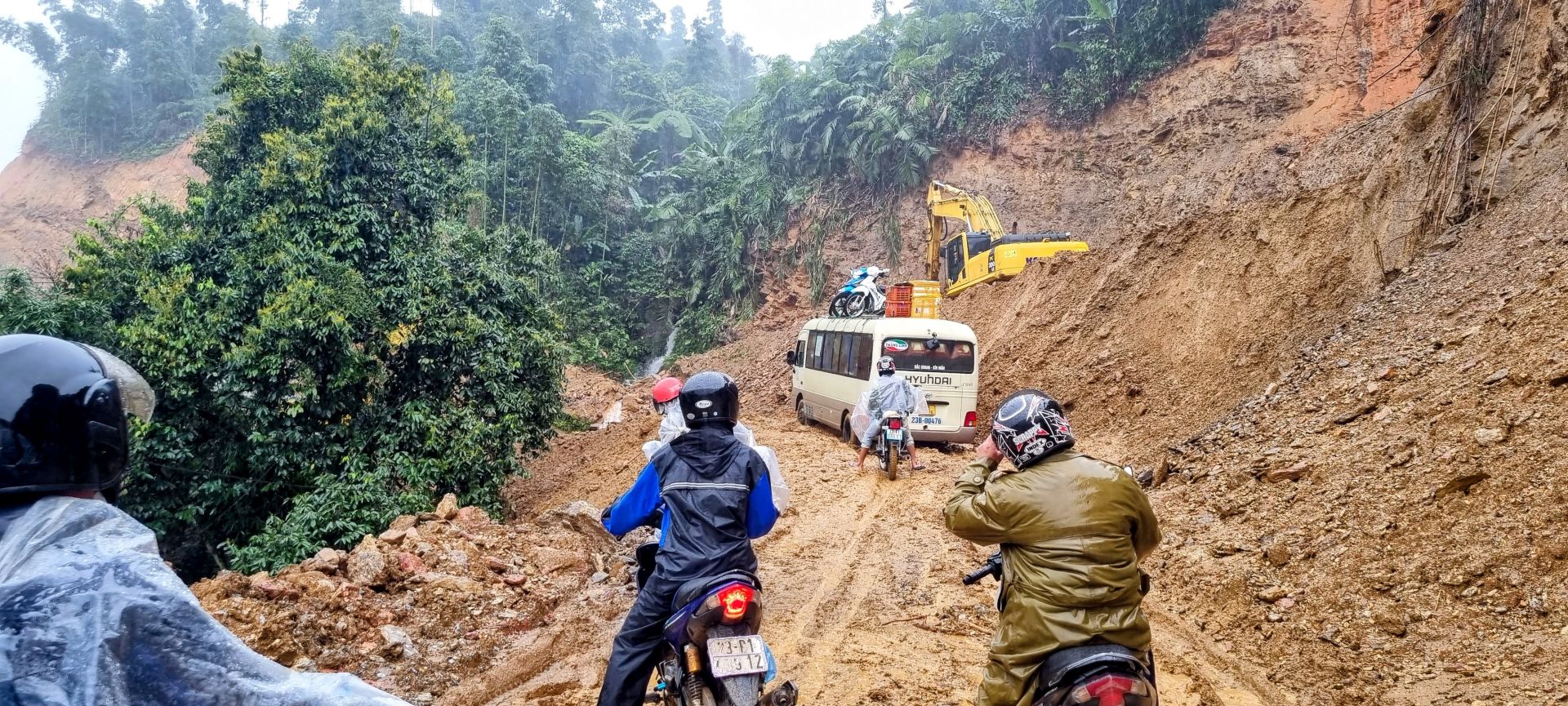
Vietnamese road surfaces can change remarkably quickly. You may move from good tarmac onto polished concrete, loose gravel, mud, sand or badly repaired road within a short distance. Painted road markings and metal utility covers can also become noticeably slippery when wet.
The greatest risk usually comes when poor grip is combined with heavy braking, acceleration or significant lean angle. If you can see a questionable surface ahead, try to adjust your speed before reaching it and cross it with the motorcycle relatively upright and settled.
Loose gravel deserves particular respect because it may collect at the edge of mountain roads or appear unexpectedly after road repairs. The safest response is usually to reduce speed smoothly, avoid sudden steering and allow the motorcycle to move slightly underneath you rather than fighting every small movement.
We explain why this happens and how to cross them more safely in Why Painted Road Lines Become Slippery when It Rains in Vietnam
Slow Down Before Corners
Try to complete most of your speed reduction before entering a bend rather than discovering halfway through it that you are travelling too quickly. You want to arrive at the corner at a speed that allows you to observe what is ahead and make an adjustment if the situation changes.
This becomes especially important on rural and mountain roads where a blind bend can contain a slow truck, buffalo, broken tarmac, gravel or an approaching vehicle partly on your side of the road. A beautiful empty road can encourage riders to increase speed, but the fact that the previous ten corners were clear tells you very little about the next one.
Ride according to the distance you can actually see. If you cannot stop within the road that is visible to you, you are relying on luck to keep that section clear.
Change Your Riding When It Rains
If you expect to ride during the wet season, it is worth understanding [how to brake a motorcycle in the rain] before you need to do it unexpectedly. Smooth inputs and more space make a significant difference once the road becomes slippery.
Heavy tropical rain creates a different problem because visibility can sometimes become more important than grip. Our guide to [what to do when a tropical downpour starts] explains when continuing makes sense and when stopping is the better option.
Mountain roads can also change after prolonged rain, with mud, stones, runoff and occasional landslides appearing where the road was clear the previous day. If you are heading into northern Vietnam, read [Riding Mountain Roads After Heavy Rain] before setting out.
One-Way Rentals
Ready for ultimate freedom? Our one-way rentals let you blaze your own trail across Vietnam — no need to loop back!
✅ Pick up/drop off in Hanoi, Danang, or Ho Chi Minh City
✅ Explore Vietnam at your pace
✅ No backtracking—just pure, open-road freedom
THE MISTAKES VISITING RIDERS COMMONLY MAKE
Some of the most common problems for visiting riders do not involve dramatic emergencies. They come from ordinary decisions made repeatedly throughout the day, such as following too closely, rushing because of the itinerary or copying local riders whose experience is very different from your own. Correcting these habits can make a significant difference to the overall risk of a trip.
Following Local Riders Too Closely
Local riders may have spent years or decades learning how Vietnamese traffic behaves. They may know a junction, recognise a particular bus route, understand subtle body language from another rider or know exactly where the road surface changes. None of that knowledge is transferred to you simply because you are following them.
Use the traffic around you as information, but continue making your own decisions. If the rider ahead overtakes on a blind corner, squeezes past a truck or enters a junction aggressively, you do not need to follow. Their level of familiarity with the road may be completely different from yours.
The safest rider in a group is often the one who is comfortable allowing somebody else to disappear into the distance. You can always meet again further down the road.
Squeezing Through Every Available Gap
One of the temptations of riding a scooter is that the motorcycle will physically fit through very small spaces. That can encourage riders to treat every visible gap as an opportunity, particularly after watching local commuters filter through traffic.
The question should not simply be whether your handlebars fit. You also have mirrors, luggage and possibly panniers to consider, while the vehicles on either side may move without warning. More importantly, you need enough spare space to react if the gap suddenly becomes smaller.
If getting through requires everybody else to remain perfectly stationary, the gap is probably not worth using. Waiting a few seconds usually costs nothing and gives you considerably more options.
Letting Navigation Make Decisions
Missing a turn is inconvenient, but it is not an emergency. If your phone tells you to turn and you are already in the wrong lane or poorly positioned, continue safely and allow the navigation system to calculate another route.
Suddenly cutting across traffic because Google Maps says you should have turned twenty metres earlier creates far more risk than simply taking the next junction. Navigation should provide information, but you remain responsible for deciding whether a manoeuvre can be completed safely.
This is particularly important in cities where the map can lag slightly behind your actual position. Five extra minutes is one of the cheapest mistakes you can make on a motorcycle.
Riding Too Far or Too Late
Fatigue gradually reduces observation, judgement and reaction time, often before the rider feels seriously tired. Long days in the mountains can be more demanding than the distance suggests because of constant corners, elevation changes, poor surfaces and the concentration needed to deal with local traffic.
Try to plan longer riding days so that you arrive before darkness where possible. Once daylight disappears, it becomes harder to read the road surface, see animals, identify debris and judge what lies beyond the next bend. You are also likely to be more tired at exactly the same time that your available information is decreasing.
If rain, roadworks or traffic delay you, change the plan rather than increasing speed to recover lost time. An itinerary is only a plan, and good motorcycle travel involves adjusting it when conditions change.
Assuming an Empty Road Is a Safe Road
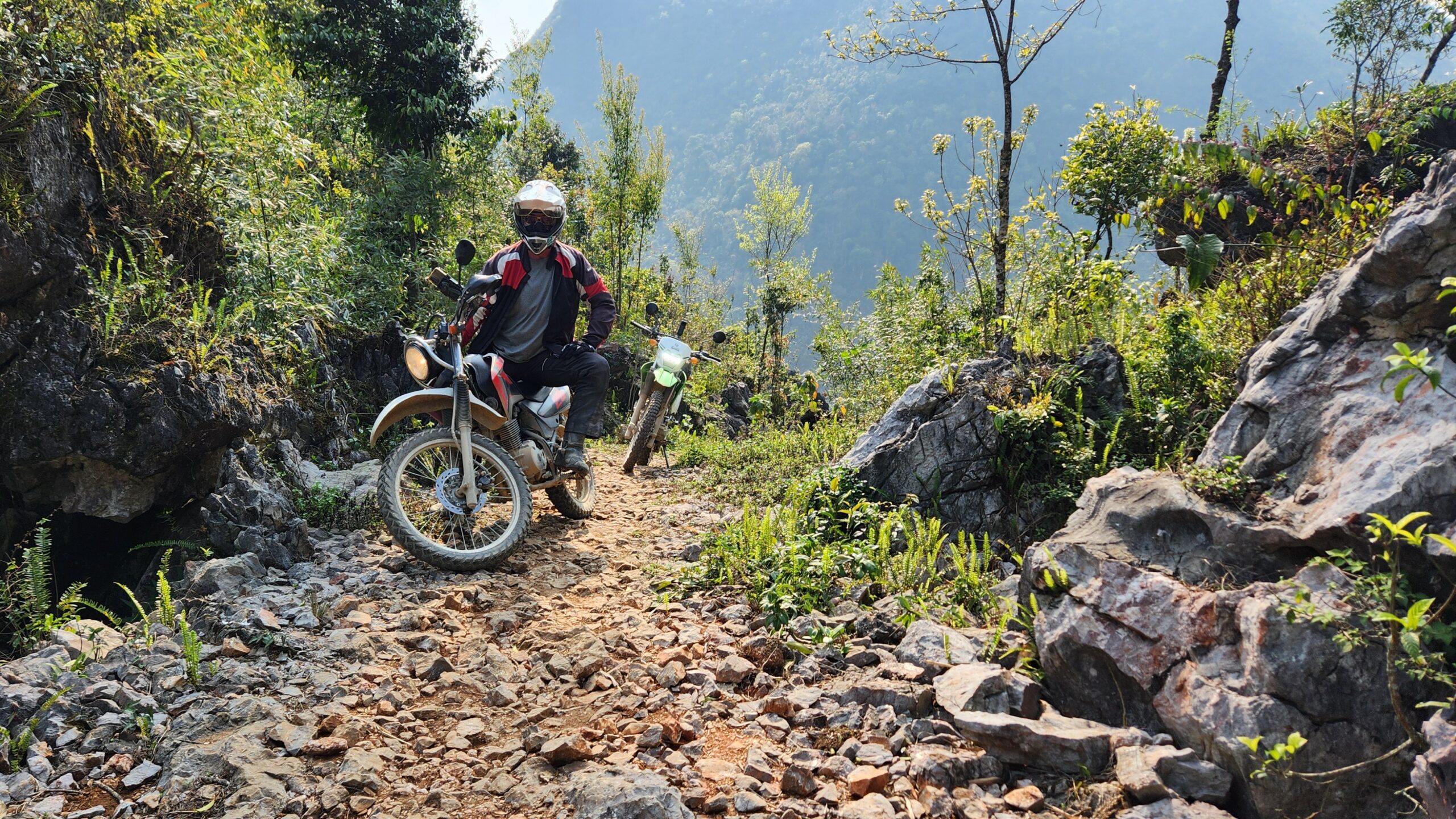
Busy Vietnamese traffic naturally makes most visiting riders cautious because there is so much happening around them. A beautiful empty mountain road can have the opposite effect, encouraging riders to relax and gradually increase speed.
The problem is that quiet roads can still contain gravel, livestock, roadworks, landslides or an approaching truck on the wrong side of a blind corner. The absence of traffic also means there may be nobody nearby if you have a problem.
Enjoy the empty roads, but do not confuse emptiness with safety. Your speed should still be determined by visibility, surface condition and what you could reasonably expect to encounter ahead.
REDUCE THE RISK BEFORE YOUR TRIP STARTS
Good motorcycle safety is not simply about reacting well when something goes wrong. The decisions you make before the trip can remove a surprising number of problems before you encounter them. Choosing the right motorcycle, planning realistic riding days and having proper support all contribute to safer and more enjoyable travel.
Choose the Right Motorcycle
Bigger is not automatically better when choosing a motorcycle for Vietnam. The best bike is one you can comfortably control at low speed, manoeuvre when fully loaded and confidently handle on the roads you intend to ride.
An automatic scooter can be convenient for shorter journeys and urban riding, while larger-wheeled semi-automatic or manual motorcycles may be more suitable for longer journeys involving mountain roads and poorer surfaces. Features such as ABS can provide additional protection during emergency braking, although technology should support good riding technique rather than replace it.
Your height, experience, luggage and intended route should all influence the motorcycle you choose. If you are still deciding what will suit your trip, you can compare our available rental motorcycles and then ask us which model is most appropriate for the roads you are planning to ride.
For riders heading into northern Vietnam, our [Honda XR150L vs XR190L comparison] explains the practical differences between two of the bikes commonly chosen for longer mountain trips.
Know When Not to Ride
One of the most useful skills in motorcycle touring is knowing when conditions have moved beyond what you are comfortable dealing with. Severe weather, exhaustion, poor visibility or badly damaged roads can all justify stopping, changing the route or shortening the day’s ride.
There is no prize for completing an itinerary exactly as planned regardless of the circumstances. A sensible rider adapts the plan to conditions rather than trying to make conditions fit the plan.
This becomes particularly important in northern Vietnam during periods of heavy rain, when mountain roads can change surprisingly quickly. Leaving later, stopping earlier or choosing another road is sometimes simply the better decision.
Why the Rental Company Matters
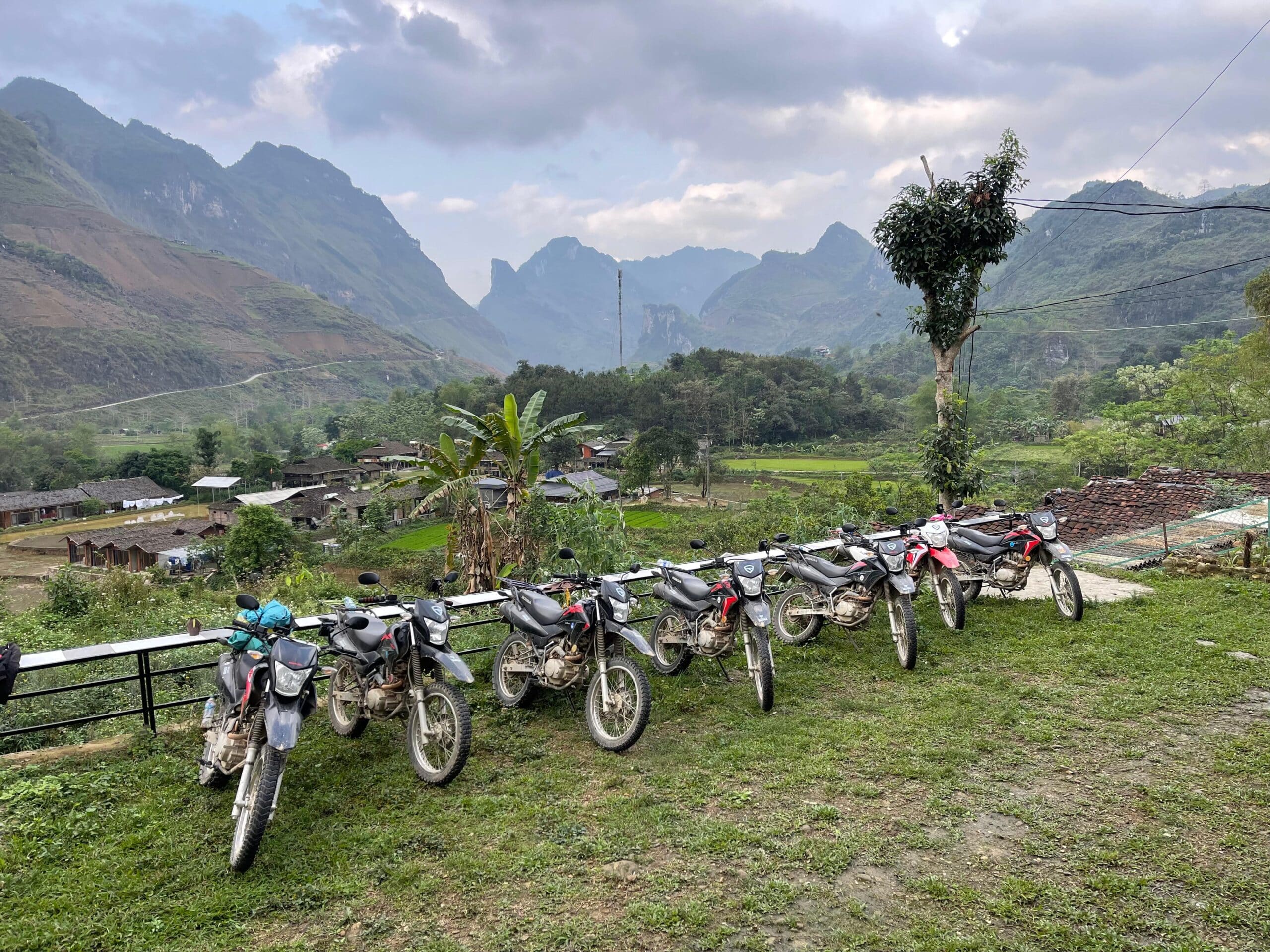
Price is naturally an important consideration when choosing a motorcycle rental, but it should not be the only one. Ask how the motorcycles are maintained, what happens if you have a mechanical problem hundreds of kilometres away and whether somebody is available to provide meaningful route or riding advice.
A well-prepared motorcycle becomes particularly important once you are several hundred kilometres away from the rental shop. If you are planning an independent trip, you can see our motorcycle rental options and compare the bikes available for longer journeys around Vietnam.
Contact AZ Motorbikes with your dates, riding experience and intended route to discuss a suitable motorcycle and the rental arrangements.
That does not mean every rider needs extensive assistance. Many experienced riders simply want a well-prepared motorcycle and the confidence that somebody will answer the phone if something goes wrong.
FAQ
Is riding a scooter in Vietnam dangerous?
Motorcycle riding always carries some risk, and Vietnamese traffic can initially feel unfamiliar to visiting riders. The risk can be reduced considerably by having suitable riding experience, using a well-maintained motorcycle, wearing appropriate equipment and learning how Vietnamese traffic behaves.
Is Vietnam a good place to learn to ride a scooter?
Busy Vietnamese traffic is not an ideal place to learn basic motorcycle control from scratch. If you have no previous riding experience, some proper training in a controlled environment before riding in Vietnam is strongly advisable.
What is the most important rule for riding in Vietnamese traffic?
Avoid making your safety dependent upon another road user seeing you or doing what you expect. Maintain enough space, control your speed and ride in a position that gives you time to react if somebody pulls out, changes direction or moves into your path.
Is riding a scooter in Vietnam safe when it rains?
It can be manageable if you reduce speed, increase following distance and make your braking, steering and throttle inputs smoother. Wet painted lines, metal covers, mud and loose debris can all reduce grip, and if visibility becomes poor, stopping is often the safer option.
What should I check before renting a motorcycle in Vietnam?
Check the tyres, brakes, lights, indicators, horn and mirrors before leaving the rental shop. Make sure the motorcycle feels comfortable, understand the controls and ask how maintenance and roadside support are handled if you are planning a longer trip.
RIDE TO ARRIVE
Vietnam rewards motorcycle riders with extraordinary roads, mountain passes, coastlines, villages and places that many visitors never see. Riding gives you the freedom to stop when you want, change direction when something looks interesting and experience the country at a pace that few other forms of transport can match.
The aim, however, is not simply to finish the route. You want to arrive safely enough to enjoy the next road, the next town and the next day’s ride as well.
You cannot predict every scooter, truck, pothole, animal or tropical downpour. What you can do is recognise potential problems earlier, control your speed and maintain enough space to respond when something unexpected happens. Most good roadcraft eventually comes back to the same three things: information, time and space.
See what is happening early enough to understand it, give yourself time to make a decision and keep enough space to act on that decision. If the weather changes, the road deteriorates or you simply become tired, adapt the plan rather than trying to force the ride.
That is not cautious riding for the sake of being cautious. It is how you stay on the road long enough to enjoy everything you came to Vietnam to see.
Ride to arrive.