
Safety + Legality
Vietnam Rainy Season: 7 Things to Pack & Riding Tips
Vietnam’s rainy season does not mean it rains all day, every day. In many parts of the country, long dry periods are interrupted by heavy showers or thunderstorms. The bigger issue is that the timing and intensity vary enormously between Northern, Central and Southern Vietnam.
For travellers, rainy season can mean fewer crowds, greener landscapes and lower prices, but also more humidity, wet clothing and occasional disruption. For motorcycle riders, poor visibility, slippery roads, flooding, landslides and damaged mountain roads can all affect a route.
This guide focuses on what to pack and how to travel sensibly in wet conditions. For a broader explanation of when and where Vietnam is wet, see our Vietnam Motorcycle Weather Guide. Riders should also read our Flooding in Vietnam guide before travelling in areas where heavy rain is forecast.
When is the rainy season in Vietnam?
There is no single rainy season for the entire country. Vietnam is long and narrow, and its climate changes significantly from north to south.
Northern Vietnam
In Hanoi and much of Northern Vietnam, the wetter period generally runs from May to September. June, July and August are normally the hottest and wettest months, with high humidity and frequent heavy storms.
Rain can be extremely local. Hanoi may be dry while mountain roads farther north are experiencing intense rain, or the reverse. Riders heading to Ha Giang, Cao Bang, Ba Be, Sa Pa or the Northwest should check local conditions rather than relying only on the Hanoi forecast.
Central Vietnam
Central Vietnam follows a different pattern. Da Nang and Hoi An can have relatively good weather through much of the northern summer, while heavier rain and storm-related disruption become more likely later in the year.
The wetter, more disruptive period often falls between roughly September and December, although exact timing varies. Heavy rain can cause flooding around low-lying towns and coastal roads, so riders should not assume that the North and Centre share the same wet season.
Southern Vietnam
Ho Chi Minh City and much of Southern Vietnam have a clearer tropical wet and dry pattern. The wet season usually runs from around May to October, with frequent afternoon or evening showers.
Many days remain perfectly usable for travel. The problem is not constant rain but sudden heavy downpours, standing water and poor visibility. A flexible schedule works much better than trying to avoid every wet day.
What to pack for Vietnam’s rainy season
The right gear makes rainy-season travel much easier, but expensive equipment is not always necessary.
A simple raincoat or poncho
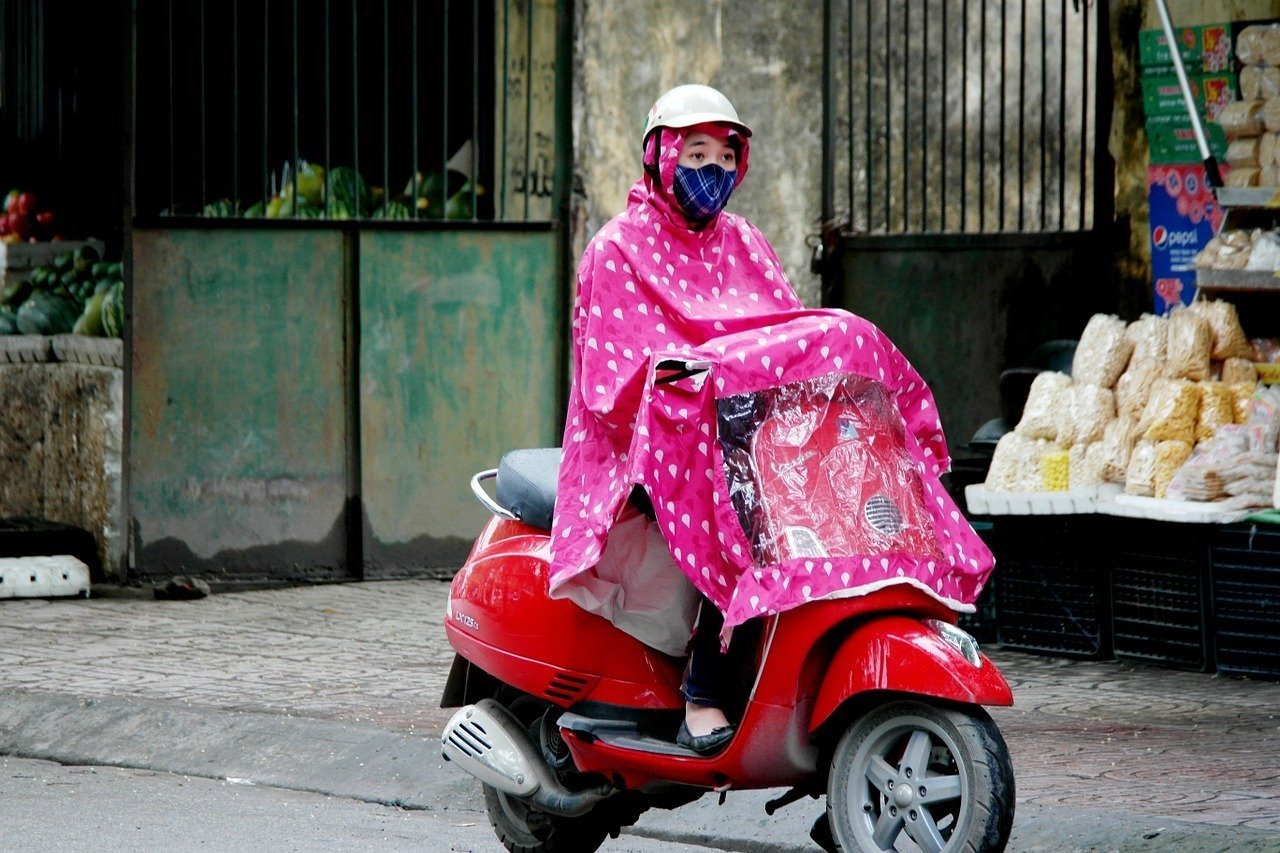
A lightweight raincoat or local poncho is one of the most useful things you can carry in Vietnam. For walking around town, a compact waterproof jacket is easy to pack. On a motorcycle, a larger poncho can provide quick protection for you and some of your luggage.
Avoid relying on a single cheap layer for a multi-day ride. A local poncho is useful as a backup, but for long motorcycle trips a proper rain suit is more secure and less likely to flap around at speed.
If you buy rain gear in Vietnam, check that it allows free movement and does not interfere with your controls, wheels or exhaust.
Quick-drying clothes
Cotton can be comfortable in dry weather but becomes heavy and slow to dry once it is soaked. Lightweight synthetic or blended clothing is usually easier to manage during the wet season.
Pack at least one dry change of clothes separately from the rest of your luggage. Dry socks and a clean shirt can make a large difference after several hours in rain and humidity.
Suitable footwear
For general travel, shoes or sandals that dry quickly are more practical than heavy footwear that stays wet for days. Sandals are useful around hotels and towns, but they are not motorcycle protection.
Riders should still use proper riding footwear where possible. Waterproof boots are useful, but even good boots can eventually let water in during prolonged tropical rain. Pack dry socks separately and give boots time to dry overnight.
Waterproof luggage protection
Backpack rain covers help, but they are not completely waterproof in severe rain. Important items such as passports, electronics, documents and dry clothes should go inside separate waterproof bags or dry sacks.
On motorcycles, assume that water will eventually find its way into poorly sealed luggage. Double-bag electronics and paperwork, and keep anything essential away from the bottom of panniers where water may collect.
Insect repellent
Mosquitoes are more active in warm, wet conditions and around standing water. Carry a reliable insect repellent and use it when needed, especially in the evening.
Repellent is easy to find in larger towns, but it is still worth carrying a small bottle in your main day bag.
Protection for electronics
Humidity is a bigger problem than many travellers expect. Cameras, phones and chargers can all be affected by condensation and damp luggage.
Keep electronics in waterproof pouches and allow wet equipment to dry properly before charging it. Small silica-gel packets can help inside camera or electronics bags, but they are a supplement, not a substitute for keeping the bag dry.
A small dry-day backup kit
Keep a small set of essentials separate from your main luggage: dry socks, a T-shirt, phone charger, documents and a light warm layer if you are travelling in the mountains.
If the rest of your luggage gets soaked, this gives you one completely dry change at the end of the day. It is a simple habit and one of the most useful rainy-season precautions.
How should motorcycle riders handle heavy rain?
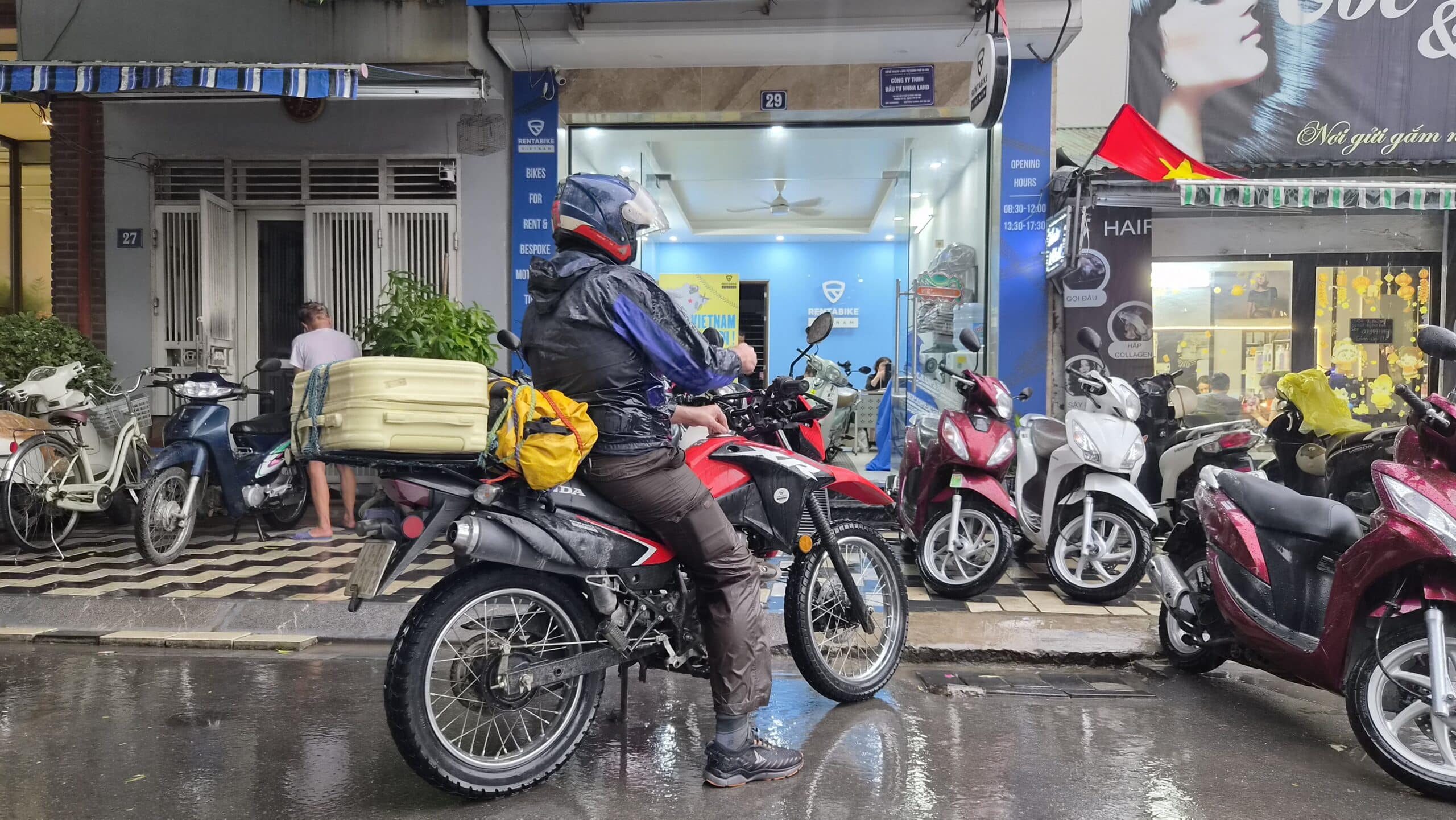
The biggest wet-season mistake is trying to ride exactly the same way as you would on a dry road.
When heavy rain starts, reduce speed smoothly and create more space around you. Painted lines, metal covers, polished concrete, mud and diesel spills can all become much more slippery when wet.
Visibility is often the limiting factor. If you cannot see clearly through the rain or spray, continuing at normal speed is not sensible. Stop somewhere genuinely safe, have a coffee and wait for the worst of the storm to pass.
Avoid deep or fast-moving floodwater. You may not be able to see potholes, open drains or the true depth of the water, and a motorcycle can lose traction or suffer engine damage. Our Flooding in Vietnam guide explains what to do when a route is underwater.
Mountain riding needs extra caution after heavy rain. Landslides, mud, fallen rocks and damaged road edges can appear even after the rain has stopped. Local information from hotels, other riders and residents is often more useful than blindly following a navigation app.
If a road looks unsafe, turn around. A missed viewpoint or changed route is much cheaper than a damaged motorcycle or an injury.
Is rainy season a bad time to travel in Vietnam?
Not necessarily. Rainy season can be one of the most rewarding times to travel because the countryside is intensely green, waterfalls are stronger and many popular destinations are quieter.
Accommodation and flights can also be cheaper outside peak periods. If your itinerary is flexible, a short storm may simply mean a longer lunch or an extra coffee rather than a ruined day.
The key is to avoid building a schedule that depends on perfect weather. A ten-day trip with every hotel booked and every day planned to the kilometre becomes stressful when one mountain road closes. A more flexible itinerary lets you change direction or wait out a bad system.
Motorcycle riders should think in terms of conditions rather than seasons. Light rain on a good road may be completely manageable. Severe rain on a mountain pass may be a reason to stop.
How to plan a Vietnam trip during wet season
Wet-season travel works best when the itinerary has room to breathe. Instead of planning every day around a fixed distance or exact road, build in time to check conditions, change routes and wait for bad weather when necessary.
Check more than one forecast
Weather apps can be useful, but tropical storms are often localised. Check the general forecast, then ask locally before committing to remote roads.
Local hotels, guides and riders often know whether a pass has been affected by a landslide or whether a low road is flooding. Treat this information seriously.
Start earlier
In many areas, storms are more common later in the day. An earlier start gives you more options if weather deteriorates.
Do not assume every afternoon will be wet, and do not assume every morning will be dry. The advantage of starting earlier is simply that you have more daylight and more time to change your plan.
Leave spare time
Do not make every day a maximum-distance day. Wet roads, traffic, roadworks and poor visibility all reduce average speed.
If your itinerary allows some spare time, you can wait for weather to improve without feeling forced to continue. This is especially important on longer Northern Vietnam routes.
Choose the route, not just the destination
A famous destination may still be reachable by more than one road. During the wet season, the safest route may not be the most scenic one.
Our route maps can help you compare alternatives, but always combine them with current local road information when heavy rain has recently affected an area.
Know when to stop
The most important rainy-season skill is knowing when not to ride. Heavy rain, poor visibility, fast-flowing water, active landslides or local warnings are all good reasons to change the plan.
Vietnam’s wet season is not something to fear, but it rewards flexibility more than stubbornness.
One-Way Rentals
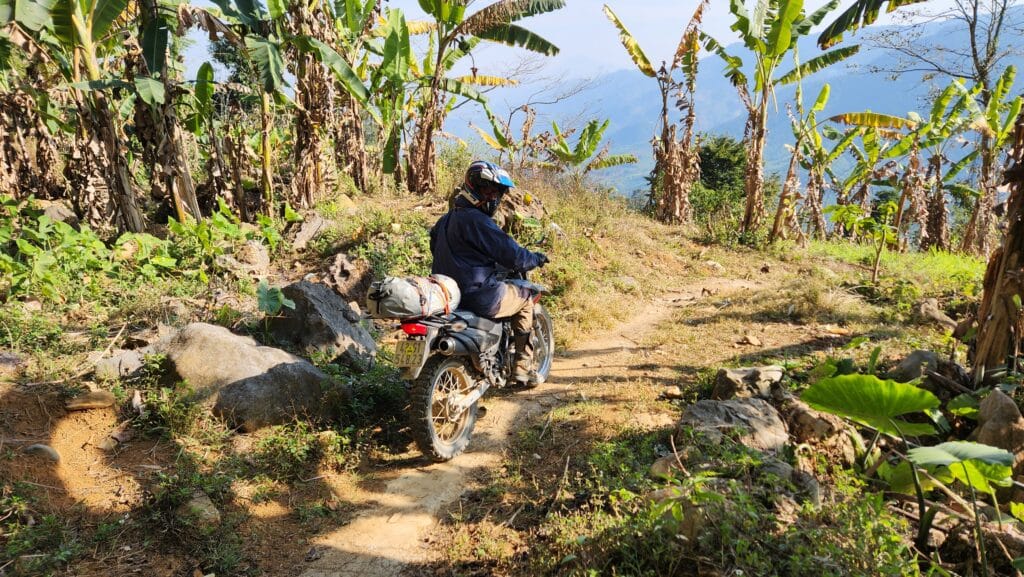
Ready for ultimate freedom? Our one-way rentals let you blaze your own trail across Vietnam — no need to loop back!
✅ Pick up/drop off in Hanoi, Danang, or Ho Chi Minh City
✅ Explore Vietnam at your pace
✅ No backtracking—just pure, open-road freedom
FAQ
When is the rainy season in Vietnam?
It depends on the region. Northern Vietnam is generally wetter from May to September, Southern Vietnam from around May to October, while Central Vietnam often sees its heaviest rain later in the year.
Does it rain all day during Vietnam’s rainy season?
Usually not. Many wet-season days have long dry periods followed by heavy showers or thunderstorms. However, prolonged rain does occur during larger weather systems.
What is the best raincoat for Vietnam?
For everyday travel, a lightweight waterproof jacket or local poncho is practical and inexpensive. Motorcycle riders should use rain gear that fits securely and does not flap around or interfere with the motorcycle.
What shoes should I wear in Vietnam’s rainy season?
For walking and general travel, quick-drying shoes or sandals are practical. Motorcycle riders should still prioritise protective riding footwear and carry dry socks separately.
Is it safe to ride a motorcycle in Vietnam during rainy season?
Yes, when conditions are manageable and you adjust your riding. Slow down, increase following distance, avoid deep floodwater and stop if visibility or road conditions become unsafe.
Rainy season is manageable if you stay flexible
Vietnam’s rainy season can still be a very good time to travel. The country is greener, popular places can be quieter and many storms pass quickly enough that they only change part of the day.
The important thing is to prepare properly and avoid treating the wet season as if every road and every day will behave the same. Pack simple waterproof gear, protect your luggage and electronics, allow extra time and change the route when conditions demand it.
For wider seasonal planning, see our Vietnam Motorcycle Weather Guide. Motorcycle riders should also read our Flooding in Vietnam guide and use our route maps to compare alternatives before heading into areas affected by heavy rain.