
Routes
How to Get to Mu Cang Chai (3 Routes)
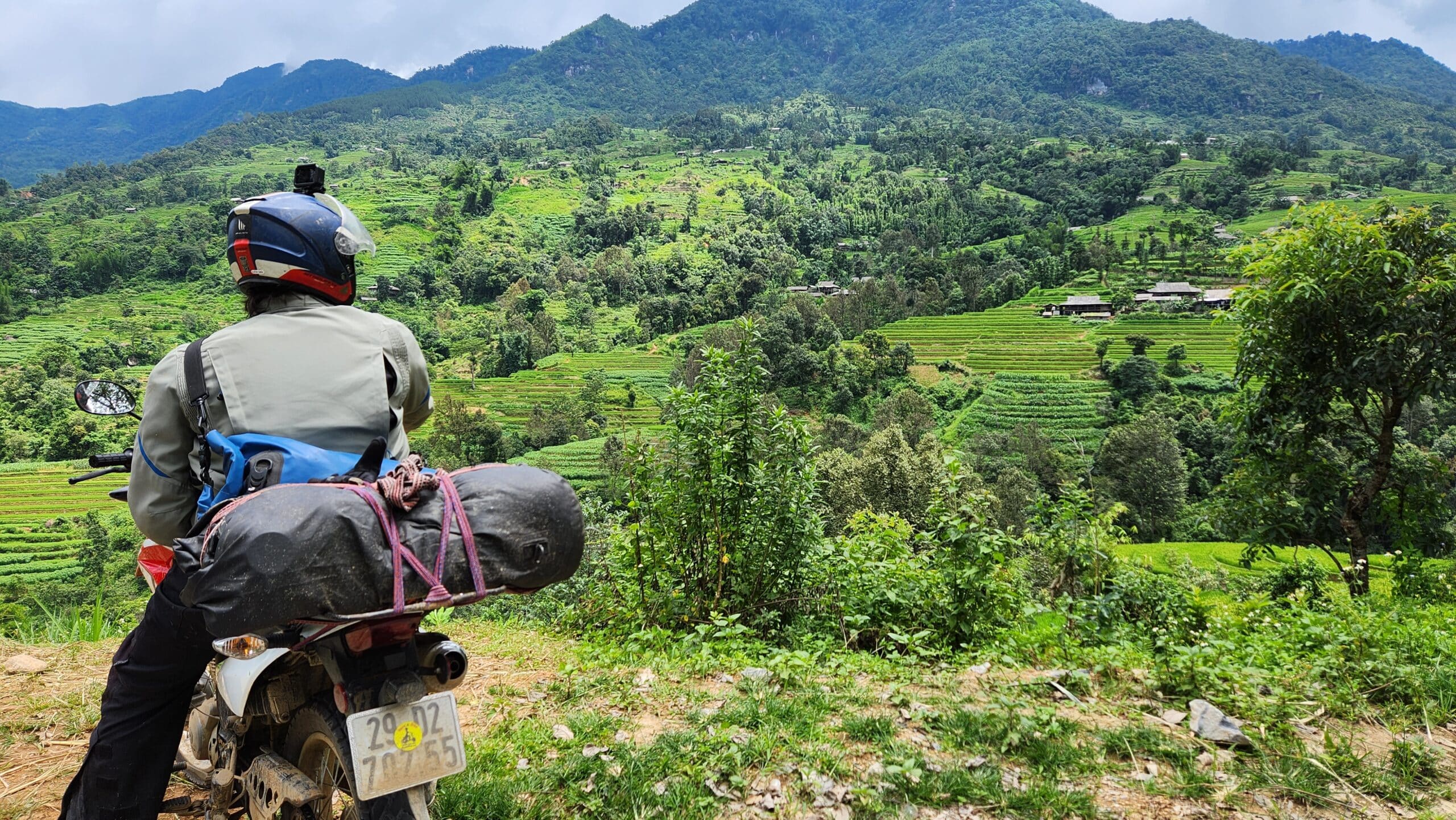
Mu Cang Chai is one of the best motorcycle destinations in Northwest Vietnam, especially during the rice season. The ride is part of the experience, with mountain passes, quiet valleys and increasingly dramatic scenery as you get closer to Mu Cang Chai.
There are several ways to get there. Most riders arrive from Hanoi via Nghia Lo, from Sa Pa through Than Uyen, or from Ta Xua using one of two more adventurous mountain routes. The best choice depends on where you are starting, how much time you have and how confident you are on smaller mountain roads.
These routes are based on roads we ride regularly on AZ Motorbikes tours and independent trips through Northwest Vietnam.
Choosing Your Route to Mu Cang Chai
There is no single best route to Mu Cang Chai. If you are coming directly from Hanoi, the route through Nghia Lo and Tu Le is the most straightforward choice. If you are already travelling around Northwest Vietnam, arriving from Sa Pa or Dien Bien can turn Mu Cang Chai into part of a much larger motorcycle loop.
Riders coming from Ta Xua have two more adventurous options. One heads through Tram Tau and Nghia Lo, while the other loops towards Ngoc Chien before joining QL32 near Tu Le. These routes take longer, but they also get you onto much quieter mountain roads.
Which Route Should you Choose
| Route | Best for | Difficulty | Main advantage |
|---|---|---|---|
| Hanoi – Nghia Lo – Tu Le – Mu Cang Chai | First-time visitor and direct traveller from Hanoi | Easy-moderate | Simplest route with excellent scenery after Nghia Lo |
| Sa Pa – Than Uyen – Mu Cang Chai | Riders already exploring Northwest Vietnam | Moderate | Excellent mountain riding and Hoang Lien Son scenery |
| Dien Bien – Muong Lay – Mu Cang Chai | Longer Northwest loops | Moderate | Quiet roads and a natural way to connect Dien Bien with Mu Cang Chai |
| Ta Xua – Tram Tau – Nghia Lo – Mu Cang Chai | Experienced riders | Difficult | Remote mountain riding and Tram Tau hot springs |
| Ta Xua – Ngoc Chien – Tu Le – Mu Cang Chai | Riders wanting a quieter scenic alternative | Moderate | Remote villages, Ngoc Chien and quieter mountain roads |
Choose the Hanoi route if Mu Cang Chai is your first destination from Hanoi and you want the easiest, most straightforward way into Northwest Vietnam.
Choose the Sa Pa route if you are already travelling through Sa Pa and want to continue south through the mountains rather than returning directly towards Hanoi.
Choose the Dien Bien route if Mu Cang Chai forms part of a larger Northwest Vietnam loop and you have several days available.
Choose the Tram Tau route if you are an experienced rider looking for smaller, more difficult mountain roads and are prepared for road conditions to change.
Choose the Ngoc Chien route if you want a quieter and more scenic alternative from Ta Xua without taking the more difficult Tram Tau crossing.
Hanoi to Mu Cang Chai via Nghia Lo
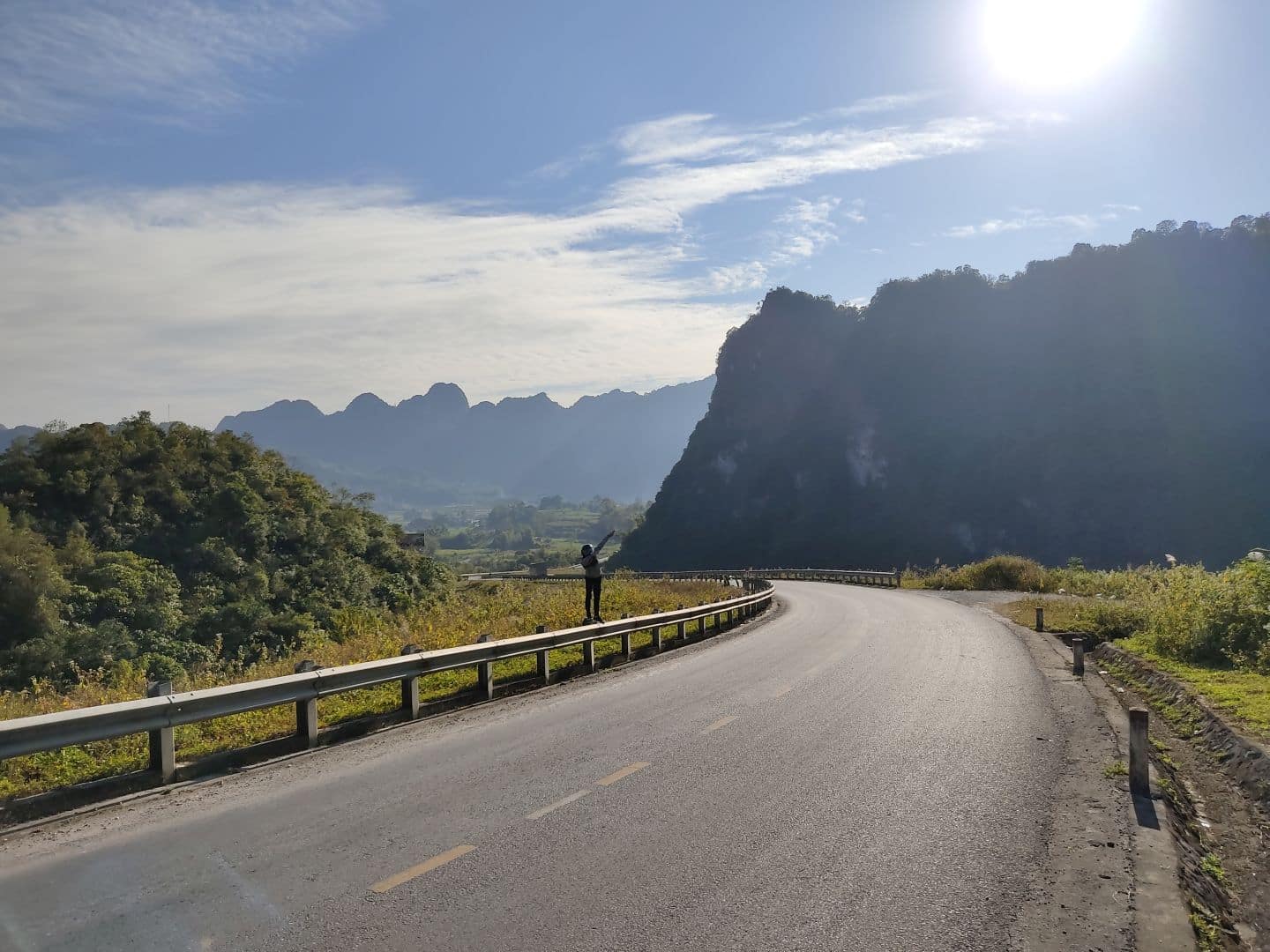
For most riders leaving Hanoi, this is the simplest and most practical route to Mu Cang Chai. The first part of the journey is mainly about getting clear of Hanoi, but the roads gradually become quieter as you head towards Thanh Son and Nghia Lo.
The real mountain riding begins after Nghia Lo. From here, QL32 takes you through Tu Le, over Khau Pha Pass and into the rice terrace country around Mu Cang Chai.
If you prefer a shorter day from Hanoi, you can check out our Hanoi to Nghia Lo content.
Getting Out of Hanoi
There are several ways of getting out of Hanoi, and the best one usually depends on where you are starting from. QL32 through Son Tay is fairly direct but can be busy, while heading towards Hoa Lac before joining quieter roads can be a less stressful option.
Do not worry too much about making the first part of the ride scenic. The main aim is to get through the traffic safely and onto the quieter roads west of the city.
Hanoi to Thanh Son
Once you are clear of Hanoi, the ride becomes steadily easier. Traffic reduces and the road begins to wind through lower hills and more rural countryside.
Thanh Son is a useful place to stop for fuel, coffee or a short break. There are also tea-growing areas around this part of the route, and roadside cafés make easy places to stop without adding much time to the day.
Thanh Son to Nghia Lo
From Thanh Son, continue towards Nghia Lo. The scenery improves gradually and you begin to feel that you are entering Northwest Vietnam rather than simply travelling away from Hanoi.
Nghia Lo is the most useful major stop before Mu Cang Chai. It is a good place for lunch, fuel and supplies, and it also works well as an overnight stop if you want to split the journey into two easier days.
Nghia Lo to Tu Le
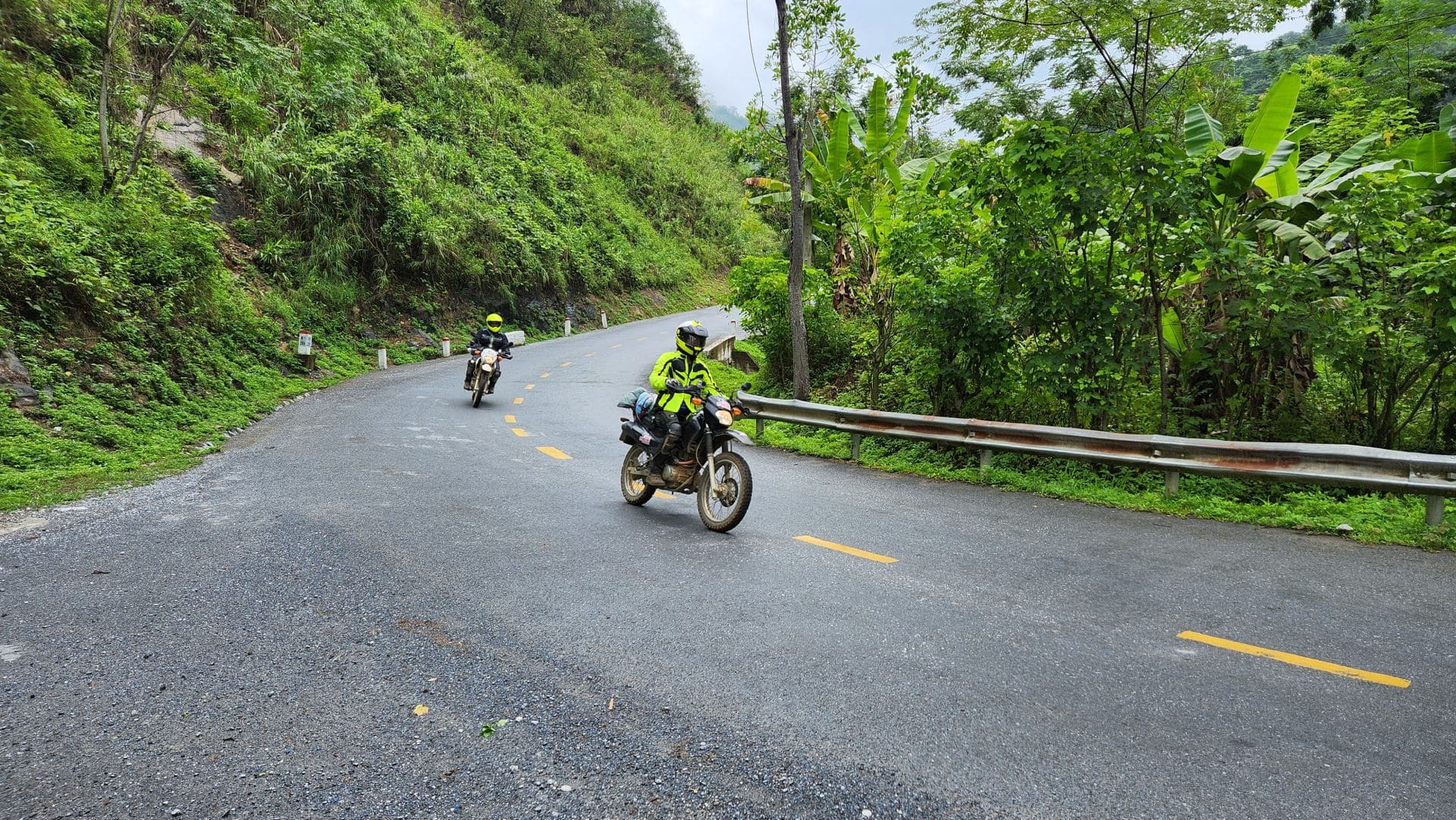
This is where the ride becomes much more interesting. The traffic drops away, the mountains become larger and the road begins to climb through increasingly dramatic valleys.
Tu Le is a good place for a break and is also worth considering for an overnight stay. The valley is surrounded by rice fields and mountains, and during the rice season the scenery here can be almost as impressive as Mu Cang Chai itself.
Khau Pha Pass
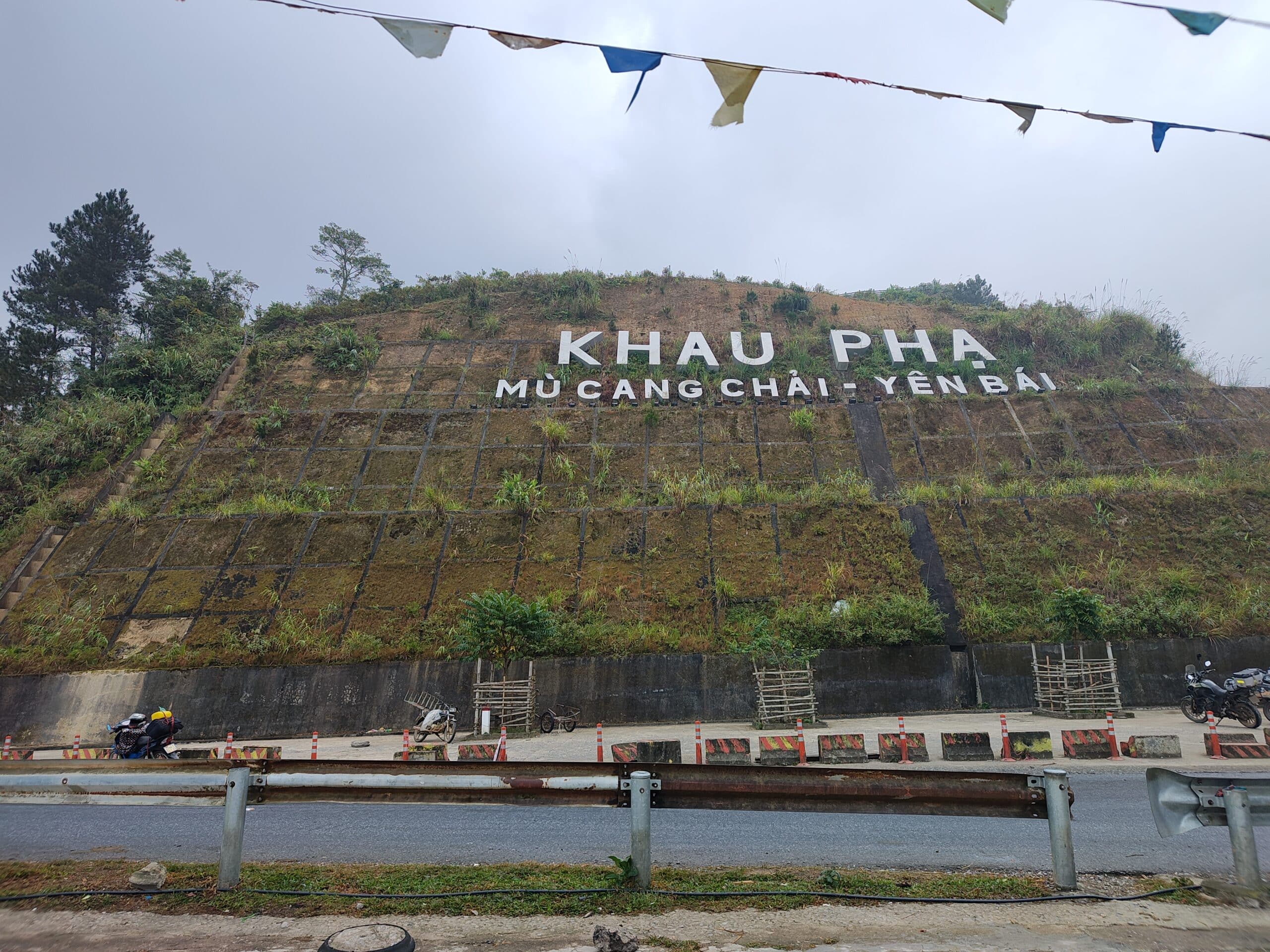
After Tu Le, QL32 climbs over Khau Pha Pass, one of the major mountain passes of Northwest Vietnam. This is one of the highlights of the entire route, with long mountain views, sweeping bends and several places where you can safely stop and look back across the valley.
Take your time here, particularly in rain, fog or low cloud. Visibility can change quickly and there may be slow trucks, buses or livestock on the road.
From Khau Pha to Mu Cang Chai
After crossing the pass, the road drops towards Mu Cang Chai and the rice terraces become increasingly prominent. Around La Pan Tan and the surrounding valleys you will begin to see the landscapes that make this part of Vietnam famous.
This final section is worth riding slowly. The road itself is generally straightforward, but there are many viewpoints, villages and smaller side roads where you may want to stop.
Best Stops on the Route
Thanh Son — A practical stop for fuel, coffee and a short rest after leaving the busier roads around Hanoi.
Nghia Lo — The main service town on the route and the best place for lunch, fuel or an overnight stop.
Tu Le — A beautiful valley surrounded by mountains and rice fields. It is particularly attractive during the green and golden rice seasons.
Khau Pha Pass — One of the best riding sections on the route, with mountain views, sweeping bends and several natural viewpoints.
La Pan Tan — Famous for its terraced rice fields and one of the best areas to stop before reaching Mu Cang Chai town.
Route Notes for Riders
Leave Hanoi early. This gives you more time in the mountains and reduces the chance of arriving in Mu Cang Chai after dark.
Fill up in Nghia Lo or Tu Le rather than waiting until your fuel level becomes low. Fuel is available along the route, but the larger towns are the easiest places to stop.
The road becomes more enjoyable after Nghia Lo, but mountain weather can change quickly. Expect fog, rain and wet roads around Khau Pha Pass, particularly during the wetter months.
Do not rush the final part of the ride. The section between Tu Le and Mu Cang Chai contains some of the best scenery of the whole journey and is where you are most likely to want extra time for stops and photographs.
Sa Pa and Dien Bien to Mu Cang Chai
If Mu Cang Chai is part of a longer Northwest Vietnam trip, approaching from Sa Pa or Dien Bien can be much more interesting than riding directly from Hanoi. Both routes give you long stretches of mountain riding and make Mu Cang Chai a natural stop on a wider loop.
The Sa Pa route is the easier and more obvious connection. The Dien Bien route is longer and suits riders who are already travelling through the far Northwest.
Sa Pa to Mu Cang Chai
From Sa Pa, head over O Quy Ho Pass and continue towards Than Uyen before joining QL32 for Mu Cang Chai. This is a very scenic ride, with the Hoang Lien Son mountains forming the backdrop for much of the journey.
The first part around Sa Pa can be busy, especially near popular stops such as Heaven’s Gate and Silver Waterfall. Once you are further away from Sa Pa, traffic drops and the ride becomes much quieter.
Than Uyen is the main practical stop on this route. It is a good place for fuel, food or an overnight stay if you are taking your time.
From Than Uyen, QL32 takes you towards Mu Cang Chai through increasingly rural mountain scenery. This is a straightforward route for most riders and works very well as part of a Sa Pa–Mu Cang Chai–Nghia Lo loop.
Choose this route if you are already staying in Sa Pa and want to continue exploring Northwest Vietnam rather than returning directly to Hanoi.
It is also a good choice if you want a scenic mountain ride without taking particularly difficult or remote roads.
Dien Bien to Mu Cang Chai
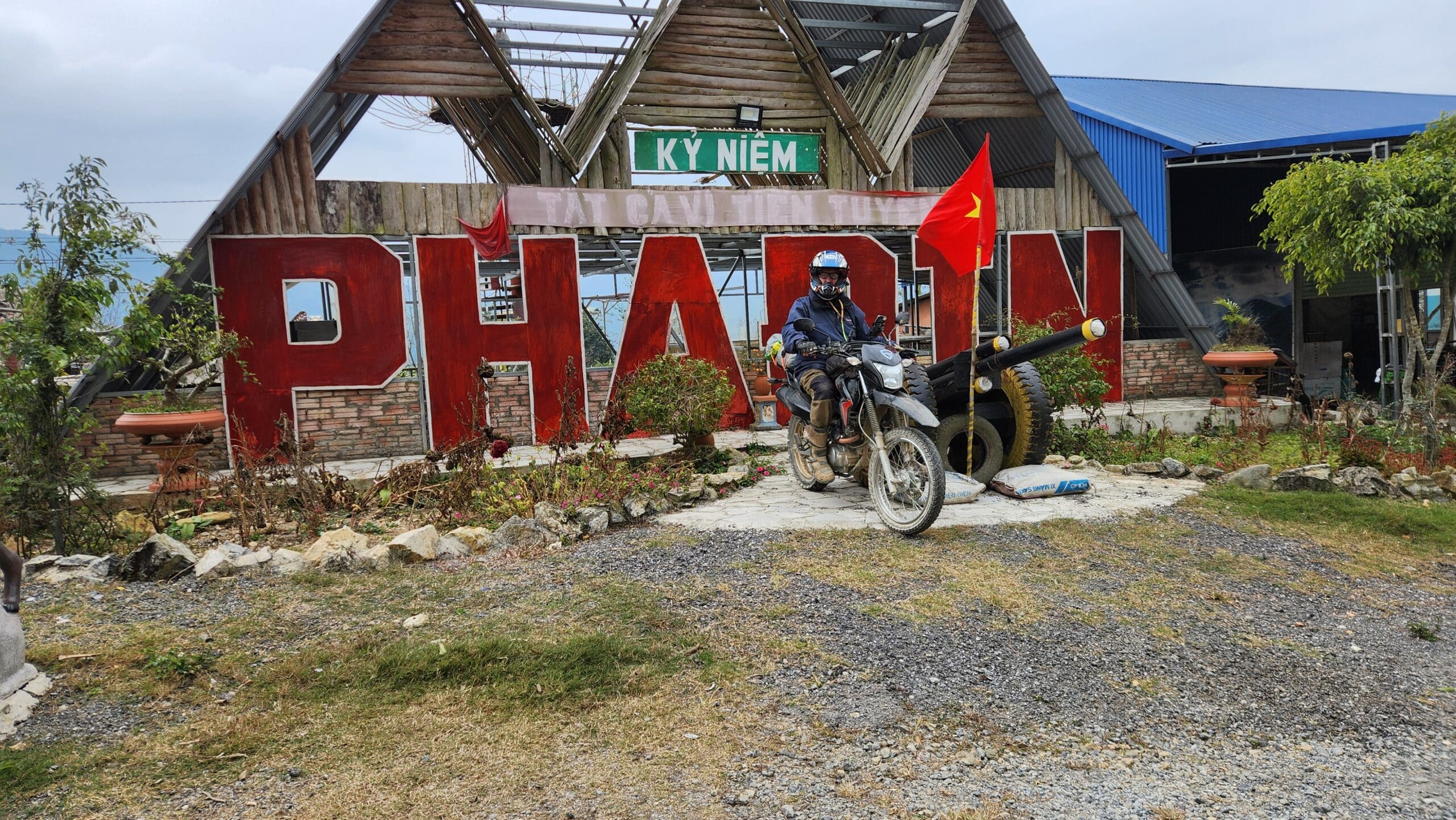
The approach from Dien Bien is better suited to a longer Northwest loop. Once you leave the busier main roads, the route becomes quieter and passes through a much more rural part of the region.
You will ride through areas around Tuan Giao, Quynh Nhai and the Pa Uon Bridge before eventually joining the roads towards Than Uyen and Mu Cang Chai. The scenery becomes progressively more interesting as you move deeper into the mountains.
This route is less about major tourist attractions and more about the journey itself. Expect small villages, roadside food stops, mountain scenery and long stretches where there is very little tourist traffic.
Choose this route if you are already riding through Dien Bien and want to connect the far Northwest with Mu Cang Chai.
It makes most sense as part of a multi-day loop rather than as a standalone ride. Allow enough time so that you are not forced to rush through the mountain sections late in the day.
Good Stops Along the Way
O Quy Ho Pass — One of the major mountain passes near Sa Pa and a spectacular start to the ride south.
Than Uyen — The most useful town between Sa Pa and Mu Cang Chai for fuel, food and accommodation.
Pa Uon Bridge — A major landmark on the Dien Bien approach and a useful point where the character of the countryside begins to change.
Small roadside villages — There are fewer major attractions on these routes, so some of the best stops are simply local cafés, viewpoints and small villages that you find along the way.
Route Notes for Riders
The Sa Pa route is generally the simpler of the two and is suitable for most riders who are comfortable on mountain roads.
The Dien Bien approach involves a much longer journey, so plan fuel and overnight stops rather than relying on making up time later in the day.
Fog and low cloud can affect the higher passes, particularly around Sa Pa and O Quy Ho. Give yourself extra time rather than riding quickly when visibility is poor.
Both approaches work particularly well as part of a larger Northwest loop. If you are planning several days in the region, Mu Cang Chai can connect naturally with Sa Pa, Dien Bien, Nghia Lo and other destinations further south.
Ta Xua to Mu Cang Chai
Ta Xua combines very well with Mu Cang Chai if you are building a longer Northwest Vietnam motorcycle route. There are two main ways to connect them: the harder crossing through Tram Tau, or a longer and generally easier route through Ngoc Chien.
The right choice depends mainly on your riding experience, the bike you are using and the weather. The Tram Tau route is the adventurous option, while Ngoc Chien is better for riders who want quieter mountain roads without committing to the more technical crossing.
Ta Xua to Tram Tau
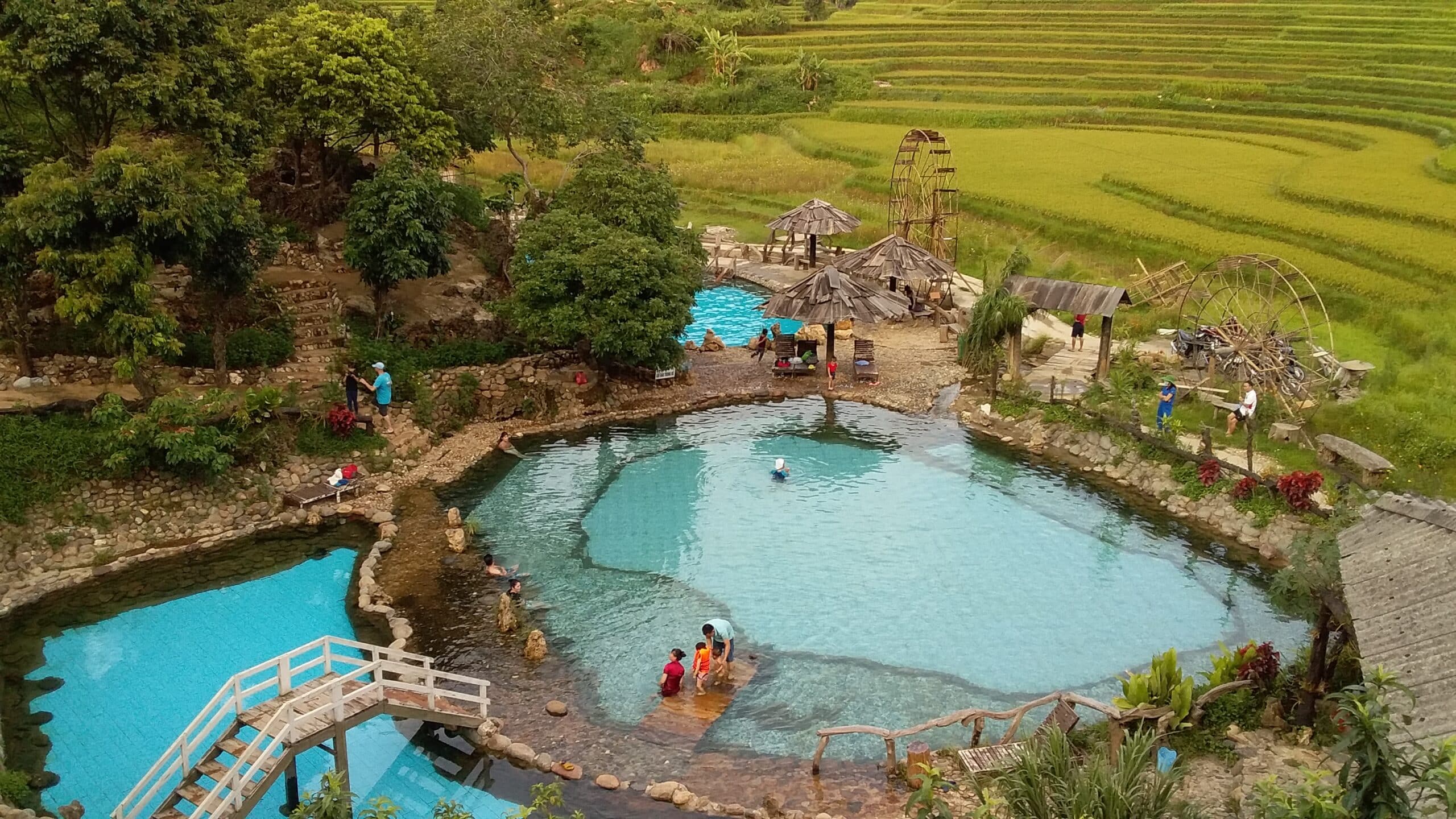
The route from Ta Xua across the mountains towards Tram Tau is one of the more challenging rides in this part of Northwest Vietnam. It uses smaller mountain roads where conditions can deteriorate quickly after rain.
Expect steep sections, broken surfaces and the possibility of mud or landslides. This is not a route to choose simply because it looks shorter on the map.
A lightweight motorcycle with reasonable ground clearance is the best choice. The Honda XR150 or XR190 is much better suited to this route than a heavy road bike, particularly if conditions are poor.
This is the type of terrain we ride on our Cloud Hunter motorcycle tour, which connects Ta Xua, Tram Tau and Mu Cang Chai.
Tram Tau makes a natural overnight stop after crossing the mountains. The hot springs are the main attraction and give you a good reason to finish the difficult riding here rather than pushing on towards Mu Cang Chai late in the day.
From Tram Tau, the ride towards Nghia Lo becomes considerably easier. Once you reach Nghia Lo, you can join QL32 and continue through Tu Le and Khau Pha Pass towards Mu Cang Chai.
Choose this route if you are an experienced rider, have a suitable motorcycle and want the most adventurous way to connect Ta Xua with Mu Cang Chai.
Avoid treating it as a fixed all-weather route. Heavy rain can change mountain-road conditions very quickly, so it is sensible to check locally before committing to the crossing.
Ta Xua to Mu Cang Chai via Ngoc Chien
The alternative is to ride west from Ta Xua towards the Son La area before turning north for Ngoc Chien. This is a longer route, but it gives you a very different journey through quiet valleys, small villages and less-visited mountain countryside.
Ngoc Chien is famous for its hot springs and makes a good overnight stop. Staying here also allows you to break the journey into two comfortable days rather than trying to cover too much distance at once.
From Ngoc Chien, smaller roads eventually connect you with QL32 near the Tu Le area. You can then continue over Khau Pha Pass and into Mu Cang Chai.
Choose this route if you want remote mountain scenery and smaller roads but do not specifically want the technical challenge of the Tram Tau crossing.
It is also a good choice if you have enough time to stay overnight in Ngoc Chien and want the journey itself to be a major part of the trip.
Tram Tau or Ngoc Chien?
Via Tram Tau is shorter, harder and more adventurous. It is best suited to confident riders on lightweight motorcycles and should be approached cautiously in poor weather.
Via Ngoc Chien is longer but allows you to explore a quieter part of Son La and gives you an excellent overnight stop at the hot springs. For many independent riders, this is the more relaxed option.
Route Notes for Riders
Check the weather before leaving Ta Xua. Rain in the mountains can affect road conditions far more than it does on the major highways.
Do not rely entirely on journey times shown by navigation apps. Small mountain roads can take considerably longer than expected because of weather, roadworks, landslides or simply the need to ride slowly.
Fill your tank whenever you have a convenient opportunity. Fuel is available in towns and villages, but options become less frequent on the smaller roads.
Start early and avoid planning to finish these routes after dark. Both are much more enjoyable when you have enough time to stop, check the route and deal with unexpected road conditions.
Planning Your Mu Cang Chai Ride
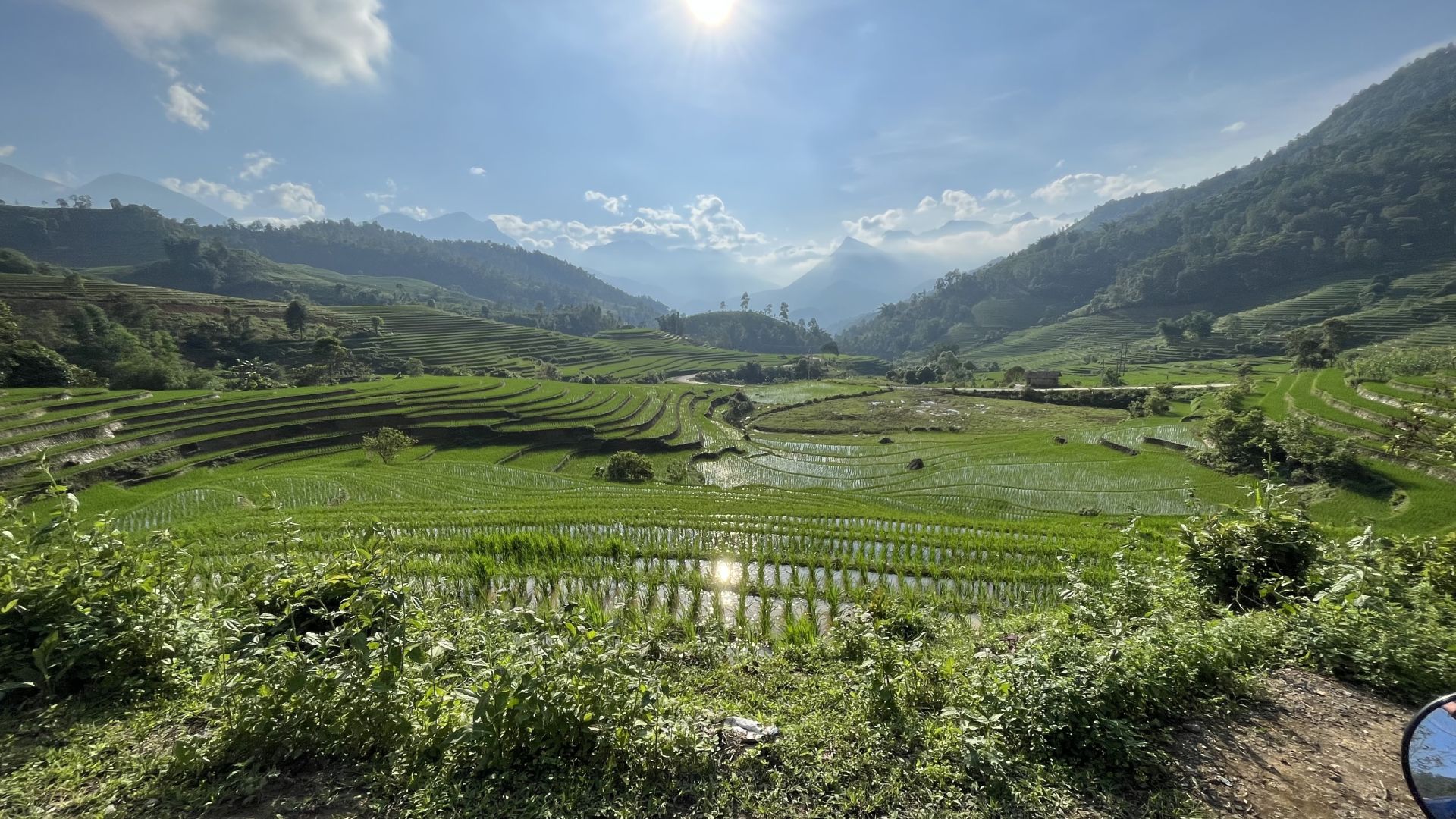
Mu Cang Chai is not especially difficult to reach, but the experience changes a lot depending on the season, weather and route you choose. A little planning makes it much easier to enjoy the mountain sections without rushing.
Best Time to Visit Mu Cang Chai
Mu Cang Chai is worth riding at different times of year, but the rice terraces are the main reason many people visit.
The terraces are usually at their most dramatic during the green growing season and again when the rice turns golden before harvest. Exact timing changes each year and can vary between valleys, so if golden rice is important to your trip, check the current conditions before travelling.
Do not assume that a traditional harvest date guarantees golden fields. Leave it too late and some terraces may already have been cut and turned brown.
Weather and Road Conditions
Mountain weather can change quickly. Rain, fog and low cloud can affect visibility around Khau Pha Pass and on the smaller roads around Ta Xua, Tram Tau and Ngoc Chien.
The main QL32 route is generally straightforward, but smaller mountain roads can become slippery or damaged after heavy rain. Check the forecast before leaving, and see our Motorcyclist’s Guide to Vietnam’s Weather if you are planning a longer ride through the North.
Which Motorcycle Is Best?
For most riders, we prefer the Honda XR150 or XR190 for Mu Cang Chai. They are light, easy to handle on mountain roads and capable enough if you decide to explore smaller roads around the rice terraces.
A Honda Wave Blade is also suitable for a solo rider staying mainly on paved roads, although it has less power for steep climbs or carrying two people.
Experienced riders can also use the Honda CB500X. The main roads are good enough for a larger motorcycle, and the extra power and comfort can be useful if you are carrying a pillion or covering longer distances.
Fuel
Fuel is easy to find on the main route through Nghia Lo, Tu Le and Mu Cang Chai. It is still good practice to fill up when you have the opportunity rather than waiting until the tank is nearly empty.
This becomes more important if you use smaller roads around Ta Xua, Tram Tau or Ngoc Chien, where fuel stops are less frequent and opening times can be less predictable.
Where to Stay
Nghia Lo, Tu Le and Mu Cang Chai all have a range of accommodation, from simple guesthouses and homestays to more comfortable hotels and resorts.
If you have time, splitting the Hanoi ride into two days gives you much more time to enjoy the mountain section. Tu Le is particularly useful because you can start the following morning close to Khau Pha Pass and the best rice terrace scenery.
Tram Tau and Ngoc Chien also work well as overnight stops if you are approaching Mu Cang Chai from Ta Xua.
How Many Days Do You Need?
You can ride from Hanoi to Mu Cang Chai in a long day, but that does not mean it is always the best way to experience the area.
Two days gives you more time for Nghia Lo, Tu Le, Khau Pha Pass and the rice terraces. If Mu Cang Chai is part of a larger Northwest loop, three or more days allows you to connect it naturally with Sa Pa, Ta Xua, Dien Bien or other mountain destinations.
Rider Advice
Leave early, especially if you are riding from Hanoi. Avoid planning mountain sections after dark and keep some spare time in the day for weather, roadworks and photo stops.
Ride carefully through villages and around blind bends. Local traffic, livestock and slow vehicles can appear unexpectedly, particularly on smaller roads.
Most importantly, do not rush the section between Tu Le and Mu Cang Chai. This is one of the best parts of the journey, and giving yourself time to stop is much more valuable than arriving an hour earlier.
Planning this route independently? See our Hanoi motorcycle rentals.
FAQ
Can I ride from Hanoi to Mu Cang Chai in one day?
Yes, but it is a long riding day. Leaving early is important, and you will have less time to stop around Nghia Lo, Tu Le and Khau Pha Pass. For a more relaxed trip, splitting the journey into two days is usually better.
When is the best time to see golden rice in Mu Cang Chai?
The golden rice period is usually around September, but the exact timing changes each year and can vary between valleys. If the rice terraces are the main reason for your trip, check current conditions before leaving because harvesting can happen quickly.
Is Mu Cang Chai suitable for beginner motorcycle riders?
The main route through Nghia Lo, Tu Le and Khau Pha Pass is suitable for riders who are comfortable with normal mountain roads. Beginners should avoid the more difficult Ta Xua and Tram Tau routes unless they have suitable experience and conditions are good.
Do I need an off-road motorcycle for Mu Cang Chai?
No. The main route to Mu Cang Chai is paved and can be ridden on a normal road bike or scooter. A lighter dual-sport motorcycle becomes more useful if you plan to explore smaller mountain roads or use the Ta Xua and Tram Tau routes.
How many days should I allow for Mu Cang Chai?
Two days is enough for a simple ride from Hanoi with an overnight stop, but three or more days is better if you want to explore the rice terraces and connect Mu Cang Chai with places such as Sa Pa, Ta Xua or Nghia Lo.
Make Mu Cang Chai Part of the Journey
Mu Cang Chai is worth visiting for the rice terraces, but the ride there is just as important. The route through Nghia Lo, Tu Le and Khau Pha Pass gives you some of the best mountain riding in Northwest Vietnam, while the Sa Pa, Dien Bien and Ta Xua approaches make it easy to include Mu Cang Chai in a longer trip.
Choose the route that matches your experience, allow enough time for weather and stops, and avoid rushing the mountain sections. If you want to explore independently, choose the right motorcycle and build Mu Cang Chai into a wider Northwest route.
If you would rather have the route, accommodation and riding days organised for you, take a look at our Northern Vietnam motorcycle tours. Mu Cang Chai is also included in our 14-Day Due North motorcycle tour, which links it with Sa Pa, Ha Giang, Cao Bang and other highlights of Northern Vietnam.